Kirjahaku
Etsi kirjoja tekijän nimen, kirjan nimen tai ISBN:n perusteella.
1000 tulosta hakusanalla Deborah C. Pollack
Steep socioeconomic hierarchy in post-industrial Western society threatens public health because of the physiological consequences of material and psychosocial insecurities and deprivations. Following on from their previous books, the authors continue their exploration of the geography of early mortality from age-related chronic conditions, of risk behaviors and their health outcomes, and of infant and child mortality, all due to rigid hierarchy. They divide the 50 states into those that gave their electoral college votes to Trump and those that gave theirs to Clinton in the 2016 presidential election and compare the two sets for socioeconomic and public health profiles. They deliberately apply only simple standard statistical methods in the public health analyses: t-test, Mann-Whitney test, bivariate regression, and backward stepwise multivariate regression. The book assumes familiarity with basic statistics.The authors argue that the unequal power relations that result in eroding public health in the nation and, in particular, in the Trump-voting states, largely cascade from the collapse of American industry, and they analyze the Cold War roots of that collapse. In two largely independent chapters on economics, they explore both the suppression of countervailing forces, such as organized labor, and the diversion of technical resources to the military as essential foundations to the population-level suffering that expressed itself in the 2016 presidential election.This interdisciplinary book has several primary audiences: creators of public policies, such as legislators and governmental staff, public health professionals and social epidemiologists, economists, labor union professionals, civil rights advocates, political scientists, historians, and students of these disciplines from public health through the social sciences.The Open Access version of this book, available at http://www.taylorfrancis.com, has been made available under a Creative Commons Attribution-Non Commercial-No Derivatives 4.0 license.
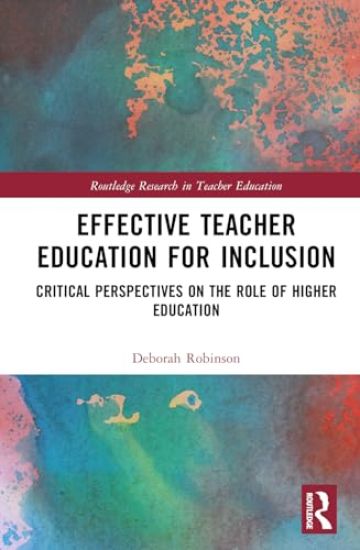
Drawing on research carried out in partnership with schoolteachers, school leaders, and student teachers, this book presents cutting-edge research on teacher education and how it can be used to catalyse the development of inclusive practice in mainstream schools and classrooms.Theoretically robust and guided by the author’s near 40 years of experience as an educationalist, this research-informed book offers an account of the practices and principles that underpin effective teacher education for special educational needs and disability (SEND). Chapters propose transformative approaches towards effective teacher education whilst also exploring the dangers of de-intellectualisation to the promotion of inclusive practices; in doing so, this book reasserts the indispensability of intellectual labour to the development of the inclusive teacher. Ultimately, this book argues that teacher education curricula must include critical-theoretical work and reflexive projects, offering intellectually rich and critical approaches whilst also defending the important role that higher education plays in the context of partnership with schools.At a time when urgent questions around equity are being discussed on the global stage, this book will be of interest to scholars, researchers, and postgraduate students in the fields of inclusion and special education, teacher education, and the theory of education more broadly. Teacher educators and policymakers working towards equitable, quality education for all will also find the volume of use.
This book describes and assesses some of the more important difficulties and defects in the current utilization of organ substitution technology, dealing with the major ethical, legal, and public policy issues of organ substitution.
In Arizona, a white family buys a Navajo-style blanket to be used on the guest-room bed. Across the country in New York, opera patrons weep to the death scene of Madam Butterfly. These seemingly unrelated events intertwine in Cannibal Culture as Deborah Root examines the ways Western art and Western commerce co-opt, pigeonhole, and commodify so-cal
Unlike the outcry over street crime committed by males, concerns about women and violence have centered primarily on their roles as victims of sexual and physical violence committed by strangers and by males in intimate relationships. Rarely is violence by women considered in the development or testing of theories of aggression.The book provides a
A capacity for learning, adapting, and changing is an important facet of organizational resilience. What is involved in generative organizational change? Is it an event, a process, or constantly ongoing? What makes organizational change "good" for the organization? Who has the power to decide what is "good" for the organization and its members? How is it decided? What if there is strong disagreement or conflict? How is that handled? What is the role of organizational members and leaders in these discussions? As these questions demonstrate, the triad of change, power and conflict are intimately linked. The purpose of this book is to explore the topics of change, power and conflict as they relate to the experiences of everyday organizational life. It will provide readers the opportunity to reflect critically on their own local experience and involvement in organizations and to glean actionable wisdom for meaningful engagement and impactful contributions to their organization(s) in the present and future.Conflict, Power, and Organizational Change will be of interest to students, researchers, academics and professional colleagues interested in the fields of business and organizational studies, especially those wanting to get acquainted with the concepts of change, power and conflict in contemporary organizational settings.
Emerging from an education world that sees professional learning as a tool to positively shape teaching practice in order to improve student learning, Transformational Professional Learning elucidates professional learning that is transformational for teachers, school leaders, and schools.Written from the unique ‘pracademic’ perspective of an author who is herself a practising teacher, school leader, and researcher, this book articulates the why and the what of professional learning. It acts as a bridge between research and practice by weaving scholarly literature together with the lived experience of the author and with the voices of those working in schools. It covers topics from conferences, coaching, and collaboration, to teacher standards and leadership of professional learning. This book questions the ways in which professional learning is often wielded in educational settings and shows where teachers, school leaders, system leaders, and researchers can best invest their time and resources in order to support and develop the individuals, teams, and cultures in schools. It will be of great interest to teachers, leaders within schools, staff responsible for professional learning in school contexts, professional learning consultants, professional learning providers, and education researchers.
Teaching Literature to Adolescents
Deborah Appleman; Richard Beach; Rob Simon; Bob Fecho
Routledge
2020
nidottu
Now in its fourth edition, this popular textbook introduces prospective and practicing English teachers to current methods of teaching literature in middle and high school classrooms. This new edition broadens its focus to cover important topics such as critical race theory; perspectives on teaching fiction, nonfiction, and drama; the integration of digital literacy; and teacher research for ongoing learning and professional development. It underscores the value of providing students with a range of different critical approaches and tools for interpreting texts. It also addresses the need to organize literature instruction around topics and issues of interest to today’s adolescents. By using authentic dilemmas and contemporary issues, the authors encourage preservice English teachers and their instructors to raise and explore inquiry-based questions that center on the teaching of a variety of literary texts, both classic and contemporary, traditional and digital. New to the Fourth Edition: Expanded attention to digital tools, multimodal learning, and teaching online New examples of teaching contemporary texts Expanded discussion and illustration of formative assessment Revised response activities for incorporating young adult literature into the literature curriculum Real-world examples of student work to illustrate how students respond to the suggested strategies Extended focus on infusing multicultural and diverse literature in the classroomEach chapter is organized around specific questions that preservice teachers consistently raise as they prepare to become English language arts teachers. The authors model critical inquiry throughout the text by offering authentic case narratives that raise important considerations of both theory and practice. A companion website, a favorite of English education instructors, http://teachingliterature.pbworks.com, provides resources and enrichment activities, inviting teachers to consider important issues in the context of their current or future classrooms.
Teaching Literature to Adolescents
Deborah Appleman; Richard Beach; Rob Simon; Bob Fecho
Routledge
2020
sidottu
Now in its fourth edition, this popular textbook introduces prospective and practicing English teachers to current methods of teaching literature in middle and high school classrooms. This new edition broadens its focus to cover important topics such as critical race theory; perspectives on teaching fiction, nonfiction, and drama; the integration of digital literacy; and teacher research for ongoing learning and professional development. It underscores the value of providing students with a range of different critical approaches and tools for interpreting texts. It also addresses the need to organize literature instruction around topics and issues of interest to today’s adolescents. By using authentic dilemmas and contemporary issues, the authors encourage preservice English teachers and their instructors to raise and explore inquiry-based questions that center on the teaching of a variety of literary texts, both classic and contemporary, traditional and digital. New to the Fourth Edition: Expanded attention to digital tools, multimodal learning, and teaching online New examples of teaching contemporary texts Expanded discussion and illustration of formative assessment Revised response activities for incorporating young adult literature into the literature curriculum Real-world examples of student work to illustrate how students respond to the suggested strategies Extended focus on infusing multicultural and diverse literature in the classroomEach chapter is organized around specific questions that preservice teachers consistently raise as they prepare to become English language arts teachers. The authors model critical inquiry throughout the text by offering authentic case narratives that raise important considerations of both theory and practice. A companion website, a favorite of English education instructors, http://teachingliterature.pbworks.com, provides resources and enrichment activities, inviting teachers to consider important issues in the context of their current or future classrooms.
Shame remains at the core of much psychological distress and can eventuate as physical symptoms, yet experiential approaches to healing shame are sparse. Links between shame and art making have been felt, intuited, and examined, but have not been sufficiently documented by depth psychologists. Shame and the Making of Art addresses this lacuna by surveying depth psychological conceptions of shame, art, and the role of creativity in healing, contemporary and historical shame ideologies, as well as recent psychobiological studies on shame. Drawing on research conducted with participants in three different countries, the book includes candid discussions of shame experiences. These experiences are accompanied by Cluff’s heuristic inquiry into shame with an interpretative phenomenological analysis that focuses on how participants negotiate the relationship between shame and the making of art. Cluff’s movement through archetypal dimensions, especially Dionysian, is developed and discussed throughout the book. The results of the research are further explicated in terms of comparative studies, wherein the psychological processes and impacts observed by other researchers and effects on self-conscious maladaptive emotions are described. Shame and the Making of Art should be essential reading for academics, researchers, and postgraduate students engaged in the study of psychology and the arts. It will be of particular interest to psychologists, Jungian psychotherapists, psychiatrists, social workers, creativity researchers, and anyone interested in understanding the dynamics of this shame and self-expression.
A Brief History of Knowledge for Social Science Researchers outlines a history of knowledge from Ancient Greece to present day, in Europe and the Western world. This outline provides the basis for understanding where various research methods originate, and their epistemological, historical, political and social roots. This book provides social science researchers with an understanding of how research methods developed, and how their truth criteria, and what is accepted as knowledge, spring from human history. Research is often reduced to data collection, results and publication in the stressful, results-oriented academic environment. But research is a human enterprise, a product of both individual creativity and historical, political and social conditions. This book will focus on how shared research criteria (as we know them today) were developed through the work and thought of philosophers, social activists and researchers. This book will be useful for graduate and post-graduate students, particularly those studying Research Methods, and Philosophy of Science courses; and for experienced social science researchers who wish to understand how research methods have developed in human history.
Unique in its focus on functional properties, this book examines the resistive, piezoresistive, thermoelectric, and electromagnetic behavior of multifunctional cement-based materials for reduced cost, improved durability and maintenance, and optimization of various structural designs. The author analyzes cement-based compounds for enhancing a wide-range of structures, including buildings, bridges, highways, automobiles, and aircrafts, exploring characteristics such as vibration damping, strain sensing, electromagnetic and magnetic shielding, electrical conductivity, and thermal insulation for improved structure stability and performance.
A comprehensive guide for physicians conducting clinical research, this second edition addresses a broader research perspective. It includes information on the implications of the ICH Guidelines, current FDA regulations, and an Internet address directory. Everything the clinical trial manager, planner, monitor, and investigator need to know about the design, establishment, monitoring, and close-out of a trial is in this book. The chapters address the elements of clinical research, professional interactions, FDA regulations and good clinical practices guidelines, investigational agent management, designing a study and protocol development, conducting the study, and more.
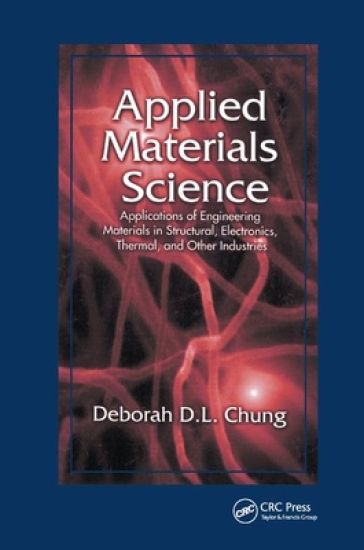
Materials are the foundation of technology. As such, most universities provide engineering undergraduates with the fundamental concepts of materials science, including crystal structures, imperfections, phase diagrams, materials processing, and materials properties. Few, however, offer the practical, applications-oriented background that their students need to succeed in industry. Applied Materials Science: Applications of Engineering Materials in Structural, Electronics, Thermal, and Other Industries fills that gap. From a cross-disciplinary perspective that reflects both the multifunctionality of many materials and the wide scope industrial needs, the author examines the practical applications of metal, ceramic, polymer, cement, carbon, and composite materials across a broad range of industries. The topics addressed include electronic packaging, smart materials, thermal management, nondestructive evaluation, and materials development. The text is clear, coherent, and tutorial in style, includes numerous up-to-date references, and provides background material in a series of appendices. Unique in its breadth of coverage of both materials and their applications, Applied Materials Science is both scientifically rich and technologically relevant. If you work or teach those that aspire to work in an engineering capacity, you will find no text or reference that better prepares its readers for real-world applications of engineering materials.
Supporting Young Children Experiencing Loss and Grief
Deborah Price; Clair Barnard
Routledge
2020
sidottu
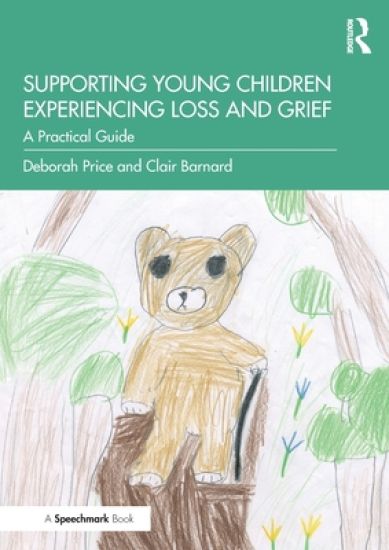
Supporting Young Children Experiencing Loss and Grief provides early years practitioners and Key Stage 1 teachers with practical advice to support children experiencing feelings related to change and loss. Using key case studies and interviews with children and adults, this important text uncovers best-practice techniques to help children talk about their feelings. Covering more than bereavement, it considers the loss children feel when they move home, undergo a change in routine, experience their parents' or carers' separation, move settings or lose contact with a close friend, nursery practitioner or teacher. Providing answers to the key question of how to support children who have feelings of loss and grief, Supporting Young Children Experiencing Loss and Grief is a must-read text for all those working with young children in caring environments who are looking to provide children with the tools they need to talk about their emotions.
Supporting Young Children Experiencing Loss and Grief
Deborah Price; Clair Barnard
Routledge
2020
nidottu
Supporting Young Children Experiencing Loss and Grief provides early years practitioners and Key Stage 1 teachers with practical advice to support children experiencing feelings related to change and loss. Using key case studies and interviews with children and adults, this important text uncovers best-practice techniques to help children talk about their feelings. Covering more than bereavement, it considers the loss children feel when they move home, undergo a change in routine, experience their parents' or carers' separation, move settings or lose contact with a close friend, nursery practitioner or teacher. Providing answers to the key question of how to support children who have feelings of loss and grief, Supporting Young Children Experiencing Loss and Grief is a must-read text for all those working with young children in caring environments who are looking to provide children with the tools they need to talk about their emotions.
Therapeutic Assessment with Children
Deborah J. Tharinger; Dale I. Rudin; Marita Frackowiak; Stephen E. Finn
TAYLOR FRANCIS LTD
2022
sidottu
Therapeutic Assessment with Children presents a ground-breaking paradigm of psychological assessment in which children and families collaborate with the psychologist assessor to understand persistent problems and find new ways of repairing their relationships and moving forward with their lives. This paradigm is systemic, client-centered, and culturally sensitive and is applicable to families from many different backgrounds who often feel misunderstood and disempowered by traditional assessment methods. In this book, the reader will find a step-by-step description of Therapeutic Assessment with Children (TA-C), with ample teaching examples to make each step come alive. Each chapter includes detailed transcripts of assessment sessions with Henry, a ten-year-old boy, and his parents as they progress through a Therapeutic Assessment and find new ways of appreciating each other and being together. The combination of didactic and clinical material will give even new clinicians a groundwork from which to begin to practice TA-C. The volume demonstrates how the core values of TA-C—collaboration, respect, humility, compassion, openness, and curiosity—can be embedded in psychological assessment with children and families.Therapeutic Assessment with Children will be invaluable for graduate assessment courses in clinical, counseling, and school psychology and for seasoned professionals wanting to learn the TA-C model.
Therapeutic Assessment with Children
Deborah J. Tharinger; Dale I. Rudin; Marita Frackowiak; Stephen E. Finn
TAYLOR FRANCIS LTD
2022
nidottu
Therapeutic Assessment with Children presents a ground-breaking paradigm of psychological assessment in which children and families collaborate with the psychologist assessor to understand persistent problems and find new ways of repairing their relationships and moving forward with their lives. This paradigm is systemic, client-centered, and culturally sensitive and is applicable to families from many different backgrounds who often feel misunderstood and disempowered by traditional assessment methods. In this book, the reader will find a step-by-step description of Therapeutic Assessment with Children (TA-C), with ample teaching examples to make each step come alive. Each chapter includes detailed transcripts of assessment sessions with Henry, a ten-year-old boy, and his parents as they progress through a Therapeutic Assessment and find new ways of appreciating each other and being together. The combination of didactic and clinical material will give even new clinicians a groundwork from which to begin to practice TA-C. The volume demonstrates how the core values of TA-C—collaboration, respect, humility, compassion, openness, and curiosity—can be embedded in psychological assessment with children and families.Therapeutic Assessment with Children will be invaluable for graduate assessment courses in clinical, counseling, and school psychology and for seasoned professionals wanting to learn the TA-C model.