Kirjojen hintavertailu. Mukana 11 608 446 kirjaa ja 12 kauppaa.

Kirjahaku

Etsi kirjoja tekijän nimen, kirjan nimen tai ISBN:n perusteella.

1000 tulosta hakusanalla Don Gutteridge

Don't Look Now

Don't Look Now

Ohio State University Press
2020
pokkari
Would that our memories were self-selecting. But often what we remember most, and most vividly, are those moments that caught us unawares: the things we wish we hadn't seen and have never been able to shake. This group of prominent American writers tries to come to grips with obsessive memory, the uncanny, and the bad dreams that accompany the moments in our lives when we wish we'd looked away, the places we wish we'd never been, and the scenes we wish we'd never stumbled upon. Featuring essays by Jericho Parms, XU XI, Jerald Walker, Jos Ordu a, Kristen Iversen, Nicole Walker, Mary Cappello, Lina Ferreira, Colleen O'Connor, Sonya Huber, Paul Crenshaw, Alyce Miller, Patrick Madden, Amelia Mar a de la Luz Montes, Yalie Kamara, Emily Heiden, Lee Martin, and David Lazar, this collection bares all. The authors invite readers into a dream that resurrects a departed mother each night, only to lose her again each morning upon waking; the post-mortem newspaper photos of a former student; kaleidoscope childhood memories of the mundane mixed up together with the traumatic; an unplanned pregnancy; a bullfight and a spouse's mortality; a teen witnessing the suicide of her father; a parent trying to shield his children from witnessing a violent death. What these writers are after, though, is not the melancholic/grotesque/violent moment itself, but the process of remembering-and trying to forget. They examine the way these memories take hold, resurface, and never leave, and what it means for a life lived long after these moments have passed. These scenes, slowly enfolding us like bad dreams or flying by like trains on elevated platforms, demand we reach some kind of accommodation with them-make peace or make sense or make amends. The one thing they insist with certainty is this they cannot-will not-be unseen.

Don't Pay for Your MBA

Don't Pay for Your MBA

Laurie Pickard

Amacom
2018
nidottu
Discover the secrets and tips to get the business education you need, the faster and cheaper way.The average debt load for graduates of the top business schools has now exceeded $100,000. For most young professionals, this means spending the first half of their career in the red and feeling pressure to take the first position offered to them so that they can start paying off their debt. However, it doesn’t have to be that way.Author and businesswoman Laurie Pickard discovered a way to get the business education she needed to land her dream job while avoiding the massive school loans that plague so many. In Don’t Pay for Your MBA, she shares all that she learned so that others can benefit as well. Pickard discovered that the same prestigious business schools that offer the MBAs so many covet also offer MOOCs (massive online open courses) for low or even no cost.Within these pages, you will learn how to:Define your goals and tailor a curriculum that is geared toward your dream jobMaster the language of businessBuild a strong networkChoose a concentration and deepen your expertiseShowcase your nontraditional education in a way that attracts companiesDon’t fall for the lies that pressure countless graduates every year into MBA programs and insurmountable debt. Self-directed online learning can fill gaps in your training, position you for promotions, and open new opportunities--at a fraction of the cost!
Don?t Trust the Abbot

Don?t Trust the Abbot

Jerome Kodell

Liturgical Press
2009
pokkari
One would expect an abbot to have words of wisdom for monks living in a monastery. But could his musings be relevant for those living in a complicated and often harried world? Yes, as readers will discover in this insightful collection. In these essays, from "Coldhearted Orthodoxy" to "God's DVD Library," from "The God of Hearsay" to "The Turtle on the Fencepost", readers will think in new ways about prayer and the Christian life, about faith and trust. Along the way, they will find in Jerome Kodell an abbot worthy of trust.
Don't Pay Any Attention to Him, He's 90% Water

Don't Pay Any Attention to Him, He's 90% Water

Johanna Drucker

Syracuse University Press
2005
nidottu
For more than a half-century, Boris Drucker has created a livelihood and a reputation as a cartoonist. His drawing style and humour has graced the pages of such diverse publications as the ""Saturday Evening Post"", ""Playboy"", ""Family Circle"", and ""The New Yorker"". Drucker's work is a record of the changing American culture, and he takes as his themes the dynamics of family life, battle of the sexes, and the generation gap, while supplying commentary on art, architecture, and fashion. This catalogue draws upon the extensive archives that Drucker donated to the Special Collections Research Center at Syracuse University Library. Documenting the full span of Drucker's career, the collection represents his work as a graphic artist, and includes his art school drawings, World War II sketchbooks from India, early advertising assignments, and many published and unpublished cartoons. His daughter, Johanna Drucker, offers an insightful essay by providing context to Drucker's work. She chronicles the scholarly culture that came to recognize the cartoonist's ability to make penetrating observations on politics, morals, manners, and social goals of society. Fans of his work are certain to treasure this collection. Original artwork for proposed cover for the New York, 1999. Ink and paint on paper, 18 X 14 in. Loaned by the artist.
Don't Let the Sun Step Over You

Don't Let the Sun Step Over You

Eva Tulene Watt

University of Arizona Press
2004
nidottu
When the Apache wars ended in the late nineteenth century, a harsh and harrowing time began for the Western Apache people. Living under the authority of nervous Indian agents, pitiless government-school officials, and menacing mounted police, they knew that resistance to American authority would be foolish. But some Apache families did resist in the most basic way they could: they resolved to endure. Although Apache history has inspired numerous works by non-Indian authors, Apache people themselves have been reluctant to comment at length on their own past. Eva Tulene Watt, born in 1913, now shares the story of her family from the time of the Apache wars to the modern era. Her narrative presents a view of history that differs fundamentally from conventional approaches, which have almost nothing to say about the daily lives of Apache men and women, their values and social practices, and the singular abilities that enabled them to survive. In a voice that is spare, factual, and unflinchingly direct, Mrs. Watt reveals how the Western Apaches carried on in the face of poverty, hardship, and disease. Her interpretation of her people's past is a diverse assemblage of recounted events, biographical sketches, and cultural descriptions that bring to life a vanished time and the men and women who lived it to the fullest. We share her and her family's travels and troubles. We learn how the Apache people struggled daily to find work, shelter, food, health, laughter, solace, and everything else that people in any community seek. Richly illustrated with more than 50 photographs, Don t Let the Sun Step Over You is a rare and remarkable book that affords a view of the past that few have seen before a wholly Apache view, unsettling yet uplifting, which weighs upon the mind and educates the heart.
Don't Let the Sun Step Over You

Don't Let the Sun Step Over You

University of Arizona Press
2004
sidottu
When the Apache wars ended in the late nineteenth century, a harsh and harrowing time began for the Western Apache people. Living under the authority of nervous Indian agents, pitiless government-school officials, and menacing mounted police, they knew that resistance to American authority would be foolish. But some Apache families did resist in the most basic way they could: they resolved to endure. Although Apache history has inspired numerous works by non-Indian authors, Apache people themselves have been reluctant to comment at length on their own past. Eva Tulene Watt, born in 1913, now shares the story of her family from the time of the Apache wars to the modern era. Her narrative presents a view of history that differs fundamentally from conventional approaches, which have almost nothing to say about the daily lives of Apache men and women, their values and social practices, and the singular abilities that enabled them to survive. In a voice that is spare, factual, and unflinchingly direct, Mrs. Watt reveals how the Western Apaches carried on in the face of poverty, hardship, and disease.Her interpretation of her people's past is a diverse assemblage of recounted events, biographical sketches, and cultural descriptions that bring to life a vanished time and the men and women who lived it to the fullest. We share her and her family's travels and troubles. We learn how the Apache people struggled daily to find work, shelter, food, health, laughter, solace, and everything else that people in any community seek. Richly illustrated with more than 50 photographs, Don t Let the Sun Step Over You is a rare and remarkable book that affords a view of the past that few have seen before a wholly Apache view, unsettling yet uplifting, which weighs upon the mind and educates the heart.
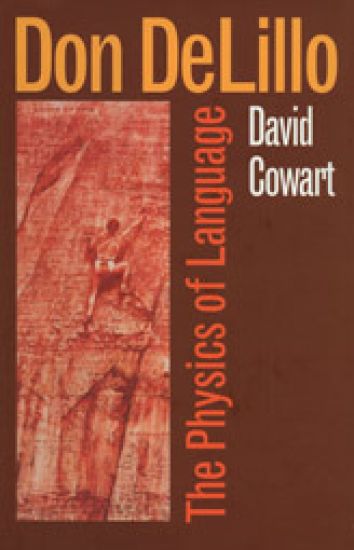
Don DeLillo

Don DeLillo

David Cowart

University of Georgia Press
2003
pokkari
Don DeLillo, author of twelve novels and winner of the National Book Award, the PEN/Faulkner Award, the William Dean Howells Medal, and the Jerusalem Prize, has begun to rival Thomas Pynchon as the definitive postmodern novelist. Always thought-provoking and occasionally controversial, DeLillo has become the voice of the bimillennial moment.Charting DeLillo's emergence as a contemporary novelist of major stature, David Cowart discusses each of DeLillo's twelve novels, including his most recent work, The Body Artist (2001). Rejecting the idea that DeLillo lacks affinities across the cultural spectrum, Cowart argues that DeLillo's work invites comparison with that of wide range of antecedents, including Dunbar, Whitman, Wittgenstein, Heidegger, Freud, Lacan, Derrida, Hemingway, Joyce, Rilke, and Eliot. At the same time, Cowart explores the ways in which DeLillo's art anticipates, parallels, and contests ideas that have become the common currency of poststructuralist theory. The major site of DeLillo's engagement with postmodernism, Cowart argues, is language, which DeLillo represents as more mysterious—numinous even—than current theory allows. For DeLillo, language remains what Cowart calls "the ground of all making."Don DeLillo: The Physics of Language is a provocative investigation of the most compelling issues of contemporary fiction.
Don Delillo

Don Delillo

Jesse Kavadlo

Peter Lang Publishing Inc
2003
sidottu
Don DeLillo - winner of the National Book Award, the William Dean Howells Medal, and the Jerusalem Prize - is one of the most important novelists of the late-twentieth and early-twenty-first centuries. While his work can be understood and taught as prescient and postmodern examples of millennial culture, this book argues that DeLillo's recent novels - White Noise, Libra, Mao II, Underworld, and The Body Artist - are more concerned with spiritual crisis. Although DeLillo's worlds are rife with rejection of belief and littered with faithfulness, estrangement, and desperation, his novels provide a balancing moral corrective against the conditions they describe. Speaking the vernacular of contemporary America, DeLillo explores the mysteries of what it means to be human.
Don't Send Me Flowers When I'm Dead

Don't Send Me Flowers When I'm Dead

Eva J. Salber

Duke University Press
1983
pokkari
"This extraordinary book is yet another example of a growing tradition-a literature of compelling and edifying oral history. Dr. Salber has worked for years in one of North Carolina's rural areas, and doing so, has come to know certain elderly people rather well. She has attended their physical complaints, but she has also wanted to know how they live, what they hope for, and what they worry about. She has asked them to speak on the record, to declare to others what occurs to them in the waning hours of their particular lives. The result is a series of American voices reminding us what it has been like for relatively vulnerable, if not defenseless, southern country folk in this rapidly disappearing 20th century. "They are men and women, blacks and whites, Dr. Salber's teachers. The North Carolinians in this book have no trouble giving us a good measure of open-eyed social comment, not to mention intelligent self-scrutiny and astute moral reflection. These pages glow with all that. . . . This book represents an intense and unyielding ethical as well as medical and literary commitment by a most impressive physician."-Robert Coles
Don't

Don't

Janet Halley

Duke University Press
1999
sidottu
In Don’t Janet E. Halley explains how the military's new anti-gay policy is fundamentally misdescribed by its common nickname, “Don't Ask/Don't Tell.” This ubiquitous phrase, she points out, implies that it discharges servicemembers not for who they are, but for what they do. It insinuates that, as long as military personnel keep quiet about their homosexual orientation and desist from “homosexual conduct,” no one will try to pry them out of their closets and all will be well. Not so, reveals Halley. In order to work through the steps by which the new law was ultimately drafted, she opens with a close reading of the 1986 Supreme Court sodomy case which served as the legal and rhetorical model for the policy revisions made in 1993. Halley also describes how the Clinton administration’s attempts to offer Congress an opportunity to regulate conduct-and not status-were flatly rejected and not included in the final statute. Using cultural and critical theory seldom applied to explain the law, Halley argues that, far from providing privacy and an assurance that servicemembers' careers will be ruined only if they engage in illegal conduct, the rule activates a culture of minute surveillance in which every member must strictly avoid using any gesture in an ever-evolving lexicon of “conduct that manifests a propensity.” In other words, not only homosexuals but all military personnel are placed in danger by the new policy. After challenging previous pro-gay arguments against the policy that have failed to expose its most devious and dangerous elements, Halley ends with a persuasive discussion about how it is both unconstitutional and, politically, an act of sustained bad faith.This knowledgeable and eye-opening analysis of one of the most important public policy debates of the 1990s will interest legal scholars, policymakers, activists, military historians and personnel, as well as citizens concerned about issues of discrimination.
Don't

Don't

Janet Halley

Duke University Press
1999
pokkari
In Don’t Janet E. Halley explains how the military's new anti-gay policy is fundamentally misdescribed by its common nickname, “Don't Ask/Don't Tell.” This ubiquitous phrase, she points out, implies that it discharges servicemembers not for who they are, but for what they do. It insinuates that, as long as military personnel keep quiet about their homosexual orientation and desist from “homosexual conduct,” no one will try to pry them out of their closets and all will be well. Not so, reveals Halley. In order to work through the steps by which the new law was ultimately drafted, she opens with a close reading of the 1986 Supreme Court sodomy case which served as the legal and rhetorical model for the policy revisions made in 1993. Halley also describes how the Clinton administration’s attempts to offer Congress an opportunity to regulate conduct-and not status-were flatly rejected and not included in the final statute. Using cultural and critical theory seldom applied to explain the law, Halley argues that, far from providing privacy and an assurance that servicemembers' careers will be ruined only if they engage in illegal conduct, the rule activates a culture of minute surveillance in which every member must strictly avoid using any gesture in an ever-evolving lexicon of “conduct that manifests a propensity.” In other words, not only homosexuals but all military personnel are placed in danger by the new policy. After challenging previous pro-gay arguments against the policy that have failed to expose its most devious and dangerous elements, Halley ends with a persuasive discussion about how it is both unconstitutional and, politically, an act of sustained bad faith.This knowledgeable and eye-opening analysis of one of the most important public policy debates of the 1990s will interest legal scholars, policymakers, activists, military historians and personnel, as well as citizens concerned about issues of discrimination.
Beachhead Don

Beachhead Don

Don Whitehead

Fordham University Press
2004
sidottu
Winner of two Pulitzer Prizes, Don Whitehead delivered battlefield dispatches that were classics of frontline reporting. One of the legendary reporters of World War II, Whitehead covered almost every important Allied invasion and campaign in Europe-from landings in Sicily, Salerno, and Anzio on the Italian front to Normandy, where he went ashore with the First Army Division. Writing for the Associated Press, he covered the brutal beachhead fighting and followed the Allied sweep to victory across France, Belgium, and Germany. Daring, valiant, and fearless, "Beachhead Don" was one of sixteen correspondents awarded the Medal of Freedom by Harry S Truman. Collected here for the first time, his dispatches are classics of war journalism. This book, long overdue, will help a new generation discover Whitehead's vivid, powerful, and unforgettable stories of men at war. John Romeiser provides a richly detailed introduction and background to the man, his work, and his world.
Don't Give Up, Don't Give In

Don't Give Up, Don't Give In

Curtis L. Ivery

Beaufort Books
2016
sidottu
Drawing from his own experiences of rural childhood poverty in Texas, to prominent roles as a government official, and now as an acclaimed educational leader, Dr. Ivery demonstrates his motivational gifts, as he seeks to inspire young men to live lives of purpose and integrity.A father and grandfather, Dr. Ivery's words are presented as a personal conversation with a young man, inviting him to stop for a moment and think about the path his life is taking, where he'd like it to lead, and how best to get there. Whether it's navigating the ups and downs of friendships and relationships; how to manage difficult emotions like frustration, anger or disappointment; or how to navigate challenges with self-confidence and control to achieve success, Dr. Ivery brings time-tested wisdom to the table. His voice is clear and direct, but more importantly—compassionate. He understands the struggles of young men and rises admirably to the challenge of communicating to their hearts.
Don't Let the Fire Go Out!

Don't Let the Fire Go Out!

Jean Carnahan

University of Missouri Press
2004
sidottu
To me the fire is a splendid metaphor for life. Sometimes raging and fervent, sometimes glowing softly and evenly, other times reduced to struggling embers. In her funeral oration, my daughter, Robin, told of her Dad starting a warm blaze in the fireplace on a cold morning. In his last words before leaving the house, he would admonish those remaining at home, 'Don't let the fire go out.' During the 2000 election, the phrase became the rallying cry for supporters wanting to revive what appeared to be a lost cause. Within days, a political campaign halted during a disastrous hour was transformed into a hopeful movement. The slogan Don't Let the Fire Go Out! became the guiding force for Jean Carnahan as she confronted life's challenges after her husband, son, and longtime friend were killed in a plane crash on October 16, 2000. The wife of Mel Carnahan, the well-known and highly respected Missouri governor and popular leader of the Democratic Party, Jean Carnahan made history when she agreed to serve in the Senate after Missouri voters elected her husband to the position posthumously.
Don't Forget the Accent Mark

Don't Forget the Accent Mark

David Sánchez

University of New Mexico Press
2011
nidottu
Raised in a Mexican home in an Anglo neighborhood, David Sánchez was fair-skinned and fluent in Spanish and English when he entered kindergarten. None of this should have had any influence on the career path he chose, but at certain moments it did. With the birth of the Chicano Movement and affirmative action, a different and sometimes disturbing significance became attached to his name. Sánchez's story chronicles his life and those moments.No matter how we transcend our origins, they remain part of our lives. This autobiography of an outstanding mathematician, dedicated to others, whose career included stints as a senior university and federal administrator, is also the story of a young man of mixed Mexican and American parentage."A straightforward, unpretentious memoir which speaks volumes about being at once American, Mexican-American, and a noted academic, and about that most American of pursuits, the quest for meritocracy."--David E. Stuart, University of New Mexico, author of The Guaymas Chronicles
Don Perkins

Don Perkins

Richard Melzer

UNIVERSITY OF NEW MEXICO PRESS
2023
pokkari
Don Perkins led a life as one of the most honored athletes in the history of the University of New Mexico and the Dallas Cowboys. But Perkins's life was far more complex and, at times, controversial. He experienced the traumas of racial discrimination, death, divorce, football-related injuries, and a never-ending search for his own identity. In his search, Perkins ventured into sportscasting, public speaking, community relations, big-rig trucking, government work, and even amateur theater, where he portrayed Frederick Douglass and other famous Black leaders. Through it all, he remained a kind, unassuming, charismatic man, universally admired by family members, friends, and millions of fans. Don Perkins: A Champion's Life is the final tribute he so richly deserves.
Don DeLillo's White Noise

Don DeLillo's White Noise

Leonard Orr

Continuum International Publishing Group Ltd.
2003
nidottu
A critical examination of "White Noise" by Don Delillo, this title forms part of a series that aims to provide accessible and informative introductions to some of the most popular, most acclaimed and most influential novels of recent years. A team of contemporary fiction scholars from both sides of the Atlantic has been assembled to give a thorough and readable analysis of each of the novels in question.The books in the series all follow the same five-part structure: a short biography of the novelist; a full-length study of the novel, drawing out the most important themes and ideas; a summary of how the novel was received when it was first published; a summary of the novel's standing today, including any film or television adaptations; and a helpful list of discussion questions, suggestions for further reading, and useful websites.
Don DeLillo

Don DeLillo

Continuum Publishing Corporation
2011
nidottu
This is a collection of original, stimulating interpretations of key texts by Don DeLillo, designed for students and edited and written by leading scholars in the field. Offering a comprehensive and up-to-date analysis of the post-1990 fiction of one of America's most respected writers and cultural critics, this volume focuses on three of Don DeLillo's most recent novels - "Mao II", "Underworld", and "Falling Man" - that span pivotal moments in recent history: the end of the Cold War, the millennium, and 9/11. Bringing together original essays by scholars working in art history, urban studies, economic theory, ethnic studies alongside contemporary literature and American studies approaches, investigates DeLillo's portrait of turn-of-the-century America as it confronts globalism and terrorism. With an eye always on the impact that shifts in historical sensibility produce on aesthetic sensibility, the volume considers the role that DeLillo sees narrative playing in a world defined by digital images and provides the first extended analysis of how much faith he has in fiction's ability to convey the trauma of September 11, an event commonly conceived as resistant to all forms of artistic expression. This series offers up-to-date guides to the recent work of major contemporary North American authors. Written by leading scholars in the field, each book presents a range of original interpretations of three key texts published since 1990, showing how the same novel may be interpreted in a number of different ways. These informative, accessible volumes will appeal to advance undergraduate and postgraduate students, facilitating discussion and supporting close analysis of the most important contemporary American and Canadian fiction.
Don DeLillo

Don DeLillo

Continuum Publishing Corporation
2011
sidottu
A wide-ranging study of the post-1990 fiction of one of America's most respected writers and cultural critics, this volume focuses on three of Don DeLillo's most recent novelsGCoMao II, Underworld, and Falling ManGCothat span pivotal moments in recent history: the end of the Cold War, the millennium, and 9/11. Consisting of original essays written by scholars whose interdisciplinary approachesGCodrawn from art history and religious history, ethnic studies and urban studies, popular culture and political scienceGCoshed new light on DeLillo's work, it investigates DeLillo's portrait of turn-of-the-century America as the nation confronts the defining phenomena of globalism and terrorism. With an eye always on the impact that shifts in historical sensibility produce on aesthetic sensibility, the volume also considers the role that DeLillo sees narrative playing in a world dominated by digital images and provides the first extended analysis of how much faith he has in fiction's ability to convey the trauma of September 11, an event commonly conceived as resistant to all forms of artistic expression.
Don DeLillo's Underworld

Don DeLillo's Underworld

John Duvall

Continuum International Publishing Group Ltd.
2002
nidottu
This is part of a new series of guides to contemporary novels. The aim of the series is to give readers accessible and informative introductions to some of the most popular, most acclaimed and most influential novels of recent years - from ‘The Remains of the Day' to ‘White Teeth'. A team of contemporary fiction scholars from both sides of the Atlantic has been assembled to provide a thorough and readable analysis of each of the novels in question.