Kirjojen hintavertailu. Mukana 11 342 296 kirjaa ja 12 kauppaa.

Kirjahaku

Etsi kirjoja tekijän nimen, kirjan nimen tai ISBN:n perusteella.

1000 tulosta hakusanalla Edward F Foley

Angst og tvang

Angst og tvang

Leif Edward Ottesen Kennair; Trond F. Aarre

Stiftelsen psykiatrisk opplysning
2011
nidottu
Angst- og tvangslidelser er tidkrevende, energikrevende og svekker livskvaliteten til de som lider av dem. Før kunne vi ikke tilby helbredende behandling, og mange har derfor gått med sin angst eller tvang i flere tiår. Når det nå finnes effektive behandlinger, er det like viktig å informere behandlere som pasienter om disse. Generelt har kunnskapen økt blant myndigheter, fagfolk - og ikke minst pasienter. Men fremdeles er det for få behandlere som tilbyr effektiv behandling for disse lidelsene. Derfor er det viktig å spre kunnskap til både pasienter og fagfolk. Målet vårt er fremdeles å bidra til mest mulig effektiv behandling, med både medisiner og psykoterapi.

Lyndall Urwick, Management Pioneer

Lyndall Urwick, Management Pioneer

Edward Brech; Andrew Thomson; John F. Wilson

Oxford University Press
2010
sidottu
Lyndall Urwick was the dominant figure in British management between the late 1920s and the early 1960s. His writings and his passion in pursuit of management as a scientific and systematic activity rather than the rule-of-thumb approach to decision-making all too prevalent in Britain exercised a huge influence on management at the time; and ultimately management as we know it today. Urwick was greatly affected by his experience of the First World War and at Rowntree's. He went on to become Director of the International Management Institute between 1928-33, before forming a very influential management consultancy, Urwick Orr and Partners, which he chaired for the rest of his career. He was also deeply involved with almost all the institutional developments in British management up to the 1960s, including the Management Research Groups, the Institute of Industrial Administration, the British Institute of Management, the Administrative Staff College, and the management education side of the Anglo-American Council on Productivity. In pursuit of what he called his 'mission at large', he gave hundreds of talks in his lucid and charismatic style, many of which were published as articles or booklets. These talks were not only in Britain but in Australia after his emigration there in 1961, in America, where he became the best-recognized foreign exponent of management, and in a range of countries around the world. But he will probably be best remembered for his writings, not only on organization theory, where he is recognized as a great synthesizer and leader in the classical school, but on a wide range of other topics, including the history of management, leadership, marketing, and management education and development. Truly he was a man of many parts.
Sociology In Government

Sociology In Government

Olaf F. Larson; Edward O. Moe; Julie N. Zimmerman; Yvonne B. Oliver

Routledge
2019
sidottu
"This bibliography is the first major output of the project ""Sociology in the U.S. Department of Agriculture: the Galpin-Taylor years, 1 9 1 9- 1 95 3."" This project is being conducted under a cooperative agreement between the Agriculture and Rural Economy Division, Economic Research Service, U.S. Depa rtment of Agriculture and the Department of Rural Sociology, New York State College of Agriculture and Life Sciences at Cornell University. We are grateful to both organiza tions for providing funds. Financial support has also been provided by the Cornell University Agricultural Experiment Station and by a grant from the budget for the Rural Sociological Society's 50th Anniversary Committee. The Farm Foundation awarded funds to support meetings of an Advisory Panel of former key members of the staff of the Division of Farm Popu lation and Rural Life. The American Sociological Association, the Rural Sociological Society, and the Cornell University Agricultural Experiment Station provided funds to assist in covering publication costs. "
Sociology In Government

Sociology In Government

Olaf F. Larson; Edward O. Moe; Julie N. Zimmerman; Yvonne B. Oliver

Routledge
2021
nidottu
Between 1919 and 1953, the Division of Farm Population and Rural Life in the USDA's Bureau of Agricultural Economics promoted sociological research on rural society and its relationships with the larger US society. In retrospect, these studies offer a historical record of rural America in a period of great change. This volume includes more than 150
Molluscan Communities of the Florida Keys and Adjacent Areas

Molluscan Communities of the Florida Keys and Adjacent Areas

Edward J. Petuch; Robert F. Myers

CRC Press
2020
nidottu
Molluscan Communities of the Florida Keys and Adjacent Areas: Their Ecology and Biodiversity is the first comprehensive overview of the ecology and biodiversity of the phylum Mollusca in the area of Florida extending from the Dry Tortugas and Ten Thousand Islands in the west to Palm Beach in the east. The book provides detailed analyses of molluscan faunas found in 20 different ecosystems, emphasizing the marine environments of the Florida Keys archipelago and its extensive coral reef tracts. Full-page color illustrations portray living animals, unique Keys environments, underwater ecosystems, and satellite images. More than 1,200 species of macromollusks—in 86 gastropod families and 54 bivalve families—are recorded from the study area, with color plates illustrating over 550 of the region’s most ecologically important species. For the first time in any book on the malacology of the Florida Keys area, the 20 marine ecosystems and their associated molluscan assemblages are arranged by the CMECS (Coastal Marine Ecological Classification Standard) system. This system emphasizes the hierarchical relationships determined by substrate type, bathymetry, and water chemistry. Along with complete species lists for every molluscan assemblage, this handy guide introduces ten newly-discovered gastropods, including new species in the families Muricidae, Buccinidae, Nassariidae, Naticidae, Turritellidae, and Olividae. Two new bivalves in the families Pectinidae and Arcidae are also described in a special systematic appendix. This richly illustrated book is written for the professional scientific audience interested in mollusks, marine ecology, evolution, and taxonomy as well as malacologists, naturalists, and shell collectors. It is also an ideal synoptic field guide, showing where individual species of mollusks can be found and within which ecosystems they occur.
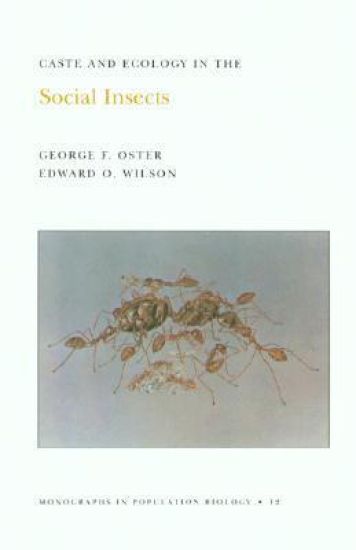
Caste and Ecology in the Social Insects

Caste and Ecology in the Social Insects

George F. Oster; Edward O. Wilson

Princeton University Press
1979
pokkari
In this pathbreaking and far-reaching work George Oster and Edward Wilson provide the first fully developed theory of caste evolution among the social insects. Furthermore, in studying the effects of natural selection in generally increasing the insects' ergonomic efficiency, they go beyond the concentration of previous researchers on the physiological mechanisms of the insects and turn our attention instead to the scale and efficiency of the insects' division of labor. Recognizing that the efficiency of the insect colony is based on a complex fitting of the division of labor to many simultaneous needs, including those imposed by the distribution of resources and enemies around the nest, Professors Oster and Wilson are able to construct a series of mathematical models to characterize the agents of natural selection that promote particular caste systems. The social insects play a key role in the subject of sociobiology because their social organization is so rigid and can be related to genetic evolution. Because of this important consideration, the authors' work has consequences not only for entomology but also for general evolutionary theory.
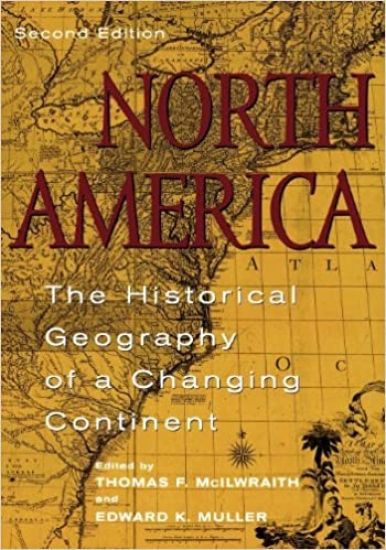
North America

North America

Thomas F. McIlwraith; Edward K. Muller

Rowman Littlefield Publishers
2001
nidottu
This classic text retains the superb scholarship of the first edition in a thoroughly revised and accessibly written new edition. With both new and updated essays by distinguished American and Canadian authors, the book provides a comprehensive historical overview of the formation and growth of North American regions from European exploration and colonization to the second half of the twentieth century. Collectively the contributors explore the key themes of acquisition of geographical knowledge, cultural transfer and acculturation, frontier expansion, spatial organization of society, resource exploitation, regional and national integration, and landscape change. With six new chapters, redrawn maps, a new introduction that explores scholarly trends in historical geography since publication of the first edition, and a new final chapter guiding students to the basic sources for historical geographic enquiry, North America will be an indispensable text in historical geography courses.
Nested Ecology

Nested Ecology

Edward T. Wimberley; John F. Haught

Johns Hopkins University Press
2009
sidottu
Nested Ecology provides a pragmatic and functional approach to realizing a sustainable environmental ethic. Edward T. Wimberley asserts that a practical ecological ethic must focus on human decision making within the context of larger social and environmental systems. Think of a set of mixing bowls, in which smaller bowls sit within larger ones. Wimberley sees the world in much the same way, with personal ecologies embedded in social ecologies that in turn are nested within natural ecologies. Wimberley urges a complete reconceptualization of the human place in the ecological hierarchy. Going beyond the physical realms in which people live and interact, he extends the concept of ecology to spirituality and the "ecology of the unknown." In doing so, Wimberley defines a new environmental philosophy and a new ecological ethic.
Nested Ecology

Nested Ecology

Edward T. Wimberley; John F. Haught

Johns Hopkins University Press
2009
pokkari
Nested Ecology provides a pragmatic and functional approach to realizing a sustainable environmental ethic. Edward T. Wimberley asserts that a practical ecological ethic must focus on human decision making within the context of larger social and environmental systems. Think of a set of mixing bowls, in which smaller bowls sit within larger ones. Wimberley sees the world in much the same way, with personal ecologies embedded in social ecologies that in turn are nested within natural ecologies. Wimberley urges a complete reconceptualization of the human place in the ecological hierarchy. Going beyond the physical realms in which people live and interact, he extends the concept of ecology to spirituality and the "ecology of the unknown." In doing so, Wimberley defines a new environmental philosophy and a new ecological ethic.
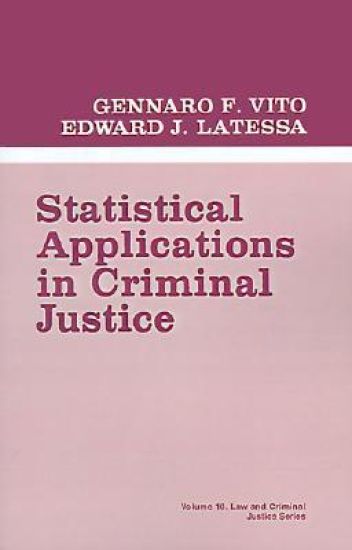
Statistical Applications in Criminal Justice

Statistical Applications in Criminal Justice

Gennaro F. Vito; Edward J. Latessa

SAGE Publications Inc
1989
sidottu
Statistical Applications in Criminal Justice introduces basic statistical concepts in a "cookbook" approach to guide math-scared students to an understanding of the utility and value of statistical analysis. Using examples drawn entirely from law and criminal justice research, the authors provide a user-friendly text for undergraduate and statistically naive graduate students of criminal justice. Vito and Latessa begin with an introduction to simple mathematical notation and proceed into a discussion of the theoretical bases of statistics--with particular attention paid to probability, sampling, and hypothesis testing. Once the student has developed a firm mastery of these basic tools, the authors present some basic statistical techniques commonly used in criminal justice research--t-tests, correlations, simple regression, ANOVA, and measures of association. Sample problems are provided to assist the student step-by-step through the application of these techniques. Uniquely written for criminal justice students, this book would be an appropriate supplement to accompany a longer research methods or statistics text. In addition, professionals who wish to brush up on their skills would find its self-teaching features useful.
Statistical Applications in Criminal Justice

Statistical Applications in Criminal Justice

Gennaro F. Vito; Edward J. Latessa

SAGE Publications Inc
1989
nidottu
Statistical Applications in Criminal Justice introduces basic statistical concepts in a "cookbook" approach to guide math-scared students to an understanding of the utility and value of statistical analysis. Using examples drawn entirely from law and criminal justice research, the authors provide a user-friendly text for undergraduate and statistically naive graduate students of criminal justice. Vito and Latessa begin with an introduction to simple mathematical notation and proceed into a discussion of the theoretical bases of statistics--with particular attention paid to probability, sampling, and hypothesis testing. Once the student has developed a firm mastery of these basic tools, the authors present some basic statistical techniques commonly used in criminal justice research--t-tests, correlations, simple regression, ANOVA, and measures of association. Sample problems are provided to assist the student step-by-step through the application of these techniques. Uniquely written for criminal justice students, this book would be an appropriate supplement to accompany a longer research methods or statistics text. In addition, professionals who wish to brush up on their skills would find its self-teaching features useful.
All for the King's Shilling

All for the King's Shilling

Edward J. Coss; John F. Guilmartin

University of Oklahoma Press
2015
nidottu
The British troops who fought so successfully under the Duke of Wellington during his Peninsular Campaign against Napoleon have long been branded by the duke's own words - ""scum of the earth"" - and assumed to have been society's ne'er-do-wells or criminals who enlisted to escape justice. Now Edward J. Coss shows to the contrary that most of these redcoats were respectable laborers and tradesmen and that it was mainly their working-class status that prompted the duke's derision. Driven into the army by unemployment in the wake of Britain's industrial revolution, they confronted wartime hardship with ethical values and became formidable soldiers in the bargainThese men depended on the king's shilling for survival, yet pay was erratic and provisions were scant. Fed worse even than sixteenth-century Spanish galley slaves, they often marched for days without adequate food; and if during the campaign they did steal from Portuguese and Spanish civilians, the theft was attributable not to any criminal leanings but to hunger and the paltry rations provided by the army.Coss draws on a comprehensive database on British soldiers as well as first-person accounts of Peninsular War participants to offer a better understanding of their backgrounds and daily lives. He describes how these neglected and abused soldiers came to rely increasingly on the emotional and physical support of comrades and developed their own moral and behavioral code. Their cohesiveness, Coss argues, was a major factor in their legendary triumphs over Napoleon's battle-hardened troops.The first work to closely examine the social composition of Wellington's rank and file through the lens of military psychology, All for the King's Shilling transcends the Napoleonic battlefield to help explain the motivation and behavior of all soldiers under the stress of combat.
The A to Z of Human Rights and Humanitarian Organizations

The A to Z of Human Rights and Humanitarian Organizations

Robert F. Gorman; Edward S. Mihalkanin

Scarecrow Press
2009
nidottu
While the idea of human rights and humanitarian assistance has ancient roots—evidence can be seen in such examples as the Ten Commandments, the Bhagavad Gita, and the teachings of Confucius and Socrates—it wasn't until the 1800s that the first modern humanitarian and human rights organizations came to be. The 19th century saw the beginning of the abolitionist movement, the forming of a variety of women's suffrage organizations, the formation and consolidation of national labor unions, and the founding of the Red Cross. This was followed by the inextricably intertwined story of war, persecution, violence, and the growth of human rights and humanitarian organizations in the 20th century. Bearing witness to some of the most horrific and blatant violations of human dignity, the 20th century also beheld the first sustained global efforts to promote human rights at the international level. The A to Z of Human Rights and Humanitarian Organizations follows major developments in the arena of human rights, including the emergence of terrorism and international responses to it; the establishment of an international criminal court; the evolution of regional human rights bodies in Africa, Europe, and Latin America; and the proliferation of new non-governmental organizations and foundations dedicated to the promotion of human rights. This is accomplished through a chronology, an introduction, appendixes, photographs, a bibliography, and hundreds of cross-referenced dictionary entries covering many of the key treaties, agreements, and definitions of human rights concepts; important humanitarian organizations, whether private, governmental, national, or international; and significant persons and events. This realistic assessment of the advances in protection of human rights and the major difficulties still facing them is an excellent tool for students, practitioners, and libraries.
When Schools Compete

When Schools Compete

Edward B. Fiske; Helen F. Ladd

Brookings Institution
2000
nidottu
"In 1989 New Zealand embarked on what is arguably the most thorough and dramatic transformation of a compulsory state education system ever undertaken by an industrialized country. Under a plan known as Tomorrow's Schools this island nation of 3.8 million people abolished its national Department of Education and turned control of its nearly 2,700 primary and secondary schools over to locally elected boards of trustees. Virtually overnight, one of the world's most tightly controlled public education systems became one of the most decentralized. Two years later, in 1991, with a new government in power, New Zealand enacted further reforms that introduced full parental choice of schools and encouraged the development of a competitive culture in the state education system. Debate rages in the United States about whether similar reforms would improve the performance of the country's troubled public school system. Judgments about the potential benefits of these ideas, as well as the general relevance of economic models to educational systems, tap into deeply held values, and discussion in the U.S. has been hampered by the lack of practical experience with them. The extended and widespread experiences of New Zealand, whose school system functions much like our own, provide U.S. policy makers with a wide range of appropriate insights and implications to consider as they gauge the merits of bold education reform. When Schools Compete is the first book to provide detailed quantitative and qualitative analysis of the New Zealand experiment. Combining the perceptive observations of a prominent education journalist and the analytical skills of an academic policy analyst, this book will help supporters and critics of market-based education reforms better anticipate the potential long-term consequences of applying ideas of market competition to the delivery of education."
When Schools Compete

When Schools Compete

Edward B. Fiske; Helen F. Ladd

Brookings Institution
2000
sidottu
"In 1989 New Zealand embarked on what is arguably the most thorough and dramatic transformation of a compulsory state education system ever undertaken by an industrialized country. Under a plan known as Tomorrow's Schools this island nation of 3.8 million people abolished its national Department of Education and turned control of its nearly 2,700 primary and secondary schools over to locally elected boards of trustees. Virtually overnight, one of the world's most tightly controlled public education systems became one of the most decentralized. Two years later, in 1991, with a new government in power, New Zealand enacted further reforms that introduced full parental choice of schools and encouraged the development of a competitive culture in the state education system. Debate rages in the United States about whether similar reforms would improve the performance of the country's troubled public school system. Judgments about the potential benefits of these ideas, as well as the general relevance of economic models to educational systems, tap into deeply held values, and discussion in the U.S. has been hampered by the lack of practical experience with them. The extended and widespread experiences of New Zealand, whose school system functions much like our own, provide U.S. policy makers with a wide range of appropriate insights and implications to consider as they gauge the merits of bold education reform. When Schools Compete is the first book to provide detailed quantitative and qualitative analysis of the New Zealand experiment. Combining the perceptive observations of a prominent education journalist and the analytical skills of an academic policy analyst, this book will help supporters and critics of market-based education reforms better anticipate the potential long-term consequences of applying ideas of market competition to the delivery of education."
Elusive Equity

Elusive Equity

Edward B. Fiske; Helen F. Ladd

Brookings Institution
2004
sidottu
"Elusive Equity chronicles South Africa's efforts to fashion a racially equitable state education system from the ashes of apartheid. The policymakers who came to power with Nelson Mandela in 1994 inherited and education system designed to further the racist goals of apartheid. Their massive challenge was to transform that system, which lavished human and financial resources on schools serving white students while systematically starving those serving African, coloured, and Indian learners, into one that would offer quality education to all persons, regardless of their race.Edward Fiske and Helen Ladd describe and evaluate the strategies that South Africa pursued in its quest for racial equity. They draw on previously unpublished data, interviews with key officials, and visits to dozens of schools to describe the changes made in school finance, teacher assignment policies, governance, curriculum, higher education, and other areas. They conclude that the country has made remarkable progress toward equity in the sense of equal treatment of persons of all races. For several reasons, however, the country has been far less successful in promoting equal educational opportunity or educational adequacy. Thus equity has remained elusive.The book is unique in combining the perceptive observations of a skilled education journalist with the analytical skills of an academic policy expert. Richly textured descriptions of how South Africa's education reforms have affected schools at the grass-roots level are combined with careful analysis of enrollment, governance, and budget data at the school, provincial, and national levels. The result is a compelling and comprehensive study of South Africa's first decade of education reform in the post-apartheid period."
Elusive Equity

Elusive Equity

Edward B. Fiske; Helen F. Ladd

Brookings Institution
2004
nidottu
Elusive Equity chronicles South Africa's efforts to fashion a racially equitable state education system from the ashes of apartheid. The policymakers who came to power with Nelson Mandela in 1994 inherited and education system designed to further the racist goals of apartheid. Their massive challenge was to transform that system, which lavished human and financial resources on schools serving white students while systematically starving those serving African, coloured, and Indian learners, into one that would offer quality education to all persons, regardless of their race.Edward Fiske and Helen Ladd describe and evaluate the strategies that South Africa pursued in its quest for racial equity. They draw on previously unpublished data, interviews with key officials, and visits to dozens of schools to describe the changes made in school finance, teacher assignment policies, governance, curriculum, higher education, and other areas. They conclude that the country has made remarkable progress toward equity in the sense of equal treatment of persons of all races. For several reasons, however, the country has been far less successful in promoting equal educational opportunity or educational adequacy. Thus equity has remained elusive.The book is unique in combining the perceptive observations of a skilled education journalist with the analytical skills of an academic policy expert. Richly textured descriptions of how South Africa's education reforms have affected schools at the grass-roots level are combined with careful analysis of enrollment, governance, and budget data at the school, provincial, and national levels. The result is a compelling and comprehensive study of South Africa's first decade of education reform in the post-apartheid period.