Suckiel offers readers a new perspective on James. For those interested in the philosophy of religion in general, and James's views in particular, this work will be of considerable interest.
In Update on the Descent, Ellen Hinsey draws on personal experience and family tragedy to forge a masterful meditation on the extremes of the human condition. A poet who situates herself in a landscape steeped in the tragic history and artistic splendor of Europe, Hinsey suffuses her work with the urgency of historical memory. Alternating lyrics, aphorism, anti-lyrics, and philosophical notebooks, she explores the nature of terror, war, tyranny, and violence as well as reconciliation and renewal of the human spirit. Called by Carolyn Forche, "A true poet, whose sense of line, cadence, and tonality is unsurpassed among poets of her generation," Hinsey brilliantly contributes to the tradition of poetry as a witness to history. "Ellen Hinsey has manifested a range of concern and a sensitivity to larger human issues which is the sine qua non of authentic poetry. She has found a way to be both truthful and original, to make poems which are absorbing and enlightening, historically pertinent and philosophically urgent. . . . To our great good fortune they succeed in their unlikely ambitions." --C. K. Williams "With this book, Ellen Hinsey confirms her status as one of the most profound and intense poets of her generation. Update on the Descent is arranged in an extremely sophisticated pattern, alternating Dantean visions, contemporary accounts of torture, and thoughts on our human condition which crystallize into formulae possessing all the depth and darkness of Heraclitus. It has the touch of strangeness indispensable for any great poetry, but its moral message is straightforward and full of inner force." --Tomas Venclova, author of Winter Dialogue and The Junction: Selected Poems "In this meditation on the vita activa, Hinsey journeys poetically and philosophically through the ruins of what it means to be human in the twenty-first century. Human nature is this lyric art's first-person, and its utterance is protean. Throughout we hear the cris de coeur of our time, from a scaffold of collective memory artfully constructed by one of our most compelling poets. Hinsey's sense of line, cadence, and tonality is remarkable, and she deserves a serious and attentive readership in this country." --Carolyn Forche
Suckiel offers readers a new perspective on James. For those interested in the philosophy of religion in general, and James's views in particular, this work will be of considerable interest.
This work has been selected by scholars as being culturally important, and is part of the knowledge base of civilization as we know it. This work was reproduced from the original artifact, and remains as true to the original work as possible. Therefore, you will see the original copyright references, library stamps (as most of these works have been housed in our most important libraries around the world), and other notations in the work.This work is in the public domain in the United States of America, and possibly other nations. Within the United States, you may freely copy and distribute this work, as no entity (individual or corporate) has a copyright on the body of the work.As a reproduction of a historical artifact, this work may contain missing or blurred pages, poor pictures, errant marks, etc. Scholars believe, and we concur, that this work is important enough to be preserved, reproduced, and made generally available to the public. We appreciate your support of the preservation process, and thank you for being an important part of keeping this knowledge alive and relevant.
One common explanation for the failure of democracy to take root in Russia more quickly and more thoroughly than it has points to inherited cultural values that predispose Russian citizens to favor an autocratic type of governance. Ellen Carnaghan takes aim at this cultural-determinist thesis in her study of Russian attitudes, based on intensive interviews with more than sixty citizens from all walks of life and a variety of political orientations. What she finds is that, rather than being influenced by an antidemocratic and anticapitalist ideology, these ordinary citizens view the economic and political system in Russia today very critically because it simply does not function well for them in meeting their everyday needs. They long for order not because they eschew democracy and free markets in any fundamental way, but because they experience them currently as chaotic and unpredictable, leading to constant frustration. As a result, there is reason to be optimistic about further progress in democratization: it depends on improving the functioning of existing institutions, not transforming deep-rooted cultural norms. In the Conclusion, Carnaghan applies her argument to elucidating the reasons why Russians have responded favorably to what Westerners see as moves in an antidemocratic direction by Vladimir Putin's government.
One common explanation for the failure of democracy to take root in Russia more quickly and more thoroughly than it has points to inherited cultural values that predispose Russian citizens to favor an autocratic type of governance. Ellen Carnaghan takes aim at this cultural-determinist thesis in her study of Russian attitudes, based on intensive interviews with more than sixty citizens from all walks of life and a variety of political orientations. What she finds is that, rather than being influenced by an antidemocratic and anticapitalist ideology, these ordinary citizens view the economic and political system in Russia today very critically because it simply does not function well for them in meeting their everyday needs. They long for order not because they eschew democracy and free markets in any fundamental way, but because they experience them currently as chaotic and unpredictable, leading to constant frustration. As a result, there is reason to be optimistic about further progress in democratization: it depends on improving the functioning of existing institutions, not transforming deep-rooted cultural norms. In the Conclusion, Carnaghan applies her argument to elucidating the reasons why Russians have responded favorably to what Westerners see as moves in an antidemocratic direction by Vladimir Putin’s government.
Ellen Sapega’s study documents artistic responses to images of the Portuguese nation promoted by Portugal’s Office of State Propaganda under António de Oliveira Salazar. Combining archival research with current theories informing the areas of memory studies, visual culture, women’s autobiography, and postcolonial studies, the author follows the trajectory of three well-known cultural figures working in Portugal and its colonies during the 1930s and 1940s. The book begins with an analysis of official Salazarist culture as manifested in two state-sponsored commemorative events: the 1938 contest to discover the “Most Portuguese Village in Portugal” and the 1940 Exposition of the Portuguese-Speaking World. While these events fulfilled their role as state propaganda, presenting a patriotic and unambiguous view of Portugal’s past and present, other cultural projects of the day pointed to contradictions inherent in the nation’s social fabric. In their responses to the challenging conditions faced by writers and artists during this period and the government’s relentless promotion of an increasingly conservative and traditionalist image of Portugal, José de Almada Negreiros, Irene Lisboa, and Baltasar Lopes subtly proposed revisions and alternatives to official views of Portuguese experience.These authors questioned and rewrote the metaphors of collective Portuguese and Lusophone identity employed by the ideologues of Salazar’s Estado Novo regime to ensure and administer the consent of the national populace. It is evident, today, that their efforts resulted in the creation of vital, enduring texts and cultural artifacts.
Ellen Sapega’s study documents artistic responses to images of the Portuguese nation promoted by Portugal’s Office of State Propaganda under António de Oliveira Salazar. Combining archival research with current theories informing the areas of memory studies, visual culture, women’s autobiography, and postcolonial studies, the author follows the trajectory of three well-known cultural figures working in Portugal and its colonies during the 1930s and 1940s. The book begins with an analysis of official Salazarist culture as manifested in two state-sponsored commemorative events: the 1938 contest to discover the “Most Portuguese Village in Portugal” and the 1940 Exposition of the Portuguese-Speaking World. While these events fulfilled their role as state propaganda, presenting a patriotic and unambiguous view of Portugal’s past and present, other cultural projects of the day pointed to contradictions inherent in the nation’s social fabric. In their responses to the challenging conditions faced by writers and artists during this period and the government’s relentless promotion of an increasingly conservative and traditionalist image of Portugal, José de Almada Negreiros, Irene Lisboa, and Baltasar Lopes subtly proposed revisions and alternatives to official views of Portuguese experience.These authors questioned and rewrote the metaphors of collective Portuguese and Lusophone identity employed by the ideologues of Salazar’s Estado Novo regime to ensure and administer the consent of the national populace. It is evident, today, that their efforts resulted in the creation of vital, enduring texts and cultural artifacts.
International Security and Arms Control examines the impact of arms control and nuclear strategy issues on the relationship between the United States and the Soviet Union. Based on a conference held at Emory University, this book's contributors include former Presidents Ford and Carter, as well as Henry Kissinger, Anatoly Dobrynin, and other current or former important American and foreign government officials and academic experts. They explore the interaction between regional conflicts and superpower policies, how new technologies affect the status quo, and the past record and future prospects for negotiations. Including an examination of U.S. allies and non-nuclear nations, this important and timely new work will appeal to the specialist or layman interested in this critical issue.
This book carefully examines the motives, objectives and strategies of the major players in the global lending game: creditor governments, bank regulatory agencies, the International Monetary Fund (IMF), and the Bank for International Settlements (BIS). After outlining the interests of the debtor governments, the authors discuss the behavior of the international banks and the IMF. They offer an incisive analysis of the creditors' strategies for coping with the situation and conclude with suggested alternative solutions for resolving the crisis and for ensuring that the future will not bring more threatening debt problems.
This book portrays how participatory inquiry in a critical hermeneutic tradition moves the research process for social scientists from an epistemological place to an ontological event. Part One offers a critique of the technical, intellectual, and advocacy research enterprises and provides the reader a segue to a philosophical and historical discussion of critical hermeneutics. The discussion, in Part Two, lays the foundation for an ontologically-based field research protocol. In Part Three, the questions of research topic, research categories, questions and conversations, selection of participants, entree, background of researcher, data collection and analysis, and learning and community are discussed from a theoretical and applied perspective with examples drawn from selected field projects. This book draws on works by Ricoeur, Gadamer, Habermas, R. Bernstein and C.A. Bowers. The research conversation based in the notion of play marks the researcher and research participants as co-progenitors of the data which when transcribed becomes a text for analysis. This text has the possibility of opening reconfigured worlds in our organizations and communities. The notions of text, narrative, and mimesis are explicated in terms of data analysis with implications for action and social policy. An ontological understanding of language is at the heart of participatory inquiry in a critical hermeneutic tradition. It is through this understanding that we are endowed with the responsibility for creating just institutions.
This book exposes the degree of rage today's teenagers feel and how our nation's schools are failing them, not just academically, but in just about every way imaginable. Hall and Handley propose practical techniques, procedures, and core values that can make high school a safe learning environment once again. Drawing from their many years of experience administering a high school that provided a safe and fulfilling learning environment, they introduce readers to teaching techniques, administrative policies, and design ideas that encourage students to speak out, express their indomitable idealism, and feel welcome and accepted.The learning process works best when students are supported, encouraged, and accepted. The authors tell the story of a special school—Mountain View—that upholds a strong belief in the value of each student through smaller classes, experiential learning, and an awareness of community in and out of school. This book describes the journeys of students who were angry, unsure, or struggling with various labels of learning disabilities, as well as students who were successful in the traditional educational system but sought more opportunities for creativity and self-expression. Their stories are told in the context of how to build and run a school that is keenly attuned to teenagers' needs. Twenty Questions for Parents help to pinpoint issues and difficulties children may be struggling with. Also included is a bibliography of helpful sources and suggested readings. In keeping with the efforts of the Bill and Melinda Gates Foundation to support small high schools around the United States, this book provides a blueprint for parents, school districts, and communities.
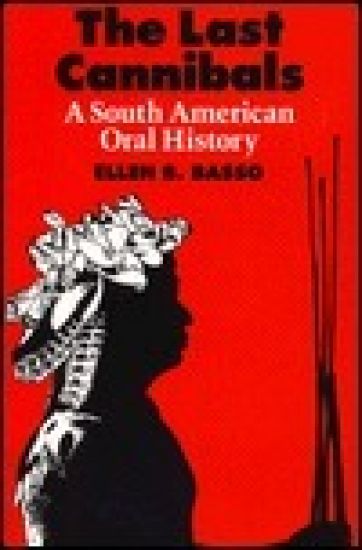
An especially comprehensive study of Brazilian Amazonian Indian history, The Last Cannibals is the first attempt to understand, through indigenous discourse, the emergence of Upper Xingú society. Drawing on oral documents recorded directly from the native language, Ellen Basso transcribes and analyzes nine traditional Kalapalo stories to offer important insights into Kalapalo historical knowledge and the performance of historical narratives within their nonliterate society.This engaging book challenges the familiar view of biography as a strictly Western literary form. Of special interest are biographies of powerful warriors whose actions led to the emergence of a more recent social order based on restrained behaviors from an earlier time when people were said to be fierce and violent.From these stories, Basso explores how the Kalapalo remember and understand their past and what specific linguistic, psychological, and ideological materials they employ to construct their historical consciousness. Her book will be important reading in anthropology, folklore, linguistics, and South American studies.
Will Clayton left his mark on world commerce through the development of Anderson, Clayton & Co., the world's largest cotton marketing firm; he made an equally important impress on international economics and politics through special and vital service in the State Department during three crucial years of world history. The politico-economic philosophy that Will Clayton developed as cotton merchant to the world provided the basis for his distinguished service as Assistant Secretary of State and as Undersecretary of State for Economic Affairs and influenced the course of international events far more than is generally realized. "When the full story of the genesis of the Marshall Plan is told, it will become evident that the inspiration was Will Clayton's; which means he will have a firm niche in history, for this, if for nothing else," wrote John Dalgleish in Everybody's Weekly (London) in 1947. Dalgleish's opinion is supported by documentary evidence and the statements of others whose views are given in this short biography. The principal events in Will Clayton's background that shaped his character and developed his personal philosophy are here portrayed by one who had a unique opportunity to view her subject at close range during the main periods of his careers in government and business. In this brief biography, his eldest daughter, Ellen Clayton Garwood, intimately but objectively traces the evolution of Clayton's realistic internationalism. The effectiveness of his governmental service in a fast-shrinking world had its roots in his early struggles in international cotton marketing. His marked ability to gain the support of Congress for government proposals-extension of the Reciprocal Trade Agreements Act, the British Loan, the Marshall Plan-is foreshadowed in his triumphant defense of his own business before a Senate investigating committee in the early twentieth century, and by his championship of Southern delivery on futures contracts on the New York Cotton Exchange. But the story is not all one of success. Will Clayton wanted more than anything to see his country assume membership in an International Trade Organization, for the charter of which he had worked so hard. His disappointment here-partially offset by the success of the General Agreement on Tariffs and Trade-finds counterpart throughout these pages in the obstacles he had to overcome in his development as a human being. And human being he emerges-son, husband, and father; businessman and statesman-whose measure, with its shadow and its highlights, should serve as strong encouragement for those who would serve their country and their world with equally intelligent devotion. This book, therefore, brings a note of definite optimism. Will Clayton started out as a poor boy among the bewildered people of the reconstructed South. He emerged a statesman who drew out of still worse confusion in the world a program of hopeful and uplifting clarity. His own words, in a cable from Geneva, August 15, 1947, describe the challenge he met-a challenge that recurs in different form today: "A great opportunity to help Europe lift herself permanently out of a morass of bilateralism and restrictionism has floated in to us on a floodtide of destruction. If we fail to seize this opportunity now it will probably never return except possibly after a third World War."
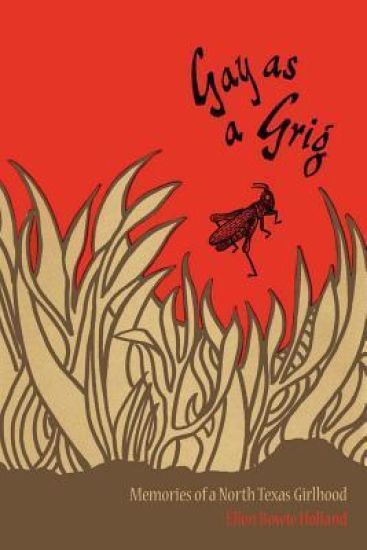
Ellen Bowie Holland grew up in a house at Weatherford, Texas, that had the "motherly look of a large and gallant hen hovering over too many chicks" and that was inhabited by a "lively, warm-hearted family." This book is her record of the "whole world of little things which enriched young lives" in her small town.Blessed with a discerning and sympathetic eye, she had much happiness to remember and record, and she employs a charming combination of nostalgia and comedy as she brings to life again these bygone days. Her childhood experiences are illuminated by the wisdom of maturity, and the whole is infused with a deft humor, developed through her skilled use of fantasy and through her ability to laugh at the pretensions of the Victorian life she saw.Holland's book also is memorable as a record of her unforgettable parents:"Mother was born on Columbus Day, and she and Columbus had a lot in common. She liked to discover things for herself and nothing pleased her more than to nicely finish off a job that she had been told could not be done" . . . "She wasn't geared for solitary musing. Like a salmon at spawning time she liked to swim upstream against rushing waters and bash into boulders" . . . "Mother's pattern of neatness reached out in all directions" . . . "Mother, sheathed like an armadillo" . . ."Father, silk-hatted, or swallow-tailed, distinguished almost beyond belief" . . . "I never heard him raise his voice or laugh aloud" . . . "Father was not witty but he had an absolutely delightful sense of nonsense. His humor came smoothly upon the scene" . . .Throughout the book the reader shares the author's consciousness of the vast distance between her own childhood and that of the grandchildren to whom the book is dedicated-a distance created by rapid technological change."From my window I look over an air-conditioned city and I see jets streaking across the sky and occasionally I hear one of them breaking the sound barrier" . . . "When I really want to awe myself I think about the fact that only one generation ago Mother saw friendly or marauding Indians roaming these same acres" . . . "Those of my age have come into a span of years where living conditions of all kinds have changed so abruptly, where obsolescence sets in so rapidly, that there is little in common between our infancy and our present."
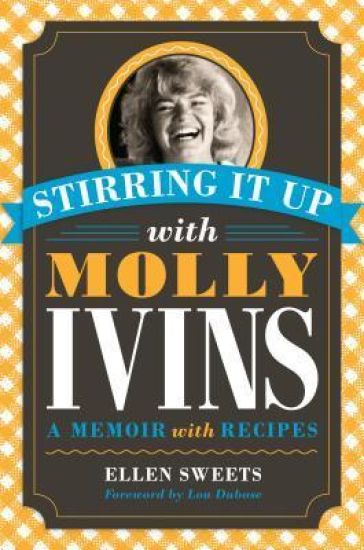
You probably knew Molly Ivins as an unabashed civil libertarian who used her rapier wit and good ole Texas horse sense to excoriate political figures she deemed unworthy of our trust and respect. But did you also know that Molly was one helluva cook? And we're not just talking chili and chicken-fried steak, either. Molly Ivins honed her culinary skills on visits to France-often returning with perfected techniques for saumon en papillote or delectable clafouti aux cerises. Friends who had the privilege of sharing Molly's table got not only a heaping helping of her insights into the political shenanigans of the day, but also a mouth-watering meal, prepared from scratch with the finest ingredients and assembled with the same meticulous attention to detail that Molly devoted to skewering a political recalcitrant.In Stirring It Up with Molly Ivins, her longtime friend, fellow reporter, and frequent sous-chef Ellen Sweets takes us into the kitchen with Molly and introduces us to the private woman behind the public figure. She serves up her own and others' favorite stories about Ivins as she recalls the fabulous meals they shared, complete with recipes for thirty-five of Molly's signature dishes. These stories reveal a woman who was even more fascinating and complex than the "professional Texan" she enjoyed playing in public. Friends who ate with Molly knew a cultured woman who was a fluent French speaker, voracious reader, rugged outdoors aficionado, music lover, loyal and loving friend, and surrogate mom to many of her friends' children, as well as to her super-spoiled poodle. They also came to revere the courageous woman who refused to let cancer stop her from doing what she wanted, when she wanted. This is the Molly you'll be delighted to meet in Stirring It Up with Molly Ivins.
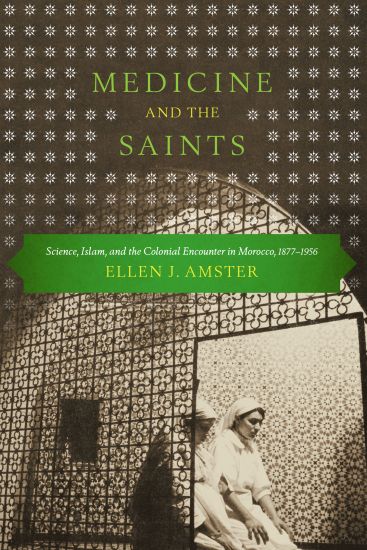
The colonial encounter between France and Morocco took place not only in the political realm but also in the realm of medicine. Because the body politic and the physical body are intimately linked, French efforts to colonize Morocco took place in and through the body. Starting from this original premise, Medicine and the Saints traces a history of colonial embodiment in Morocco through a series of medical encounters between the Islamic sultanate of Morocco and the Republic of France from 1877 to 1956.Drawing on a wealth of primary sources in both French and Arabic, Ellen Amster investigates the positivist ambitions of French colonial doctors, sociologists, philologists, and historians; the social history of the encounters and transformations occasioned by French medical interventions; and the ways in which Moroccan nationalists ultimately appropriated a French model of modernity to invent the independent nation-state. Each chapter of the book addresses a different problem in the history of medicine: international espionage and a doctor’s murder; disease and revolt in Moroccan cities; a battle for authority between doctors and Muslim midwives; and the search for national identity in the welfare state. This research reveals how Moroccans ingested and digested French science and used it to create a nationalist movement and Islamist politics, and to understand disease and health. In the colonial encounter, the Muslim body became a seat of subjectivity, the place from which individuals contested and redefined the political.
"Dissanayake argues that art was central to human evolutionary adaptation and that the aesthetic faculty is a basic psychological component of every human being. In her view, art is intimately linked to the origins of religious practices and to ceremonies of birth, death, transition, and transcendence. Drawing on her years in Sri Lanka, Nigeria, and Papua New Guinea, she gives examples of painting, song, dance, and drama as behaviors that enable participants to grasp and reinforce what is important to their cognitive world."—Publishers Weekly"Homo Aestheticus offers a wealth of original and critical thinking. It will inform and irritate specialist, student, and lay reader alike."—American AnthropologistA thoughtful, elegant, and provocative analysis of aesthetic behavior in the development of our species—one that acknowledges its roots in the work of prior thinkers while opening new vistas for those yet to come. If you're reading just one book on art anthropology this year, make it hers."—Anthropology and Humanism
Former high desert rancher Ellen Waterston writes of a wild, essentially roadless, starkly beautiful part of the American West. Following the recently created 750-mile Oregon Desert Trail, she embarks on a creative and inquisitive exploration, introducing readers to a "trusting, naïve, earnest, stubbly, grumpy old man of a desert" that is grappling with issues at the forefront of national, if not global, concern: public land use, grazing rights for livestock, protection of sacred Indigenous ground, water rights, and protection of habitat for endangered species.Blending travel writing with memoir and history, Waterston profiles a wide range of people who call the high desert home and offers fresh perspectives on nationally reported regional conflicts such as the Malheur Wildlife Refuge occupation. Walking the High Desert invites readers—wherever they may be—to consider their own beliefs, identities, and surroundings through the optic of the high desert of southeastern Oregon.
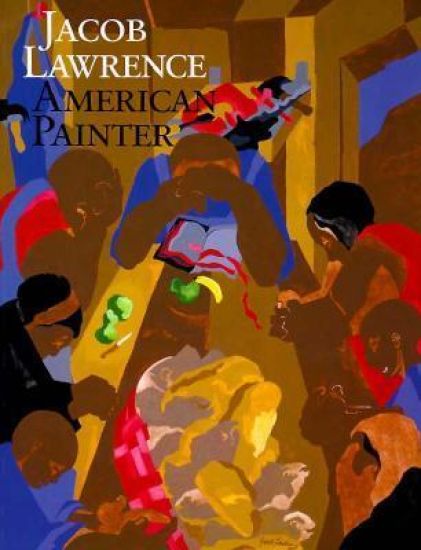
For nearly five decades, Jacob Lawrence has been widely regarded as America’s most important black artist. His work is known throughout the world for its depiction of the black American experience from the Civil War to the civil rights movement and beyond. But Lawrence’s paintings are more than a chronicle of this history. He has created a uniquely American vision that affirms the place of all individuals in our society and honors the struggle for independence. Jacob Lawrence has given us powerful, lasting images which, when seen as a whole, constitute a narrative of epic proportions.This major book celebrates the creative genius of Jacob Lawrence. It is the most comprehensive survey ever made of his work and traces his developments as an artists as well as places his work within the tradition of American modernism. In this context it examines for the first time works he has completed since 1974, when he was honored with a retrospective at the Whitney Museum of Art.The paintings reproduced here illustrate a broad array of moods and subjects. Representing each of the artist’s significant periods, they range from fond portraits of Harlem street life in the 1930s to angry depictions of racial injustice during the 1960s, from images of people working in harmony to bleak depictions of civilization shattered by nuclear war. Yet together they reveal an essential unity in Lawrence’s work. His distinctive cubist-expressionist style and his basic humanist credo remain intact throughout fifty years of changing artistic fashion.The artist’s life encompasses a broad spectrum of experience that formed the character of three American generations. He was raised in the Depression, and his first art training was through social programs under FDR’s New Deal. In the late 1930s he was employed as a painter by the WPA, then served in the Coast Guard in World War II.From the start of his career, he achieved success and recognition in the competitive world of New York artists and galleries, all the time maintaining a powerful representational style that went counter to prevailing forces of Abstract Expressionism.Ellen Wheat examines Jacob Lawrence’s life as an integrated whole. She discusses the cultural and political grounding of 1930s Harlem, effects on artists of the Depression and New Deal, art in New York, all in relations to Lawrence’s long-standing commitment to depicting the history of black Americans and to the narrative series format he adopted to convey it. Among other subjects, he has dealt with Toussaint L’Ouverture, Harriet Tubman, the community of Harlem, the American South, Nigeria, civil rights, and John Brown. Wheat also documents and analyzes developments in the artist’s technique and style in relation to the work of some of his teachers and peers (Charles Alston, Claude McKay, Romare Bearden) and those who influenced his work (Orozco, Albers, Grosz, Giotto).Throughout these pages Lawrence speaks of his work and development in the first person. The author draws on her numerous interviews with the artist since 1982, as well as other sources. This chronological overview of Lawrence’s career is enhanced by over 150 illustrations of his work, 85 in color, and a generous selection of photos that place him in his studio, in the art world at large, and among his friends and colleagues.