Kirjojen hintavertailu. Mukana 12 016 292 kirjaa ja 12 kauppaa.

Kirjahaku

Etsi kirjoja tekijän nimen, kirjan nimen tai ISBN:n perusteella.

1000 tulosta hakusanalla Emilio Comba

ICTs and Innovation for Didactics of Social Sciences

ICTs and Innovation for Didactics of Social Sciences

Emilio José Delgado-Algarra

Business Science Reference
2020
sidottu
The advancement of technology in today's world has led to the progression of several professional fields. This includes the classroom, as teachers have begun using new technological strategies to increase student involvement and motivation. ICT innovation including virtual reality and blended learning methods has changed the scope of classroom environments across the globe; however, significant research is lacking in this area.ICTs and Innovation for Didactics of Social Sciences is a fundamental reference focused on didactics of social sciences and ICTs including issues related to innovation, resources, and strategies for teachers that can link to the transformation of social sciences teaching and learning as well as societal transformation. While highlighting topics such as blended learning, augmented reality, and virtual classrooms, this book is ideally designed for researchers, administrators, educators, practitioners, and students interested in understanding current relevant ICT resources and innovative strategies for the didactic of social sciences and didactic possibilities in relation to concrete conceptual contents, resolution of problems, planning, decision making, development of social skills, attention, and motivation promoting a necessary technological literacy.
ICTs and Innovation for Didactics of Social Sciences

ICTs and Innovation for Didactics of Social Sciences

Emilio José Delgado-Algarra

Business Science Reference
2020
nidottu
The advancement of technology in today's world has led to the progression of several professional fields. This includes the classroom, as teachers have begun using new technological strategies to increase student involvement and motivation. ICT innovation including virtual reality and blended learning methods has changed the scope of classroom environments across the globe; however, significant research is lacking in this area.ICTs and Innovation for Didactics of Social Sciences is a fundamental reference focused on didactics of social sciences and ICTs including issues related to innovation, resources, and strategies for teachers that can link to the transformation of social sciences teaching and learning as well as societal transformation. While highlighting topics such as blended learning, augmented reality, and virtual classrooms, this book is ideally designed for researchers, administrators, educators, practitioners, and students interested in understanding current relevant ICT resources and innovative strategies for the didactic of social sciences and didactic possibilities in relation to concrete conceptual contents, resolution of problems, planning, decision making, development of social skills, attention, and motivation promoting a necessary technological literacy.
Ispanyol Lezzetleri

Ispanyol Lezzetleri

Emilio Rodríguez

Emilio Rodriguez
2023
pokkari
"İspanyol Lezzetleri: Başlangı lar İ in Yemek Kitabı" sizi doğrudan İspanyol mutfağının b y l d nyasına davet ediyor. Tutku ve kolaylıkla, bu kitap sizi İspanyol lezzetlerinin keyfine varmaya ve hen z mutfakta yeniyken bile harika İspanyol tarifleri denemeye teşvik ediyor.Emilio Rodr guez, lezzet tutkunu ve İspanyol mutfağının hayranı olarak, bu mutfak ser veninde sizinle birlikte olacak. Anlaşılır talimatlar ve pratik ipu ları ile, paella, tapas ve daha fazlasını kendi mutfağınızda başarıyla hazırlamanızı sağlayacak.Eğer mutfakta yeniyseniz veya sadece İspanyol mutfağını keşfetmeye meraklıysanız, "İspanyol Lezzetleri" size eşsiz bir lezzet yolculuğu sunuyor. Farklı tatlar ve aromalarla dolu bu mutfağın tadını ıkarmaya hazır olun.Bu kitap, İspanyol mutfağının eşitli yemeklerini ve tekniklerini size sunarak, kahvaltıdan tatlılara kadar her ğ nde farklı lezzetleri deneyimlemenizi sağlayacak. Bu kitapla mutfağınız, İspanyol lezzetleriyle dolu bir mutfağa d n şecek ve siz de bu lezzetleri kendi mutfağınızda rahat a yaratabileceksiniz.
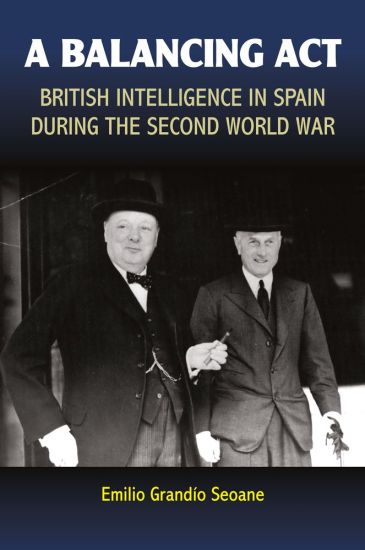
A Balancing Act

A Balancing Act

Emilio Grandio Seoane

Sussex Academic Press
2017
sidottu
This book reveals the development, strategy and extraordinary success of Britains secret services in Francos Spain during the Second World War. The main claim of this study is that British pressure, exercised above all through their intelligence services, led Franco to distance himself from the Axis cause and eventually embrace that of the Allies. Starting from a virtually non-existent base, the British rapidly built up a complex intelligence network in Spain that stretched from Corunna to Barcelona and from Bilbao to Gibraltar. As Spain was a non-belligerent, spy networks including those of the Germans, Italians, Portuguese and British proliferated in the Iberian Peninsula. Double-agents abounded within these networks; each one knew what the others were up to. The British exploited this two-way traffic to let Franco know that if he did not accede to their demands, they would back a restoration of the Bourbon monarchy under Don Juan. This pressure culminated in the meeting of 1943 between Franco and the British Ambassador, Sir Samuel Hoare, at the dictators country retreat in Galicia, the British underlining their purpose by flying warplanes close by the estate. Following this meeting, Franco almost immediately began to move away from the Axis powers and towards the Allies. The British swiftly dismantled their intelligence networks given that they had achieved their aim. Francos expulsion of the German naval forces from Spanish ports and the denazification of the regime explains the benevolent attitude of the Allies towards the Spanish dictatorship after the war. Throughout this whole process, the British secret service, as this extensively researched study uncovers, played a crucial role.
A Balancing Act

A Balancing Act

Emilio Grandio Seoane

Sussex Academic Press
2018
nidottu
This book reveals the development, strategy and extraordinary success of Britains secret services in Francos Spain during the Second World War. The main claim of this study is that British pressure, exercised above all through their intelligence services, led Franco to distance himself from the Axis cause and eventually embrace that of the Allies. Starting from a virtually non-existent base, the British rapidly built up a complex intelligence network in Spain that stretched from Corunna to Barcelona and from Bilbao to Gibraltar. As Spain was a non-belligerent, spy networks including those of the Germans, Italians, Portuguese and British proliferated in the Iberian Peninsula. Double-agents abounded within these networks; each one knew what the others were up to. The British exploited this two-way traffic to let Franco know that if he did not accede to their demands, they would back a restoration of the Bourbon monarchy under Don Juan. This pressure culminated in the meeting of 1943 between Franco and the British Ambassador, Sir Samuel Hoare, at the dictators country retreat in Galicia, the British underlining their purpose by flying warplanes close by the estate. Following this meeting, Franco almost immediately began to move away from the Axis powers and towards the Allies. The British swiftly dismantled their intelligence networks given that they had achieved their aim. Francos expulsion of the German naval forces from Spanish ports and the denazification of the regime explains the benevolent attitude of the Allies towards the Spanish dictatorship after the war. Throughout this whole process, the British secret service, as this extensively researched study uncovers, played a crucial role.
Diario De Dario

Diario De Dario

Emilio Perez

Lulu.com
2007
nidottu
Dario Lage, un inseguro y pusilanime oficinista cincuenton, languidece en soledad mientras arrastra penosamente su existencia gris por el Madrid de principios de los ochenta. Su proyecto familiar es un fracaso en toda regla: un matrimonio desgraciado y un hijo perdedor le estan llevando poco a poco a la debacle emocional. Sumido en un estado de progresivo deterioro animico, buscara, no obstante, una salida digna, algun remedio a su angustiosa situacion, y se refugia para ello en la terapia ingenua de un diario. Simultaneamente, en el mundo real que le rodea, ese mundo para el hostil y del que huye con pavor, una historia tenebrosa se desarrolla amenazante, una espiral de droga y de violencia que el ignora y que, cual espada de Damocles, planea amenazante sobre su cabeza. Instalado en su politica de avestruz, Dario Lage no es consciente de que, dia a dia, la tragedia llama sin cesar a la puerta de su cuarto golpeando al mismo ritmo desbocado que agoniza su patetico diario.
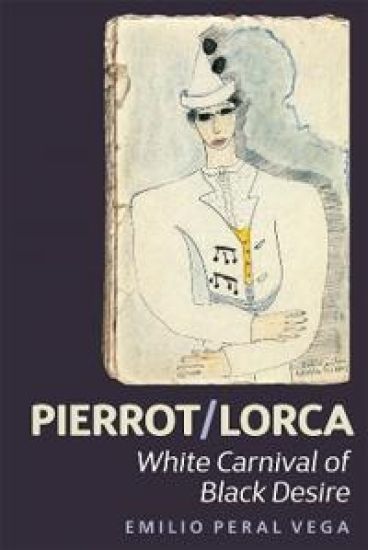
Pierrot/Lorca

Pierrot/Lorca

Emilio Peral Vega

Tamesis Books
2015
sidottu
Peral Vega explores the importance of Pierrot as a symbol of failure in matters of love in García Lorca's imagery and his literary and personal life. Academic research has paid little attention to the importance of the figure of Pierrot in García Lorca's imagery and, above all, in his literary and personal life. An image of marginality and failure, Pierrot was soon taken over by Spanish intellectuals of the early twentieth century as a representation of the bohemian spirit and, corresponding to his marginal status in matters of love, as a symbol of furtive desires experienced by those whose sexuality had to remain silent. Consequently, García Lorca, as Pierrot, needs a mask to cover his identity, facing perpetual failure in his relentless pursuit of the other. As can be seen already from the poems, prose and plays of his youth,García Lorca outlines in Pierrot his innermost self, a trend that will continue in the aforementioned series of drawings and some of his major pieces, such as El público. Pierrot / Lorca: White Carnival of Black Desire aims, from a multidisciplinary perspective, to open new critical readings of both García Lorca's work and some episodes of his life; as with, for example, his relationship with Salvador Dalí, which can be presented in theatrical terms: Harlequin (Dalí) / Pierrot (García Lorca). Emilio Peral Vega is Associate Professor of Spanish Literature at the Universidad Complutense de Madrid.
The Girl Behind the Glass

The Girl Behind the Glass

Emilio Iasiello

Tumbleweed Books
2020
pokkari
A few crazy nights of bar hoppingThe ashes of a long lost friendAnd Mike still has to go to work the next day Legal clerk Mike comes to a realization that his life of sex, drugs, and rock n roll are coming to an end. His job is just a paycheck, and the endless nights of shots and sex must end. It all comes to a head when a long lost friend's ashes turn up on his doorstep, along with the unfinished manuscript they were working on together.With one last kick at the can, Mike takes his friend out on the town for one last run at binge drinking and bar hopping. Along the way, he gains self-realization. And with the end of the self-discovery journey, he decides to take that dangerous step into the unknown. His future is not yet written. And he wants to change the narrative.One crazy night after another brings Mike full circle. And everywhere he looks, there is a girl behind the glass smiling at him.
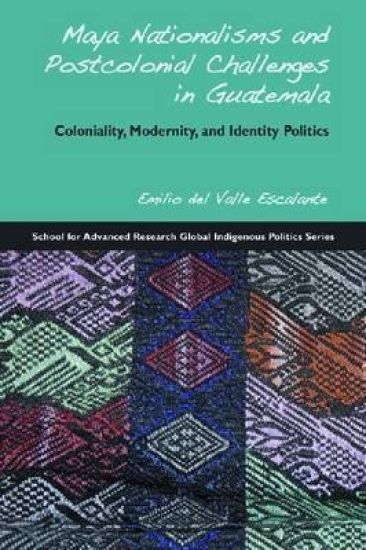
Maya Nationalisms and Postcolonial Challenges in Guatemala

Maya Nationalisms and Postcolonial Challenges in Guatemala

Emilio Del Valle Escalante

School of American Research Press,U.S.
2009
nidottu
In the past few decades, indigenous movements throughout the Americas have become the cornerstone of popular mobilizations. These movements have made their mark in diverse institutional and political landscapes. Although this prominence has been considered a recent phenomenon, it is but the latest example of the ongoing creativity of indigenous peoples in their efforts to achieve civil rights and legal recognition as differentiated cultural entities. Their struggle has changed the makeup of Latin American nation-states to the point that these can no longer be conceived in conventional terms, that is, as culturally and linguistically homogenous. This book focuses on the emergence and political-cultural implications of Guatemala's Maya movement. It explores how, since the 1970s, indigenous peoples have been challenging established, hegemonic narratives of modernity, history, nation, and cultural identity as these relate to the indigenous world. For the most part, these narratives have been fabricated by non-indigenous writers who have had the power not only to produce and spread knowledge but also to speak for and about the Maya world. Contemporary Maya narratives promote nationalisms based on the reaffirmation of Maya ethnicity and languages that constitute what it means to be Maya in present-day society, as well as political-cultural projects oriented toward the future.
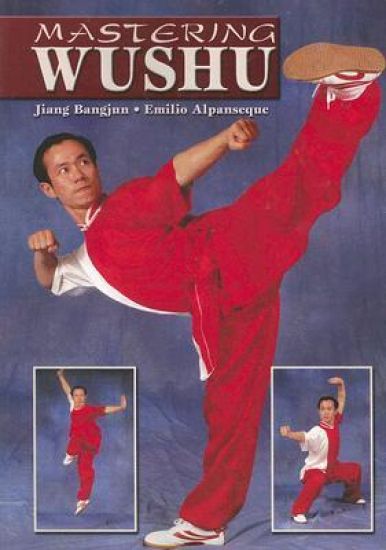
Mastering Wushu

Mastering Wushu

Emilio Alpanseque; Jiang Bangjun

Empire Books
2007
nidottu
Breathtaking to watch and exciting to perform, Wushu has become a global phenomenon with tremendous crossover appeal. Finally, a well-produced comprehensive instructional book that encompasses all fundamental skills, training principles, and terminology of Wushu is available in a convenient single volume in the English language. Whether you are a beginner, an experienced competitor, or a coach, this book is a must for those in search of a solid source of information compiled by one of the most sought-after champions and masters of all time, Jiang Bangjun, and Emilio Alpanseque, a highly- accomplished and well-known international Wushu authority from Madrid, Spain. The topics covered are: History, Stretching and Flexibility Exercises, Hand Forms and Hand Techniques, Stances and Footwork, Basic Combinations, Balance Techniques, Jumping Techniques, Tumbling Techniques, and a Basic Compulsory Routine. Fully illustrated with more than 400 photographs, detailed step-by-step descriptions, and special tips, MASTERING WUSHU is your best first step into Wushu excellence
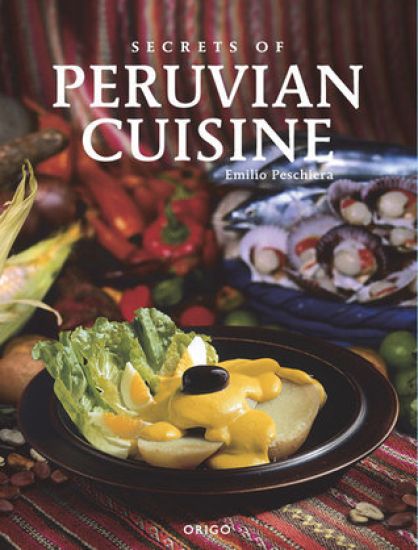
Secrets of Peruvian Cuisine

Secrets of Peruvian Cuisine

Emilio Peschiera

Board and Bench Publishing
2010
nidottu
Author and master chef Emilio Peschiera takes readers on a tour through the history and evolution of Peruvian cuisine, from its beginnings with the Incas through the latest international influences, including a review of some basic techniques for preparing recipes with the secrets of true Peruvian flavor. More than 100 delicious recipes--from appetizers, entrees, desserts, and cocktails--are included along with tips and suggestions on pairing food and wine.
Autobiography of the [Undead]

Autobiography of the [Undead]

Emilio Carrero

Calamari Press
2025
pokkari
Autobiography of the Undead] is an autobiographical mosaic, a memoir reconstructed from a mirrored myriad of textual fragments from other books, movies, songs, articles, web pages, inner thoughts, personal conversations/correspondence, etc. all parsed and deconstructed, then reformulated and collaged in a new light. For has not every sentence already been said? How vital is context and subtext, the framed phrasing coming before and after? Does Marguerite Duras own the four words "I want to write"? Can no one else besides Ocean Vuong write, "I want to make my words deliberate"? Anyone can play three chords or a sequence of tones, but what about the rhythm, tempo, key, timbre, dynamics, harmonics or accent? Or the instrument the notes are played on, the natural-born tone of voice?With thoughtful reverence, Emilio Carrero appropriates and reshapes these fragments of sea glass and twists and spins them into a collaged kaleidoscope unique to his own "sad, brown Puerto Rican life." Does he not have the right to sing along with Gillian Welch when she croons, "I want to do right, but not right now"? In Before Midnight, when Ethan Hawke says, "that is a good line, I want to use that in a book someday," are the screenwriters the only ones that can take such lines and reuse them in books? Is not every book an ever-morphing Ship of Theseus, riding on the shoulders of those that came before us?With the dexterity of a surgeon stitching together a new Frankenstein from hundreds (704, in fact) of others, dead and undead (for, as Carrero writes (quoting Marquis Bey), "once the work is out of their hands, the author dies a little death"), the author compiles this cacophony of sound bytes into a holographic chorus of voices, a quantum superposition of tethered threads woven into a textured tapestry that blurs the boundaries of fiction/nonfiction, appropriation, authorship and literary license, reviving the words into a new life form all it's own.This is an autobiography from/in/as the graveyard], and it will unsettle you. As we all need to be, for such an unsettling brings us to each other; it brings us to the graveyard-who knew it was so, so full of (our) love, of our yearnings. We can live there, in the graveyard, in a non-possessive undead coalition. Emilio Carrero gives us an exquisite meditation on gritty love, honest togetherness, and a forceful consideration of what it means to live with, for, and as the un]dead.-Marquis BeyMaybe the only part of a life that can be written honestly is the crisis. Fearlessly grounded in the aspirations and cringe of a single life, Autobiography of the Undead] nevertheless burns through the narrative and ontological expectations of both living and writing. Carrero lights a citational fever through a vast archive of texts, voices, and moments, and, like Clarice Lispector, creates a fleeting flame that lets us see an eternal presence. As long as we live, the crisis is us.-Farid Matuk