Kirjojen hintavertailu. Mukana 11 244 527 kirjaa ja 12 kauppaa.

Kirjahaku

Etsi kirjoja tekijän nimen, kirjan nimen tai ISBN:n perusteella.

1000 tulosta hakusanalla F.J. Doherty

Human Body Temperature

Human Body Temperature

Y. Houdas; E.F.J. Ring

Kluwer Academic/Plenum Publishers
1982
sidottu
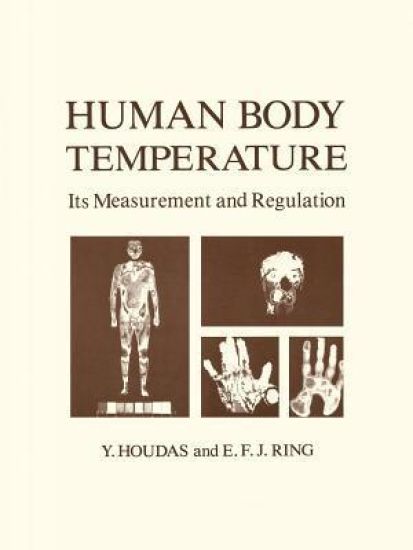
The physiology of man is a complex subject. Unfortunately the regulation of temperature in the human body is not always well explained in textbooks. Many conference proceedings on the subject have been produced that give excellent detail on research topics. However, the subject matter is rarely presented as a composite whole. New technology has broadened the scope of methods available for studying body temperature. Thermography in particular has made it possible to record in real time the temperature distribution of large areas of the body surface. Modem image processing methods permit dynamic studies to be carried out and detailed analyses made retrospectively-a tremendous advance over the complex and slow techniques formerly used by physiologists. Yet although the associa­ tion between disease and temperature is as old as medicine itself, beyond the implicit faith in the clinical mercury thermometer, other measuring techniques are finding a slow acceptance. This book is designed to put into perspective the critical factors that make up "body temperature. " Body temperature cannot be viewed as a static entity but rather must be seen as a dynamic process. An understanding of this phenomenon is important to all who use thermal imaging and measuring techniques in clinical medi­ cine. These methods have, in recent years, brought engineers, physi­ cists, technicians, and clinicians together. Inevitably, however, there v vi Preface are gaps and overlaps in technology and understanding.
Enzymes in Food Processing

Enzymes in Food Processing

Gregory A. Tucker; L.F.J. Woods

Chapman and Hall
1996
sidottu
Recent years have seen a rapid increase in the use of enzymes as food processing tools, as an understanding of their means of control has improved. Since publication of the first edition of this book many new products have been commercially produced and the corresponding number of published papers has swollen. This second edition has been fully revised and updated to cover changes in the last five years. It continues to provide food technologists, chemists, biochemists and microbiologists with an authoritative, practical and detailed review of the subject.
Shaping the Urban Landscape

Shaping the Urban Landscape

Gilbert A. Stelter; Alan F.J. Artibise

Carleton University Press,Canada
1982
nidottu
This is a collection of essays focusing on the process of city-building in Canada. The authors weigh the relative broad social, economic and technological trends as they attempt to explain the shaping of this urban landscape.
The Canadian City

The Canadian City

Gilbert A. Stelter; Alan F.J. Artibise

Carleton University Press,Canada
1984
nidottu
The emphasis is on urban society, with new essays on social structure, the family, ethnicity and immigration, and religion. Other sections are devoted to urban growth, the physical environment, and urban government and reform.
Enzymes in Food Processing

Enzymes in Food Processing

Gregory A. Tucker; L.F.J. Woods

Springer-Verlag New York Inc.
2012
nidottu
Recent years have seen a rapid increase in the use of enzymes as food processing tools, as an understanding of their means of control has improved. Since publication of the first edition of this book many new products have been commercially produced and the corresponding number of published papers has swollen. This second edition has been fully revised and updated to cover changes in the last five years. It continues to provide food technologists, chemists, biochemists and microbiologists with an authoritative, practical and detailed review of the subject.
Mode 3 Knowledge Production in Quadruple Helix Innovation Systems

Mode 3 Knowledge Production in Quadruple Helix Innovation Systems

Elias G. Carayannis; David F.J. Campbell

Springer-Verlag New York Inc.
2011
nidottu
Developed and developing economies alike face increased resource scarcity and competitive rivalry. In this context, science and technology appear as an essential source of competitive and sustainable advantage at national and regional levels. However, the key determinant of their efficacy is the quality and quantity of entrepreneurship-enabled innovation that unlocks and captures the benefits of the science enterprise in the form of private, public or hybrid goods. Linking basic and applied research with the market, via technology transfer and commercialization mechanisms, including government-university-industry partnerships and capital investments, constitutes the essential trigger mechanism and driving force of sustainable competitive advantage and prosperity. In this volume, the authors define the terms and principles of knowledge creation, diffusion, and use, and establish a theoretical framework for their study. In particular, they focus on the “Quadruple Helix” model, through which government, academia, industry, and civil society are seen as key actors promoting a democratic approach to innovation through which strategy development and decision making are exposed to feedback from key stakeholders, resulting in socially accountable policies and practices.
Human Body Temperature

Human Body Temperature

Y. Houdas; E.F.J. Ring

Springer-Verlag New York Inc.
2013
nidottu
The physiology of man is a complex subject. Unfortunately the regulation of temperature in the human body is not always well explained in textbooks. Many conference proceedings on the subject have been produced that give excellent detail on research topics. However, the subject matter is rarely presented as a composite whole. New technology has broadened the scope of methods available for studying body temperature. Thermography in particular has made it possible to record in real time the temperature distribution of large areas of the body surface. Modem image processing methods permit dynamic studies to be carried out and detailed analyses made retrospectively-a tremendous advance over the complex and slow techniques formerly used by physiologists. Yet although the associa­ tion between disease and temperature is as old as medicine itself, beyond the implicit faith in the clinical mercury thermometer, other measuring techniques are finding a slow acceptance. This book is designed to put into perspective the critical factors that make up "body temperature. " Body temperature cannot be viewed as a static entity but rather must be seen as a dynamic process. An understanding of this phenomenon is important to all who use thermal imaging and measuring techniques in clinical medi­ cine. These methods have, in recent years, brought engineers, physi­ cists, technicians, and clinicians together. Inevitably, however, there v vi Preface are gaps and overlaps in technology and understanding.
Geschichte der sozialen Ideen in Deutschland

Geschichte der sozialen Ideen in Deutschland

Walter Euchner; Helga Grebing; F.-J. Stegmann; Peter Langhorst; Traugott Jähnichen; Norbert Friedrich

Vs Verlag Fur Sozialwissenschaften
2005
sidottu
Die btirgerliche Gesellschaft zerstOrte die mittelalterlichen sozialen Strukturen mitsamt ihrem theologischen Uberbau. Gesellschaft und Wirtschaft sollten nach den Prinzipien von Vemunft und Nutzen gestaltet werden - Prinzipien, die in der Philo sophie der Aufldarung gleiehsam als Synonyme auftraten. Die sozialisti­ schen Ideen entstanden als Reaktion auf die neuen btirgerlichen Leitbilder und die krisenhaften Folgen ihrer Verwirkliehung. Ihr Ziel war jedoch nicht die bloBe Beseitigung oder Negation der btirgerliehen Gesellschaft, sondem deren "Autbe­ bung" im Hegelschen Sinne, d.h. die vom Btirgertum erfochtene Befreiung der Individuen von den Fesseln der alten Zustiinde sollte bewahrt, die neu entstande­ nen wirtschaftlichen Abhangigkeiten und Gefahrdungen jedoch, z.T. unter Rtick­ griff auf iiltere Solidaritatsvorstellungen, tiberwunden werden. Die sozialistischen Ideen mtissen zusammen mit den politischen Kraften, die urn ihre Durchsetzung kampften, betrachtet werden. In dieser Darstellung kann jedoch von der Sozial-und Wirtschaftsgeschichte sowie den politischen Umstan­ den nur so viel mitgeteilt werden, wie fur das Verstandnis der modemen soziali­ stischen Ideen erforderlieh ist. Der Nachdruck liegt auf den gedanldiehen Struktu­ ren der sozialistischen V orstellungen, auf ihren typischen Denkmustem, ihrer wechselseitigen Beeinflussung und den Veranderungen, die sie im Laufe der Zeit erfahren haben. Das sozialistische Denken prasentierte sieh in seiner marxistischen Form als entfaltetes, philosophisch begrtindetes System. Aber auch die sozialistische Mar­ xismuskritik, z.B. der zumeist von Kant beeinfluBte ethische Sozialismus, besaB ein philosophisches Fundament. Kurz - sozialistische Ideen sind haufig mit er­ kenntnistheoretischen,geschiehtsphilosophischen oder ethischen Grundpositio­ nen verkntipft, die auch heute noch unser Interesse finden konnen.
Qualitätsmanagement bei der Softwareerstellung

Qualitätsmanagement bei der Softwareerstellung

C. Ungermann; F.-J. Tesch; B. Stolpe; M. Weissert

Springer-Verlag Berlin and Heidelberg GmbH Co. K
1996
nidottu
Vielen Unternehmen ist die Zertifizierung nach DIN EN ISO 9001 ein Buch mit sieben Siegeln. Das kann diese knappe Anleitung andern: Sie bietet kleinen und mittelstandischen Unternehmen der Software-Branche einen verstandlichen Einstieg in das Thema "Qualitatsmanagement" und hilft ihnen, sich auf die Zertifizierung nach DIN EN ISO 9001 vorzubereiten.
Torticollis spasmodicus

Torticollis spasmodicus

E. Peterson; F.J. Erbguth

Springer-Verlag Berlin and Heidelberg GmbH Co. K
2001
nidottu
Neben der Darstellung ätiopathogenetischer Hypothesen des Torticollis spasmodicus aus neuro-orthopädischer Sicht werden die Ergebnisse einer eigenen innovativen Methode zur klinischen und elektrophysiologischen Untersuchung von Torticollispatienten in übersichtlicher Form vorgestellt. Die differenzierte Diagnostik mit semiquantitativer EMG-Auswertung ist eine unverzichtbare Entscheidungshilfe bei Indikation und Auswahl der effektivsten Operation. Diese ist besonders für den Neurochirurgen von Interesse.
Autopoiesis and Cognition

Autopoiesis and Cognition

H.R. Maturana; F.J. Varela

Kluwer Academic Publishers
1980
sidottu
This is a bold, brilliant, provocative and puzzling work. It demands a radical shift in standpoint, an almost paradoxical posture in which living systems are described in terms of what lies outside the domain of descriptions. Professor Humberto Maturana, with his colleague Francisco Varela, have undertaken the construction of a systematic theoretical biology which attempts to define living systems not as they are objects of observation and description, nor even as in­ teracting systems, but as self-contained unities whose only reference is to them­ selves. Thus, the standpoint of description of such unities from the 'outside', i. e. , by an observer, already seems to violate the fundamental requirement which Maturana and Varela posit for the characterization of such system- namely, that they are autonomous, self-referring and self-constructing closed systems - in short, autopoietic systems in their terms. Yet, on the basis of such a conceptual method, and such a theory of living systems, Maturana goes on to define cognition as a biological phenomenon; as, in effect, the very nature of all living systems. And on this basis, to generate the very domains of interac­ tion among such systems which constitute language, description and thinking.
Autopoiesis and Cognition

Autopoiesis and Cognition

H.R. Maturana; F.J. Varela

Kluwer Academic Publishers
1991
nidottu
This is a bold, brilliant, provocative and puzzling work. It demands a radical shift in standpoint, an almost paradoxical posture in which living systems are described in terms of what lies outside the domain of descriptions. Professor Humberto Maturana, with his colleague Francisco Varela, have undertaken the construction of a systematic theoretical biology which attempts to define living systems not as they are objects of observation and description, nor even as in­ teracting systems, but as self-contained unities whose only reference is to them­ selves. Thus, the standpoint of description of such unities from the 'outside', i. e. , by an observer, already seems to violate the fundamental requirement which Maturana and Varela posit for the characterization of such system- namely, that they are autonomous, self-referring and self-constructing closed systems - in short, autopoietic systems in their terms. Yet, on the basis of such a conceptual method, and such a theory of living systems, Maturana goes on to define cognition as a biological phenomenon; as, in effect, the very nature of all living systems. And on this basis, to generate the very domains of interac­ tion among such systems which constitute language, description and thinking.
Somatische Problemen

Somatische Problemen

W M C Van Aalderen; M J I J Albers; A C E de Blécourt; G Bleijenberg; H Boxma; C Braet; O F Brouwer; B Derkx; H J y Van Drie; M Van Dijk; A M Van Furth; T M Van Gemert; R a Hirasing; H W C Hofland; E C a M Houdijk; L W a De Jong; R C J De Jonge; L J Kalverdijk; J K W Kieboom; C Kluft; C M F Kneepkens; H Knoop; F J M Van Leerdam; M M H Lub; T G J De Meij; E a J Peeters; S Scholten; A B Sprikkelman; D Tibboel; H L G Ter Waarbeek; J Walstra; B Wijnberg-Williams

Bohn Stafleu Van Loghum
2009
pokkari
Color Atlas of Vascular Diseases

Color Atlas of Vascular Diseases

C. Diehm; J.-R. Allenberg; K. Nimura-Eckert; F.J. Veith

Springer-Verlag Berlin and Heidelberg GmbH Co. K
2011
nidottu
The industrialized world has witnessed a steady increase in diseases of the arteries, veins, and lymph vessels in recent years. The prevalence and incidence of arteriosclerotic vascular disease has taken on the character of an epidemic. Diseases of the superficial and deep veins are widespread. Everypracticing physician is confronted daily by arterial circulatory disorders of the supra-aortic vessels,the thoracic and abdominal aorta, and the pelvic and leg arteries as well as by venous and lymphatic diseases.Todayvascular disease isbest managed in an interdisciplinary way; interventional radiologists and neurologists should be part of the team at any established vascular center. Many older colleagues were forced to acquire their knowledge of vascular diseases on their own. There are still many medical schools and hospitals that lack vascular specialists who are capable of passing on their expertise to students. For manyyears there was no expertise in medical angiology in countries such as Great Britain or the United States. All of vascular medicine resided in the hands of vascular surgeons. It is only in the last few years that vascular internists have appeared in these countries as well.