Kirjojen hintavertailu. Mukana 12 453 130 kirjaa ja 12 kauppaa.

Kirjahaku

Etsi kirjoja tekijän nimen, kirjan nimen tai ISBN:n perusteella.

1000 tulosta hakusanalla Fernando Silva

The Political Economy of the Common Agricultural Policy
What is the balance of the European Union’s Common Agricultural Policy more than half a century after its birth? Does it illustrate the virtues of the European model of coordinated capitalism, as opposed to US-style liberal capitalism? Or is it an incoherent set of instruments that exert diverse negative impacts and, like Frankenstein’s monster, seems to have escaped the control of its designers?The Political Economy of the Common Agricultural Policy does not criticize the CAP from the liberal standpoint that views most public interventions in the economy as bad for efficiency and welfare. The CAP has been costly to Europeans, both as consumers and as taxpayers, and has also generated a number of negative impacts upon third countries, but these costs and impacts have been more moderate than is suggested. This book proposes that the issue with the CAP is not a generic problem of coordinating capitalism but, instead, a more specific problem of low-quality coordination. The text argues that profound reform of the European Union’s institutions and policies is required to counter the rapid rise of a more Eurosceptical state of mind but – in the case of agricultural policy – history casts serious doubts on the capacity of the European network of agriculture-related politicians to lead such a reform.This key work is essential reading for researchers, graduate students, and master’s level docents of the Common Agricultural Policy and – more broadly – European Union policy and reform.

The Philosophy of Group Polarization

The Philosophy of Group Polarization

Fernando Broncano-Berrocal; J. Adam Carter

Routledge
2021
sidottu
Group polarization—the tendency of groups to incline toward more extreme positions than initially held by their individual members—has been rigorously studied by social psychologists, though in a way that has overlooked important philosophical questions. This is the first book-length treatment of group polarization from a philosophical perspective. The phenomenon of group polarization raises several important metaphysical and epistemological questions. From a metaphysical point of view, can group polarization, understood as an epistemic feature of a group, be reduced to epistemic features of its individual members? Relatedly, from an epistemological point of view, is group polarization best understood as a kind of cognitive bias or rather in terms of intellectual vice? This book compares four models that combine potential answers to the metaphysical and epistemological questions. The models considered are: group polarization as (i) a collective bias; (ii) a summation of individual epistemic vices; (iii) a summation of individual biases; and (iv) a collective epistemic vice. Ultimately, the authors defend a collective vice model of group polarization over the competing alternatives. The Philosophy of Group Polarization will be of interest to students and researchers working in epistemology, particularly those working on social epistemology, collective epistemology, social ontology, virtue epistemology, and distributed cognition. It will also be of interest to those working on issues in political epistemology, applied epistemology, and on topics at the intersection of epistemology and ethics.
Tears of the Trufflepig

Tears of the Trufflepig

Fernando A. Flores

Farrar, Straus Giroux Inc
2019
pokkari
Near future. South Texas. Narcotics are legal and there’s a new contraband on the market: ancient Olmec artifacts, shrunken indigenous heads, and filtered animals - species of animals brought back from extinction to clothe, feed, and generally amuse the very wealthy. Esteban Bellacosa has lived in the border town of MacArthur long enough to know to keep quiet and avoid the dangerous syndicates who make their money through trafficking. But his simple life starts to get complicated when the swashbuckling investigative journalist Paco Herbert invites him to come to an illegal underground dinner serving filtered animals. Bellacosa soon finds himself in the middle of an increasingly perilous, surreal, psychedelic journey, where he encounters legends of the long-disappeared Aranaña Indian tribe and their object of worship: the mysterious Trufflepig, said to possess strange powers. Written with infectious verve, bold imagination, and oddball humor, Fernando A. Flores’s debut novel, Tears of the Trufflepig, is an absurdist take on life along the border, an ode to the myths of Mexican culture, a dire warning against the one percent’s determination to dictate society’s decline, and a nuanced investigation of loss. It’s also the perfect introduction to Flores: a wonderfully weird, staggeringly smart new voice in American fiction, and a mythmaker of the highest order.
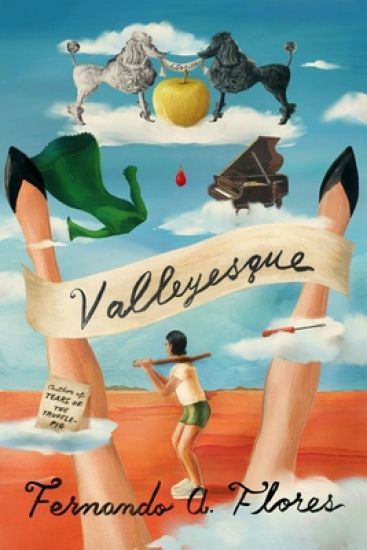
Valleyesque

Valleyesque

Fernando A Flores

FARRAR, STRAUS GIROUX INC
2022
pokkari
One of The Millions's Most Anticipated Books of 2022These are marvelously unpredictable stories, anchored by Fernando A. Flores's deadpan prose and his surefooted navigation of those overlapping territories, the real and the fantastic, where so much of the best contemporary fiction now lives. --Kelly Link, author of Get in TroublePsychedelic, dazzling stories set in the cracks of the Texas-Mexico borderland, from an iconoclastic storyteller and the author of Tears of the Trufflepig. No one captures the border--its history and imagination, its danger, contradiction, and redemption--like Fernando A. Flores, whose stories reimagine and reinterpret the region's existence with peerless style. In his immersive, uncanny borderland, things are never what they seem: a world where the sun is both rising and setting, and where conniving possums efficiently take over an entire town and rewrite its history. The stories in Valleyesque dance between the fantastical and the hyperreal with dexterous, often hilarious flair. A dying Fr d ric Chopin stumbles through Ciudad Ju rez in the aftermath of his mother's death, attempting to recover his beloved piano that was seized at the border, while a muralist is taken on a psychedelic journey by an airbrushed Emiliano Zapata T-shirt. A woman is engulfed by a used-clothing warehouse with a life of its own, and a grieving mother breathlessly chronicles the demise of a town decimated by violence. In two separate stories, queso dip and musical rhythms are bottled up and sold for mass consumption. And in the final tale, Flores pieces together the adventures of a young Lee Harvey Oswald as he starts a music career in Texas. Swinging between satire and surrealism, grief and joy, Valleyesque is a boundary- and border-pushing collection from a one-of-a-kind stylist and voice. With the visceral imagination that made his debut novel, Tears of the Trufflepig, a cult classic, Flores brings his vision of the border to life--and beyond.
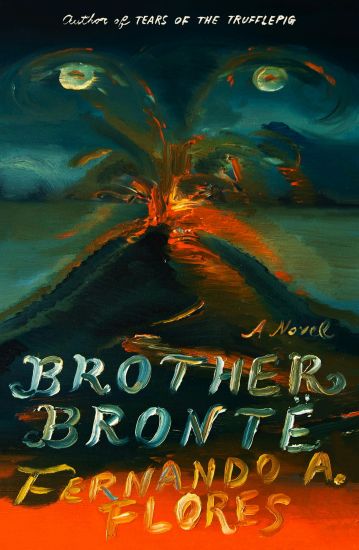
Brother Brontë

Brother Brontë

Fernando A. Flores

MCD
2025
sidottu
Named a Most Anticipated Book of 2025 by the Los Angeles Times"Brother Bront evokes Octavia Butler, William Gibson, and John Steinbeck; these are all my favorites, and with this book, Fernando A. Flores joins the list." --Robin Sloan, author of Mr. Penumbra's 24-Hour Bookstore "This crazy cakey world-making of Fernando A. Flores is all of literature, wide, plaintive, melancholy and full of feminist fellow joyousness and ways. Hated this world ending, I want more." --Eileen Myles Two women fight to save their dystopian border town--and literature--in this gonzo near-future adventure. The year is 2038, and the formerly bustling town of Three Rivers, Texas, is a surreal wasteland. Under the authoritarian thumb of its tech industrialist mayor, Pablo Henry Crick, the town has outlawed reading and forced most of the town's mothers to work as indentured laborers at the Big Tex Fish Cannery, which poisons the atmosphere and lines Crick's pockets. Scraping by in this godforsaken landscape are best friends Prosperina and Neftal --the latter of whom, one of the town's last literate citizens, hides and reads the books of the mysterious renegade author Jazzmin Monelle Rivas, whose last novel, Brother Bront , is finally in Neftal 's possession. But after a series of increasingly violent atrocities committed by Crick's forces, Neftal and Prosperina, with the help of a wounded bengal tigress, three scheming triplets, and an underground network of rebel t as, rise up to reclaim their city--and in the process, unlock Rivas's connection to Three Rivers itself. An adventure that only the acclaimed Fernando A. Flores could dream up, Brother Bront is a mordant, gonzo romp through a ruined world that, in its dysfunction, tyranny, and disparity, nonetheless feels uncannily like our own. With his most ambitious book yet, Flores once again bends what fiction can do, in the process crafting a moving and unforgettable story of perseverance.
Emulsion Science

Emulsion Science

Fernando Leal-Calderon; Véronique Schmitt; Jerôme Bibette

Springer-Verlag New York Inc.
2007
sidottu
This book gives an overview of the most recent advances in emulsion science, from the preparation to the destruction of these materials. This book is intended for a large audience, from undergraduate students to senior scientists. A progressive and didactic approach is proposed for that purpose. The concepts presented should provide a useful guidance for formulating and controlling the lifetime of emulsion at laboratory and industrial scales. For easy comprehension, the text is illustrated by more than 70 figures. This book is a new edition of the one published in the series "Springer Tracts in Modern Physics (vol. 181)". The main difference is a more didactic approach which will allow the non-specialist reader to capture the essential concepts. We shall also incorporate the very last research results (solid-stabilized emulsions, metastability) and novel applications (Biotechnology).
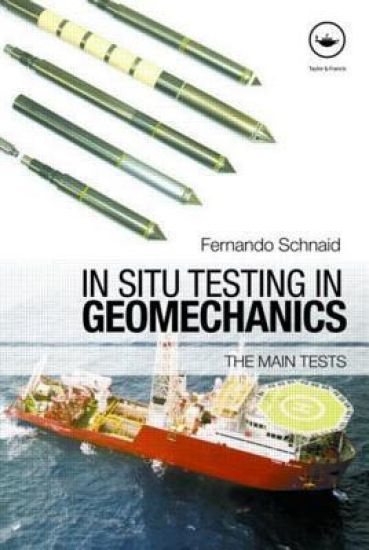
In Situ Testing in Geomechanics

In Situ Testing in Geomechanics

Fernando Schnaid

CRC Press
2008
sidottu
Demanding a thorough knowledge of material behaviour and numerical modelling, site characterisation and in situ test interpretation are no longer just basic empirical recommendations.Giving a critical appraisal of the understanding and assessment of the stress-strain-time and strength characteristics of geomaterials, this book explores new interpretation methods for measuring properties of a variety of soil formations.Emphasis is given to the five most commonly encountered in situ test techniques: standard penetration tests cone penetration tests vane test pressuremeter tests dilatometer testsIdeal for practising engineers in the fields of geomechanics and environmental engineering, this book solves numerous common problems in site characterisation. It is also a valuable companion for students coming to the end of their engineering courses and looking to work in this sector.
In Situ Testing in Geomechanics

In Situ Testing in Geomechanics

Fernando Schnaid

CRC Press
2008
nidottu
Demanding a thorough knowledge of material behaviour and numerical modelling, site characterisation and in situ test interpretation are no longer just basic empirical recommendations.Giving a critical appraisal of the understanding and assessment of the stress-strain-time and strength characteristics of geomaterials, this book explores new interpretation methods for measuring properties of a variety of soil formations.Emphasis is given to the five most commonly encountered in situ test techniques: standard penetration tests cone penetration tests vane test pressuremeter tests dilatometer testsIdeal for practising engineers in the fields of geomechanics and environmental engineering, this book solves numerous common problems in site characterisation. It is also a valuable companion for students coming to the end of their engineering courses and looking to work in this sector.
Twentieth Century Guerrilla Movements in Latin America
Twentieth Century Guerrilla Movements in Latin America: A Primary Source History collects political writings on human rights, social injustice, class struggle, anti-imperialism, national liberation, and many other topics penned by urban and rural guerrilla movements.In the second half of the twentieth century, Latin America experienced a mass wave of armed revolutionary movements determined to overthrow oppressive regimes and eliminate economic exploitation and social injustices. After years of civil resistance, and having exhausted all peaceful avenues, thousands of working-class people, peasants, professions, intellectuals, clergymen, students, and teachers formed dozens of guerrilla movements. Fernando Herrera Calderón presents important political writings, some translated into English here for the first time, that serve to counteract the government propaganda that often overshadowed the intellectual side of revolutionary endeavors. These texts come from Latin American countries such as Argentina, Bolivia, Colombia, Mexico, Nicaragua, and many more.The book will be indispensable to anyone teaching or studying revolutions in modern Latin American history.
Twentieth Century Guerrilla Movements in Latin America
Twentieth Century Guerrilla Movements in Latin America: A Primary Source History collects political writings on human rights, social injustice, class struggle, anti-imperialism, national liberation, and many other topics penned by urban and rural guerrilla movements.In the second half of the twentieth century, Latin America experienced a mass wave of armed revolutionary movements determined to overthrow oppressive regimes and eliminate economic exploitation and social injustices. After years of civil resistance, and having exhausted all peaceful avenues, thousands of working-class people, peasants, professions, intellectuals, clergymen, students, and teachers formed dozens of guerrilla movements. Fernando Herrera Calderón presents important political writings, some translated into English here for the first time, that serve to counteract the government propaganda that often overshadowed the intellectual side of revolutionary endeavors. These texts come from Latin American countries such as Argentina, Bolivia, Colombia, Mexico, Nicaragua, and many more.The book will be indispensable to anyone teaching or studying revolutions in modern Latin American history.
Modelling the Wireless Propagation Channel

Modelling the Wireless Propagation Channel

Fernando P¿rez Font¿n; Perfecto Mari¿o Espi¿eira

John Wiley Sons Inc
2008
sidottu
A practical tool for propagation channel modeling with MATLAB® simulations. Many books on wireless propagation channel provide a highly theoretical coverage, which for some interested readers, may be difficult to follow. This book takes a very practical approach by introducing the theory in each chapter first, and then carrying out simulations showing how exactly put the theory into practice. The resulting plots are analyzed and commented for clarity, and conclusions are drawn and explained from the obtained results. Key features include: A unique approach to propagation channel modeling with accompanying MATLAB® simulations to demonstrate the theory in practiceContains step by step commentary and analysis of the obtained simulation results in order to provide a comprehensive and structured learning toolCovers a wide range of topics including shadowing effects, coverage and interference, Multipath Narrowband channel, Multipath Wideband channel, propagation in micro and pico-cells, the land mobile satellite (LMS) channel, the directional Multipath channel and MIMO and propagation effects in fixed radio links (terrestrial and satellite)The book comes with an accompanying website that contains the MATLAB® simulations and allows readers to try them out themselvesWell suited for lab-use, as reference and as a self-learning tool both for advanced students and professionals Modeling the Wireless Propagation Channel: A simulation approach with MATLAB® will be best suited for postgraduate (Masters and PhD) students and practicing engineers in telecommunications and electrical engineering fields, who are seeking to familiarise themselves with the topic without too many formulas. The book will also be of interest to network engineers, system engineers and researchers
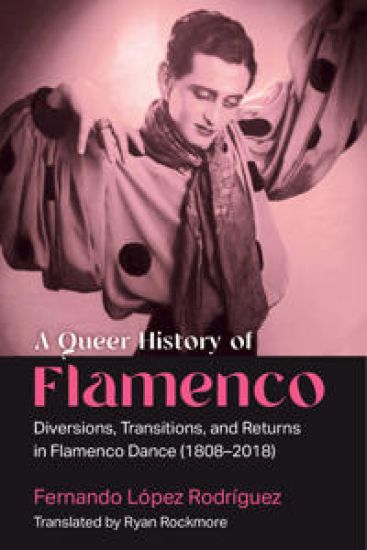
A Queer History of Flamenco

A Queer History of Flamenco

Fernando López Rodríguez

THE UNIVERSITY OF MICHIGAN PRESS
2024
nidottu
A Queer History of Flamenco offers a groundbreaking exploration of flamenco through the lenses of queer theory and cultural studies. Previous histories have provided a largely distorted image about why, where, and how people have done flamenco—as well as who has performed flamenco. Yet feminists, transvestites, butches, femmes, the Spanish Roma, disabled people, guiris, and “incomprehensible” artists have been determined to do things differently without giving up their flamenco status. In this skillful translation of his book Historia queer del flamenco, Fernando López Rodríguez draws on diverse archival materials as well as his own lived experience and artistic practice, unearthing queer flamenco histories, voices, and perspectives that were previously unknown, avoided, or purposely hidden. Tracing flamenco’s development from its birth up to the contemporary era, the book places flamenco within significant historical periods such as the Spanish Civil War, Franco’s dictatorship, the transition to democracy, and the economic crisis of 2008, up to contemporary performances of the late 2010s. In taking a queer approach to History, the author abandons antiquated debates about purities and impurities; anecdotes about the lives of artists that are completely detached from their processes of creation; and myths about geniuses who seem to make art alone and completely detached from their collaborators and the historical, social, economic and artistic moment in which they lived. A Queer History of Flamenco is not only about the present and the queerness of people living, performing, or creating in it, but also about flamenco’s past in which so many queer artists and practices and their lives have remained unearthed and unaddressed.
A Queer History of Flamenco

A Queer History of Flamenco

Fernando López Rodríguez

THE UNIVERSITY OF MICHIGAN PRESS
2024
sidottu
A Queer History of Flamenco offers a groundbreaking exploration of flamenco through the lenses of queer theory and cultural studies. Previous histories have provided a largely distorted image about why, where, and how people have done flamenco—as well as who has performed flamenco. Yet feminists, transvestites, butches, femmes, the Spanish Roma, disabled people, guiris, and “incomprehensible” artists have been determined to do things differently without giving up their flamenco status. In this skillful translation of his book Historia queer del flamenco, Fernando López Rodríguez draws on diverse archival materials as well as his own lived experience and artistic practice, unearthing queer flamenco histories, voices, and perspectives that were previously unknown, avoided, or purposely hidden. Tracing flamenco’s development from its birth up to the contemporary era, the book places flamenco within significant historical periods such as the Spanish Civil War, Franco’s dictatorship, the transition to democracy, and the economic crisis of 2008, up to contemporary performances of the late 2010s. In taking a queer approach to History, the author abandons antiquated debates about purities and impurities; anecdotes about the lives of artists that are completely detached from their processes of creation; and myths about geniuses who seem to make art alone and completely detached from their collaborators and the historical, social, economic and artistic moment in which they lived. A Queer History of Flamenco is not only about the present and the queerness of people living, performing, or creating in it, but also about flamenco’s past in which so many queer artists and practices and their lives have remained unearthed and unaddressed.
El Greco

El Greco

Fernando Marias

Thames Hudson Ltd
2013
sidottu
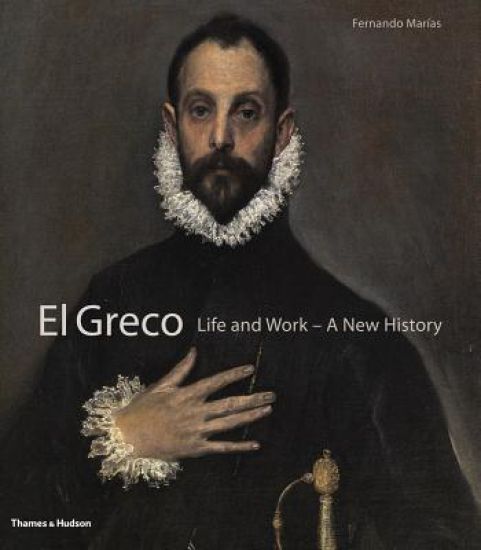
Domenikos Theotokopoulos, known to us as El Greco, was one of the seminal figures of the Spanish Golden Age. This magnificent volume, published to mark the four hundredth anniversary of the artist’s death, features superb new photographs of recently cleaned and restored paintings, revealing hitherto unknown facets of his art. Born in Crete in 1541 under Venetian rule, raised in the iconographic traditions of Byzantine art, and acquainted with both Greek Orthodox and Roman Catholic practice, El Greco journeyed to Venice and Rome in the late Renaissance, before finding patronage in Spain at the court of Philip II. He was a painter not only of religious subjects but also of idiosyncratic portraits executed in his own uniquely dramatic and expressionistic style. He spent approximately half his life in Toledo, a city with which his name has become indelibly linked, although he was never fully accepted and was known there as a disputatious outsider. All this and more is detailed in this thorough, richly illustrated book, in which the artist’s works are reproduced following their recent major cleanings and restorations, which have revealed hitherto unknown facets of his art.
Dependency and Development in Latin America

Dependency and Development in Latin America

Fernando Henrique Cardoso; Enzo Faletto

University of California Press
1979
pokkari
At the end of World War II, several Latin American countries seemed to be ready for industrialization and self-sustaining economic growth. Instead, they found that they had exchanged old forms of political and economic dependence for a new kind of dependency on the international capitalism of multinational corporations. In the much-acclaimed original Spanish edition ("Dependencia y Desarrollo en America Latina") and now in the expanded and revised English version, Cardoso and Faletto offer a sophisticated analysis of the economic development of Latin America. The economic dependency of Latin America stems not merely from the domination of the world market over internal national and 'enclave' economies, but also from the much more complex interact ion of economic drives, political structures, social movements, and historically conditioned alliances. While heeding the unique histories of individual nations, the authors discern four general stages in Latin America's economic development: the early outward expansion of newly independent nations, the political emergence of the middle sector, the formation of internal markets in response to population growth, and the new dependence on international markets. In a postscript for this edition, Cardoso and Faletto examine the political, social and economic changes of the past ten years in light of their original hypotheses.
The Celestina

The Celestina

Fernando de Rojas

University of California Press
2019
pokkari
The Celestina is considered by scholars to be the first European novel. Written in fifteenth-century Spain, this masterpiece is remarkable for its originality, depth, handling of dialogue, and drawing of character. The novel's focus is the character of Celestina, who dominates the scene. An old bawd brimming with salty wisdom derived from a vigorous and sinful life, she is one of the great creations in all of literature and holds a secure place beside her two compatriots, Don Quixote and Sancho Panza. This Spanish classic, a forebear of Cervantes, was originally published anonymously in 1499; later editions bear the name of Fernando de Rojas as author.
Science in Resistance

Science in Resistance

Fernando Racimo

University of California Press
2025
sidottu
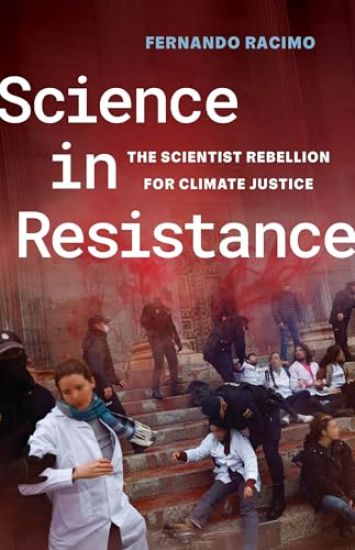
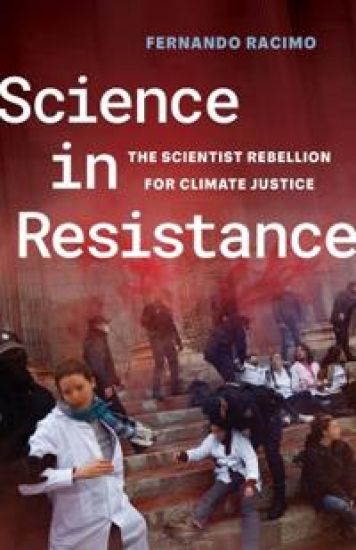
Scientists around the world rise up for climate and ecological justice In April 2022, hundreds of scientists rose in civil disobedience, breaking the law in more than twenty-eight countries. Risking arrest, they glued their hands to roads, blocked government and corporate buildings, and chained themselves to the White House fence. In Science in Resistance, Fernando Racimo provides a first-person account of the Scientist Rebellion, a growing international movement of researchers stepping beyond conventional roles to alert the public about the need for action in the climate emergency. Combining personal stories, interviews with frontline activists, and insights from research on direct action and academia, he explores the challenges scientists face when taking a stand for climate and social justice. Reflecting on his role as a scientist-activist, Racimo describes how he came to be involved in the movement. He also explores the many ways in which academic institutions today are complicit in climate breakdown—whether by accepting funding from and collaborating with the very industries driving it, or by discouraging scientists from speaking up. Drawing on lessons from political science, psychology, ecology, sociology, and the history of science, he explains how academia can be transformed to become an actor for good in the emergency.
Science in Resistance

Science in Resistance

Fernando Racimo

University of California Press
2025
pokkari
Scientists around the world rise up for climate and ecological justice In April 2022, hundreds of scientists rose in civil disobedience, breaking the law in more than twenty-eight countries. Risking arrest, they glued their hands to roads, blocked government and corporate buildings, and chained themselves to the White House fence. In Science in Resistance, Fernando Racimo provides a first-person account of the Scientist Rebellion, a growing international movement of researchers stepping beyond conventional roles to alert the public about the need for action in the climate emergency. Combining personal stories, interviews with frontline activists, and insights from research on direct action and academia, he explores the challenges scientists face when taking a stand for climate and social justice. Reflecting on his role as a scientist-activist, Racimo describes how he came to be involved in the movement. He also explores the many ways in which academic institutions today are complicit in climate breakdown—whether by accepting funding from and collaborating with the very industries driving it, or by discouraging scientists from speaking up. Drawing on lessons from political science, psychology, ecology, sociology, and the history of science, he explains how academia can be transformed to become an actor for good in the emergency.
We're Still Here

We're Still Here

Fernando Ortiz-Moya

University of California Press
2026
sidottu
In a world that expects cities to fuel economic growth and attract millions of people every year, there's something unnerving about the phrase "shrinking cities." But thousands of cities are getting smaller, leaving vacant homes, abandoned factories, and oversized infrastructure. Shrinking cities pose a new problem for urban planners: how to manage the transition to fewer residents with a tool kit designed for expansion. Urbanist Fernando Ortiz-Moya argues that instead of chasing regrowth, cities can embrace their smaller size and build on their unique character and history to enhance life for those who remain. We're Still Here contrasts official responses to shrinkage with spontaneous bottom-up actions led by traditionally marginalized residents in the cities of Pittsburgh, Manchester, and Kitakyushu. These stories show how decline becomes a springboard for social and physical (re)construction and justice-driven urbanism—revealing both the limits of pro-growth planning and the seeds of a new approach that he calls "(Re)City-Making." Far from a cautionary tale, this book makes a convincing case for the shrinking city as a laboratory for innovative, people-centered urban policy and collective empowerment.