Various authors; Kenneth C. Eastwell; Karel Petrzik; Manuel Rubio; Federico Dicenta; Pedro Martínez-Gómez; H Czosnek; A. Koren; F. Vidavski; John E. Thomas; Andrew D. W. Geering
This book features six peer-reviewed reviews on viruses affecting key horticultural crops.The first chapter considers best management practices for the control of viruses and virus-like agents in apple production, including the development of orchards with clean, virus-tested planting stock. The second chapter comprehensively details how Apple mosaic virus is spread and describes the symptoms displayed by affected host plants.The third chapter examines the challenge of Plum pox virus (PPV) control for sustainable cultivation of plums and looks at the genetic and molecular basis of PPV resistance in Prunus.The fourth chapter outlines the major insect-transmitted viruses infecting tomato crops, including viruses transmitted by aphids, thrips, whitefly and leafhoppers.The fifth chapter reviews current knowledge on banana bunchy top disease. The chapter outlines symptoms of the disease, as well as the biological characteristics of the pathogen related to host range, transmission and spread.The final chapter discusses the symptoms, taxonomy, diagnosis, epidemiology and control of minor viral pathogens of banana, plantain and abacá, such as cucumber mosaic virus, banana bract mosaic virus and sugarcane mosaic virus.
A complete and updated catalogue of impact craters and structures in South America from 2014 is presented here. Approximately eighty proven, suspected and disproven structures have been identified by several sources in this continent. All the impact sites of this large continent have been exhaustively reviewed: the proved ones, the possible ones and some very doubtful. Many sites remain without a clear geological "in situ" confirmation and some of them could be even rejected. Argentina and Brazil are leading the list containing almost everything detected. In Bolivia, Chile, Colombia, Guyana, Paraguay, Perú, Uruguay and Venezuela only a few were observed. Only Ecuador is waiting for new discoveries. So far, the largest well stated impact site is still the Araguainha structure in Brazil with its 40 kilometers in diameter. However, two possible impact structures are larger than Araguainha: Malvinas, (with 250 kilometers in diameter) and Vichada in Colombia, (50 kilometers). This study also reports the existence of some Tertiary-Quaternary glassy impactite layers: the "escorias" and "tierras cocidas" of the pampas in Argentina.
Michael Hviid Jacobsen; Gunnar Aakvaag; Gunnar C. Aakvaag; Thomas Johansson; Willy Guneriussen; Johanna Esseveld; Mai Ottosen; Nihad Bunar; Rickard Jonsson; Sara Eldén; Thomas Eriksen; Simon Lindgren; Fredrik Engelstad; Inger Hagen; Bjørn Schiermer; Philip Lalander; Søren Kristiansen; Marko Valenta; Ola Sigurdson; Thomas Boje
Sociology is a constantly changing scientific endeavour, adventure and practice that was born with the advent of modernity. One of the main reasons for the rise of sociology was modern societys wish to understand itself. In this introduction to sociology, the authors emphasize the importance and centrality of the idea of the sociological imagination, as it was conceived by sociologist C. Wright Mills. This book will enhance and further develop your sociological imagination with a sensibility that has its breeding ground in the Scandinavian countries; this is the first comprehensive attempt to write an international/Nordic text book and introductory text to sociology. This book is aimed primarily at first year students in sociology but will be of interest to anyone who is looking for a comprehensive guide to the exciting field of sociology. Contents Introduction The legacy of the sociological imagination Scandinavian sensibility Structure and content of the book Summary Think for yourself Further reading Chapter 1. What is society? Contested concepts and shifting metaphors Willy Guneriussen, University of Tromsø Introduction Individualism vs holism: methodological and ontological controversies Sociology – an explanatory or interpretive science? Structure or action? Society – a material or symbolic reality? The symbolic turn Combining distinctions The theoretical landscape of sociology Several theories – one reality? Beyond traditions – towards a minimalist model of society Biology and society Combining traditions The first synthesis: Talcott Parsons’ sociology Modifying Parsons’ theory of society Metaphors, science and sociological imagination Metaphors Changing conceptions or changing realities? Concluding reflections Summary Think for yourself Further reading Chapter 2. The sociology of work Inger Marie Hagen, Fafo Introduction The labour contract – labour as commodity in the market From work to labour Modern labour – work as commodity The two parties to the contract: labour and managerial prerogative The labour contract and the social context – different models The collective agreement Labour and self-expression Working conditions Other answers to `why work?’ Motivation and management The work organisation From command to self-management? An example – the modern work organisation – the three different company systems Employer and employee – equal partners Management as superior to employees Employee and management as parties in an ongoing dialogue Working life and distribution – industrial democracy Norms of distribution and norms of democracy Three notions of industrial democracy Industrial democracy and participation – individual and representative participation The Nordic labour market The Nordic model of labour relations When contemporary labour is a part of the past . . . Summary Think for yourself Further reading Chapter 3. The sociology of power Fredrik Engelstad, University of Oslo Introduction The interpretation of `power’ Power as concept Dimensions in social action Expectations and legitimacy From micro to macro State, democracy, politics State, rights and informal power relations Shaping and articulation of interests Political participation on a broad scale Fragmentation and globalisation: abdication of politics? Civil society Networks and organising capacity Gender power and attitudes toward gender Encounters with welfare state institutions Economy and working life Business life, markets and power Management and leadership in enterprises Participation and industrial democracy Ideas and communication Power in the public sphere Aesthetics, culture and national values Social elites: who governs? Power and democratisation Summary Think for yourself Further reading Chapter 4. The sociology of the family Mai Heide Ottosen, The Danish National Centre for Social Research Introduction What is a family? Sociological perspectives on the family Kinship vs family studies The family as a social institution The family as a social group Family as social practice Demographic trends The `bean-pole’ family The crisis of the patriarchal family Structuring family networks Family policies Inside the family: marriage, parenthood and childhood The de-institutionalisation of marriage From fatherhood and motherhood to parenthood Childhood Summary Think for yourself Further reading Chapter 5. The sociology of education Nihad Bunar and Rickard Jonsson, Stockholm University Introduction Sociological perspectives on education The functionalist approach Education and socialisation Social integration Education and gatekeeping: screening and selecting Education as an agent of social change The conflict approach The correspondence principle Reproduction through expectations and opposition Subjective expectation of objective probability Restricted and elaborated codes The subjective-interpretative approach Education and the market The market-oriented position The market-sceptical position The market-ambivalent position Education and ethnicity Urban schools Refugee and migrant students Education and gender Gender and school achievement Summary Think for yourself Further reading Chapter 6. The sociology of religion Ola Sigurdson, University of Gothenburg Introduction What is the sociology of religion? Sociology, the secularisation thesis and the return of religion Religion in the Scandinavian nation-states: an example The continuities and discontinuities of secularised religion The future of religion: towards a post-secular society? Summary Think for yourself Further reading Chapter 7. The sociology of media and information technologies Simon Lindgren, UmeS University Introduction Constructions and representations The media `effects’ model Media, ideology and struggles over hegemony New media and participatory culture Summary Think for yourself Further reading Chapter 8. The sociology of health Thomas Johansson, University of Gothenburg Introduction Historical perspectives Health inequalities Gender and health Lifestyles, risks and health The face of health Global health Summary Think for yourself Further reading Chapter 9. The sociology of class and social stratification Gunnar C. Aakvaag, University of Oslo Introduction Marx’s definition of class The class structure of modern capitalism Max Weber: a multidimensional approach to stratification and class Weber’s general approach to social stratification: class, status and party Weber’s class theory Contemporary class analysis A neo-Marxian approach: Erik Olin Wright and exploitation Wright’s class schema A neo-Weberian approach: John H. Goldthorpe and life chances Service and labour contracts Goldthorpe’s class schema Pierre Bourdieu: classes and lifestyles The social space Bourdieu’s class schema Habitus and class Class, habitus and lifestyle Class and social mobility Social relationships Intergenerational mobility Summary Think for yourself Further reading Chapter 10. The sociology of deviance Philip Lalander, Malmö University Introduction Labelling, ambivalence and counter-labelling Different types of deviance Diagnosis and identity Indulgence at the margins of society Escape from everyday life/escaping everyday life Summary Think for yourself Further reading Chapter 11. The sociology of gender Johanna Esseveld and Sara Eldén, Lund University Introduction Gender and sex Beyond dichotomies A sociological definition of gender Theorising gender Classical texts Men’s and women’s roles Gender oppression and structural inequality New themes in the sociology of gender Gender as a social practice Intersectionality Scandinavian sociology of gender today Conclusions Summary Think for yourself Further reading Chapter 12. The sociology of micro-social interaction and everyday life Søren Kristiansen and Michael Hviid Jacobsen, Aalborg University Introduction Everyday life as a social domain Micro-social interaction The basis of micro-social interaction: common sense, meaning and intersubjectivity Phenomenological sociology Symbolic interactionism Ethnomethodology The syntax of interaction: rules, rituals and ceremonies Goffman and dramaturgical sociology Conversation analysis Summary Think for yourself Further reading Chapter 13. The sociology of globalisation Thomas Hylland Eriksen, University of Oslo Introduction Origins of contemporary globalisation Globalisation today Globalisers and sceptics Dimensions of globalisation Disembedding, including de-localisation Standardisation Interconnectedness Mobility Mixing Vulnerability Re-embedding Central questions about globalisation The dialectics of globalisation Summary Think for yourself Further reading Chapter 14. The sociology of culture Bjorn Schiermer, University of Copenhagen Introduction Sociology of culture and popular culture The Frankfurt School: the critique and the potential of modern mass culture Siegfried Kracauer: the dialectics of commodified culture Theodor W. Adorno: the critical potential of autonomous art Walter Benjamin: art and politics The Birmingham School: culture as `a way of life’ Poststructuralism and semiotics: culture as `text’ The `material turn’: re-extending the shortened concept of culture Cultural studies: leaving the high/low dichotomy behind Ironic sensibilities: kitsch and camp and new ways of being together Summary Think for yourself Further reading Chapter 15. The sociology of ethnicity Nihad Bunar and Marko Valenta, Stockholm University and NTNU Introduction Defining ethnicity Theoretical approaches to ethnicity Primordialism Instrumentalism New ethnicities The importance of ethnic networks Symbolic ethnicity Theories and policies for managing ethnic diversity Ethnicity and other sociologically relevant concepts of categorisation Ethnicity and class Ethnicity and gender Ethnicity and race Ethnicity, racism and discrimination Ethnicity and nation Ethnicity and citizenship Summary Think for yourself Further reading Chapter 16. The sociology of the self Thomas Johansson, University of Gothenburg Introduction The sociology of the body: classical texts Consuming the Other Cyborgs and transvestites Lifestyle, fashion and the body Bodybuilding, fitness and gender Plastic surgery and body modifications Summary Think for yourself Further reading Chapter 17. The sociology of social change Gunnar C. Aakvaag, University of Oslo Introduction What are the `general characteristics’ of a society? Functional differentiation Consequences for the individual: facing social complexity Institutional `colonisation’ Consequences for the individual: facing commercialisation and bureaucratisation Individualisation Industrial modernity Individualised modernity Consequences for the individual: facing the decline of standard biographies Risk society Objective side-effects Subjective perception Consequences for the individual: facing uncertainty Social change: all that is solid melts into air? Summary Think for yourself Further reading Notes References Index
Teaching English to Second Language Learners in Academic Contexts: Reading, Writing, Listening, and Speaking provides the fundamental knowledge that ESL and EFL teachers need to teach the four language skills. This foundational text, written by internationally renowned experts in the field, explains why skills-based teaching is at the heart of effective instruction in English for academic purposes (EAP) contexts. Each of the four main sections of the book helps readers understand how each skill—reading, writing, listening, and speaking—works and explains what research has to say about successful skill performance. Pedagogically focused chapters apply this information to principles for EAP curriculum design and to instructional activities and tasks adaptable in a wide range of language-learning contexts. Options for assessment and the role of digital technologies are considered for each skill, and essential information on integrated-skill instruction is provided. Moving from theory to practice, this teacher-friendly text is an essential resource for courses in TESOL programs, for in-service teacher-training seminars, and for practicing EAP teachers who want to upgrade their teaching abilities and knowledge bases.
Teaching English to Second Language Learners in Academic Contexts: Reading, Writing, Listening, and Speaking provides the fundamental knowledge that ESL and EFL teachers need to teach the four language skills. This foundational text, written by internationally renowned experts in the field, explains why skills-based teaching is at the heart of effective instruction in English for academic purposes (EAP) contexts. Each of the four main sections of the book helps readers understand how each skill—reading, writing, listening, and speaking—works and explains what research has to say about successful skill performance. Pedagogically focused chapters apply this information to principles for EAP curriculum design and to instructional activities and tasks adaptable in a wide range of language-learning contexts. Options for assessment and the role of digital technologies are considered for each skill, and essential information on integrated-skill instruction is provided. Moving from theory to practice, this teacher-friendly text is an essential resource for courses in TESOL programs, for in-service teacher-training seminars, and for practicing EAP teachers who want to upgrade their teaching abilities and knowledge bases.
W. Ackermann; A. C. Brill; H. Diekmann; K. Eitel; E. Friederich; H. Gnamm; O. Grimm; A. Miekeley; G. Otto; J. A. Sagoschen; J. Trupke; G. Volmer-Schuck; H. Werner; Th. Windel; K. Wöllhaf; W. Wudich
Das Erscheinen des hier vorliegenden Bandes ist infolge der Zeitnot, unter der wir aIle, nicht zuletzt der Herausgeber selbst, leiden, verzogert worden. Die Leserschaft, die auf die Neuausgabe des schon seit langem vergriffenen Bandes wartet, wird aber feststellen mussen, daB es sich bei dieser Neuauflage nicht etwa um eine Erganzung der alten Auflage, sondern um einen ganzlich neuen Band handelt. BegruBt werden wird auch die Hinzunahme der Kapitel uber Gerbereimaschinen und uber Unfallverhutung. Die Flille an neuen Erkenntnissen und Materialien, die in der Zeit seit der erst en Auflage in Erscheinung getreten sind, haben gerade auch auf dem Zuricht sektor Erweiterungen und zum Teil tiefgreifende Veranderungen an Verfahren lind Fertigprodukten mit sich gebracht. Man denke z. B. nur an die umfangreiche Verwendung von Kunststoffen auf dem Zurichtgebiet, an die zahllosen Bleich-, Fettungs-, Entfettungs- oder Nachgerbungsmoglichkeiten, an die modernen Lacke, Appreturen und Farbstoffe, die dem Lederhersteller heute an die Hand gegeben werden, oder an das Pastingverfahren zur Ledertrocknung u. a. m."
Philip Zelikow; Anna Wieslander; Lucy Ward; Edward Stringer; Nathan Shachar; Michael Scott; Kori Schake; Andreas Rödder; Iskander Rehman; Sergey Radchenko; Alina Polyakova; Gudrun Persson; Kenneth Payne; Charles Moore; Munira Mirza; Henrik Meinander; Rory Medcalf; James Marriott; Fredrik Logevall; Alexander Lee; Julian Jackson; Katja Hoyer; Oleksii Goncharenko; Francis J. Gavin; Kentaro Fujimoto; Daisy Dunn; Claire Coutinho; J.C.D. Clark; David Butterfield; Kristin Ven Bruusgaard; Elisabeth Braw; John Bew; Benedetta Berti
Machiavellis observation om ledarskapets svåra balansgång är lika relevant i vår tid, som den en gång var i 1500-talets Florens. Kinas framväxt, Rysslands attack mot Ukraina och den växande politiska och ekonomiska närvaron i den globala södern har aktualiserat frågan om vikten av kompetent ledarskap inom politiskt styre. Denna antologi utforskar utmaningarna för ledarskap och statskonst i en allt mer komplex värld och ställer frågan huruvida vi kan skapa politiska eliter som är kapabla att på ett säkert vis vägleda väst genom de många prövningar vi står inför. Genom att se till vårt förflutna såväl som till vår samtid undersöker världsledande forskare och skribenter hur ledarskapsidéer har utvecklats genom historien för att ge oss en större förståelse för statskonsten och för vilka färdigheter och organisationer som krävs för att driva små stater, stora imperier och allt däremellan. Boken finns även i engelsk utgåva.
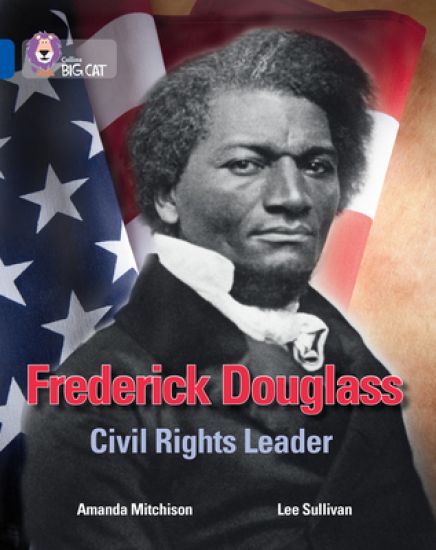
Build your child’s reading confidence at home with books at the right level Antislavery campaigner, author, diplomat and political statesmen, Frederick Douglass was one of the greatest men of his age. Having been enslaved himself, Frederick fought publicly against slavery and was an inspiration in the fight for social and political change. Written by Amanda Mitchison, find out about this life-long battle to fight for equality. Sapphire/Band 16 books offer longer reads to develop children's sustained engagement with texts and are more complex syntactically.Text type: A biographyCurriculum links: History, CitizenshipThis book has been quizzed for Accelerated Reader.
HarperCollins is proud to present its incredible range of best-loved, essential classics. You have seen how a man was made a slave; you shall see how a slave was made a man. Born into slavery during the early nineteenth century, Frederick Douglass escaped to freedom before he was twenty-one years old. From the moment he arrived in New York City, he felt a need to tell his story, one that mirrored so many people still enslaved in the South with no hope of escape. As an orator and preacher, Douglass was an abolitionist, supporter of women’s suffrage and staunch defender of equality for all. In his first autobiographical work, published in 1845, The Narrative of Frederick Douglass describes how he went from slave to a free man.
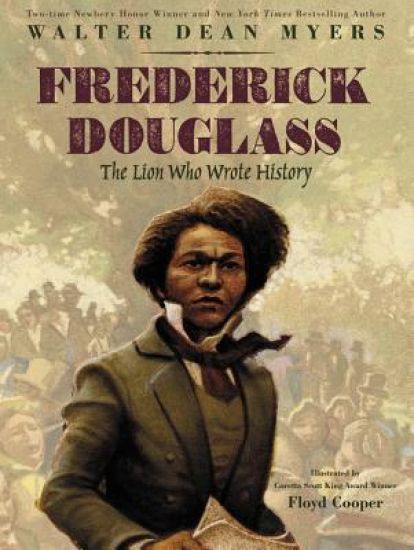
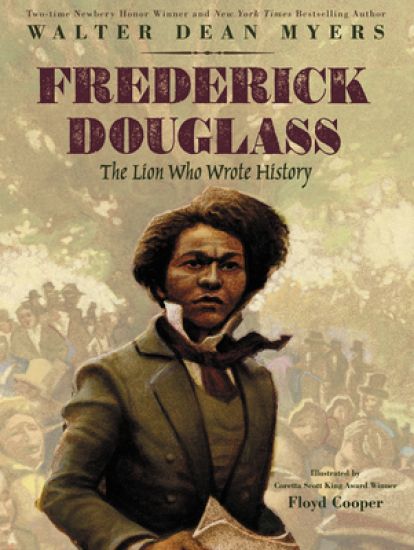
"The go-to Frederick Douglass biography for younger students" (Booklist starred review).In this powerful picture book biography, New York Times bestselling author Walter Dean Myers and acclaimed artist Floyd Cooper take readers on an inspiring journey through the life of Frederick Douglass.Frederick Douglass was born into slavery in the South, taught himself to read, and grew up to become an icon. He was a leader of the abolitionist movement, a celebrated writer, an esteemed speaker, and a social reformer, proving that "once you learn to read, you will be forever free."The story of one of America's most revered figures is brought to life by the text of award-winning author Walter Dean Myers and the sweeping, lush illustrations of artist Floyd Cooper. This picture book biography draws on Frederick Douglass's autobiographies and includes a timeline, making it an excellent source for reports."A stirring testament to the power of words and daring action to create change" (Publishers Weekly starred review).
"The go-to Frederick Douglass biography for younger students" (Booklist starred review).In this powerful picture book biography, New York Times bestselling author Walter Dean Myers and acclaimed artist Floyd Cooper take readers on an inspiring journey through the life of Frederick Douglass.Frederick Douglass was born into slavery in the South, taught himself to read, and grew up to become an icon. He was a leader of the abolitionist movement, a celebrated writer, an esteemed speaker, and a social reformer, proving that "once you learn to read, you will be forever free."The story of one of America's most revered figures is brought to life by the text of award-winning author Walter Dean Myers and the sweeping, lush illustrations of artist Floyd Cooper. This picture book biography draws on Frederick Douglass's autobiographies and includes a timeline, making it an excellent source for reports."A stirring testament to the power of words and daring action to create change" (Publishers Weekly starred review).
WITH AN INTRODUCTION BY KATE WILLIAMSFrederick II of Prussia attempted to escape his authoritarian father as a boy, but went on to become one of history's greatest rulers. Nancy Mitford brings all these contradictions and achievements to sparkling life in an fascinating, intimate biography.
An autobiography of author who was born into slavery in Maryland in 1818. He describes his life as a slave - the cruelty he suffered at the hands of plantation owners; his struggles to educate himself in a world where slaves are deliberately kept ignorant; and ultimately, his fight for his right to freedom.
'Highly readable and deeply researched' - Andrew Roberts 'Masterful ... brilliantly brings to life one of the most complex characters of modern European history' - Sunday Telegraph'It is sure to be the standard English-language account for many years. It instructs; it entertains; and it surprises' - Philip Mansel, The SpectatorFrederick the Great, King of Prussia, dominated the eighteenth century in the same way that Napoleon dominated the start of the nineteenth. He was a force of nature, a ruthless, brilliant, charismatic military commander, a monarch of exceptional energy and talent, a gifted composer, performer, poet and philosopher, and a discerning patron of artists, architects and writers, most famously Voltaire. From the very start of his reign he was an intensely divisive figure - fascinating even to those who hated him.Tim Blanning's brilliant new biography captures Frederick's vitality, complexity and flawed genius better than any previous writer. He also recreates a remarkable era, the last flowering of the old regime that would be swept away almost immediately after Frederick's death by the French Revolution. Equally at home on the battlefield or in the music room at Frederick's extraordinary miniature palace of Sanssouci, Blanning draws on a lifetime's immersion in the eighteenth century to present him in the round, with new attention paid to his cultural self-fashioning, including his sexuality. Frederick's spectre has hung over Germany ever since, both as inspiration and warning - Blanning at last allows us to understand him in his own time.
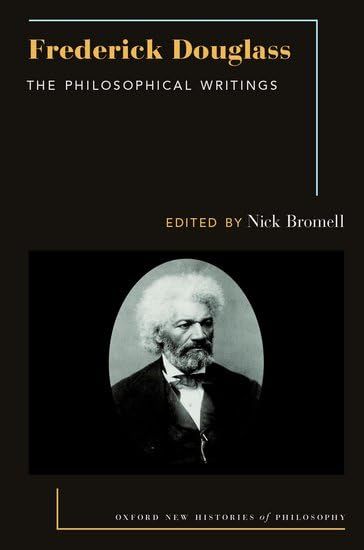
A newly edited collection of the seminal writings and speeches of a legendary writer, orator, and civil rights leader.The life of Frederick Douglass is nothing less than the history of America in the 19th century from slavery to reconstruction. His influence was felt in the political sphere, major social movements, literary culture, and even international affairs. His resounding words tell not only his own remarkable story, but also that of a burgeoning nation forced to reckon with its tremulous moral ground. This compact volume offers a full course on a necessary historical figure, giving voice once again to a man whose guiding words are needed now as urgently as ever. The Portable Frederick Douglass includes the full range of Douglass's writings, from autobiographical writings that span from his life as a slave child to his memories of slavery as an elder statesman in the late 1870s; his protest fiction (one of the first works of African American fiction); his brilliant oratory, constituting the greatest speeches of the Civil War era, which launched his political career; and his journalistic essays that range from cultural and political critique toart, literature, law, history, philosophy, and reform.
A new edition of the classic African American autobiography, now with with the inclusion of Douglass's other works.The pre-eminent American slave narrative published in 1845, the Narrative powerfully details the life of the abolitionist Frederick Douglass from his birth into slavery in 1818 to his escape to the North in 1838: how he endured the daily physical and spiritual brutalities of his owners and drivers, how he learned to read and write, and how he grew into a man who could only live free or die.Also included in this edition are Douglass's famous oration The Meaning of the Fourth of July to the Negro and his only known work of fiction, the novella The Heroic Slave.Frederick Augustus Washington Bailey was born into slavery in 1818 in Tuckahoe, Maryland. He changed his surname to Douglass to conceal his identity after escaping slavery in 1838 and making his way to Philadelphia and New York. Having been taught to read by the wife of one of his former owners, Douglass wrote later that literacy was his 'pathway from slavery to freedom', and in 1845 he published his instantly bestselling Narrative of the Life of Frederick Douglass, an American Slave. Renowned as the foremost African American advocate against slavery and segregation of his time, he repeatedly risked his own freedom as an antislavery lecturer, writer and publisher. He died in Washington, D.C., in 1895, and after lying in state in the nation's capital, was buried in the Mount Hope Cemetery in Rochester, New York.Ira Dworkin is Associate Director of the Prince Alwaleed Center for American Studies and Research and Assistant Professor of English and Comparative Literature at The American University in Cairo.
An updated edition of a classic African American autobiography, with new supplementary materials A Penguin Vitae Edition The preeminent American slave narrative first published in 1845, Frederick Douglass's Narrative powerfully details the life of the abolitionist from his birth into slavery in 1818 to his escape to the North in 1838, how he endured the daily physical and spiritual brutalities of his owners and driver, how he learned to read and write, and how he grew into a man who could only live free or die. In addition to Douglass's classic autobiography, this new edition also includes his most famous speech "What to the Slave Is the Fourth of July?" and his only known work of fiction, The Heroic Slave, which was written, in part, as a response to Harriet Beecher Stowe's Uncle Tom's Cabin. Penguin Classics presents Penguin Vitae, loosely translated as "Penguin of one's life," a deluxe hardcover series featuring a dynamic landscape of classic fiction and nonfiction that has shaped the course of our readers' lives. Penguin Vitae invites readers to find themselves in a diverse world of storytellers, with beautifully designed classic editions of personal inspiration, intellectual engagement, and creative originality.