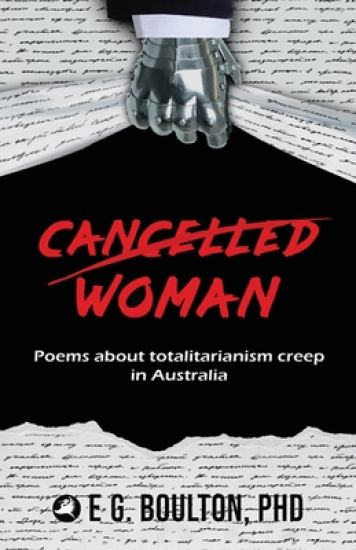
This book of poems and reflections captures an experience of the loss of freedom of expression, and other human rights, in western society at the start of the 21st century.
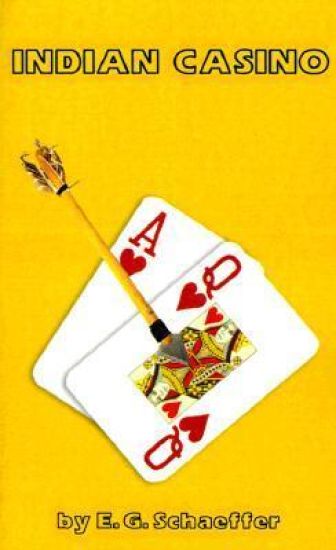
Abby Morris' life has finally made a change for the better, and not a moment too soon. A recent move to New Hampshire to pursue a new job has led to more than a simple change of scenery. Her new home has led her to Thomas Collier, an editor for a local newspaper, the sort of man she always yearned to find. There are just a couple of problems standing in the way of her new found happiness: Thom's ex-girlfriend, Sarah, and restless nights where she is bombarded with otherworldly dreams of a black bird watching her every move.For nearly a year, Sarah Wisdom's life had been everything she had ever wanted, but her road to happiness had taken an unexpected turn when her boyfriend took an exit out of her life. With Thom gone, she has to make a new road to contentment, or fight her way up an old path fueled by the desperation to be with the man she loves. Armed with nothing but her cell phone and a head full of tormenting visions of a malevolent crow, Sarah embarks on a trip to reclaim what she knows is rightfully hers. It's a journey that will lead her to an ancient stone circle known as Mystery Hill.
Browne's famous work, first published in 1902, was the essential text on literary history in Persian studies for many years. As an overview of Persian literature from the earliest times until Firdawsi, it continues to be a valuable reference. Out of print for some time, it is now reissued as a library edition, in facsimile to capture the feel of the original edition.
This book explains the nature of dampness in buildings, how to diagnose a dampness problem before it gets out of hand and how to deal with it. It covers the problems of rising dampness and condensation (and how to distinguish them), which are generally not fully understood, even by many professional surveyors. The book stresses the need to use a moisture meter to obtain reliable and comprehensive information. Dampness in Buildings will be of immediate practical use to surveyors, architects, builders, housing managers and health inspectors. It will be equally valuable to house owners and potential purchasers.
As this collection of essays demonstrates, over a long career Edward Goodwin Ballard has written on a wide range of topics of philosophical interest. Although the present volume can be enjoy ably browsed, it is not simply a sampling of his writings. Rather, herein Professor Ballard has chosen and organized essays which pertain to the major concerns of his philosophic life. He has long held that the function of philosophy, particularly in a time such as ours, is the discernment and analysis of basic principles (archai) and their consequences. Indeed, in Philosophy at the Crossroads. he recommended focusing upon the history of philosophy understood as the movement of recognizing and interpreting the shifts in first principles as they reflect and determine human change. For Ballard, the study of the history of philosophy, like philosophy itself, is not so much a body of knowledge as an exercise (an art) whiQh moves the practitioner towards social and individual maturity. He holds, along with Plato and Husserl, that philosophy is a process of conversion to the love of wisdom as well as a grasp of the means for its attainment. Throughout his writings, Ballard has maintained that the difficulties of this journey have to do with the limitations of the pilgrim. Human being is perspectival, finite, and inevitably ignorant. Philosophic command and self -recognition reside in the just assessment of the limits of human knowledge.
Technological change has been recognized as the major contributor to economic growth and has become one of the most important challenges to policy makers and managers. Many excellent books and papers have been written on the subject. Most of these deal with the macro or micro economic impact of technological change or the technological change process from invention and discovery to innovation, development, and final maturity as well as ultimate obsolescence of technology. This book is designed to present technological change as a decision process and explain the use of recently developed methods for the effective management of technological change. In particular, techniques for the effective choice among technological alternatives, timing of the introduction of new technology both in terms of its own status and that of the technology to be replaced if any, and the rate and method of introduction of new technology are presented. Management of technology is a complex decision process which is affected by both internal and external factors. The purpose of this book is to instruct the reader in effective technology deciSion making which involves the evaluation of the status of technology in use if any, the problem to be solved or output to be obtained, determination of environmental and internal constraints, and the competitive environment or market conditions which affect the technology decisions.
As we experience yet another deep economic recession, people throughout the world are feeling the symptoms of capitalist crisis, from unemployment to bankruptcy to deficits to cutbacks and so on. With this timely book, Murray E.G. Smith invites readers to a reconsideration of the themes pertinent to an understanding of capitalist economic crises and to discussion of the ways to overcome them. The text is broad-ranging, integrating eleven studies that consider the theory of labour-value from historical, philosophical, and economic perspectives. Smith incorporates a thorough review of the controversy that has raged around Marx’s theory of labour-value, reporting the key arguments of orthodox Marxists, neo-Ricardians, neo-orthodox Marxists, and fundamentalists Marxists. He concludes that the Marxian theory of labour-value remains a logically coherent and theoretically sound basis for understanding capitalism’s historical-structural crises. Also included is a reconsideration of Marx’s law of the falling tendency of the rate of profit along with a statistical analysis of long-term trends in the Canadian economy had lend support to Marx’s views. This original and important contribution to Marxist debates will appeal to an international community of political economists and Marx scholars. Its comprehensive reporting and analysis will also attract a broader audience of historians and philosopher.
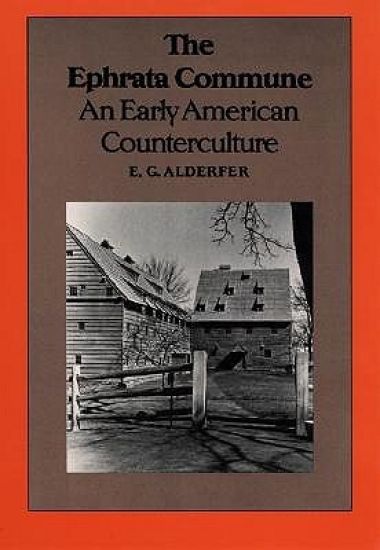
This title offers a picture of the founding, development, economy, calligraphy, printing, music, theology, inner tensions and self-destruction of the Ephrata Commune.
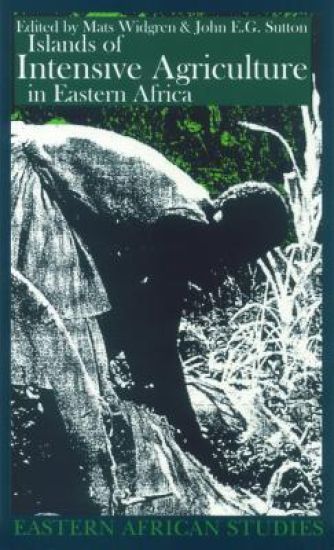
The East African Rift Valley is home to specialized agricultural regimes - their apparent isolation masking the degree of exchange between communities. This book reveals complex agricultural methods and dynamic farming strategies which evolved long before colonial intervention or recent development projects. These indigenous systems created spectacular landscapes, with terrace walls to conserve the soiland hill-furrow irrigation to supplement low or seasonal rainfall, thus allowing intensive exploitation of all usable land. Mulch or animal manure were applied to boost fertility on regularly planted fields. Labour, communal tasks and the allocation of land and water required social organisation and the use of sanctions. The studies examine 'islands' where intensive devices and integrated systems have been developed and maintained.Sometimes they are in relatively isolated and arid localities but are able to support surprising concentrations of population. These islands of intensive local cultivation are surrounded by a low-density 'sea' of livestock-herdersor extensive cultivators. Islands in the Eastern Rift Valley and flanking highlands - Iraqw in Tanzania, Marakwet in Kenya and Konso in Ethiopia - are illustrated by geographers and anthropologists applying an historical perspective. The archaeological example is of Engaruka in a dry stretch of the Rift in northern Tanzania where a cluster of nucleated villages with skilfully engineered irrigation thrived between the fifteenth and sixteenth centuries. Published in association with The British Institute in Eastern Africa North America: Ohio U Press; Uganda: Fountain Publishers; Kenya: EAEP
GRM 32 is the long-delayed follow-up of Grenfell & Hunt, 'The Hibeh Papyri I', published in 1906. It contains two Ptolemaic literary pieces. Others, mostly from Oxyrhynchus itself (alongside a small number from the Arsinoite or Heracleopolite nomes), appear to derive from a philosophical library.
The vivid story of a tightly knit group of travelers--connoisseurs, collectors, scientists--who dedicated themselves to exploring and preserving what they referred to as Old Japan and Old Japan's lasting influence on the culture of Gilded Age America. After the Civil War, the United States--as cultural historian and critic Christopher Benfey argues--lost its philosophical moorings and looked eastward, to Old Japan and its seemingly untouched indigenous culture, for balance and perspective. Japan, meanwhile, was trying to reinvent itself as a more cosmopolitan, modern state, transforming in the space of twenty-five years from a feudal backwater to an international power. It was the parallel rise of these two young nations that initiated some of the major power struggles--both military and economic--of the twentieth century. This great wave of historical and cultural reciprocity brought with it some larger-than-life personalities, and this is their story as well. The lure of unknown foreign cultures played out on both sides of the Pacific, in the lives of Herman Melville, Theodore Roosevelt, Henry Adams, John La Farge, Kakuzo Okakura (the author of The Book of Tea), Isabelle Gardner, and Lafcadio Hearn, among others. The Great Wave is a beautifully rendered meditation on the subject of cultural identity and on the consequences--both good and bad--of cultural cross-pollonation. Above all, like Louis Menand's The Metaphysical Club, it proves that what important history does at its best is transform our worldview.
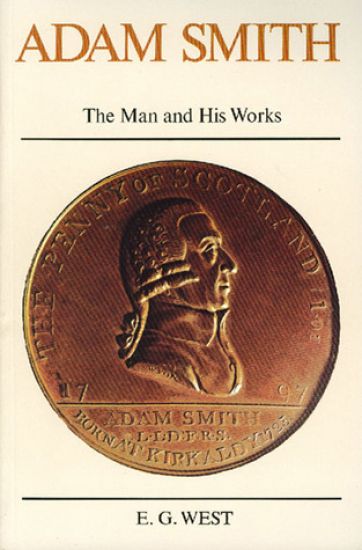
E G West brings to life Adam Smith's first years in the bustling Scottish seaport of Kirkcaldy (and recounts Smith's brief kidnapping, as a baby, by gypsies). We follow young Smith as a student, watch his thought develop as Professor of Moral Philosophy at Glasgow, and enjoy with him the hospitality of David Hume, the Parisian literary salons, Johnson, Burke, Gibbon, and other giants of the era. West gives us a masterful summary of 'The Wealth of Nations'. Even more significant, West restores to eminence an earlier work of Smith's, 'The Theory of Moral Sentiments'. "If The Wealth of Nations had never been written," he asserts, "this previous work would have earned for him a prominent place in intellectual history." West takes particular delight in using 'The Theory of Moral Sentiments' to rebut Marx's assumptions about laissez-faire capitalism.
E G West brings to life Adam Smith's first years in the bustling Scottish seaport of Kirkcaldy (and recounts Smith's brief kidnapping, as a baby, by gypsies). We follow young Smith as a student, watch his thought develop as Professor of Moral Philosophy at Glasgow, and enjoy with him the hospitality of David Hume, the Parisian literary salons, Johnson, Burke, Gibbon, and other giants of the era. West gives us a masterful summary of 'The Wealth of Nations'. Even more significant, West restores to eminence an earlier work of Smith's, 'The Theory of Moral Sentiments'. "If The Wealth of Nations had never been written," he asserts, "this previous work would have earned for him a prominent place in intellectual history." West takes particular delight in using 'The Theory of Moral Sentiments' to rebut Marx's assumptions about laissez-faire capitalism.
This book provides the first comprehensive history of the world airline industry from the early 1960s to the present day. It begins with the advent of jet airliners, covers the 'second' jet age of wide-bodied aircraft such as the Boeing 747 and DC-10, and closes with the introduction of the 'third' jet age, which begins with the double-decked giant Airbus A380. This reference volume is the ultimate resource for information on modern air transport.