

Kirjahaku
Etsi kirjoja tekijän nimen, kirjan nimen tai ISBN:n perusteella.
1000 tulosta hakusanalla George Barrell Cheever


Through the use of new sources, this study gives prominence to Cartier's business, social, and family milieu. It examines his emergence as a corporation lawyer, company director, landlord, and railway promoter as well as his political battles with his in-laws, his disintegrating marriage, and his long liaison with the unorthodox Luce Cuvillier. A rebel and political exile in 1837, Cartier by the 1850s was a member of the militia, a government minister, and a perennial defender of British traditions. His solid conservatism brough him support and rewards from the English-speaking bourgeoisie, the Grand Trunk Railway, and the Seminary of Montreal. After confederation, Cartier's political energies lessened, and his interest turned to his country estate and to pleasures of the table, drawing room, and stable. His degenerative disease and his alienation from his working-class voters in east-end Montreal made him vulnerable to his opponents, and his life ended in political defeat and implication in the Pacific scandal. His career, Young concludes, illustrates the development of bourgeois hegemony in Montreal after 1840 and the progressive integration of institutional, political, and economic structures to preserve that power.
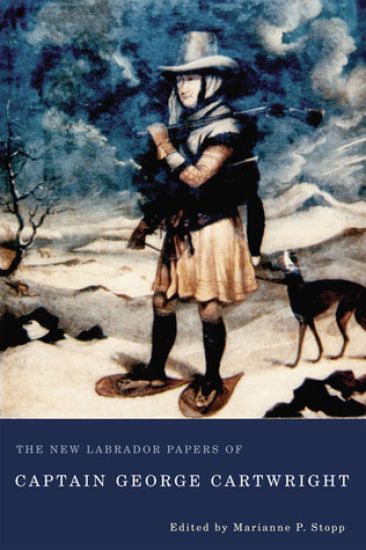
The New Labrador Papers of Captain George Cartwright
George Cartwright; Marianne P. Stopp
McGill-Queen's University Press
2008
sidottu
Captain George Cartwright (1739-1819), an English merchant who spent time in Labrador between 1770 and 1786, is best known for the fascinating account of his experiences provided in his Journal of Transactions and Events during a Residence of nearly Sixteen Years on the Coast of Labrador (1792). In recent years more of his papers have been discovered and stand alongside his journal as important source material for the early colonial period in the Atlantic region. Transcribed from original documents and extensively annotated by Marianne Stopp, the new papers deal with practical matters such as how to build a house in a sub-arctic climate, the best methods of sealing, trapping, and salmon fishing, as well as merchant rivalries and trade with Aboriginal groups. Cartwright's papers are of value for what they tell us about early methods and materials; Stopp's detailed introduction provides a history of Cartwright's Labrador and discusses these new papers with respect to early architecture, ethnohistory, material culture, and Inuit studies.
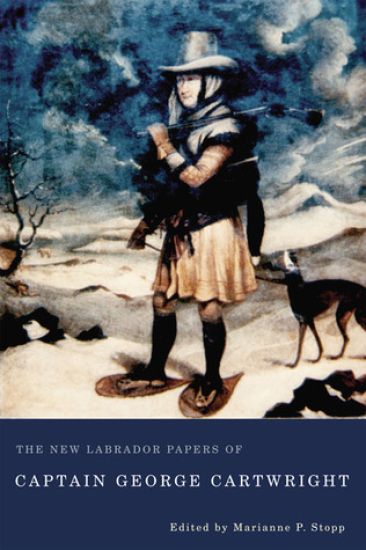
The New Labrador Papers of Captain George Cartwright
George Cartwright; Marianne P. Stopp
McGill-Queen's University Press
2013
nidottu
Captain George Cartwright (1739-1819), an English merchant who spent time in Labrador between 1770 and 1786, is best known for the fascinating account of his experiences provided in his Journal of Transactions and Events during a Residence of nearly Sixteen Years on the Coast of Labrador (1792). In recent years more of his papers have been discovered and stand alongside his journal as important source material for the early colonial period in the Atlantic region. Transcribed from original documents and extensively annotated by Marianne Stopp, the new papers deal with practical matters such as how to build a house in a sub-arctic climate, the best methods of sealing, trapping, and salmon fishing, as well as merchant rivalries and trade with Aboriginal groups. Cartwright's papers are of value for what they tell us about early methods and materials; Stopp's detailed introduction provides a history of Cartwright's Labrador and discusses these new papers with respect to early architecture, ethnohistory, material culture, and Inuit studies.

An eminent Canadian man of letters, scholar, naval officer and secret intelligence agent, CBC scriptwriter, musician, biographer, and translator, George Whalley (1915-1983) was also a gifted poet whose work spans five decades. Along with his major critical work, Poetic Process, and his superb biography, The Legend of John Hornby, Whalley's poetry is an important contribution to the emergence and development of twentieth-century modernism. The Complete Poems of George Whalley is the first collection of Whalley's entire poetic oeuvre. It contains the previously published work from his two books of poetry, Poems 1939-1944 and No Man An Island, as well as pieces that appeared in periodicals and edited collections. It gathers all his unpublished poems found in public archives and his personal papers, letters, and journals. This collection reinforces Whalley's place as the foremost Canadian poet of the Second World War, during and immediately after which the majority of these works were written. It also emphasizes the humour and playfulness of his early and late poems. Michael DiSanto's introduction provides an overview of Whalley's life and career, and examines the relationship between his poetics and criticism by consulting his essays, letters, and unpublished papers. Restoring Whalley's poetry and literary contributions to their rightful place in the Canadian canon, this comprehensive collection opens new chapters on mid-twentieth-century modernism and war poetry.
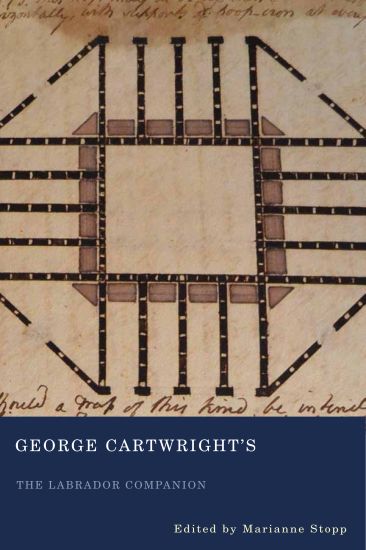
George Cartwright's The Labrador Companion
George Cartwright
McGill-Queen's University Press
2016
sidottu
New manuscripts directly related to Canada's history rarely come to light. The Labrador Companion, written in 1810 by Captain George Cartwright (1739-1819), and discovered in 2013, is a fascinating and unusual find because of its level of detail, its setting in a hardly studied part of Britain's fur-trade empire, and because it is a personal account rather than a trade outfit ledger or government document. This annotated edition transcribes The Labrador Companion in full. Cartwright documented the everyday work of Labrador's particular kind of fur-trade life based on his experiences operating a series of merchant stations in southern Labrador between 1770 and 1786. Although his focus is firmly on instruction in the manifold ways of capturing animals, he also provides rare glimpses of Innu and Inuit life as well as of housekeeping and gardening. The Labrador Companion includes a lengthy description of Labrador's fauna - of land, sea, and air - that counts among Canada's earliest natural history writing based on first-hand observation. A revealing account of fur-trade-era technology, methods, and materials, conveyed through one man's acquired knowledge and skills, The Labrador Companion gives a close-to-the-ground picture of the resource industries that were at the heart of British, and French, colonial presence in the Canadian northeast.
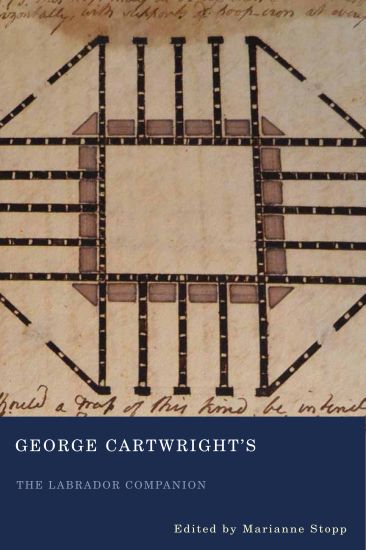
George Cartwright's The Labrador Companion
George Cartwright
McGill-Queen's University Press
2016
nidottu
New manuscripts directly related to Canada's history rarely come to light. The Labrador Companion, written in 1810 by Captain George Cartwright (1739-1819), and discovered in 2013, is a fascinating and unusual find because of its level of detail, its setting in a hardly studied part of Britain's fur-trade empire, and because it is a personal account rather than a trade outfit ledger or government document. This annotated edition transcribes The Labrador Companion in full. Cartwright documented the everyday work of Labrador's particular kind of fur-trade life based on his experiences operating a series of merchant stations in southern Labrador between 1770 and 1786. Although his focus is firmly on instruction in the manifold ways of capturing animals, he also provides rare glimpses of Innu and Inuit life as well as of housekeeping and gardening. The Labrador Companion includes a lengthy description of Labrador's fauna - of land, sea, and air - that counts among Canada's earliest natural history writing based on first-hand observation. A revealing account of fur-trade-era technology, methods, and materials, conveyed through one man's acquired knowledge and skills, The Labrador Companion gives a close-to-the-ground picture of the resource industries that were at the heart of British, and French, colonial presence in the Canadian northeast.


This book offers a detailed look into the life and works of Pulitzer Prize-winning Jewish American poet George Oppen. Born in 1908 in New York State, Oppen spent parts of his life working as a die cutter and carpenter and later running a furniture factory. Like the work he did with his hands during those years, his poetry used basic materials; he favored short, simple nouns and focused on concrete objects rather than abstractions. This book examines the characteristics of Oppen's work, particularly his use of small and often odd phrasings and unusual line formations to express the ultimately inexpressible. The first three chapters delve into his primitive modes, language and materials. Subsequent chapters tackle his subjects: cityscapes, light and water, and then animals and their relation to human history and struggles. His final collection of poems, Primitive, is examined in its own chapter, which is followed by an exploration of recurring specific phrases and concrete images. The author demonstrates how Oppen's poetry restores to readers an essential dimension of communication and experience that has been ignored or forgotten.

When the Civil War broke out in 1861, "The Battle Cry of Freedom" became perhaps the most common patriotic song echoing throughout the North. The author of that famous tune was George F. Root, and his many other patriotic songs established him as "the musician of the people." This biography follows Root's dual career as a nationally-known traveling teacher and a composer of popular songs. His wartime songs expressed the emotions of the soldiers and of the people at home. His later songs document such events as the assassination of President Lincoln, the settling of the West, the literature and humor of his day, and the many reform movements that defined the values of that era. His biography reveals how he became the musician of the people and how his critics responded.

Captain George W. Alexander was a controversial figure in Richmond during the Civil War, honored as a hero and condemned as a cruel prison superintendent. He was appointed Provost Marshal and put in charge of Castle Thunder in 1862, after escaping imprisonment at Fort McHenry. At his Confederate prison in Richmond, he oversaw prisoners of all types, including Confederates, women, slaves, Federal deserters, and spies. This biography traces Alexander's life from the U.S. Navy voyage with Commodore Perry to Japan, hiding in Canada after Lee's surrender, editorship of Washington DC's Sunday Gazette to his death in 1895. The main body of the text concentrates on Alexander's time at Castle Thunder, but the book also explores the evolution of the prison system and the provost marshal's department, touching on unusual prisoners and escape attempts. Appendix 1 is a partial list of prisoners at Castle Thunder and when, where, and why they were arrested. Appendix 2 is a transcript of the court martial of Private John R. Jones. Appendix 3 lists prisoners sent from Camp Holmes and appendix 4 is a report of Alexander as Assistant Provost Marshall. Appendix 5 is a pamphlet published by the Republican Party National Committee; it struck at the Democratic Party by scorning its "military prison keepers."

Having entered the world in 1896 as a poverty-stricken child named Naftaly (Nathan) Birnbaum, George Burns rose from New York's Lower East Side to the uppermost heights of celebrity in the entertainment industry. His storied romance with Gracie Allen led to their success in vaudeville, films, radio and television as one of the greatest comedy teams in history. Burns experienced both tragedy and triumph during his 100-year lifespan, ultimately recovering from the death of his beloved Gracie in 1964 to re-emerge as a solo performer and an Oscar-winning actor. This all-inclusive biography explores George Burns's career against the backdrop of American entertainment history in the 20th century. His loves, his close friendship with Jack Benny, his rivalry with Groucho Marx, and his latter-day success in films are all carefully detailed.
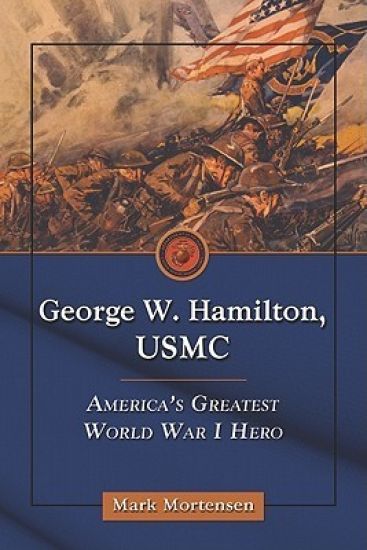
In its list of the "Top 10 Badass Marines," Leatherneck magazine declared that Major George W. Hamilton "never asked anyone to do anything he wasn't prepared to do himself...and do better." Indeed, the author of A History of the United States Marine Corps once called Hamilton "the most outstanding Marine Corps hero in World War I." A leader of the first major American assault on June 6, 1918, and the last ranking officer in the American Expeditionary Forces to learn that the war was over, Hamilton remained in the thick of the fighting from start to finish. Although he earned the Distinguished Service Cross, the Navy Cross, the Croix de Guerre, and two Medal of Honor recommendations for his service, Hamilton's fame stalled when he died prematurely in 1922. With this first complete biography, Hamilton takes his rightful place among the first rank of American military heroes.

A writer's writer, East Tennessee poet and novelist George Scarbrough enjoyed a career that spanned eight decades and included numerous awards. This biography makes use of Scarbrough's personal journals to tie his literature to his life and presents previously unpublished poetry, letters, and prose pieces. Somewhat overlooked during his lifetime, he is, as this book demonstrates, among the best poets of the 20th century.

? The Cincinnati Reds are recognized as one of the great teams in baseball history. Left fielder George Foster, an integral part of the Reds' back-to-back 1975 and 1976 World Championships, has never received proper credit for his contribution to their legacy. In 1977, Foster became the most feared slugger in the National League, batting .320, with 52 home runs and 149 runs batted in to win the NL MVP Award, establishing a new single-season home run record for the Reds' franchise that still stands. Yet Foster's big year was not enough to stem the emergence of the Los Angeles Dodgers, who roared out of the gate and ran away with the NL West Division pennant. This book tells the story of Foster's record-setting season and puts his pre-steroid era achievements in their proper perspective. The author chronicles the subsequent decline of the Big Red Machine and the rest of Foster's big league career.