
Kirjahaku
Etsi kirjoja tekijän nimen, kirjan nimen tai ISBN:n perusteella.
1000 tulosta hakusanalla Gilbert Dalgalian
The Life of the Right REV. Gilbert Burnet, Bishop of Salisbury, Who Died the 17th of March, 1714, in the 72d Year of His Age, and Interred in Clerkenwell Church, London.
Edward Goldney
Gale Ecco, Print Editions
2010
pokkari
The Stage Reminiscences of Mrs. Gilbert (1901)
Kessinger Publishing
2010
pokkari

Mary Price; Or, the Memoirs of a Servant-Maid ... Illustrated with Fifty-Two Engravings by F. Gilbert. Vol. I.
George W M Reynolds; Frederick Gilbert
British Library, Historical Print Editions
2011
pokkari
Title: Mary Price; or, the Memoirs of a servant-maid ... Illustrated with fifty-two engravings by F. Gilbert.Publisher: British Library, Historical Print EditionsThe British Library is the national library of the United Kingdom. It is one of the world's largest research libraries holding over 150 million items in all known languages and formats: books, journals, newspapers, sound recordings, patents, maps, stamps, prints and much more. Its collections include around 14 million books, along with substantial additional collections of manuscripts and historical items dating back as far as 300 BC.The FICTION & PROSE LITERATURE collection includes books from the British Library digitised by Microsoft. The collection provides readers with a perspective of the world from some of the 18th and 19th century's most talented writers. Written for a range of audiences, these works are a treasure for any curious reader looking to see the world through the eyes of ages past. Beyond the main body of works the collection also includes song-books, comedy, and works of satire. ++++The below data was compiled from various identification fields in the bibliographic record of this title. This data is provided as an additional tool in helping to insure edition identification: ++++ British Library Reynolds, George W. M.; Gilbert, Frederick; 1852, 53. 8 . 12623.k.3.

Mary Price; Or, the Memoirs of a Servant-Maid. Illustrated with Fifty-Two Engravings by F. Gilbert.
George W M Reynolds; Frederick Gilbert
British Library, Historical Print Editions
2011
pokkari
Title: Mary Price; or, the Memoirs of a servant-maid ... Illustrated with fifty-two engravings by F. Gilbert.Publisher: British Library, Historical Print EditionsThe British Library is the national library of the United Kingdom. It is one of the world's largest research libraries holding over 150 million items in all known languages and formats: books, journals, newspapers, sound recordings, patents, maps, stamps, prints and much more. Its collections include around 14 million books, along with substantial additional collections of manuscripts and historical items dating back as far as 300 BC.The FICTION & PROSE LITERATURE collection includes books from the British Library digitised by Microsoft. The collection provides readers with a perspective of the world from some of the 18th and 19th century's most talented writers. Written for a range of audiences, these works are a treasure for any curious reader looking to see the world through the eyes of ages past. Beyond the main body of works the collection also includes song-books, comedy, and works of satire. ++++The below data was compiled from various identification fields in the bibliographic record of this title. This data is provided as an additional tool in helping to insure edition identification: ++++ British Library Reynolds, George W. M.; Gilbert, Frederick; 1852, 53. 8 . 12623.k.3.

The Hand of Destiny; Or, the Life of Marianne ... Translated by Sir Gilbert Campbell, Bart.
Pierre Carlet De Chamblain De Marivaux; Gilbert Edward Campbell
British Library, Historical Print Editions
2011
pokkari
Title: The Hand of Destiny; or, the Life of Marianne ... Translated by Sir Gilbert Campbell, Bart.Publisher: British Library, Historical Print EditionsThe British Library is the national library of the United Kingdom. It is one of the world's largest research libraries holding over 150 million items in all known languages and formats: books, journals, newspapers, sound recordings, patents, maps, stamps, prints and much more. Its collections include around 14 million books, along with substantial additional collections of manuscripts and historical items dating back as far as 300 BC.The NOVELS OF THE 18th & 19th CENTURIES collection includes books from the British Library digitised by Microsoft. The collection includes major and minor works from a period which saw the development and triumph of the English novel. These classics were written for a range of audiences and will engage any reading enthusiast. ++++The below data was compiled from various identification fields in the bibliographic record of this title. This data is provided as an additional tool in helping to insure edition identification: ++++ British Library Carlet de Chamblain de Marivaux, Pierre; Campbell, Gilbert Edward; 1889.]. 160 p.; 8 . 12623.f.24.
The Months Illustrated by Pen and Pencil. Edited by ... S. M. the Designs by N. Humphreys, J. Gilbert, Etc.
Samuel LL D Manning; John Gilbert
British Library, Historical Print Editions
2011
pokkari

Jeff Trachtman, Individually and by His Father Gilbert M. Trachtman, Petitioners, V. Irving Anker, Etc., et al. U.S. Supreme Court Transcript of Record with Supporting Pleadings
Alan H Levine; Leonard Koerner
Gale Ecco, U.S. Supreme Court Records
2011
pokkari
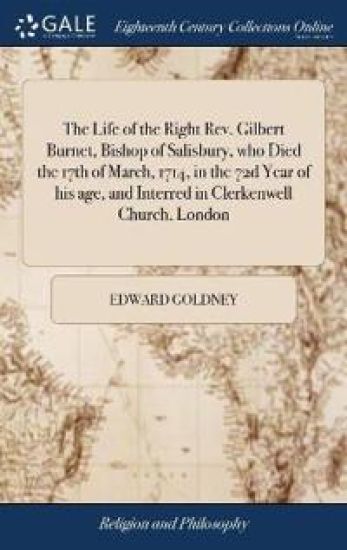
The Life of the Right Rev. Gilbert Burnet, Bishop of Salisbury, who Died the 17th of March, 1714, in the 72d Year of his age, and Interred in Clerkenwell Church, London
Edward Goldney
Gale Ecco, Print Editions
2018
sidottu
The 18th century was a wealth of knowledge, exploration and rapidly growing technology and expanding record-keeping made possible by advances in the printing press. In its determination to preserve the century of revolution, Gale initiated a revolution of its own: digitization of epic proportions to preserve these invaluable works in the largest archive of its kind. Now for the first time these high-quality digital copies of original 18th century manuscripts are available in print, making them highly accessible to libraries, undergraduate students, and independent scholars.The Age of Enlightenment profoundly enriched religious and philosophical understanding and continues to influence present-day thinking. Works collected here include masterpieces by David Hume, Immanuel Kant, and Jean-Jacques Rousseau, as well as religious sermons and moral debates on the issues of the day, such as the slave trade. The Age of Reason saw conflict between Protestantism and Catholicism transformed into one between faith and logic -- a debate that continues in the twenty-first century.++++The below data was compiled from various identification fields in the bibliographic record of this title. This data is provided as an additional tool in helping to insure edition identification: ++++British LibraryT082760Anonymous. By Edward Goldney, senior. Drop-head title. The printer is possibly Edward Goldney, junior. In: Edward Goldney's 'Infallible remedies', London, 1770]. London, 1770?]. 16p., plates: port.; 8
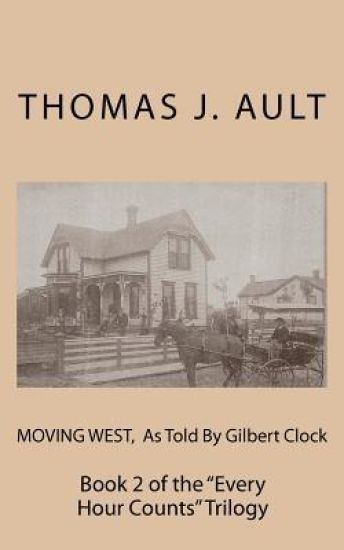
Moving West, As Told By Gilbert Clock: Book 2 of the "Every Hour Counts" Trilogy
Thomas J. Ault
Createspace Independent Publishing Platform
2011
nidottu
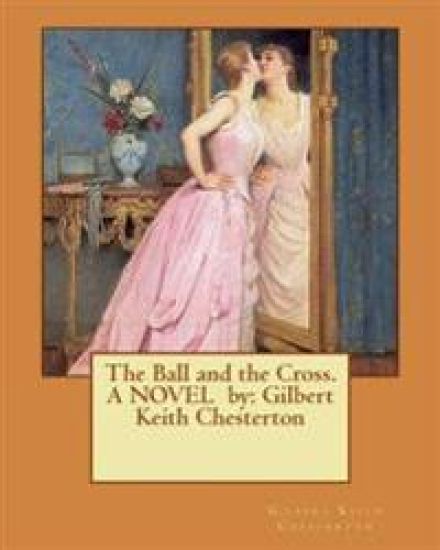
The Ball and the Cross. A NOVEL by: Gilbert Keith Chesterton
G. K. Chesterton
Createspace Independent Publishing Platform
2016
nidottu
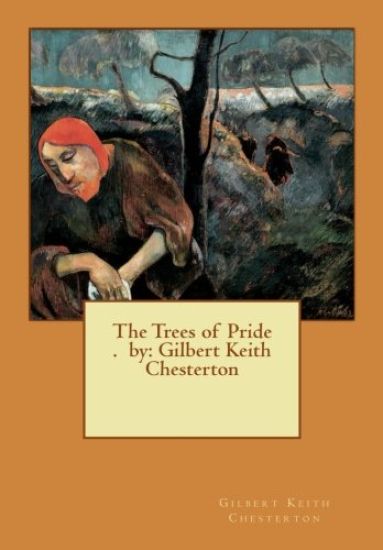
The Trees of Pride . by: Gilbert Keith Chesterton
G. K. Chesterton
Createspace Independent Publishing Platform
2016
nidottu
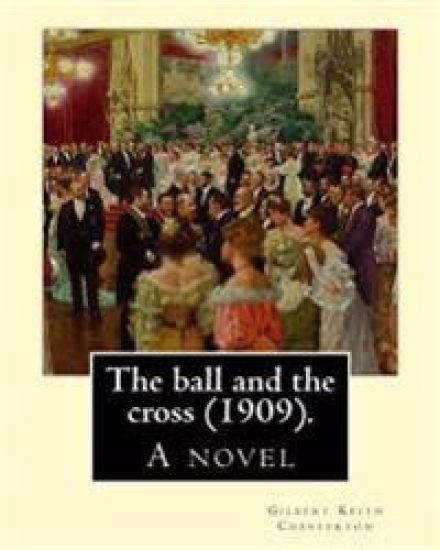
The ball and the cross (1909). By: Gilbert Keith Chesterton: A novel
G. K. Chesterton
Createspace Independent Publishing Platform
2016
nidottu
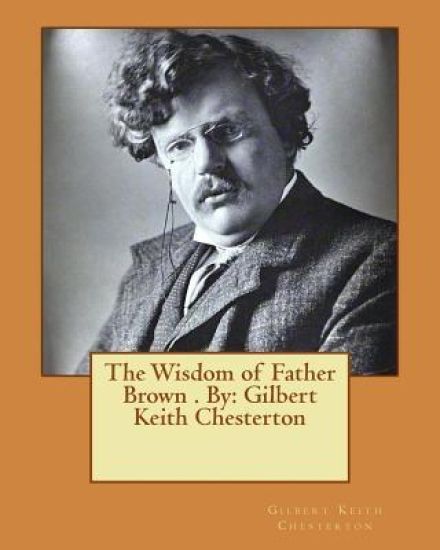
The Wisdom of Father Brown . By: Gilbert Keith Chesterton
G. K. Chesterton
Createspace Independent Publishing Platform
2016
nidottu
Father Brown is a fictional Roman Catholic priest and amateur sleuth created in the early 20th century by English novelist G. K. Chesterton. Father Brown is featured in a series of short stories where he solves mysteries and crimes using his intuition and keen understanding of human nature. The character was loosely based by Chesterton on Father John O'Connor (1870-1952), a parish priest in Bradford, who was involved in Chesterton's conversion to Catholicism in 1922.Chesterton portrays Father Brown as a short, stumpy Roman Catholic priest, with shapeless clothes, a large umbrella, and an uncanny insight into human evil. In "The Head of Caesar" he is "formerly priest of Cobhole in Essex, and now working in London". He makes his first appearance in the story "The Blue Cross" and continues to appear throughout five volumes of short stories, often assisted in his crime-solving by the reformed criminal M. Hercule Flambeau.
The Man Who Knew Too Much. Novel by: Gilbert Keith Chesterton. ( Include: The Ball and the Cross .By: Gilbert Keith Chesterton )
G. K. Chesterton
Createspace Independent Publishing Platform
2016
nidottu
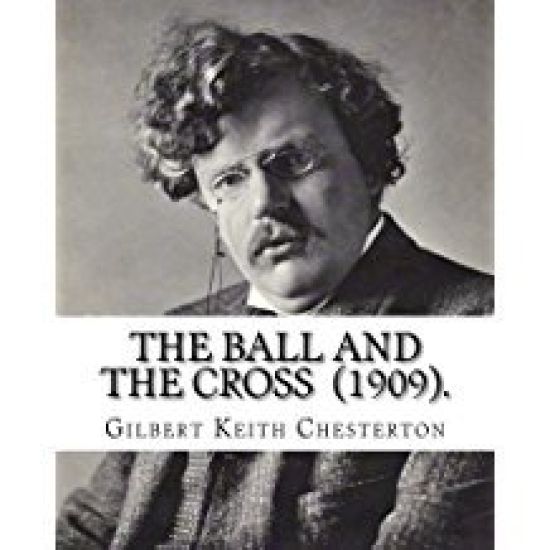
The Ball and the Cross (1909). By: Gilbert Keith Chesterton: Novel (World's classic's)
G. K. Chesterton
Createspace Independent Publishing Platform
2017
nidottu
The Ball and the Cross is a novel by G. K. Chesterton. The title refers to a more worldly and rationalist worldview, represented by a ball or sphere, and the cross representing Christianity. The first chapters of the book were serialized from 1905 to 1906 with the completed work published in 1909. The novel's beginning involves debates about rationalism and religion between a Professor Lucifer and a monk named Michael. A part of this section was quoted in Pope John Paul I's Illustrissimi letter to G. K. Chesterton.Much of the rest of the book concerns the dueling, figurative and somewhat more literal, of a Jacobite Catholic named Maclan and an atheist Socialist named Turnbull.Lynette Hunter has argued that the novel is more sympathetic to Maclan, but does indicate Maclan is also presented as in some ways too extreme.Turnbull, as well, is presented in a sympathetic light: both duelists are ready to fight for and die for their antagonistic opinions and, in doing so, develop a certain partnership that evolves into a friendship. The real antagonist is the world outside, which desperately tries to prevent from happening a duel over "mere religion" (a subject both duelists judge of utmost importance). Gilbert Keith Chesterton, KC*SG (29 May 1874 - 14 June 1936), better known as G. K. Chesterton, was an English writer, poet, philosopher, dramatist, journalist, orator, lay theologian, biographer, and literary and art critic. Chesterton is often referred to as the "prince of paradox".Time magazine has observed of his writing style: "Whenever possible Chesterton made his points with popular sayings, proverbs, allegories-first carefully turning them inside out." Chesterton is well known for his fictional priest-detective Father Brown, and for his reasoned apologetics. Even some of those who disagree with him have recognised the wide appeal of such works as Orthodoxy and The Everlasting Man. Chesterton, as a political thinker, cast aspersions on both Progressivism and Conservatism, saying, "The whole modern world has divided itself into Conservatives and Progressives. The business of Progressives is to go on making mistakes. The business of the Conservatives is to prevent the mistakes from being corrected."Chesterton routinely referred to himself as an "orthodox" Christian, and came to identify this position more and more with Catholicism, eventually converting to Catholicism from High Church Anglicanism. George Bernard Shaw, Chesterton's "friendly enemy" according to Time, said of him, "He was a man of colossal genius."Biographers have identified him as a successor to such Victorian authors as Matthew Arnold, Thomas Carlyle, Cardinal John Henry Newman, and John Ruskin. Chesterton was born in Campden Hill in Kensington, London, the son of Marie Louise, n e Grosjean, and Edward Chesterton.He was baptised at the age of one month into the Church of England, though his family themselves were irregularly practising Unitarians.According to his autobiography, as a young man Chesterton became fascinated with the occult and, along with his brother Cecil, experimented with Ouija boards.Chesterton was educated at St Paul's School, then attended the Slade School of Art to become an illustrator. The Slade is a department of University College London, where Chesterton also took classes in literature, but did not complete a degree in either subject.
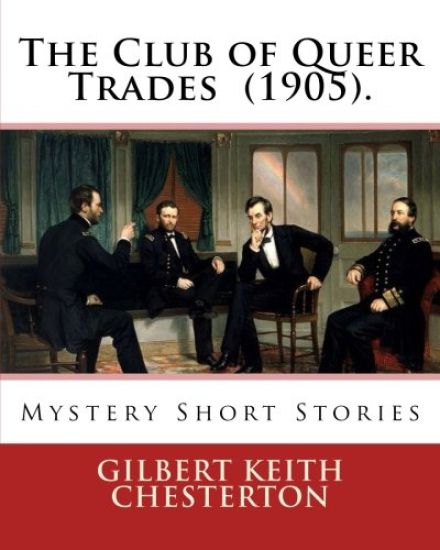
The Club of Queer Trades (1905). By: Gilbert Keith Chesterton: Mystery Short Stories
G. K. Chesterton
Createspace Independent Publishing Platform
2017
nidottu
The Club of Queer Trades is a collection of stories by G. K. Chesterton first published in 1905.Each story in the collection is centered on a person who is making his living by some novel and extraordinary means (a "queer trade", using the word "queer" in the sense of "peculiar"). To gain admittance one must have invented a unique means of earning a living and the subsequent trade being the main source of income.... Gilbert Keith Chesterton, KC*SG (29 May 1874 - 14 June 1936), better known as G. K. Chesterton, was an English writer, poet, philosopher, dramatist, journalist, orator, lay theologian, biographer, and literary and art critic. Chesterton is often referred to as the "prince of paradox". Time magazine has observed of his writing style: "Whenever possible Chesterton made his points with popular sayings, proverbs, allegories-first carefully turning them inside out." Chesterton is well known for his fictional priest-detective Father Brown, and for his reasoned apologetics. Even some of those who disagree with him have recognised the wide appeal of such works as Orthodoxy and The Everlasting Man.Chesterton, as a political thinker, cast aspersions on both Progressivism and Conservatism, saying, "The whole modern world has divided itself into Conservatives and Progressives. The business of Progressives is to go on making mistakes. The business of the Conservatives is to prevent the mistakes from being corrected."Chesterton routinely referred to himself as an "orthodox" Christian, and came to identify this position more and more with Catholicism, eventually converting to Catholicism from High Church Anglicanism. George Bernard Shaw, Chesterton's "friendly enemy" according to Time, said of him, "He was a man of colossal genius."Biographers have identified him as a successor to such Victorian authors as Matthew Arnold, Thomas Carlyle, Cardinal John Henry Newman, and John Ruskin.
The Flying Inn (1914). By Gilbert Keith Chesterton: Novel
G. K. Chesterton
Createspace Independent Publishing Platform
2017
nidottu
The Flying Inn is the final novel by G. K. Chesterton, first published in 1914. It is set in a future England where the Temperance movement has allowed a bizarre form of "Progressive" Islam to dominate the political and social life of the country. Because of this, alcohol sales to the poor are effectively prohibited, while the rich can get alcoholic drinks "under a medical certificate". The plot centres on the adventures of Humphrey Pump and Captain Patrick Dalroy, who roam the country in their cart with a barrel of rum in an attempt to evade Prohibition, exploiting loopholes in the law to temporarily prevent the police taking action against them. Eventually the heroes and their followers foil an attempted coup by an Islamic military force. The novel includes the poem, The Rolling English Road. The poem was first published under the title A Song of Temperance Reform in the New Witness in 1913.. Gilbert Keith Chesterton, KC*SG (29 May 1874 - 14 June 1936), better known as G. K. Chesterton, was an English writer, poet, philosopher, dramatist, journalist, orator, lay theologian, biographer, and literary and art critic. Chesterton is often referred to as the "prince of paradox". Time magazine has observed of his writing style: "Whenever possible Chesterton made his points with popular sayings, proverbs, allegories-first carefully turning them inside out." Chesterton is well known for his fictional priest-detective Father Brown, and for his reasoned apologetics. Even some of those who disagree with him have recognised the wide appeal of such works as Orthodoxy and The Everlasting Man.Chesterton, as a political thinker, cast aspersions on both Progressivism and Conservatism, saying, "The whole modern world has divided itself into Conservatives and Progressives. The business of Progressives is to go on making mistakes. The business of the Conservatives is to prevent the mistakes from being corrected."Chesterton routinely referred to himself as an "orthodox" Christian, and came to identify this position more and more with Catholicism, eventually converting to Catholicism from High Church Anglicanism. George Bernard Shaw, Chesterton's "friendly enemy" according to Time, said of him, "He was a man of colossal genius."Biographers have identified him as a successor to such Victorian authors as Matthew Arnold, Thomas Carlyle, Cardinal John Henry Newman, and John Ruskin. Chesterton was born in Campden Hill in Kensington, London, the son of Marie Louise, n e Grosjean, and Edward Chesterton.He was baptised at the age of one month into the Church of England, though his family themselves were irregularly practising Unitarians.According to his autobiography, as a young man Chesterton became fascinated with the occult and, along with his brother Cecil, experimented with Ouija boards. Chesterton was educated at St Paul's School, then attended the Slade School of Art to become an illustrator. The Slade is a department of University College London, where Chesterton also took classes in literature, but did not complete a degree in either subject......
The Man Who Knew Too Much (1922). by: Gilbert K. Chesterton, Illustrated By: W (William). Hatherell (1855-1928): Detective Stories
W. Hatherell; Gilbert K. Chesterton
Createspace Independent Publishing Platform
2017
nidottu
The Man Who Knew Too Much and other stories (1922) is a book of detective stories by English writer G. K. Chesterton, published in 1922 by Cassell and Company in the United Kingdom, and Harper Brothers in the United States.The book contains eight connected short stories about "The Man Who Knew Too Much", and additional unconnected stories featuring separate heroes/detectives. The United States edition contained one of these additional stories: "The Trees of Pride", while the United Kingdom edition contained "Trees of Pride" and three more, shorter stories: "The Garden of Smoke", "The Five of Swords" and "The Tower of Treason". Horne Fisher, "The Man Who Knew Too Much", is the main protagonist of the first eight stories. In the final story, "The Vengeance of the Statue", Fisher notes: "The Prime Minister is my father's friend. The Foreign Minister married my sister. The Chancellor of the Exchequer is my first cousin." Because of these intimate relationships with the leading political figures in the land, Fisher knows too much about the private politics behind the public politics of the day. This knowledge is a burden to him in the eight stories, because he is able to uncover the injustices and corruptions of the murders in each story, but in most cases the real killer gets away with the killing because to bring him openly to justice would create a greater chaos: starting a war, reinciting Irish rebellions or removing public faith in the government. In the seventh story, "The Fad of the Fisherman", the Prime Minister himself is the murderer, who kills the financier whose country house he is visiting because the financier is trying to start a war with Sweden over "the Danish ports". By killing his host, the Prime Minister seeks to avoid a war in which many more people would die, and the financier would profit at the cost of thousands of lives.In "The Vanishing Prince", an Irish rebel, Michael, is cornered in a tower, but a junior policeman named Wilson kills two senior police officers to be promoted in the field to become officer in charge of the case. He then tries to blame the two murders on the rebel to ensure he is hung. The rebel, otherwise a gentleman, is enraged and shoots (but only wounds) Wilson. Fisher, however, is forced to arrest Michael: "Wilson recovered, and we managed to persuade him to retire. But we had to pension that damnable murderer more magnificently than any hero who ever fought for England. I managed to save Michael from the worst, but we had to send that perfectly innocent man to penal servitude for a crime we know he never committed; but it was only afterwards that we could connive in a sneakish way at his escape. And Sir Walter Carey is Prime Minister of this country, which he would probably never have been if the truth had been told of such a horrible scandal in his department. It might have done for us altogether in Ireland; it would certainly have done for him. And he is my father's oldest friend, and has always smothered me in kindness. I am too tangled up in the whole thing, you see, and I was certainly never born to set it right." Fisher is accompanied in the stories by a political journalist, Harold March, but rather than being his "Watson", the stories are all written in the third person. Less a clumsy foil to reflect Fisher's brilliance, March is more of a sounding board for Fisher to discuss Chesterton's paradoxes and philosophy. Apart from the first story, in which March meets Fisher, and the final story, the stories have no internal chronology, and so can be read in any order.... Gilbert Keith Chesterton, KC*SG (29 May 1874 - 14 June 1936), better known as G. K. Chesterton, was an English writer, poet, philosopher, dramatist, journalist, orator, lay theologian, biographer, and literary and art critic. WILLIAM HATHERELL (1855-1928).William Hatherell was a Victorian era illustrator who worked for magazines such as The Graphic, Harpers, Scribner's and the Century.
The Napoleon of Notting Hill (1904). By: Gilbert Keith Chesterton: political satire
G. K. Chesterton
Createspace Independent Publishing Platform
2017
nidottu
The Napoleon of Notting Hill is a novel written by G. K. Chesterton in 1904, set in a nearly unchanged London in 1984. Although the novel is set in the future, it is, in effect, set in an alternative reality of Chesterton's own period, with no advances in technology or changes in the class system or attitudes. It postulates an impersonal government, not described in any detail, but apparently content to operate through a figurehead king, randomly chosen.The dreary succession of randomly selected Kings of England is broken up when Auberon Quin, who cares for nothing but a good joke, is chosen. To amuse himself, he institutes elaborate costumes for the provosts of the districts of London. All are bored by the King's antics except for one earnest young man who takes the cry for regional pride seriously - Adam Wayne, the eponymous Napoleon of Notting Hill. While the novel is humorous (one instance has the King sitting on top of an omnibus and speaking to it as to a horse: "Forward, my beauty, my Arab," he said, patting the omnibus encouragingly, "fleetest of all thy bounding tribe"), it is also an adventure story. Chesterton is not afraid to let blood be drawn in his battles, fought with sword and halberd in the London streets between neighbouring boroughs; Wayne thinks up some ingenious strategies, and Chesterton does not shrink from the death in combat of some of his characters. Finally, the novel is philosophical, contemplating the value and meaning of man's actions and the virtue of respect for one's enemies. Gilbert Keith Chesterton, KC*SG (29 May 1874 - 14 June 1936), better known as G. K. Chesterton, was an English writer, poet, philosopher, dramatist, journalist, orator, lay theologian, biographer, and literary and art critic. Chesterton is often referred to as the "prince of paradox". Time magazine has observed of his writing style: "Whenever possible Chesterton made his points with popular sayings, proverbs, allegories-first carefully turning them inside out." Chesterton is well known for his fictional priest-detective Father Brown, and for his reasoned apologetics. Even some of those who disagree with him have recognised the wide appeal of such works as Orthodoxy and The Everlasting Man.Chesterton, as a political thinker, cast aspersions on both Progressivism and Conservatism, saying, "The whole modern world has divided itself into Conservatives and Progressives. The business of Progressives is to go on making mistakes. The business of the Conservatives is to prevent the mistakes from being corrected."Chesterton routinely referred to himself as an "orthodox" Christian, and came to identify this position more and more with Catholicism, eventually converting to Catholicism from High Church Anglicanism. George Bernard Shaw, Chesterton's "friendly enemy" according to Time, said of him, "He was a man of colossal genius."Biographers have identified him as a successor to such Victorian authors as Matthew Arnold, Thomas Carlyle, Cardinal John Henry Newman, and John Ruskin. Chesterton was born in Campden Hill in Kensington, London, the son of Marie Louise, n e Grosjean, and Edward Chesterton.He was baptised at the age of one month into the Church of England, though his family themselves were irregularly practising Unitarians.According to his autobiography, as a young man Chesterton became fascinated with the occult and, along with his brother Cecil, experimented with Ouija boards.