Title: Otto mesi d'Africa. Con prefazione di Dario Papa.Publisher: British Library, Historical Print EditionsThe British Library is the national library of the United Kingdom. It is one of the world's largest research libraries holding over 150 million items in all known languages and formats: books, journals, newspapers, sound recordings, patents, maps, stamps, prints and much more. Its collections include around 14 million books, along with substantial additional collections of manuscripts and historical items dating back as far as 300 BC.The HISTORY OF TRAVEL collection includes books from the British Library digitised by Microsoft. This collection contains personal narratives, travel guides and documentary accounts by Victorian travelers, male and female. Also included are pamphlets, travel guides, and personal narratives of trips to and around the Americas, the Indies, Europe, Africa and the Middle East. ++++The below data was compiled from various identification fields in the bibliographic record of this title. This data is provided as an additional tool in helping to insure edition identification: ++++ British Library Chiesi, Gustavo; Norsa, Giulio; 1888. 318 p.; 8 . 10097.de.13.
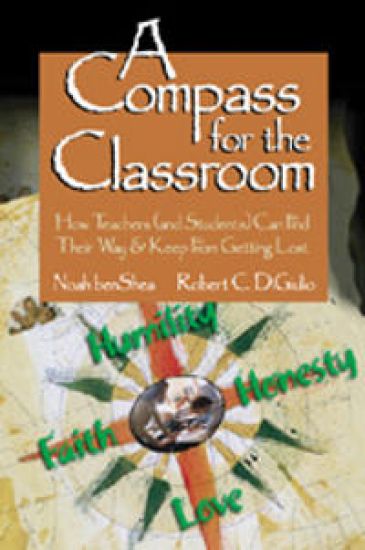
A Compass for the Classroom provides guidance, support, and inspiration. The book presents a new model of reflection using the metaphor of a compass, with directional points of humility, honesty, love, and faith. It is a guide to finding one's way in life by always considering the four points in our decisions and views. The book provides teachers with something to feed the spirit to succeed in the somewhat selfless struggle that educators take on to help students learn and thrive. It includes examples of the compass points in action in classrooms, as well as assessment checklists for teachers and students.
A Compass for the Classroom provides guidance, support, and inspiration. The book presents a new model of reflection using the metaphor of a compass, with directional points of humility, honesty, love, and faith. It is a guide to finding one's way in life by always considering the four points in our decisions and views. The book provides teachers with something to feed the spirit to succeed in the somewhat selfless struggle that educators take on to help students learn and thrive. It includes examples of the compass points in action in classrooms, as well as assessment checklists for teachers and students.
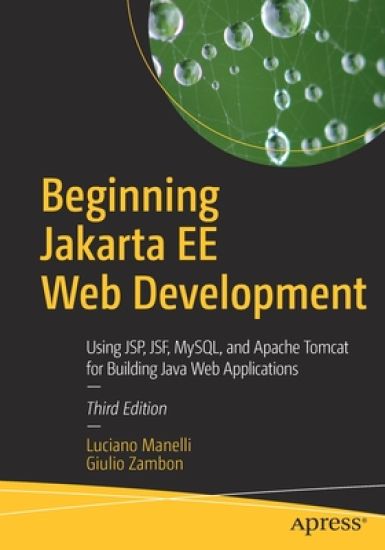
Start building Java-based web applications now, even if you’re a complete newcomer to Java. Comprehensive and example-driven, this book is all you need to develop dynamic Java-based web applications using JSP, connect to databases with JSF, and put them into action using the popular open source Java web server, Apache Tomcat.Beginning Jakarta EE Web Development is a comprehensive introduction to building Java-based web applications using JSP, JSF, MySQL, and the Apache Tomcat web application server. Other APIs including JSON, JSTL, and XML parser are covered along the way.Key concepts are made easy to grasp with numerous working examples and a walk-through of the development of a complete ecommerce project. This book is written for professionals by practicing Java web application professionals and experts. What You Will LearnBuild Java-based web applications using JSP and JSF with Eclipse Jakarta EEConfigureyour database with MySQLDefine XML documents for your applicationsUse the Apache MyFaces APIs to create JSF applicationsIntegrate and implement JSF and JSP togetherBuild an online ecommerce web application Who This Book Is ForProgrammers new to programming in Java and programming in general.
Learn everything you need to know to manage data as a product and shift toward a more modular and decentralized socio-technical data architecture to deliver business value in an incremental, measurable, and sustainable way Key Features Leverage data-as-product to unlock the modular platform potential and fix flaws in traditional monolithic architectures Learn how to identify, implement, and operate data products throughout their life cycle Design and execute a forward-thinking strategy to turn your data products into organizational assets Purchase of the print or Kindle book includes a free PDF eBook Book DescriptionTraditional monolithic data platforms struggle with scalability and burden central data teams with excessive cognitive load, leading to challenges in managing technological debt. As maintenance costs escalate, these platforms lose their ability to provide sustained value over time. With two decades of hands-on experience implementing data solutions and his pioneering work in the Open Data Mesh Initiative, Andrea Gioia brings practical insights and proven strategies for transforming how organizations manage their data assets. Managing Data as a Product introduces a modular and distributed approach to data platform development, centered on the concept of data products. In this book, you’ll explore the rationale behind this shift, understand the core features and structure of data products, and learn how to identify, develop, and operate them in a production environment. The book guides you through designing and implementing an incremental, value-driven strategy for adopting data product-centered architectures, including strategies for securing buy-in from stakeholders. Additionally, it explores data modeling in distributed environments, emphasizing its crucial role in fully leveraging modern generative AI solutions. By the end of this book, you’ll have gained a comprehensive understanding of product-centric data architecture and the essential steps needed to adopt this modern approach to data management.What you will learn Overcome the challenges in scaling monolithic data platforms, including cognitive load, tech debt, and maintenance costs Discover the benefits of adopting a data-as-a-product approach for scalability and sustainability Navigate the complete data product lifecycle, from inception to decommissioning Automate data product lifecycle management using a self-serve platform Implement an incremental, value-driven strategy for transitioning to data-product-centric architectures Optimize data modeling in distributed environments to enhance GenAI-based use cases Who this book is forIf you’re an experienced data engineer, data leader, architect, or practitioner committed to reimagining your data architecture and designing one that enables your organization to get the most value from your data in a sustainable and scalable way, this book is for you. Whether you’re a staff engineer, product manager, or a software engineering leader or executive, you’ll find this book useful. Familiarity with basic data engineering principles and practices is assumed.
Hydrogen is a key vector towards a future sector-coupled and more integrated energy system. Hydrogen can be used as long term, even seasonal, storage for electricity itself, as well as a fuel in the transport and residential sectors, and as a feedstock for the chemical industries. There are several competing, or complementary, technologies for generating hydrogen from various sources, and then to store it, to transport it, and to use it in various sectors. This book offers an overview of the currently available technologies, taking into account their principles, advantages and shortcomings, and so enabling readers to make informed choices on the best options for given conditions. Chapters cover hydrogen characteristics, production of hydrogen, storage and distribution, and hydrogen energy utilisation and applications in different sectors. The work conveys the entire chain of energy use of hydrogen, from production to final use. Chemistry and materials science are covered, along with efficiency considerations. Hydrogen Technologies for Energy presents a concise but thorough overview for researchers in universities and in industry who are involved in hydrogen technology and energy-related topics. The book is also a useful resource for graduate students interested in a future in this field of research and development.
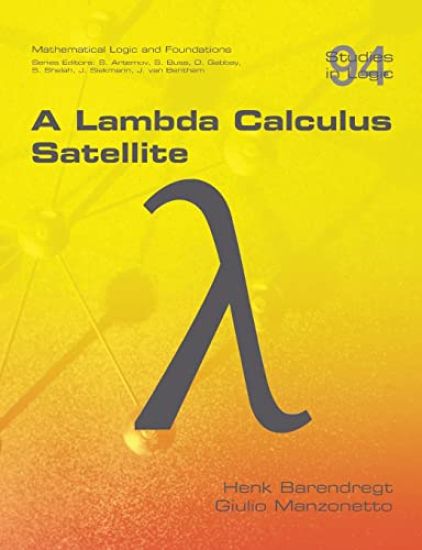
In 1936 the notion of intuitive computability was operationalized in two different ways: via Turing machines and via lambda-calculus. The difference consisted in manipulating beads (bits) for the former approach versus manipulating trees (rewriting lambda-terms) for the latter. Both proposals turned out to formalize the same notion of computability, and led to the Church-Turing Thesis, claiming that intuitive computability is captured in the correct way.This resulted in the foundation of imperative and functional programming. Variants of lambda-calculus are being used in another powerful field of applications, namely proof-checking, the basis for certifying mathematical theorems and thereby high tech industrial products. These two areas of research are still being actively investigated and make lambda-calculus a major tool in the present stages of science and of the industrial revolution.In this book lambda-calculus is considered from another angle: as a study of these tree-like structures, investigating the relation between their shape and their action. This is like studying numbers qualitatively, rather than for their applications dealing quantitatively with objects and phenomena in the world.Barendregt's book The Lambda Calculus, its Syntax and Semantics' (1981/84), does treat the subject from the same methodological viewpoint, and includes several open conjectures. In the more than four decades that have passed, most - but not all - of these conjectures have been solved, sometimes in ingenious PhD theses. This Satellite' to the aforementioned book presents these solutions in a uniform style and adds other topics of interest.
An informative guide to the most iconic works in The Frick Collection honoring the museum's reopening post-renovation. From paintings and sculpture to decorative arts, this publication encapsulates the range and depth of Henry Clay Frick's collection. Organized chronologically and by geographic school, The Frick Collection is designed to offer a sense of the connections between, and diversity among, contemporaneous artistic production across different fields, genres, and media in early modern Europe. When American industrialist Henry Clay Frick (1849–1919) built his New York home on the Upper East Side of Manhattan, he intended for it to one day become a public art museum for the "use and benefit of all persons whomsoever." After his death and that of his wife, Adelaide, in 1931, the house was transformed into a museum and was opened to the public in December 1935. The Frick's daughter Helen Clay Frick (1888–1984), along with a board of trustees, was instrumental in the continuance of her father's legacy and the care of his bequest. Over the years, the collection grew and the number of visitors increased, requiring renovation campaigns in the 1970s and 2020s to accommodate these changes, the latest giving access to the public for the first time to a suite of rooms on the second floor. Originally the Frick family's private quarters, these rooms are now galleries for works of art, providing space for more objects to be on view. The scope of the collection, which spans from about 1300 to 1900, was never intended to be encyclopedic and reflects the taste of the founder, who chose to acquire works for his home that were "pleasing to live with."
TWO LEGENDARY MONSTERS, ONE SCARY VOLUME! Straight out of Italy, here comes a bold new take on two classic monster stories… "Fumetti style!" Dracula x Frankenstein is the perfect graphic novel to get this year for Halloween and beyond. Jonathan Harker, a British solicitor, arrives in Transylvania to meet his client, Count Dracula. In the Count's castle, he finds himself playing the part of the bait in a cruel game that Dracula set up for his host. July 31, 1797. During an expedition to the North Pole, Captain Walton is stuck with his ship in the ice and scans the horizon. Suddenly, someone emerges from the gloom, on a dog sled. The driver is an exhausted man, Victor Frankenstein. And once he has recovered from the cold he will have to tell the captain about his near-death experience with the mysterious creature to which he himself gave life to…
USA, 1875. Embarqu la suite de son p re adoptif, un inventeur de g nie, recrut pour une mission de sauvetage, Alo, jeune Indien orphelin va devoir parcourir les USA du Colorado l'Alaska. Un v ritable voyage initiatique qui l'am nera d couvrir ses racines et les parts sombres de son pass un secret enfoui que plusieurs tribus indiennes tentent de pr server et de dissimuler depuis des g n rations. Ce recueil contient le storyboard, le crayonn et l'encrage. Un moyen exceptionnel pour d couvrir les secrets de la cr ation de cette bande dessin e. http: //shop.sandawe.com/recherche?search_query=alo+du+vent
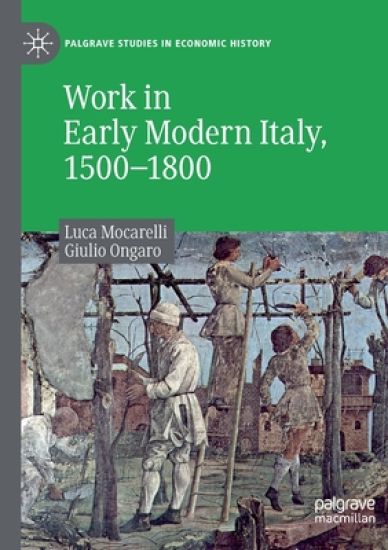
Recent decades have seen many economic history books and articles published about working men and women, small and big entrepreneurs, guilds and state manufactures, farmers and journeymen, and children and citizens. Studies have been conducted both at a macro and a micro level, at a global and at a local scale and with regional and national approaches aimed at analysing cultural, social and economic phenomena associated with the world of work. Yet, there is still new ground to be covered. This book aims to fill a gap in early modern history by presenting new insights in the study of global labour history. It considers the whole Italian peninsula as one geographical unit of analysis, encompassing all of the features that characterize labour cultures during the early modern period. It details the evolution of forms of labour in both agriculture and manufacture and the role of labour as an economic, social and cultural factor in the evolution of the Italian area.
Recent decades have seen many economic history books and articles published about working men and women, small and big entrepreneurs, guilds and state manufactures, farmers and journeymen, and children and citizens. Studies have been conducted both at a macro and a micro level, at a global and at a local scale and with regional and national approaches aimed at analysing cultural, social and economic phenomena associated with the world of work. Yet, there is still new ground to be covered. This book aims to fill a gap in early modern history by presenting new insights in the study of global labour history. It considers the whole Italian peninsula as one geographical unit of analysis, encompassing all of the features that characterize labour cultures during the early modern period. It details the evolution of forms of labour in both agriculture and manufacture and the role of labour as an economic, social and cultural factor in the evolution of the Italian area.
This book explores in depth the significance of soft skills within engineering education and the profession of engineering and emphasizes the importance of integrating hard and soft skills effectively, thereby enhancing personal acumen. Among the most important soft skills are ability to communicate, courtesy, creativity, empaty, flexibility, integrity, positivity, problem solving, professionalism, resourcefulness, responsibility, a strong work ethic, and ability to work within a team. While hard skills are related to the left side of the brain and are linked to the intelligence quotient (IQ), soft skills are related to the right side of the brain and are linked to the emotional quotient (EQ). A person who fuses hard and soft skills successfully will be able to upgrade their professional behavior and become a difference maker (DM). Soft skills are of central importance in the context of Engineering 4.0, the new phase of engineering, and in Engineering 4.0 education, and this is the central focus of the book. The presented examples of the role of soft skills will also enable readers to self-evaluate, to identify those skills that require improvement, and ultimately to enhance their performance.