Kirjojen hintavertailu. Mukana 11 518 949 kirjaa ja 12 kauppaa.

Kirjahaku

Etsi kirjoja tekijän nimen, kirjan nimen tai ISBN:n perusteella.

1000 tulosta hakusanalla Gordon Kipling

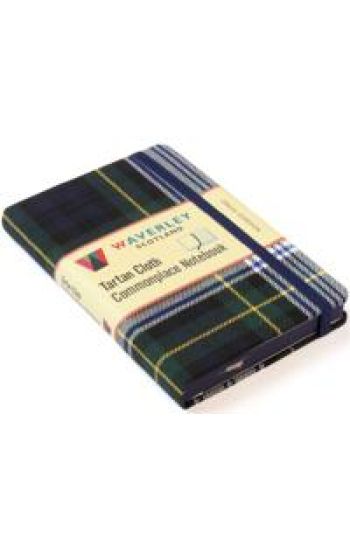
Waverley (M): Dress Gordon Tartan Cloth Commonplace Notebook
This Dress Gordon genuine tartan cloth notebook has 176pp of 80gsm cream paper, with left page plain, right page ruled. With a ribbon marker, an expandable inner note pocket, elastic enclosure, a leaflet about the history of tartan, and a colourful bookmark with a brief history of the Dress Gordon tartan. Cloth supplied by tailors and kilt makers Kinloch Anderson. Comes in a light plastic wrapper bag. Scientists, thinkers and writers in the Scottish Enlightenment used 'commonplace notebooks' to record thoughts and ideas. Many British writers such as Virginia Woolf and Arthur Conan Doyle continued to use them. Tartan belongs to Scottish heritage and culture, and thrives today both at home and overseas. There are now over 7,000 tartans officially recorded in the Scottish Register of Tartans located within the National Archive of Scotland. Waverley Books (Waverley Scotland) are delighted to innovate on the commonplace notebook idea with the Waverley tartan notebooks bound in genuine tartan cloth supplied by kiltmakers and tailors Kinloch Anderson, Edinburgh, sourced from weavers in Scotland, and the Borders.

Waverley (M): Gordon Red Weathered Tartan Cloth Commonplace Notebook
This Gordon Red Weathered notebook is bound in real tartan cloth. It has 176 pages and has stained edges and a matching elastic enclosure. The notebook has a ribbon-marker and an inner note holder. It has a booklet about tartan, and a Clan Map of Scotland. It also comes with a bookmark with detail about the Gordon Red Weathered tartan.The tartan cloth is supplied by and produced with the authority of Kinloch Anderson Scotland, holders of Royal Warrants of Appointment as Tailors and Kiltmakers to HM The Queen, HRH The Duke of Edinburgh and HRH The Prince of Wales.
Waverley Dress Gordon Tartan: Large  Notebook/Journal (21 x 13cm, 192 pages)
The Waverley Dress Gordon Large Tartan cloth hardback (21 x 13cm) Notebook has 192 pages cream FSC acid-free paper, from sustainable forests and boards made from 100% recycled paper. Left hand side page blank, right hand side page ruled. Made with cloth woven in mills in Great Britain. Pocket at the back for enclosures. Bookmark with history of tartan on one side and brief story of the tartan design on the other. Leaflet with map of Scotland, explanation of the history of tartan.
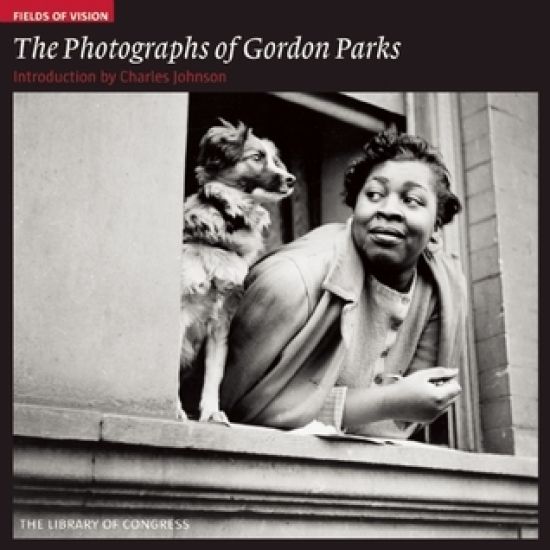
Photographs of Gordon Parks: the Library of Congress
Following on from the publication of the first six titles featuring The Library of Congress' internationally renowned collection of Farm Security Administration (FSA) and Office of War Information (OWI) photographs, the 'Fields of Vision' series continues with images showcasing the work of Arthur Rothstein, Gordon Parks and Carl Mydans. Providing a unique view of American life during the Great Depression and Second World War, each 'Fields of Vision' volume includes an introduction to the life of the photographer by a leading author or journalist, and 50 evocative images selected from their work. Transporting the viewer to American homes, farms and streets in the 1930s and 1940s, they also offer a glimpse of a new narrative and intimate style that was later to blossom on the pages of 'LOOK' and 'LIFE' magazines. For many Americans of the pre-television age, the diversity and complexity of their country was defined by the lenses of these men and women. Gordon Parks was born in 1912 in Fort Scott, Kansas, the youngest of fifteen children in a poor tenant-farming family. He was working odd jobs in Minnesota when he saw the work of FSA photographers in a magazine and was inspired to buy a camera. Parks early pictures landed him a position as Roy Stryker's apprentice in 1942. Among his extraordinary FSA photos is American Gothic, which shows charwoman Ella Watson posed with mop and broom against an American flag. After the FSA, Parks worked at Life magazine. He also became a respected writer and film director. He died in 2006.
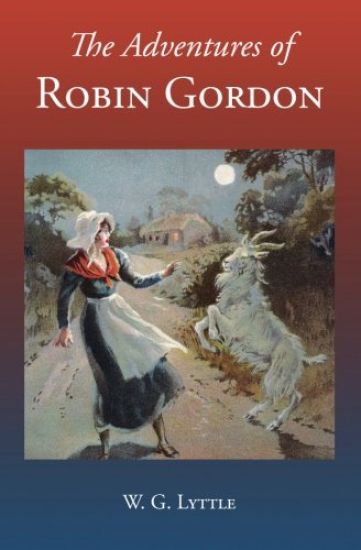
The Adventures of Robin Gordon

The Adventures of Robin Gordon

W. G. Lyttle

Books Ulster
2015
nidottu
The Adventures of Robin Gordon is the second of three volumes in the series Robin's Readings (originally Humorous Readings) by W. G. Lyttle. First published in book form in 1880, it is a collection of stories based on humorous monologues that the author gave around the country in the guise of Robin, a County Down farmer, who spoke in what is widely known today as 'Ulster-Scots'. It is now approximately one hundred years since the book was last in print. This new edition, with reset text, includes an introduction, footnotes and an extensive glossary of words to help place the work in context and aid the modern reader.
The Watson Gordon Lecture

The Watson Gordon Lecture

Helen Langdon

National Galleries of Scotland
2017
sidottu
Caravaggio's astonishingly naturalistic and provocative Cupid Victorious hung in the palace of a famous family at the heart of seventeenth-century Rome. Helen Langdon explores how the artist, famed for his originality, created a balance between a suggestion of his own world - a world of lively and rowdy street life - and a complex and ambiguous response to both ancient and Renaissance art and literature. Langdon also looks at the challenge the painting threw out to contemporary painters, whose world was characterised by extreme and bitter rivalries; often they reject his irony, sometimes embellish the painting's sexuality, and at other times convey an opposing sense of the harmony of the arts.
An Analysis of Gordon W. Allport's The Nature of Prejudice

An Analysis of Gordon W. Allport's The Nature of Prejudice

Alexander O’Connor

Macat International Limited
2017
nidottu
With his 1954 book The Nature of Prejudice, American psychologist Gordon Allport displays the crucial skill of reasoning, producing and organizing an argument that was persuasive enough to have a major impact not only in universities, but also on government policy. The question that Allport tackled was an old one: why are people so disposed to prejudice against those from other groups? Earlier psychologists had suggested a number of reasons, especially in the case of racial prejudice. Some had suggested that racism was a learned behaviour, conditioned by negative experiences of other races; others that there was an objective rationale to negative racial stereotypes. Allport, however, reasoned that prejudice is essentially a by-product of the necessary mental shortcuts the human brain uses to process the vast amount of information it takes in. Because our brains want to use as little effort as possible, they regularly fall back on simple stereotypes – which easily generate prejudice. Gathering strong evidence for this hypothesis, he reasoned, clearly and persuasively, that our natural cognitive approach is the most significant factor in accounting for prejudice. Going further still, Allport also reasoned that, once this was better understood, social scientists would be able to influence policy-makers to curb discrimination by law.
An Analysis of Gordon W. Allport's The Nature of Prejudice

An Analysis of Gordon W. Allport's The Nature of Prejudice

Alexander O’Connor

Macat International Limited
2017
sidottu
With his 1954 book The Nature of Prejudice, American psychologist Gordon Allport displays the crucial skill of reasoning, producing and organizing an argument that was persuasive enough to have a major impact not only in universities, but also on government policy. The question that Allport tackled was an old one: why are people so disposed to prejudice against those from other groups? Earlier psychologists had suggested a number of reasons, especially in the case of racial prejudice. Some had suggested that racism was a learned behaviour, conditioned by negative experiences of other races; others that there was an objective rationale to negative racial stereotypes. Allport, however, reasoned that prejudice is essentially a by-product of the necessary mental shortcuts the human brain uses to process the vast amount of information it takes in. Because our brains want to use as little effort as possible, they regularly fall back on simple stereotypes – which easily generate prejudice. Gathering strong evidence for this hypothesis, he reasoned, clearly and persuasively, that our natural cognitive approach is the most significant factor in accounting for prejudice. Going further still, Allport also reasoned that, once this was better understood, social scientists would be able to influence policy-makers to curb discrimination by law.
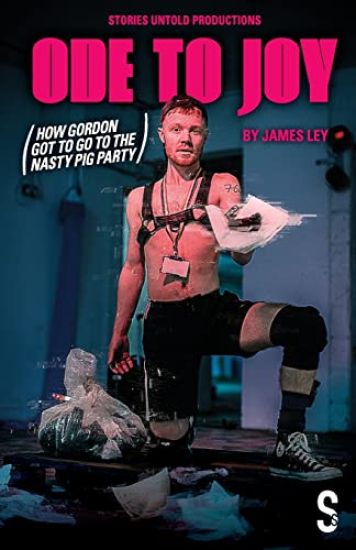
Ode to Joy (How Gordon got to go to the nasty pig party)
Gordon is homonormative and fears he might be pathologically boring until he meets Cumpig and Manpussy at a sex party in Leith. When they tell him about Europe’s biggest gay sex party in Berlin, Gordon obviously wants to go, but can he really transform into a sex pig? A new LGBTQ play about love, friendship and Schokoladenkuchen from James Ley. First previewed on 21 July 2022 and presented at Edinburgh Festival Fringe as part of the 2022 Made in Scotland Showcase, by Stories Untold Productions Ltd. ‘A filthy and brilliantly-paced joyride’ ???? The Scotsman on Wilf Shortlisted for 2023 Best New Play CATS (Critics Awards for Theatre in Scotland)
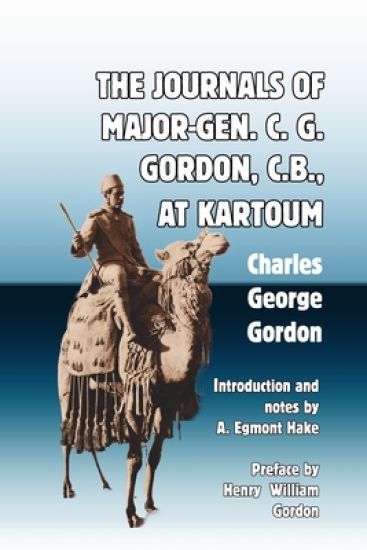
The Journals of Major-Gen. C. G. Gordon, C.B., At Kartoum

The Journals of Major-Gen. C. G. Gordon, C.B., At Kartoum

Charles George Gordon

Scrawny Goat Books
2022
sidottu
"Now mark this, if the Expeditionary Force, and I ask for no more than two hundred men, does not come in ten days, the town may fall; and I have done my best for the honour of our country. Good bye." These are the poignant last words written by Major-General Charles George Gordon in the final entry of his journal kept at the city of Khartoum in the Sudan in January 1885, just prior to the fall of that city. Gordon and at least 10,000 residents of the city were slaughtered in the butchery which followed.Having first been appointed Governor-General of the Sudan in 1873 by the Egyptian government-with the approval of the British government-Gordon had worked hard to bring the country to order, suppressing the Islamic slave trade and uplifting the population. He was recalled to that office in 1883 following the outbreak of the 1881 Islamist uprising under a self-proclaimed "Mahdi" of Islam (the "Guided One") in the Sudan.Sent to Khartoum to organise the evacuation of the city, Gordon succeeded in arranging the safe departure of over 2,500 civilians, but stayed on with a small group of soldiers and others to defend the city against the Mahdist forces. The resultant siege lasted more than a year, during which time Gordon kept a what became a six volume journal, smuggled out in parts back to the British authorities. This journal recounted the day-to-day life, adventures, battles, tactics, survival mechanisms of the besieged city-such as the building of "homemade" landmines out of water cans filled with dynamite, and wooden dummy sentries in uniform on the city walls-among many other innovations.The journals-which read like a thriller-were also full of bitter recrimination towards the British government, which Gordon blamed for refusing to intervene, despite officially encouraging him to go in the first place.The year-long defence of the city gained Gordon wide admiration in Britain, and finally, public pressure forced the government to organise a relief column. This force however arrived two days too late: Khartoum had fallen, and Gordon had been killed and decapitated, and his head paraded around as trophy by the Mahdist leaders.This new edition of all six of Gordon's "Journals of Khartoum" is not a "facsimile reproduction," but has been entirely reset to modern standards. It contains all the author's original illustrations, digitally restored to the highest quality possible. This edition also has the original enlightening preliminary remarks by his brother, commissary-general Sir Henry Gordon, and the full set of appendices which contain supplementary letters, proclamations and other significant data.
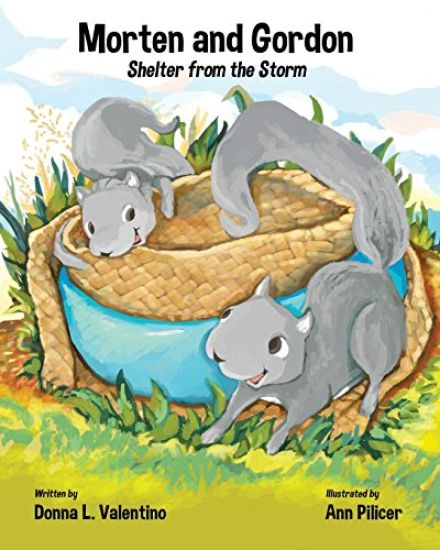
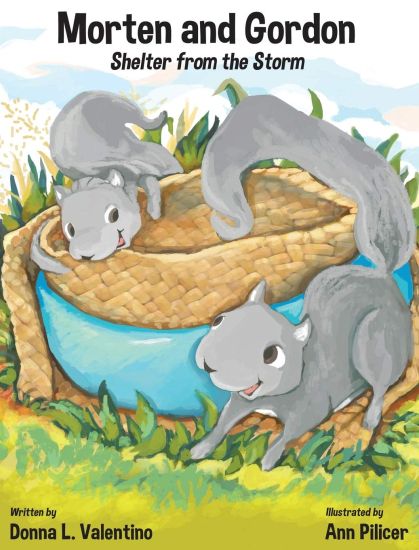
Morten and Gordon

Morten and Gordon

Donna L Valentino

Richter Publishing, LLC
2017
pokkari
A vividly illustrated children's book, the inspiration for "Morten and Gordon" came to author Donna L. Valentino in the form of a squirrel curled up in a boot on her back step. Valentino took the squirrel choosing her boot as a sign and began work on her first book. The story of two squirrels, brothers Morten and Gordon live on a farm and are loving it. Whether they are watching the farmer plant his crops or sampling them, they always seem to be living life to the fullest. One night, a storm comes and the brothers need to find shelter. Morten and Gordon scurry up to the farmer's porch and seek refuge from the weather in his warm boots, staying safe and dry all night long. With vibrantly colorful illustrations by Ann Pilicer, "Morten and Gordon" is sure to catch a child's eye. The farm's bright backdrop serves as the critters' playground with a new fun scene on every page. A clever rhyme scheme throughout the story will keep those younger listeners engaged as they have fun on the farm with Morten and Gordon.
Morten and Gordon

Morten and Gordon

Donna L Valentino

Richter Publishing LLC
2017
sidottu
The story of two squirrels, brothers Morten and Gordon live on a farm and are loving it. Watching the farmer plant his crops or sampling them, they are always living life to the fullest. One night, a storm comesthe brothers need to find shelter. MortenGordon scurry up to the farmer's porchseek refuge from the weather in his warm boots.
Adrian Smith + Gordon Gill Architecture, 2006-2021
Adrian Smith + Gordon Gill Architecture’s, 2006-2021 monograph showcases the spectacular work of the firm from the first 15 years of its practice through drawings, renderings, model photography, photography of built work, competition entries, exhibition materials, master plans, interiors, and special research projects and publications. The projects featured in the monograph cover a wide variety of AS+GG’s high-performance, energy-efficient, aesthetically striking architecture on an international scale in a wide range of typologies and scales, from low- and mid-rise residential, commercial, and cultural buildings to mixed-use supertall towers. Projects explored include supertall towers, large-scale mixed-use complexes, corporate offices, exhibition facilities, cultural facilities and museums, civic and public spaces, hotels and residential complexes, institutional projects, and high-tech laboratory facilities.
The Narrative of Arthur Gordon Pym of Nantucket
“My visions were of shipwreck and famine; of death or captivity among barbarian hordes; of a lifetime dragged out in sorrow and tears, upon some gray and desolate rock, in an ocean unapproachable and unknown.”In his only novel, The Narrative of Arthur Gordon Pym of Nantucket (1838), Edgar Allan Poe carries his knack for the mysterious and macabre, spilt blood and cryptic messages onto the South Seas. Aboard a whaling ship, stowaway Pym will endure starvation, cannibalism, whirlpools, mad dogs and premature burials on a journey toward the frozen expanse of Antarctica. Published the year full emancipation was legalized by the UK’s Slavery Abolition Act of 1833, Arthur Gordon Pym captures the relentless anxiety and violence of pre-Civil War American expansion. Allegorical, tragic, and based on real events, this adventure story went on to inspire many authors from Herman Melville and Jules Verne, to H.G. Wells and Vladmir Nabokov. This edition also includes accompanying selected letters, essays, and criticism from Poe himself.