We Can Readers: Bandit Eats Grass Bandit likes to eat grass but too much makes him sick. When Bandit is sick, who has to clean it up? His owner, Su. She may not like cleaning up after her cat, but she gets the job done. In this very simple 16-page reader, short sentences are paired with fun illustrations featuring an Asian-American character to get kids reading about Su and her can-do-it mindset. Sample Text: When Bandit is sick, it is not good. No one is happy. Not me. Not Bandit. This book is part of the We Can Readers series from Brenda Ponnay. This book in the We Can Readers series is Guided Reading Level C. We Can Readers are very short, feature diverse characters, and are suitable for kids just learning to read.
We Can Readers: Bandit Eats Grass Bandit likes to eat grass but too much makes him sick. When Bandit is sick, who has to clean it up? His owner, Su. She may not like cleaning up after her cat, but she gets the job done. In this very simple 16-page reader, short sentences are paired with fun illustrations featuring an Asian-American character to get kids reading about Su and her can-do-it mindset. Sample Text: When Bandit is sick, it is not good. No one is happy. Not me. Not Bandit. This book is part of the We Can Readers series from Brenda Ponnay. This book in the We Can Readers series is Guided Reading Level C. We Can Readers are very short, feature diverse characters, and are suitable for kids just learning to read.
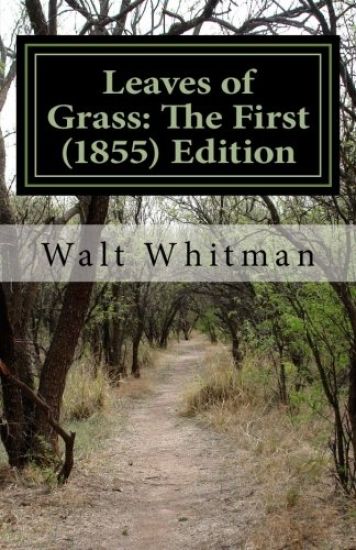
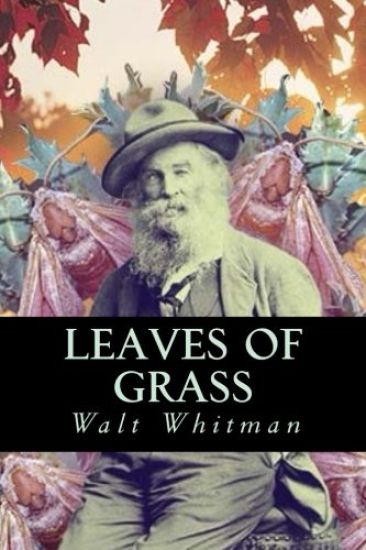
Leaves of Grass is a poetry collection by the American poet Walt Whitman (1819-1892). Though the first edition was published in 1855, Whitman spent most of his professional life writing and re-writing Leaves of Grass, revising it multiple times until his death. This resulted in vastly different editions over four decades-the first a small book of twelve poems and the last a compilation of over 400.The poems of Leaves of Grass are loosely connected, with each representing Whitman's celebration of his philosophy of life and humanity. This book is notable for its discussion of delight in sensual pleasures during a time when such candid displays were considered immoral. Where much previous poetry, especially English, relied on symbolism, allegory, and meditation on the religious and spiritual, Leaves of Grass (particularly the first edition) exalted the body and the material world. Influenced by Ralph Waldo Emerson and the Transcendentalist movement, itself an offshoot of Romanticism, Whitman's poetry praises nature and the individual human's role in it. However, much like Emerson, Whitman does not diminish the role of the mind or the spirit; rather, he elevates the human form and the human mind, deeming both worthy of poetic praise.With one exception, the poems do not rhyme or follow standard rules for meter and line length. Among the poems in the collection are "Song of Myself", "I Sing the Body Electric", "Out of the Cradle Endlessly Rocking". Later editions included Whitman's elegy to the assassinated President Abraham Lincoln, "When Lilacs Last in the Dooryard Bloom'd". Leaves of Grass was highly controversial during its time for its explicit sexual imagery, and Whitman was subject to derision by many contemporary critics. Over time, the collection has infiltrated popular culture and been recognized as one of the central works of American poetry. Walter "Walt" Whitman ( May 31, 1819 - March 26, 1892) was an American poet, essayist, and journalist. A humanist, he was a part of the transition between transcendentalism and realism, incorporating both views in his works. Whitman is among the most influential poets in the American canon, often called the father of free verse. His work was very controversial in its time, particularly his poetry collection Leaves of Grass, which was described as obscene for its overt sexuality.Born in Huntington on Long Island, Whitman worked as a journalist, a teacher, a government clerk, and-in addition to publishing his poetry-was a volunteer nurse during the American Civil War. Early in his career, he also produced a temperance novel, Franklin Evans (1842). Whitman's major work, Leaves of Grass, was first published in 1855 with his own money. The work was an attempt at reaching out to the common person with an American epic. He continued expanding and revising it until his death in 1892. After a stroke towards the end of his life, he moved to Camden, New Jersey, where his health further declined. When he died at age 72, his funeral became a public spectacle....
Throughout the pages of Scripture, God has expressed the character of his people using different metaphors. One of these metaphors is that which describes the church as a flock of sheep. This metaphor describes the relationship between God and his people as that of one between a shepherd and his sheep. God says that we are his sheep. We are spiritual lambs and sheep. Perhaps you may be thinking, "For the love of God, no, I am not a sheep Sheep are dumb Sheep are clueless What a put down Why would God insult us by calling us sheep?" The purpose of metaphors in the Bible is to cause us to see and understand word pictures in the natural realm in order to discern their application in the spiritual realm with more clarity. In order to understand how God intends for us to behave and to act we have to understand his wisdom in choosing each metaphor in a way that vividly points to the different aspects of our relationship with him. I believe that God chose the metaphor of the family because he wants us to understand that just as the members of a loving and healthy earthly family love each other with brotherly love, we must also love each other and be committed to each other with godly love as members of God's spiritual family. As God's people, we are a group of individuals that share the same spiritual last name and "divine blood" ties that unite us together in spiritual unity. In families, the older ones take care of the younger ones and lead them to maturity just as we should do in the church. In the first book of this series, "The Church: The Family we hate to love" I presented an in-depth discussion of the implications of family relationships as God's spiritual family. In the second book of this series, "The God Invasion" my aim was to demonstrate how God chose the metaphor of a nation and its military in order to show us the nature of our relationship with him as soldiers in his army that recognize the need to constantly engage the correct enemy in the midst of spiritual battle. In this book, we will now consider the church as a flock of sheep. My goal is to help you discover what God wants you to understand concerning the nature of sheep, how they interact with their shepherd and the nature of their life together in the flock. Then, through a deeper understanding of the dynamics of flocks of sheep, I will suggest how to apply these natural aspects of the shepherd/sheep relationship to our spiritual relationship to God as our shepherd, to church leaders as his under-shepherds, to each other as fellow sheep and to the enemy.I urge you to open your heart to the spirit of the metaphor of the flock. Allow the Holy Spirit to speak to you as you read these pages and apply the implications of this metaphor and the spiritual principles that it presents to your walk with Christ. The fruit of embracing the principles of this metaphor is the rest and blessing of lying in green pastures and enjoying the abundant life that Christ offers, where the grass is always greener on your side of the fence. Embrace the aspects of your identity as one of God's sheep recognizing that our Lord was not ashamed to be called the "Lamb of God."Devour these pages in the spirit of God's truth Bon Appetite
Leaves of Grass is a poetry collection by the American poet Walt Whitman (1819-1892). Although the first edition was published in 1855, Whitman spent most of his professional life writing and re-writing Leaves of Grass, revising it multiple times until his death. This resulted in vastly different editions over four decades-the first a small book of twelve poems and the last a compilation of over 400.
James Lane Allen(December 21, 1849 - February 18, 1925) was an American novelist and short story writer whose work, including the novel A Kentucky Cardinal, often depicted the culture and dialects of his native Kentucky. His work is characteristic of the late-19th century local color era, when writers sought to capture the vernacular in their fiction. Allen has been described as "Kentucky's first important novelist." Allen was born near Lexington, Kentucky, and his youth there during the Ante-bellum, Civil War, and Reconstruction periods heavily influenced his writing. He graduated from Transylvania University in 1872, delivering the Salutatorian address in Latin. In 1893 Allen moved to New York City, where he lived until his death. He was a contributor to Harper's Magazine, The Atlantic Monthly, and other popular magazines of the time. His novels include The Choir Invisible, which was a very popular best seller in 1897. Allen is buried in Lexington Cemetery. At the northern edge of Gratz Park in Lexington is the "Fountain of Youth", built in memory of Allen using proceeds willed to the city by him.James Lane Allen School, an elementary school off Alexandria Drive in Lexington, Kentucky is named in his honor.