Kirjojen hintavertailu. Mukana 11 627 067 kirjaa ja 12 kauppaa.

Kirjahaku

Etsi kirjoja tekijän nimen, kirjan nimen tai ISBN:n perusteella.

1000 tulosta hakusanalla Guy L. Diffenbaugh

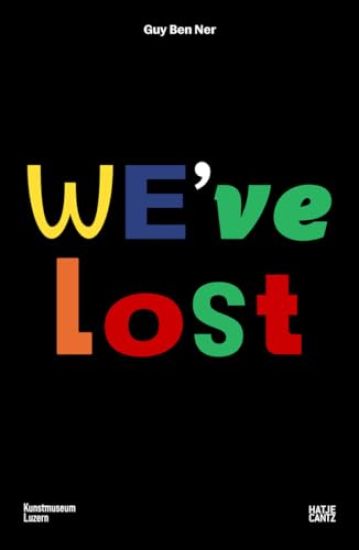
Guy Ben Ner: We've Lost (Bilingual edition)
Strategies of Playful Resistance Within the Consumer Society Guy Ben Ner makes a lot out of very little, radically integrating both himself and his private surroundings into his work. His family’s apartment in Tel Aviv serves as a film location for the video artist, as do the aisles of a furniture store. In these often grotesque settings, the influence of economics and politics on the most intimate human relationships becomes apparent. In conversation with his close friend and fellow artist Christian Jankowski, Ben Ner provides insight into the process of creating his works. For what seems improvised is based on months of research and draws on an extensive knowledge of film history, and it is this discrepancy between improvised situations and the rigor of his artistic concepts that characterizes his work. Using terms such as “aesthetics,” “fantasy,” “family,” or “citation,” curator Fanni Fetzer develops an alphabet of resistance in Ben Ner’s oeuvre. Consequently, this publication aims to convey the artist’s clear political stance and his strategy of playful resistance.
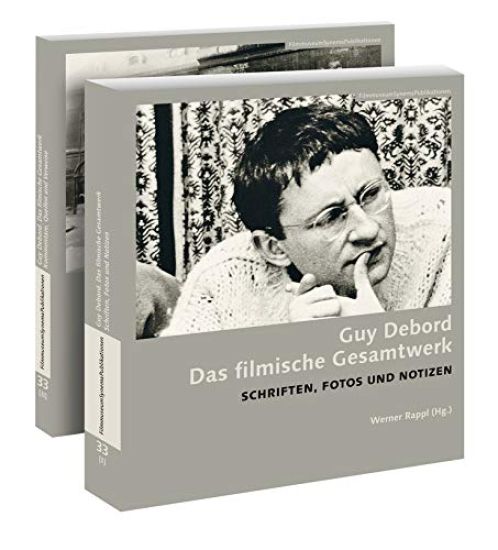
Guy Debord – Das filmische Gesamtwerk

Guy Debord – Das filmische Gesamtwerk

Werner Rappl; Wolfgang Kukulies; Alexander Horwath; Guy Debord

Synema Gesellschaft Fur Film u. Medien
2020
nidottu
In his films Guy Debord (1931–1994) worked according to the following principle: do nothing you should, do everything you should not. Created between 1952 and 1978, all the films reflect this rule and confirm what he referred to as his “detestable ambition.”Gathered in a single volume for the first time in German, this publication unites the texts of all of Guy Debord’s films in a new translation: from his first film made in affiliation with the Lettrist group led by Isidore Isou, Hurlements en faveur de Sade (1952), an alteration of black and white sequences devoid of images; to works that originated in the course of his participation in the Situationist International, Sur le passage de quelques personnes à travers une assez courte unité de temps (1959) and Critique de la séparation (1961); to the adaptation of his best known theoretical work, La Société du spectacle (1973), followed by the response to his critics entitled Réfutation de tous les jugements, tant élogieux qu'hostiles, qui ont été jusqu'ici portés sur le film "La Société du spectacle" (1975) and his résumé, intended as an act of closure: In girum imus nocte et consumimur igni (1978).Texts and images are true to the French original edition and complemented by a list of sources for the quotes, Debord’s notes on his films, drafts of unrealized film projects, as well as the text of the TV documentary he coauthored, Guy Debord, son art et son temps (1994).
Selected Stories by Guy De Maupassant

Selected Stories by Guy De Maupassant

Guy De Maupassant

Rupa Co
2014
nidottu
The Masterpieces of World Fiction series brings together the best-loved short stories by the great masters of the genre-from Chekov and Maupassant, Kipling and Wilde, to O. Henry and Saki and Tolstoy and Conrad. Thoughtfully compiled by the bestselling author Terry O' Brien, this series is a great way for readers to revisit old favourites and for introducing literary masterpieces to newer, younger readers.
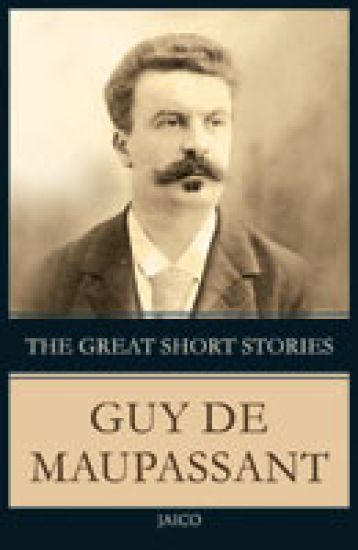
The Great Short Stories Guy De Maupassant

The Great Short Stories Guy De Maupassant

Guy de Maupassant

Jaico Publishing House
2008
nidottu
GUY DE MAUPASSANT was a master of the short story. This collection reflects his remarkable diversity, with stories that vary in theme and tone, and range from tragedy and satire to comedy and farce. With a simplicity of style that masks complex philosophy, Maupassant can illuminate an entire code of values by means of a few telling details. He exposes the brutality of war and the hypocrisy it spawns, and depicts the petty limitations, the dissimulations and the vanities inherent at different levels of society. His stories are linked by a trenchant irony and by a preoccupation with the frailty of human nature and the futility of so many lives.