Kirjojen hintavertailu. Mukana 11 342 296 kirjaa ja 12 kauppaa.

Kirjahaku

Etsi kirjoja tekijän nimen, kirjan nimen tai ISBN:n perusteella.

1000 tulosta hakusanalla Hans Claesson

Hans und Heinz Kirch

Hans und Heinz Kirch

Theodor Storm

Henricus - Klassiker in Neuer Rechtschreibung
2021
sidottu
In der Reihe Klassiker in neuer Rechtschreibung gibt Klara Neuhaus-Richter die 10.000 wichtigsten B cher der Weltliteratur in der empfohlenen Schreibweise nach Duden heraus. Theodor Storm: Hans und Heinz Kirch 1883 erscheint die b rgerliche Gesellschaftsnovelle um die unterschiedlichen Lebensentw rfe von Vater Hans und Sohn Heinz. Der zentrale Konflikt um Familientradition und Individualit t entzweit den Schiffseigner aus Heiligenhafen und seinen Sohn. Entstanden zwischen Oktober 1881 und Februar 1882. Erstdruck in: Westermann's Monatshefte (Braunschweig), Oktober 1882. Erste Buchausgabe: Berlin, Paetel, 1883. Textgrundlage ist die Ausgabe: Theodor Storm: S mtliche Werke in vier B nden. Herausgegeben von Peter Goldammer, 4. Auflage, Berlin und Weimar: Aufbau, 1978. Die Paginierung obiger Ausgabe wird in dieser Neuausgabe als Marginalie zeilengenau mitgef hrt. Neu herausgegeben und mit einer Biografie des Autors versehen von Klara Neuhaus-Richter, Berlin 2021. Umschlaggestaltung von Rainer Richter unter Verwendung einer Portr tzeichnung von Josefine Weinschrott. Gesetzt aus der Minion Pro, 11 pt. Henricus - Edition Deutsche Klassik GmbH ber den Autor: 1817 in Husum als Sohn eines Advokaten geboren, tritt Theodor Storm nach dem Studium in Kiel und Berlin zun chst in die v terliche Kanzlei ein und schl gt sp ter die Richterlaufbahn ein. Bereits mit 17 erscheint ein erstes Gedicht im Husumer Wochenblatt. Storm schreibt zeit seines Lebens neben seiner b rgerlichen Karriere. Nach seiner Pensionierung 1880 entstehen in seinem Alterswohnsitz in Hademarschen zahlreiche Novellen, darunter seine heute wohl bekannteste, Der Schimmelreiter, der im Mai 1888 erscheint, bevor Theodor am 4. Juli an Magenkrebs stirbt. Seiner norddeutschen Heimat verpflichtet, die ihn thematisch und stilistisch pr gt, ohne dass er in Heimatdichtung verf llt, ist Storm einer der bedeutendsten Vertreter des poetischen Realismus.

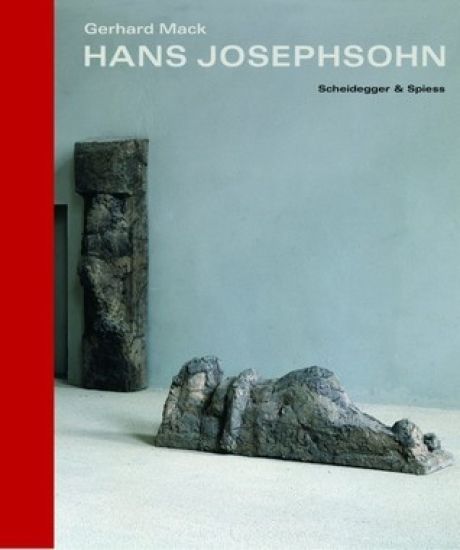
Hans Josephsohn

Hans Josephsohn

Gerhard Mack

Scheidegger und Spiess AG, Verlag
2022
sidottu
Hans Josephsohn is one of the premier Swiss sculptors working today. For more than sixty years, he has sculpted numerous arresting figures and busts that capture the tensions of our age. Gerhard Mack brings Josephsohn s work to the wider world in this in-depth look at the artist and the impact of his sculpture. Mack traces Josephsohn s evolution as an artist, charting his initial years and first successes as he broke onto the scene and carved out a place in twentieth-century art. He explores the power and complexity of Josephsohn s standing and reposing figures, reliefs, and busts, analyzing how Josephsohn employs space, volume, and light in his pieces. Georg Gisel s striking photographs capture the fragile plaster figures-in-progress standing in Josephsohn s studio, revealing them to be meditations on fate and the accidents of existence. An unprecedented study of an important, yet lesser-known, European sculptor, "Hans Josephsohn" will be invaluable to anyone interested in the development of contemporary and Swiss art."
Hans Bach - Skulpturen, Druckgrafik, Zeichnungen

Hans Bach - Skulpturen, Druckgrafik, Zeichnungen

Scheidegger und Spiess AG, Verlag
2013
sidottu
The Swiss artist Hans Bach first worked as a draftsman, etcher and illustrator before turning to sculpture. Since the 1980s he has created a renowned oeuvre of expressive wooden sculptures. The central theme of the sculptor, who also worked as a lecturer at the Zurich University of Design and Art (today Zurich University of the Arts ZHdK) from 1986 to 2006, is people. In 2001, Scheidegger & Spiess published the book Hans Bach, which is now out of print. Sculptures 1992–2001 about his wooden sculptures created in the 1990s, especially his expressive female figures, appeared. This volume now provides an insight into his work over the last ten years and, in addition to the sculptures, also presents prints and drawings.
Hans Josephsohn

Hans Josephsohn

Gerhard Mack

Scheidegger und Spiess AG, Verlag
2005
sidottu
Hans Josephsohn is one of the premier Swiss sculptors working today. For more than sixty years, he has sculpted numerous arresting figures and busts that capture the tensions of our age. Gerhard Mack brings Josephsohn?s work to the wider world in this in-depth look at the artist and the impact of his sculpture. Mack traces Josephsohn?s evolution as an artist, charting his initial years and first successes as he broke onto the scene and carved out a place in twentieth-century art. He explores the power and complexity of Josephsohn?s standing and reposing figures, reliefs, and busts, analyzing how Josephsohn employs space, volume, and light in his pieces. Georg Gisel?s striking photographs capture the fragile plaster figures-in-progress standing in Josephsohn?s studio, revealing them to be meditations on fate and the accidents of existence. An unprecedented study of an important, yet lesser-known, European sculptor, Hans Josephsohn will be invaluable to anyone interested in the development of contemporary and Swiss art.
Hans Josephsohn Sculptures

Hans Josephsohn Sculptures

Scheidegger und Spiess AG, Verlag
2017
nidottu
As a boy, photographer and filmmaker Jurg Hassler passed the studio of sculptor Hans Josephsohn every day on his way to school. Watching the artist working captivated him, and once he had finished school in the late 1950s, Hassler began working as Josephsohn's assistant and apprentice, eventually becoming a sculptor himself. After studying photography and taking up filmmaking as well, he occupied himself with Josephsohn's sculptural work also with the camera, resulting in countless images and the film portrait Josephsohn: Stein des Anstosses (Josephsohn: Bone of Contention), which was released in 1977. This new book features a selection of photographs by Jurg Hassler, who predominantly works in black-and-white. Many of them have single sculptures by Hans Josephsohn as a motif, highlighting the artist's strong archaic expressiveness. Nina Keel's essay takes a closer look at the context of Hassler's photographic engagement with the art of his teacher. The Kesselhaus Josephsohn in St. Gallen, Switzerland, is an exhibition space dedicated to the work of Hans Josephsohn.
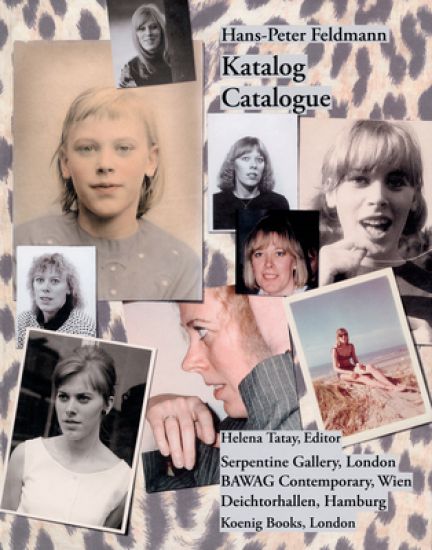
Hans-Peter Feldmann

Hans-Peter Feldmann

Brigitte Huck; Helena Tatay

Verlag der Buchhandlung Walther Konig
2012
nidottu
Hans-Peter Feldmann (born 1941) is a virtuoso taxonomist of contemporary visual culture. Published for Feldmann's major 2012 exhibition at the Serpentine Galllery in London (which travels to Vienna and Hamburg), Catalogue compiles well-known images alongside new and unseen works, including selections from the artist's private photo albums and reproductions of early book works from the late 1960s on. Grids of seagulls and postcards share space with lighthearted photobooth snaps of people crossing their eyes and a variety of other visual gags. At once intimate and accessible, Catalogue includes a lengthy, playful interview with Hans Ulrich Obrist and Helena Tatay, in which Feldmann looks back over his career, discussing inspirational figures such as Marcel Broodthaers, Bruno Goller and Konrad Klapheck and his favorite books.
Dan Graham. Hans Ulrich Obrist.The Conversation Series 25

Dan Graham. Hans Ulrich Obrist.The Conversation Series 25

Hans-Ulrich Obrist; Dan Graham

Buchhandlung Walther Konig GmbH Co. KG. Abt. Verlag
2024
sidottu
Since the mid-1960s when he started out as a fledgling critic, Dan Graham has carved out a unique role for himself, expanding the scope of the Conceptual artist to incorporate art criticism, music criticism, photography and architecture. For this volume, curator Hans Ulrich Obrist met with Graham on several occasions to discuss the artist's work, life and the numerous interests he passionately follows. The conversation thus wanders seamlessly from architecture to rock and roll, philosophy to astrology, Graham's early performance pieces, photography and articles, to the films and glass pavilions for which he is best known today. A fountain of art folklore, Graham offers recollections of friends and colleagues, art work and influences, providing an invaluable insight not only into the New York art scene of the 60s and 70s, but also one of its most influential representatives.