

Kirjahaku
Etsi kirjoja tekijän nimen, kirjan nimen tai ISBN:n perusteella.
1000 tulosta hakusanalla Hans Rust; Rust Hans 1879-

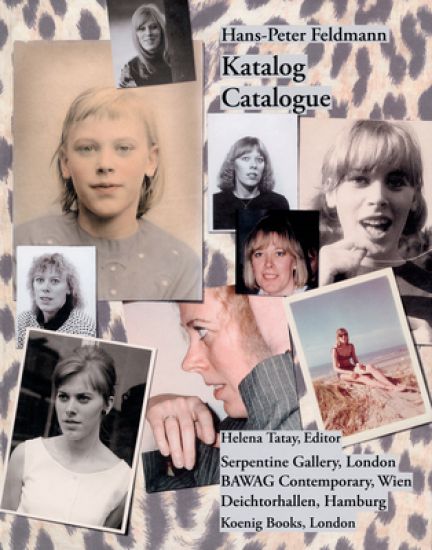
Hans-Peter Feldmann (born 1941) is a virtuoso taxonomist of contemporary visual culture. Published for Feldmann's major 2012 exhibition at the Serpentine Galllery in London (which travels to Vienna and Hamburg), Catalogue compiles well-known images alongside new and unseen works, including selections from the artist's private photo albums and reproductions of early book works from the late 1960s on. Grids of seagulls and postcards share space with lighthearted photobooth snaps of people crossing their eyes and a variety of other visual gags. At once intimate and accessible, Catalogue includes a lengthy, playful interview with Hans Ulrich Obrist and Helena Tatay, in which Feldmann looks back over his career, discussing inspirational figures such as Marcel Broodthaers, Bruno Goller and Konrad Klapheck and his favorite books.

Hans Sachs und die Reformation - In Gedichten und Prosastücken
Richard Zoozmann
Severus
2013
pokkari

Dan Graham. Hans Ulrich Obrist.The Conversation Series 25
Hans-Ulrich Obrist; Dan Graham
Buchhandlung Walther Konig GmbH Co. KG. Abt. Verlag
2024
sidottu
Since the mid-1960s when he started out as a fledgling critic, Dan Graham has carved out a unique role for himself, expanding the scope of the Conceptual artist to incorporate art criticism, music criticism, photography and architecture. For this volume, curator Hans Ulrich Obrist met with Graham on several occasions to discuss the artist's work, life and the numerous interests he passionately follows. The conversation thus wanders seamlessly from architecture to rock and roll, philosophy to astrology, Graham's early performance pieces, photography and articles, to the films and glass pavilions for which he is best known today. A fountain of art folklore, Graham offers recollections of friends and colleagues, art work and influences, providing an invaluable insight not only into the New York art scene of the 60s and 70s, but also one of its most influential representatives.
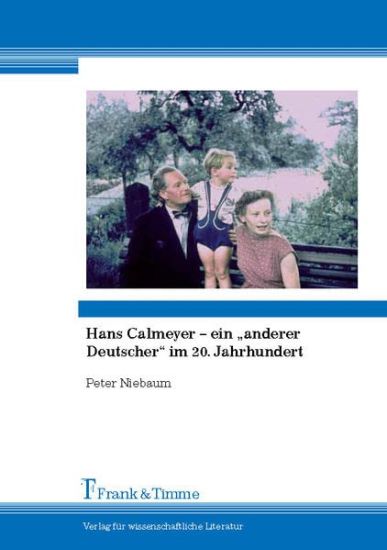
Hans Calmeyer - ein "anderer Deutscher" im 20. Jahrhundert
Peter Niebaum
Frank und Timme GmbH
2011
nidottu
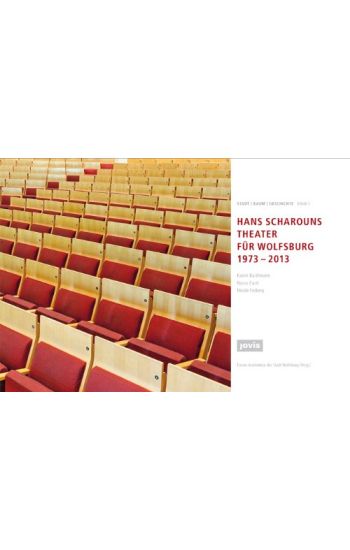
HANS SCHAROUNS THEATER FÜR WOLFSBURG 1973 – 2013
JOVIS VERLAG
2013
sidottu
Erst sein Spätwerk, die Berliner Philharmonie (1956–1963), verschaffte Hans Scharoun endlich die verdiente internationale Beachtung. Fast zeitgleich gewann Scharoun auch in Wolfsburg den internationalen Architekturwettbewerb für den Neubau eines Theaters. Nach mehreren Überarbeitungen und einem zähen Ringen um die Realisierung wurde der Kulturbau am 5. Oktober 1973 feierlich einge-weiht. Vier Jahrzehnte später hat sich das Gebäude am Klieversberg nicht nur unter den wichtigsten Gastspieltheatern in Deutschland etabliert – auch die Architektur hat nichts von ihrer eindrucksvollen Präsenz und ihrer herausragenden Qualität verloren. Zum 40-jährigen Jubiläum ordnen Katrin Barthmann und Rocco Curti vom Niedersächsischen Landes-amt für Denkmalpflege den erstrangigen Kulturbau in die Architekturgeschichte des 20. Jahrhunderts ein. In einem Rundgang lädt Nicole Froberg vom Forum Architektur Wolfsburg zum Erkunden der Räume ein. Fotograf Lars Landmann öffnet die Augen für großartige Details und ermöglicht einen spannenden Blick hinter die Kulissen. mit Beiträgen von Katrin Barthmann, Rocco Curti und Nicole Froberg
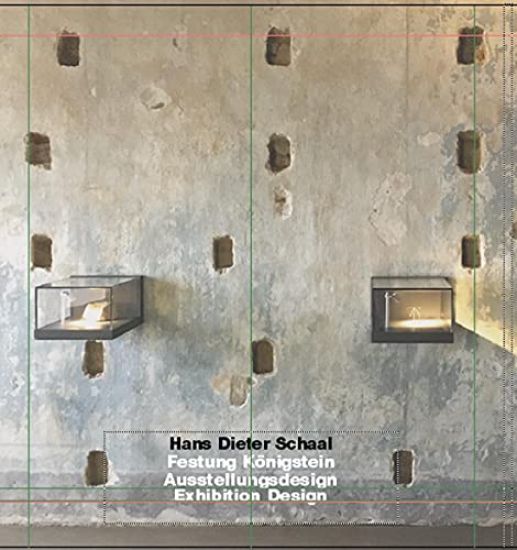
Hans Dieter Schaal. Festung Königstein. Ausstellungsdesign/ Exhibition Design
Hans Dieter Schaal; Angelika Taube
EDITION AXEL MENGES
2021
nidottu
The Königstein Fortress, located not far from Dresden on a rocky plateau high above the Elbe River, is considered one of the most interesting and best preserved fortifications in Europe. It has a long eventful history dating back to the Bronze Age. Königstein was first mentioned in documents in 1241. It was not until the end of the 16th century that the former castle began to be expanded into a fortress, which was then constantly adapted to new conditions. However, it was spared from warlike destruction over all the centuries. Instead, it was sometimes used as a prison camp in times of war, for example during the Franco-Prussian War of 1870/71 and for the last time during the Second World War. In 1949, the then GDR set up a youth workshop in the fortress based on the teachings of Soviet pedagogue Anton Semyonovich Makarenko. In 1955, the GDRs Ministry of Culture finally converted Königstein into a museum and since 1991, now owned by the Free State of Saxony, it has undergone extensive structural renovation. The managing director of Festung Königstein gGmbH, Angelika Taube, became aware of Hans Dieter Schaal as early as 1997, and in the following years established an intensive collaboration with him, which has now resulted in six permanent and twelve temporary exhibitions. They illustrate the multifaceted history of the fortress in a way that clearly stands out from pure documentation and always creates something new and original from the factually given. This book presents these exhibitions in large-format colour illustrations. In addition, it contains descriptions and comments by Schaal that clarify the history of the exhibitions and also give the reader insights into the creative processes. Hans Dieter Schaal, born in Ulm in 1943, architect, stage designer, exhibition and landscape planner, makes the complexity of reality visible through his analytically differentiated stagings and brings its background into the field of vision of the attentive viewer. His works, the majority of which have been published by Edition Axel Menges, have since found an audience far beyond the borders of his native country. The author lives and works in a village near Biberach an der Riss.
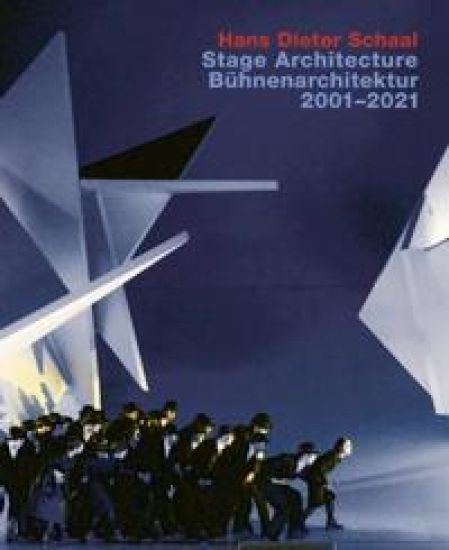
Hans Dieter Schaal, Stage Architecture 20012021 / Buhnenarchitektur 20012021
Wolfgang Willaschek
EDITION AXEL MENGES
2023
sidottu
Play-acting but above all the opera have only seemingly little to do with our everyday life. In fact opera is a very artificial work of art in which reality is nevertheless present, but condensed in such a way that it touches us throughout the ages. In experiencing opera performances, we thus become companions of the bard Orpheus in Monteverdis opera L'Orfeo, who mourns the death of his beloved nymph Eurydice with his laments. We transform ourselves into sympathetic and compassionate brothers and sisters of Orpheus, Wozzeck, Tosca, Tristan, Isolde or Jenufa and are thus directly referred to the perils and also pleasures in our own lives. In order to make the visual and sound dimensions of an opera tangible for the audience, a close interaction of dramaturges, actors, singers, dancers, directors, stage designers and technicians is necessary. What role do stage designers play in this? Dont some performances owe their success primarily to the work of the set designer? The stage settings created by Hans Dieter Schaal, who has worked on almost all German stages, but also in many important international theatre venues, including Vienna, Salzburg, Zurich, Brussels, Paris, Moscow and San Francisco, have, over and over again, such a lasting effect due to their visual power that they remain in the memory of the audience for a long time. The first volume on Hans Dieter Schaals stage settings covered the years 1982 to 2000, and this book now brings out a further volume dedicated to the works from 2001 to 2021. The book is captivating not only because of its abundance of mostly large-format photographs and many design drawings, but also because of the detailed texts written by Schaal himself, which reveal how intensively the artist deals with the respective work. As a result he invents images that often trigger a completely new perspective on the works. Hans Dieter Schaal, born in Ulm in 1943, is an architect, landscape designer, stage designer, exhibition designer and artist. His works, the majority of which have been published by Edition Axel Menges, have found an audience far beyond his home country. The author lives and works near Biberach an der Riß.

Hans Jürgen von der Wense
Edition Text + Kritik
2010
nidottu
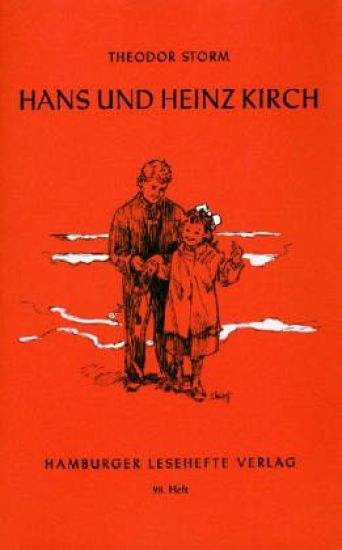
Den Stoff zu dieser Novelle fand Storm fast vollständig in der "Geschichte des Schiffers Brand" nach einer wahren Begebenheit. Wenn man die übernommene Aufzeichnung mit der daraus entstandenen Novelle vergleicht, erkennt man unschwer Storms eigene künstlerische Leistung: die Gestaltung dieses erschütternden Schicksals zweier Menschen, die besondere Tragik des Vater-Sohn-Problems. Als sich der ehrgeizige Hans Kirch gegen die Liebe seines Sohnes zu einem Mädchen von geringer Herkunft stellt, geht Heinz Kirch zur See. Einen unfrankierten Brief seines Sohnes weist Hans Kirch zurück und verschließt sich auch später einer Versöhnung. Nach einer Vision vom Tode seines Heinz zerbricht Hans Kirch. "Wo aber ist Heinz Kirch geblieben?" Ein ausführliches Nachwort und Anmerkungen erleichtern die Lektüre dieser Novelle.

Für Hans-Georg Gadamer (1900-2002) trägt "Verstehen" im Medium der Sprache die menschliche Erkenntnis und ist damit Basis und Grenze einer jeden spezialisierten Erkenntnisform. Gegen diesen Universalitätsanspruch der philosophischen Hermeneutik sind immer wieder Einwände erhoben worden - insbesondere von der Kritischen Theorie. Diese Einführung veranschaulicht nicht nur die Auseinandersetzung um den Universalitätsanspruch der Hermeneutik, sondern ebenso die Diskussion ihrer Grundlagen. Sie konfrontiert Hermeneutik und Dekonstruktion und wurde für die Neuauflage um ein Kapitel zur Ästhetik ergänzt.

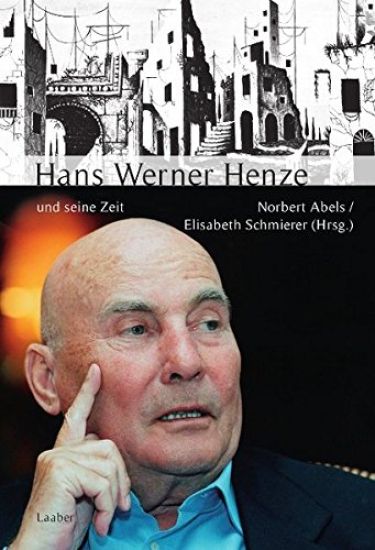
Hans Werner Henze und seine Zeit
Laaber Verlag
2012
sidottu
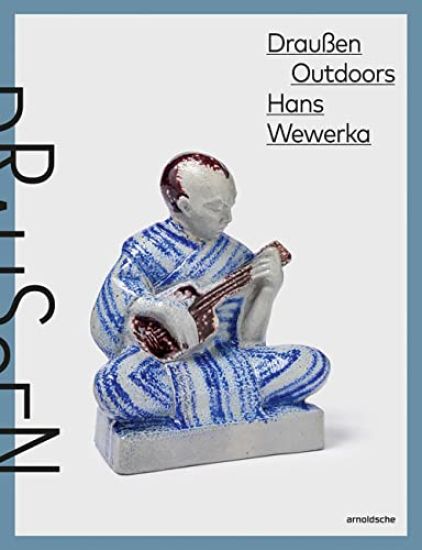
Hans Wewerka Outdoors – Draußen
Arnoldsche
2022
sidottu
Inspired by the Dutch sculptor Joseph Mendes da Costa (1863–1939) and Ernst Barlach (1870–1938), Hans Wewerka (1888–1915) conquered the realm of figurative sculpture while he was still a student in Höhr, an unusual discipline among the area’s vernacular ceramics. He observed society outside [draußen in German], in all realms of public life, with great sensibility: gossip mongers, potato sellers, a dancing couple. Wewerka created likenesses taken from real life. His artistic approach and his acute awareness of form made him an exceptional creator of modern earthenware who had already gained international recognition during his lifetime. This first, comprehensive monograph featuring a catalogue of works documents Hans Wewerka’s previously unknown career and traces his connections to modernist art, such as the Berlin Secession and artists like Rudolf Bosselt, Käthe Kollwitz, and Ernst Barlach. Text in English and German.
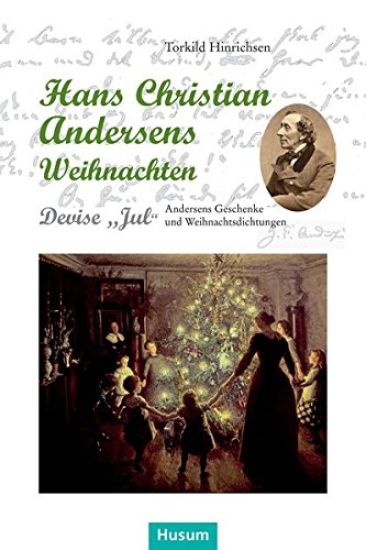
Hans Christian Andersens Weihnachten
Husum Druck
2017
nidottu