"Gaudy Night stands out even among Miss Sayers's novels. And Miss Sayers has long stood in a class by herself." --Times Literary SupplementThe great Dorothy L. Sayers is considered by many to be the premier detective novelist of the Golden Age, and her dashing sleuth, Lord Peter Wimsey, one of mystery fiction's most enduring and endearing protagonists. Acclaimed author Ruth Rendell has expressed her admiration for Sayers's work, praising her "great fertility of invention, ingenuity, and wonderful eye for detail." The third Dorothy L. Sayers classic to feature mystery writer Harriet Vane, Gaudy Night features an introduction by Elizabeth George, herself a crime fiction master. Gaudy Night takes Harriet and her paramour, Lord Peter, to Oxford University, Harriet's alma mater, for a reunion, only to find themselves the targets of a nightmare of harassment and mysterious, murderous threats.
"Written with distinction and wit, and is as much as psychological story as an experiment in detection. It has all the excitement which a detective story should offer." -- The SpectatorThe great Dorothy L. Sayers is considered by many to be the premier detective novelist of the Golden Age, and her dashing sleuth, Lord Peter Wimsey, one of mystery fiction's most enduring and endearing protagonists. Acclaimed author Ruth Rendell has expressed her admiration for Sayers's work, praising her "great fertility of invention, ingenuity, and wonderful eye for detail." The second Dorothy L. Sayers classic to feature mystery writer Harriet Vane, Have His Carcase features an introduction by Elizabeth George, herself a crime fiction master. Harriet's discovery of a murdered body on the beach before it is swept out to sea unites her once more with the indomitable Lord Peter, as together they attempt to solve a most lethal mystery, and find themselves become much closer than mere sleuthing partners in the process.
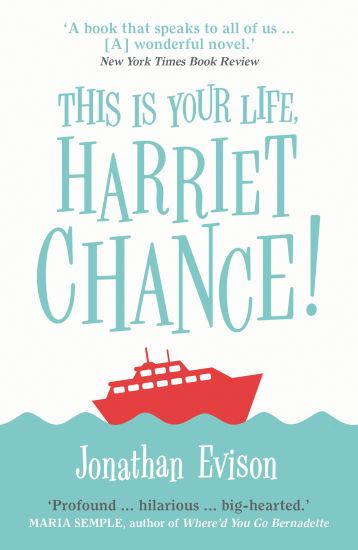
Harriet Chance has spent the last seventy-eight years following the rules... Career girl (brief), Wife (fifty-five years), and, Mother of two (ongoing). Now widowed, She discovers that her late husband had been planning an Alaskan cruise. Ignoring the advice of her children she decides to set sail. Will she take a second chance at life?
Title: The Diary of Martha Bethune Baliol from 1753 to 1754. By Harriet Skene.]Publisher: British Library, Historical Print EditionsThe British Library is the national library of the United Kingdom. It is one of the world's largest research libraries holding over 150 million items in all known languages and formats: books, journals, newspapers, sound recordings, patents, maps, stamps, prints and much more. Its collections include around 14 million books, along with substantial additional collections of manuscripts and historical items dating back as far as 300 BC.The GENERAL HISTORICAL collection includes books from the British Library digitised by Microsoft. This varied collection includes material that gives readers a 19th century view of the world. Topics include health, education, economics, agriculture, environment, technology, culture, politics, labour and industry, mining, penal policy, and social order. ++++The below data was compiled from various identification fields in the bibliographic record of this title. This data is provided as an additional tool in helping to insure edition identification: ++++ British Library Baliol, Martha; Skene, Harriet; 1853. 317 p.; 8 . 12627.b.10.
Title: The Chaucer Birthday Book. Compiled by Harriet Waechter. With a frontispiece.]Publisher: British Library, Historical Print EditionsThe British Library is the national library of the United Kingdom. It is one of the world's largest research libraries holding over 150 million items in all known languages and formats: books, journals, newspapers, sound recordings, patents, maps, stamps, prints and much more. Its collections include around 14 million books, along with substantial additional collections of manuscripts and historical items dating back as far as 300 BC.The FICTION & PROSE LITERATURE collection includes books from the British Library digitised by Microsoft. The collection provides readers with a perspective of the world from some of the 18th and 19th century's most talented writers. Written for a range of audiences, these works are a treasure for any curious reader looking to see the world through the eyes of ages past. Beyond the main body of works the collection also includes song-books, comedy, and works of satire. ++++The below data was compiled from various identification fields in the bibliographic record of this title. This data is provided as an additional tool in helping to insure edition identification: ++++ British Library Chaucer, Geoffrey; Waechter, Harriet; 1889. 4 . 11603.ee.17.
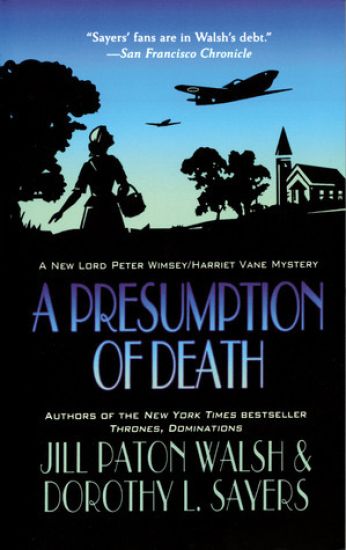
Sixty years after Dorothy L. Sayers began her unfinished Lord Peter Wimsey novel, Thrones Dominations, Booker Prize finalist Jill Paton Walsh took on the challenge of completing the manuscript--with extraordinary success. "The transition is seamless," said the San Francisco Chronicle; "you cannot tell where Sayers leaves off and Walsh begins." "Will Paton Walsh do it again?" wondered Ruth Rendell in London's Sunday Times. "We must hope so." Jill Paton Walsh fulfills those hopes in A Presumption of Death. Although Sayers never began another Wimsey novel, she did leave clues. Drawing on "The Wimsey Papers," in which Sayers showed various members of the family coping with wartime conditions, Walsh has devised an irresistible story set in 1940, at the start of the Blitz in London. Lord Peter is abroad on secret business for the Foreign Office, while Harriet Vane, now Lady Peter Wimsey, has taken their children to safety in the country. But war has followed them there---glamorous RAF pilots and even more glamorous land-girls scandalize the villagers, and the blackout makes the nighttime lanes as sinister as the back alleys of London. Daily life reminds them of the war so constantly that, when the village's first air-raid practice ends with a real body on the ground, it's almost a shock to hear the doctor declare that it was not enemy action, but plain, old-fashioned murder. Or was it? At the request of the overstretched local police, Harriet reluctantly agrees to investigate. The mystery that unfolds is every bit as literate, ingenious, and compelling as the best of original Lord Peter Wimsey novels.
Harriet Flores struggles with boredom and an unrequited crush while learning to manage her chronic illness through a long, hot, 1990s summer in Chicago. She uses her imagination to cope, which sometimes gets her into trouble, as she makes up fantastical fibs and wonders if there are ghosts upstairs. One neighbor, Pearl, encourages Harriet to read and write, leading Harriet to have a breakthrough and discover the power of storytelling.
Uncle Tom's Cabin; or, Life Among the Lowly, is an anti-slavery novel by American author Harriet Beecher Stowe. Published in 1852, the novel "helped lay the groundwork for the Civil War", according to Will Kaufman.Uncle Tom's Cabin was the best-selling novel of the 19th century and the second best-selling book of that century, following the Bible. It is credited with helping fuel the abolitionist cause in the 1850s. In the first year after it was published, 300,000 copies of the book were sold in the United States; one million copies in Great Britain.In 1855, three years after it was published, it was called "the most popular novel of our day."The impact attributed to the book is great, reinforced by a story that when Abraham Lincoln met Stowe at the start of the Civil War, Lincoln declared, "So this is the little lady who started this great war."The quote is apocryphal; it did not appear in print until 1896, and it has been argued that "The long-term durability of Lincoln's greeting as an anecdote in literary studies and Stowe scholarship can perhaps be explained in part by the desire among many contemporary intellectuals ... to affirm the role of literature as an agent of social change." The book and the plays it inspired helped popularize a number of stereotypes about black people. These include the affectionate, dark-skinned "mammy"; the "pickaninny" stereotype of black children; and the "Uncle Tom", or dutiful, long-suffering servant faithful to his white master or mistress. In recent years, the negative associations with Uncle Tom's Cabin have, to an extent, overshadowed the historical impact of the book as a "vital antislavery tool." The book opens with a Kentucky farmer named Arthur Shelby facing the loss of his farm because of debts. Even though he and his wife Emily Shelby believe that they have a benevolent relationship with their slaves, Shelby decides to raise the needed funds by selling two of them-Uncle Tom, a middle-aged man with a wife and children, and Harry, the son of Emily Shelby's maid Eliza-to a slave trader. Emily Shelby is averse to this idea because she had promised her maid that her child would never be sold; Emily's son, George Shelby, hates to see Tom go because he sees the man as his friend and mentor. When Eliza overhears Mr. and Mrs. Shelby discussing plans to sell Tom and Harry, Eliza determines to run away with her son. The novel states that Eliza made this decision because she fears losing her only surviving child (she had already miscarried two children). Eliza departs that night, leaving a note of apology to her mistress. Tom is sold and placed on a riverboat which sets sail down the Mississippi River. While on board, Tom meets and befriends a young white girl named Eva. Eva's father Augustine St. Clare buys Tom from the slave trader and takes him with the family to their home in New Orleans. Tom and Eva begin to relate to one another because of the deep Christian faith they both shar.During Eliza's escape, she meets up with her husband George Harris, who had run away previously. They decide to attempt to reach Canada. However, they are tracked by a slave hunter named Tom Loker. Eventually Loker and his men trap Eliza and her family, causing Phineas to push Loker down a cliff after George had shot him in the side. Worried that Loker may die, Eliza convinces George to bring the slave hunter to a nearby Quaker settlement for medical treatment.Back in New Orleans, St. Clare debates slavery with his Northern cousin Ophelia who, while opposing slavery, is prejudiced against black people. St. Clare, however, believes he is not biased, even though he is a slave owner. In an attempt to show Ophelia that her views on blacks are wrong, St. Clare purchases Topsy, a young black slave. St. Clare then asks Ophelia to educate her.......






![The Diary of Martha Bethune Baliol from 1753 to 1754. [By Harriet Skene.]](/covers/9781241362867.jpg)
![The Chaucer Birthday Book. Compiled by Harriet Waechter. [With a Frontispiece.]](/covers/9781241568092.jpg)