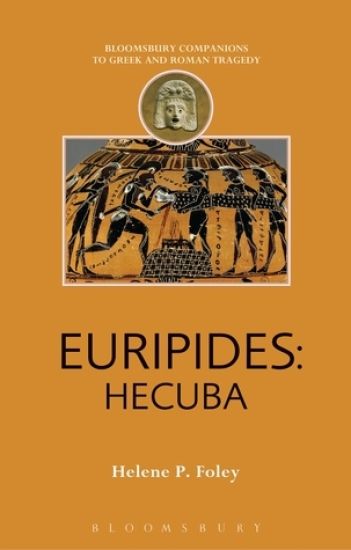
Chosen as one of the ten canonical plays by Euripides during the Hellenistic period in Greece, Hecuba was popular throughout Antiquity. The play also became part of the so-called 'Byzantine triad' of three plays of Euripides (along with Phoenician Women and Orestes) selected for study in school curricula, above all for the brilliance of its rhetorical speeches and quotable traditional wisdom. Translations into Latin and vernacular languages, as well as stage performances emerged early in the sixteenth century. The Renaissance admired the play for its representation of the extraordinary suffering and misfortunes of its newly-enslaved heroine, the former queen of Troy Hecuba, for the courageous sacrificial death of her daughter Polyxena, and for the beleaguered queen's surprisingly successful revenge against the unscrupulous killer of her son Polydorus. Later periods, however, developed reservations about the play's revenge plot and its unity. Recent scholarship has favorably reassessed the play in its original cultural and political context and the past thirty years have produced a number of exciting staged productions. Hecuba has emerged as a profound exploration of the difficulties of establishing justice and a stable morality in post-war situations. This book investigates the play's changing critical and theatrical reception from Antiquity to the present, its mythical and political background, its dramatic and thematic unity, and the role of its choruses.
'I will build the foundation of the house, but it's up to you to decorate it.' Michel ThomasExperience significant results in a remarkably short period of time thanks to the unique Michel Thomas Method, perfected over 50 years by celebrated psycholinguist Michel Thomas. The method works in tune with how the brain prefers to receive, store and then retrieve information. You'll stick with it, because you'll love it.* Improve your French naturally and unforgettably, without strain* Learn from listening and speaking, without the pressure of writing or memorizing* Build up your French in manageable steps by thinking out answers for yourselfHow does it work?Learning vocabulary is notoriously difficult if attempted in the traditional way - with long lists and hours of memorization. With the Michel Thomas Method, new words and phrases are presented in such a way that they cannot be forgotten. In this five-hour phase-two course, Michel Thomas Method teacher Hélène Lewis introduces over 1,000 carefully chosen 'power words,' including verbs and everyday phrases. Learning alongside two genuine students, you will exponentially build up your vocabulary by unlocking what you already know. What's new?This new edition includes remastered audio and comes in new, eco-friendly recyclable packaging.Why is it so successful? 'What you understand, you know; and what you know, you don't forget.' - Michel ThomasMichel Thomas believed that the greatest barrier to any form of learning was stress: stress from worrying about remembering what you are being taught, stress from being afraid to make a mistake, stress from failing.With the Michel Thomas Method, all the attention is focused on removing stress and tension from the learning environment. The teacher takes on full responsibility for your understanding, and therefore your remembering, of what is being taught. In fact, the Michel Thomas Method forbids you from trying to memorize. There's no writing, no books, no homework.The Michel Thomas Method works by stripping away all inessential language and breaking down the most important language into its component parts. Crystal-clear building blocks are then presented, and only when they are absorbed and understood is the next piece of the puzzle introduced, enabling you to reconstruct the language for yourself - to form your own sentences, to say what you want, when you want.What's in the Course?*French Vocabulary Course comprises 5 course CDs. The booklet is available to download from www.michelthomas.com.*Note that the course content is the same as the previously entitled French Vocabulary Builder+ course, but does not include a CD-ROM.Learn anywhereMichel Thomas Method audio courses let you learn whenever you want: at home, in your car, or on the move. The audio CDs are MP3-compatible.What learners are sayingI experienced the same sort of pleasure that you got from suddenly getting a crossword clue right or cracking a code...the finger-snapping moment of, Oh My God! I've just understood what you've said to me in Spanish or you've just understood me! -Peter LØVSTRØM , Actor, 2017I've used Michel Thomas to get off the starting block for French, Italian and Spanish and I'm always surprised by how much I can say after only a few hours of listening. The Michel Thomas Italian course organises verbs into logical groups which helps you pick them up fast. And perhaps more importantly, it shows you how to use this grammar to build useful sentences. -Katie from Joyoflanguages.com
The first translation into English of 'Mother Homer is Dead, 'written in the immediate aftermath of the death of Cixous's mother in the 103rd year of her life.
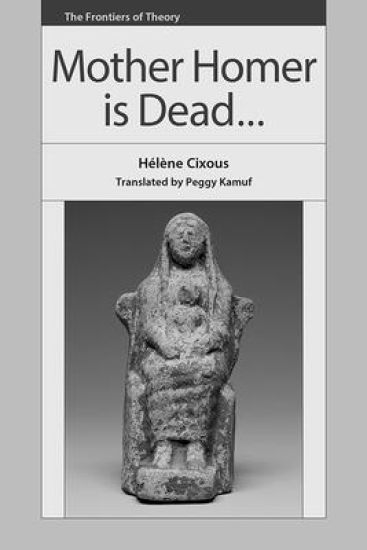
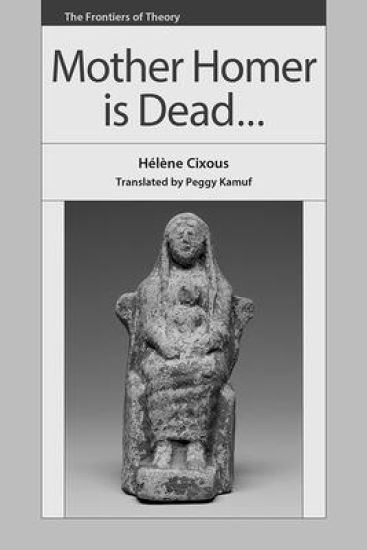
Helene Cixous chronicles the last six months of her mother's life, transgressing the mother-daughter relation in the experience of dyingMother Homer is Dead was written in the immediate aftermath of the death of the writer's mother in the 103rd year of her life. ve Cixous, nee Klein, has figured centrally in her daughter's writing since the publication of Osnabrck (1999). Since then, Cixous's work has turned in ever-tighter orbits around the relation to her mother's life as it tapers down toward death. The writer discovers a guide book for the task written in her mother's own hand, where the narrator comes to realise that she will have been midwife to her mother's death. In French, this substitutability or reversibility of birth and death is facilitated by the noun accouchement, childbirth or labour, but which literally says 'bedding, putting or going to bed'. The reversal also concerns the positions of mother/child. What is happening requires the child to become the mother of the mother. How then must she hear her child's repeated cry of 'Help me, help me'? Is it help dying that she wants? And how to know this is indeed her desire? The narrator/writer, when in doubt, opts always for life, for more life for her mother, but to the point that many of those around her-family, friends, doctors, nurses-warn that she has lost touch with 'reality'. Perhaps never has the agony of letting go of the dying one been so unflinchingly rendered. Cixous's exquisitely poetic prose has also never been put to a more harrowing test of its inventive capacities. Key FeaturesThe first translation into EnglishPrimary text by a celebrated French author and intellectualExtraordinary account of the experience of death and coping with bereavement
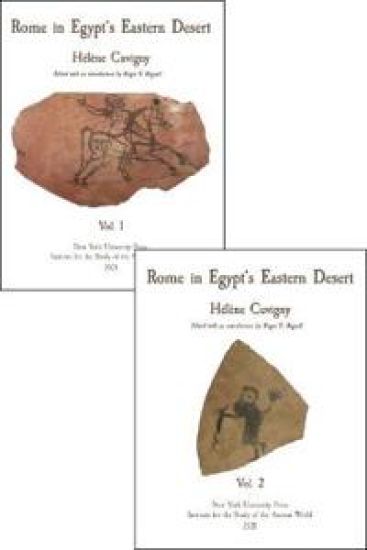
A detailed archaeological study of life in Egypt's Eastern desert during the Roman period by a leading scholar Rome in Egypt's Eastern Desert is a two-volume set collecting Hélène Cuvigny's most important articles on Egypt's Eastern Desert during the Roman period. The excavations she directed uncovered a wealth of material, including tens of thousands of texts written on pottery fragments (ostraca). Some are administrative texts, but many more are correspondence, both official and private, written by and to the people (mostly but not all men) who lived and worked in these remote and harsh environments, supported by an elaborate network of defense, administration, and supply that tied the entire region together. The contents of Rome in Egypt's Eastern Desert have all been published earlier in peer-reviewed venues, but most appear here for the first time in English. All of the contributions have been checked or translated by the editor and brought up to date with respect to bibliography, and some have been significantly rewritten by the author, in order to take account of the enormous amount of new material discovered since the original publications. A full index makes this body of work far more accessible than it was before. This book assembles into one collection thirty years of detailed study of this material, conjuring in vivid detail the lived experience of those who inhabited these forts—often through their own expressive language—and the realia of desert geography, military life, sex, religion, quarry operations, and imperial administration in the Roman world.
A detailed archaeological study of life in Egypt's Eastern desert during the Roman period by a leading scholar Rome in Egypt's Eastern Desert is a two-volume set collecting Hélène Cuvigny's most important articles on Egypt's Eastern Desert during the Roman period. The excavations she directed uncovered a wealth of material, including tens of thousands of texts written on pottery fragments (ostraca). Some are administrative texts, but many more are correspondence, both official and private, written by and to the people (mostly but not all men) who lived and worked in these remote and harsh environments, supported by an elaborate network of defense, administration, and supply that tied the entire region together. The contents of Rome in Egypt's Eastern Desert have all been published earlier in peer-reviewed venues, but most appear here for the first time in English. All of the contributions have been checked or translated by the editor and brought up to date with respect to bibliography, and some have been significantly rewritten by the author, in order to take account of the enormous amount of new material discovered since the original publications. A full index makes this body of work far more accessible than it was before. This book assembles into one collection thirty years of detailed study of this material, conjuring in vivid detail the lived experience of those who inhabited these forts—often through their own expressive language—and the realia of desert geography, military life, sex, religion, quarry operations, and imperial administration in the Roman world.
A detailed archaeological study of life in Egypt's Eastern desert during the Roman period by a leading scholar Rome in Egypt's Eastern Desert is a two-volume set collecting Hélène Cuvigny's most important articles on Egypt's Eastern Desert during the Roman period. The excavations she directed uncovered a wealth of material, including tens of thousands of texts written on pottery fragments (ostraca). Some are administrative texts, but many more are correspondence, both official and private, written by and to the people (mostly but not all men) who lived and worked in these remote and harsh environments, supported by an elaborate network of defense, administration, and supply that tied the entire region together. The contents of Rome in Egypt's Eastern Desert have all been published earlier in peer-reviewed venues, but most appear here for the first time in English. All of the contributions have been checked or translated by the editor and brought up to date with respect to bibliography, and some have been significantly rewritten by the author, in order to take account of the enormous amount of new material discovered since the original publications. A full index makes this body of work far more accessible than it was before. This book assembles into one collection thirty years of detailed study of this material, conjuring in vivid detail the lived experience of those who inhabited these forts—often through their own expressive language—and the realia of desert geography, military life, sex, religion, quarry operations, and imperial administration in the Roman world.
Fourteen ambitious women depart on a two-year dream mission on the spaceship Athena. This is the first voyage between America and Canada intending to confirm the livability of an unexplored exoplanet. Canadian Army Captain Camille Tremblay boldly leads her crew to this exciting new world. With their budding friendships and varying senses of humor, the women must overcome their loneliness and fears to adjust to the growing desolation of space. However, their journey takes a sinister turn when they experience an unexpected betrayal, endangering their lives and challenging their resolve. These heroic astronauts must now stretch their skills and relationships as they are forced to establish life on a strange planet. Here, they face environmental dangers and fascinating but hostile aliens, while a mysterious deadly force lurks nearby.
Fourteen ambitious women depart on a two-year dream mission on the spaceship Athena. This is the first voyage between America and Canada intending to confirm the livability of an unexplored exoplanet. Canadian Army Captain Camille Tremblay boldly leads her crew to this exciting new world. With their budding friendships and varying senses of humor, the women must overcome their loneliness and fears to adjust to the growing desolation of space. However, their journey takes a sinister turn when they experience an unexpected betrayal, endangering their lives and challenging their resolve. These heroic astronauts must now stretch their skills and relationships as they are forced to establish life on a strange planet. Here, they face environmental dangers and fascinating but hostile aliens, while a mysterious deadly force lurks nearby.
NORA BROOKE has never been in love. Like most people, she has no memory of her previous lifetimes, or the soulmate she returns to in between lifetimes. The invisible world of she - and he-fairy entities is growing impatient with Nora's bad luck through centuries of misery and loneliness. With their help, this is about to change. Thirty-five years old and single - Nora considers a vacation. It is a decision that is about to turn her upside down, where she lands in Riga, Latvia on the coast of the Baltic Sea. OSKAR EGLE is about to change his life from a stranger innocently bumping into Nora's shoulder to becoming her closest friend, lover and husband. Not so quickly - though, Oskar's Aunt Kara - an evil fairy in disguise of a normal human being emerges from the dead carcass of a cat and wants nothing more than to interfere. With her team of crows and bats hidden in the midst of the normal world, Kara will stop at nothing short of bending fate. Kara's war on the unification of soulmates transforms her to an entity smaller than a pinhead on the bank of the River Daugava. IF YOU WANT TO fall in love, read this book. IF YOU WANT TO find your soulmate, have a closer look. IF YOU WANT TO explore what fairies, leprechauns and trolls implore -- what they do, where they live, how they work and hide from sight STEP IN AND LISTEN deep into the night for a pin dropping into a bottomless well telling all farewell, but what's left is treasure worth more than gold - more than any tangible hold. IN THIS BOOK YOU will find A chance made to unwind Secret doors with secret keys Secret messages aimed to please Good luck charms of chests and thimbles Travel to Seemingly Nowhere in symbols And the Spiritual Resting Place of All Things Repulsive Is a place for the most impulsive Board a ship, train or plane Rest in these words And stand much to gain Travel with me across the ocean With words of complete devotion. Excerpt from The Fairyselves: IF ONE STARES TOO INTENTLY at the constellations littered across a black velvet sky, they appear to move. When such things actually move, it is usually just one, and its tail blazes in a trail of fireworks. Everyone is amazed. It's how we know the eyes are not playing tricks on the brain. FAIRIES ARE LIKE THIS. If we have opportunity to see them, we are amazed. In matters of logic, we might certainly question if what we saw was actually real, or our imagination. Babies, toddlers - even those minds trapped in far away places suddenly rise from the living dead to see a blaze of sparkles and wings. Fairies, yes. Copyright 2012 Staley & Gailitis; MHP; Moncure, North Carolina, U.S.A. All Rights Reserved. "This book is a great read for any woman who has gotten caught up with the endless to-do list. Nora uses her imagination to escape, and escape she does. "Her journey leads her to a whole new to-do list in Latvia, where she connects with all the parts of herself she has lost along the way. She remembers who she really is, how to be in love, how to create magic, how to enjoy life and how to free her spirit "Her new powers even transform the evil in others." -- Beatrice R.D. Hair, MA.ED. "This delightful story tickles the imagination and leads the reader to places that, until now, were not explored." -- Debbie Staley "Author Helene Hinson Staley creates an enchanting story of eternal love that transcends time and space. She invites the reader to enter her fantasy world of human (and non-human) emotions and soulful beings. "Feel the warmth while on this fascinating journey of emotion." --William Styple
Dr. Helene von Druskowitz 2. Mai 1856 in Wien-Hietzing 31. Mai 1918, Mauer-Oehling, Nieder sterreich Transkribiert nach der Ausgabe: Helene von Druskowitz, Pessimistische Kardinals tze Ein Vademekum f r die freiesten Geister Herros Zimsen Verlag, Wittenberg o. J.
The royal judge was an archetypal character in French tragedy during the 17th century. This figure impersonated the king by asserting his judicial authority and bringing order to an otherwise chaotic world. In Passing Judgement, Hélène Bilis examines how an overlooked character-type—the royal judge—remained a constant of the tragic genre throughout the 17th century, although the specifics of his role and position fluctuated as playwrights experimented with changing models of sovereignty onstage. Her readings analyze how this royal decision-maker stood at the intersection of political and theatrical debates, and evolved through a process of trial and error in which certain portrayals of kingship were deemed obsolete and were discarded, while others were promoted as culturally allowable and resonant. In tracing the royal judge’s persistent presence and transformation, Bilis argues that we can better grasp the weighty political stakes of theatrical representations under the ancien régime.
Inventive new methods of audio-visual mediation and aesthetic activism have been giving shape, since at least the mid-2000s, to feelings of despair, disappointment, and rage at the injustice that South Africa’s colonial and apartheid histories continue to trail in their wake. Wayward Feeling reveals how racism, sexism, and other forms of structural disenfranchisement have continued to assert themselves in affective terms, and how these terms have been recast in spaces both public and intimate in "post-rainbow" times. Helene Strauss argues that the tension between aspiration and achievability has yielded modes of feeling that increasingly disrupt the thrall of post-apartheid nation-building and reconciliation myths, even as widespread attachment to the utopian ideals of the anti-apartheid struggle continues to shape dissenting political organizing and cultural production. Drawing on a variety of audio-visual forms – including video installations, conceptual artwork, documentary film, live art, and sonic installations – Wayward Feeling examines some of the affective resources that people in contemporary South Africa have been drawing on to make difficult lives more bearable.
Do you want to combine good nutrition with artistic flair? Create desserts that wow family and friends? Cherry Desserts Magic is a collection of the author's favorite recipes that pay homage to the humble cherry. Long known for their nutritional benefits, cherries add both WOW factor and good nutrition to desserts we prepare for family and friends. Do you want to bring a baked cheesecake from ho-hum to fabulous? Try the Cherry Lime Cheesecake. Cr me Brul e with Cherry Sauce is sure to please the most discriminating palate at your next dinner party. In a hurry but need a special lunch treat? Chocolate Cherry Muffins are quick and easy to prepare. Helene Unger, retired professional Home Economist, educator, and writer is sharing her favorite recipes featuring sweet and sour cherries. All recipes have detailed, easy to follow directions and have been tested. The author has included traditional favorites, such as Black Forest Cherry Torte and Cherry Pound Cake, as well as ethnic favorites such as Mennonite Cherry Mooss (soup) and Turkish Cherry Bread Pudding. Helene hopes to inspire both the novice and the experienced baker to try the wonderful world of cherry desserts.