Kirjojen hintavertailu. Mukana 11 717 486 kirjaa ja 12 kauppaa.

Kirjahaku

Etsi kirjoja tekijän nimen, kirjan nimen tai ISBN:n perusteella.

1000 tulosta hakusanalla Herman Franck

Philosophy without Intuitions

Philosophy without Intuitions

Herman Cappelen

Oxford University Press
2012
sidottu
The claim that contemporary analytic philosophers rely extensively on intuitions as evidence is almost universally accepted in current meta-philosophical debates and it figures prominently in our self-understanding as analytic philosophers. No matter what area you happen to work in and what views you happen to hold in those areas, you are likely to think that philosophizing requires constructing cases and making intuitive judgments about those cases. This assumption also underlines the entire experimental philosophy movement: only if philosophers rely on intuitions as evidence are data about non-philosophers' intuitions of any interest to us. Our alleged reliance on the intuitive makes many philosophers who don't work on meta-philosophy concerned about their own discipline: they are unsure what intuitions are and whether they can carry the evidential weight we allegedly assign to them. The goal of this book is to argue that this concern is unwarranted since the claim is false: it is not true that philosophers rely extensively (or even a little bit) on intuitions as evidence. At worst, analytic philosophers are guilty of engaging in somewhat irresponsible use of 'intuition'-vocabulary. While this irresponsibility has had little effect on first order philosophy, it has fundamentally misled meta-philosophers: it has encouraged meta-philosophical pseudo-problems and misleading pictures of what philosophy is.
The Inessential Indexical

The Inessential Indexical

Herman Cappelen; Josh Dever

Oxford University Press
2013
sidottu
When we represent the world in language, in thought, or in perception, we often represent it from a perspective. We say and think that the meeting is happening now, that it is hot here, that I am in danger and not you; that the tree looks larger from my perspective than from yours. The Inessential Indexical is an exploration and defense of the view that perspectivality is a philosophically shallow aspect of the world. Cappelen and Dever oppose one of the most entrenched and dominant trends in contemporary philosophy: that perspective (and the perspective of the first person in particular) is philosophically deep and that a proper understanding of it is important not just in the philosophies of language and mind, but throughout philosophy. They argue that there are no such things as essential indexicality, irreducibly de se attitudes, or self-locating attitudes. Their goal is not to show that we need to rethink these phenomena, to explain them in different ways. Their goal is to show that the entire topic is an illusion--there's nothing there. The Context and Content series is a forum for outstanding original research at the intersection of philosophy, linguistics, and cognitive science. The general editor is François Recanati (Institut Jean-Nicod, Paris).
God in the Age of Science?

God in the Age of Science?

Herman Philipse

Oxford University Press
2012
sidottu
God in the Age of Science? is a critical examination of strategies for the philosophical defence of religious belief. The main options may be presented as the end nodes of a decision tree for religious believers. The faithful can interpret a creedal statement (e.g. 'God exists') either as a truth claim, or otherwise. If it is a truth claim, they can either be warranted to endorse it without evidence, or not. Finally, if evidence is needed, should its evidential support be assessed by the same logical criteria that we use in evaluating evidence in science, or not? Each of these options has been defended by prominent analytic philosophers of religion. In part I Herman Philipse assesses these options and argues that the most promising for believers who want to be justified in accepting their creed in our scientific age is the Bayesian cumulative case strategy developed by Richard Swinburne. Parts II and III are devoted to an in-depth analysis of this case for theism. Using a 'strategy of subsidiary arguments', Philipse concludes (1) that theism cannot be stated meaningfully; (2) that if theism were meaningful, it would have no predictive power concerning existing evidence, so that Bayesian arguments cannot get started; and (3) that if the Bayesian cumulative case strategy did work, one should conclude that atheism is more probable than theism. Philipse provides a careful, rigorous, and original critique of theism in the world today.
Billy Budd, Sailor

Billy Budd, Sailor

Herman Melville

University of Chicago Press
2001
nidottu
Hayford and Sealts's text was the first accurate version of Melville's final novel. Based on a close analysis of the manuscript, thoroughly annotated, and packaged with a history of the text and perspectives for its criticism, this edition will remain the definitive version of a profoundly suggestive story.
The Struggle for Constitutional Justice in Post-Communist Europe

The Struggle for Constitutional Justice in Post-Communist Europe

Herman Schwartz

University of Chicago Press
2000
sidottu
In the former Eastern Bloc countries, one of the most important, and most difficult, aspects of the transition to democracy has been the establishment of constitutional justice and the rule of law. Herman Schwartz's wide-ranging book is the first to chronicle and analyze the rise of constitutional courts in this changing region. Beginning with a brief history of the courts prior to 1989, Schwartz draws on his expertise as a constitutional scholar and long-time adviser to many of these countries to compare their jurisprudence with relevant American and West European law. He then focuses in detail on the relative success stories of Poland and Hungary, where the courts faced little opposition, and the more problematic situations in Russia, Slovakia and Bulgaria, where the courts' independence and very existence were threatened by both old-line communists and new-style authoritarians. With a wealth of historical and other information, backed up by a massive array of research, the book is a remarkably rich, yet accessible, source for anyone interested in the ongoing struggles of post-Communist Europe.
The Struggle for Constitutional Justice in Post-Communist Europe

The Struggle for Constitutional Justice in Post-Communist Europe

Herman Schwartz

University of Chicago Press
2002
nidottu
In the former Eastern Bloc countries, one of the most important, and most difficult, aspects of the transition to democracy has been the establishment of constitutional justice and the rule of law. Herman Schwartz's wide-ranging book is the first to chronicle and analyze the rise of constitutional courts in this changing region. Beginning with a brief history of the courts prior to 1989, Schwartz draws on his expertise as a constitutional scholar and long-time adviser to many of these countries to compare their jurisprudence with relevant American and West European law. He then focuses in detail on the relative success stories of Poland and Hungary, where the courts faced little opposition, and the more problematic situations in Russia, Slovakia and Bulgaria, where the courts' independence and very existence were threatened by both old-line communists and new-style authoritarians. With a wealth of historical and other information, backed up by a massive array of research, the book is a remarkably rich, yet accessible, source for anyone interested in the ongoing struggles of post-Communist Europe.
Billy Budd, Sailor (An Inside Narrative)

Billy Budd, Sailor (An Inside Narrative)

Herman Melville

THE UNIVERSITY OF CHICAGO PRESS
2025
sidottu
An illustrated edition of Billy Budd featuring woodcuts by celebrated artist Barry Moser. This edition of Billy Budd, Sailor presents Herman Melville’s iconic tale of the high seas alongside illustrations by renowned artist, publisher, and printmaker Barry Moser. Throughout his fifty-year career, Moser has illustrated more than three hundred books ranging from novels to children’s stories to the Bible. Through his Pennyroyal Press, Moser designs and prints fine-press, illustrated, and occasionally oversized books in very limited editions, which are beloved by collectors and bibliophiles. To coincide with the centenary of the novella’s posthumous publication, Moser created sixteen original woodcuts illustrating the scenes and characters of Billy Budd, Sailor, and this trade edition now makes these exquisite illustrations accessible to a wide audience.
Dreaming of Cockaigne

Dreaming of Cockaigne

Herman Pleij

Columbia University Press
2001
sidottu
Imagine a dreamland where roasted pigs wander about with knives in their backs to make carving easy, where grilled geese fly directly into one's mouth, where cooked fish jump out of the water and land at one's feet. The weather is always mild, the wine flows freely, sex is readily available, and all people enjoy eternal youth. Such is Cockaigne. Portrayed in legend, oral history, and art, this imaginary land became the most pervasive collective dream of medieval times-an earthly paradise that served to counter the suffering and frustration of daily existence and to allay anxieties about an increasingly elusive heavenly paradise. Illustrated with extraordinary artwork from the Middle Ages, Herman Pleij's Dreaming of Cockaigne is a spirited account of this lost paradise and the world that brought it to life. Pleij takes three important texts as his starting points for an inspired of the panorama of ideas, dreams, popular religion, and literary and artistic creation present in the late Middle Ages. What emerges is a well-defined picture of the era, furnished with a wealth of detail from all of Europe, as well as Asia and America. Pleij draws upon his thorough knowledge of medieval European literature, art, history, and folklore to describe the fantasies that fed the tales of Cockaigne and their connections to the central obsessions of medieval life.
Dreaming of Cockaigne

Dreaming of Cockaigne

Herman Pleij

Columbia University Press
2003
pokkari
Imagine a dreamland where roasted pigs wander about with knives in their backs to make carving easy, where grilled geese fly directly into one's mouth, where cooked fish jump out of the water and land at one's feet. The weather is always mild, the wine flows freely, sex is readily available, and all people enjoy eternal youth. Such is Cockaigne. Portrayed in legend, oral history, and art, this imaginary land became the most pervasive collective dream of medieval times-an earthly paradise that served to counter the suffering and frustration of daily existence and to allay anxieties about an increasingly elusive heavenly paradise. Illustrated with extraordinary artwork from the Middle Ages, Herman Pleij's Dreaming of Cockaigne is a spirited account of this lost paradise and the world that brought it to life. Pleij takes three important texts as his starting points for an inspired of the panorama of ideas, dreams, popular religion, and literary and artistic creation present in the late Middle Ages. What emerges is a well-defined picture of the era, furnished with a wealth of detail from all of Europe, as well as Asia and America. Pleij draws upon his thorough knowledge of medieval European literature, art, history, and folklore to describe the fantasies that fed the tales of Cockaigne and their connections to the central obsessions of medieval life.
The Theory Mess

The Theory Mess

Herman Rapaport

Columbia University Press
2001
sidottu
Although deconstruction has become a popular catchword, as an intellectual movement it has never entirely caught on within the university. For some in the academy, deconstruction, and Jacques Derrida in particular, are responsible for the demise of accountability in the study of literature. Countering these facile dismissals of Derrida and deconstruction, Herman Rapaport explores the incoherence that has plagued critical theory since the 1960s and the resulting legitimacy crisis in the humanities. Against the backdrop of a rich, informed discussion of Derrida's writings-and how they have been misconstrued by critics and admirers alike-The Theory Mess investigates the vicissitudes of Anglo-American criticism over the past thirty years and proposes some possibilities for reform.
The Theory Mess

The Theory Mess

Herman Rapaport

Columbia University Press
2001
pokkari
Although deconstruction has become a popular catchword, as an intellectual movement it has never entirely caught on within the university. For some in the academy, deconstruction, and Jacques Derrida in particular, are responsible for the demise of accountability in the study of literature. Countering these facile dismissals of Derrida and deconstruction, Herman Rapaport explores the incoherence that has plagued critical theory since the 1960s and the resulting legitimacy crisis in the humanities. Against the backdrop of a rich, informed discussion of Derrida's writings-and how they have been misconstrued by critics and admirers alike-The Theory Mess investigates the vicissitudes of Anglo-American criticism over the past thirty years and proposes some possibilities for reform.
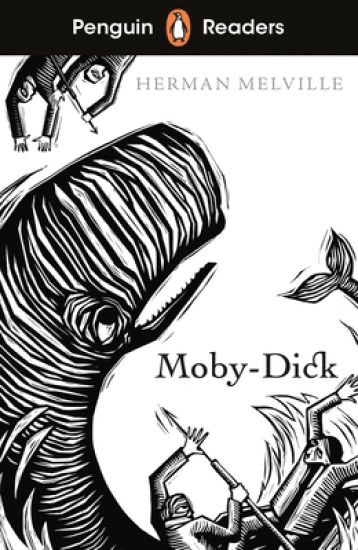
Penguin Readers Level 7: Moby Dick (ELT Graded Reader)
Penguin Readers is an ELT graded reader series for learners of English as a foreign language. With carefully adapted text, new illustrations and language learning exercises, the print edition also includes instructions to access supporting material online.Titles include popular classics, exciting contemporary fiction, and thought-provoking non-fiction, introducing language learners to bestselling authors and compelling content.The eight levels of Penguin Readers follow the Common European Framework of Reference for language learning (CEFR). Exercises at the back of each Reader help language learners to practise grammar, vocabulary, and key exam skills. Before, during and after-reading questions test readers' story comprehension and develop vocabulary.Visit the Penguin Readers websiteExclusively with the print edition, readers can unlock online resources including a digital book, audio edition, lesson plans and answer keys.When the young sailor "Ishmael" decides to sail on the Pequod with the mysterious Captain Ahab, he has no idea about Ahab's plans to get revenge on the great white whale Moby Dick. Ahab wants to find and kill the whale at any cost - even if it means losing his ship and his crew.
Adaptable

Adaptable

Herman Pontzer

PENGUIN BOOKS LTD
2025
sidottu
'Engrossing, richly informative . . . challenges us to rethink universal health benchmarks' New YorkerA new way of thinking about diversity and what really unites us, from the internationally renowned author of BurnReal diversity isn’t skin deep. Over the past 100,000 years, as humans expanded into every biome on the planet, our bodies and our cultures have been fine-tuned to our local environments. Beyond the physical demands of our climate, we live our lives immersed in ideas and norms that affect what we eat, how we move and why we get sick – all of which, in turn, affect how our bodies work.As an evolutionary anthropologist conducting ground-breaking research with human populations around the globe, Herman Pontzer has come to see much more clearly how our genes and environments combine to shape our bodies and our health: for better or worse. In this book, he takes us on a tour of the human body and the surprising ways it can change in response to its environment: from the Andean groups who have developed increased lung capacity to the Sama divers who have larger spleens. He also highlights the critical ways we misinterpret biological adaptations: in healthcare, public policy and individual choices.With so much of our wellbeing and public discourse centred on human biology, a clear understanding of the distinction between socially constructed and genetic differences is more important than ever. This timely reappraisal of an overlooked science is an essential guide to our remarkable bodies.
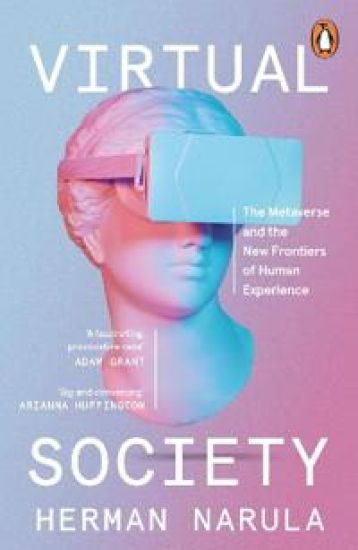
Virtual Society

Virtual Society

Herman Narula

PENGUIN BOOKS LTD
2022
pokkari
Is the metaverse a brave new world? An immersive digital playground? The next generation of online gaming? Or just the latest manifestation of our human tendency to create other realities?Herman Narula argues that it is all of these things. His vision of the metaverse, deeply rooted in history and psychology, looks to the Egyptians, whose conception of death inspired them to build the pyramids, to modern-day sports fans whose fantasy leagues are as competitive as the real thing, and finds that humanity has always sought to supplement our day-to-day lives with a rich diversity of alternative immersive experiences. Rigorously researched, passionately argued, and written by a tech founder and creator of digital worlds, Virtual Society reveals why the metaverse offers a new universe of ideas that offers users unprecedented opportunities to create, explore and find meaning. It's an essential guide for anyone who wants to get beyond superficial headlines and understand the true shape of our virtual future.
Virtual Society

Virtual Society

Herman Narula

PENGUIN BOOKS LTD
2023
pokkari
A definitive guide to the metaverse: why it's important, why it matters to society, and how to create a metaverse that works for all of us---------------'Brimming with big and convincing arguments about where human life is heading' Arianna Huffington---------------The metaverse is a vision of how the next generation of the internet will operate. Many people believe it is the future. But what will that future look like? An immersive digital playground? The next generation of online gaming? Or just the latest manifestation of our human tendency to create other realities?Herman Narula argues that it is all of these things and more. His vision of the metaverse, deeply rooted in history and psychology, looks to the Egyptians, whose concept of death inspired them to build the pyramids, to modern-day sports fans whose fantasy leagues are as competitive as the real thing, and finds that humanity has always sought ways to supplement our day-to-day lives with a rich diversity of alterative immersive experiences.Virtual Society reveals why the metaverse offers a new universe of ideas that gives everyone the chance to create, explore and find meaning. It's an essential guide for anyone who wants to understand the true shape of our virtual future.---------------Reader reviews'This book unlocked my understanding of the Metaverse in a completely new refreshing way. This is a must read book which needs to be introduced in every school curriculum globally for our upcoming metaversial society and "fulfilment economy".' *****'I've been trying to follow what tech professionals and commentators mean when talking about the metaverse over the last two years. Herman's description of what the metaverse may become, however, is by the far the most compelling. What makes it compelling is the fact that it is routed in human history. The metaverse is not a new concept; and you don't need a degree from Cambridge to understand it.' *****