Kirjojen hintavertailu. Mukana 12 390 323 kirjaa ja 12 kauppaa.

Kirjahaku

Etsi kirjoja tekijän nimen, kirjan nimen tai ISBN:n perusteella.

1000 tulosta hakusanalla Humor Heals Us

National Styles of Humor

National Styles of Humor

Avner Ziv

Praeger Publishers Inc
1988
sidottu
This volume represents a first in its analysis of historical trends in the humor of eight Western countries: Australia, Belgium, France, Great Britain, Israel, Italy, the United States, and Yugoslavia. In each country, the authors surveyed and assessed the national humor in a way designed to facilitate comparative study. Each essay details the historical development of national humor with an emphasis on the twentieth century and contemporary trends. The survey includes traditional and popular forms of humor as well as humor in literature, the performing and visual arts, and the mass media. A bibliography suggesting materials for further study completes each chapter. Not only do the contributors present a vivid picture of traditional forms of humor such as carnivals, popular performances, and special festivities, they also examine historical changes in humor. Each author discusses the functions of humor; and as a whole, the contributors demonstrate that sexual, aggressive, social, intellectual, and defensive humor have developed differently and are appreciated differently.
American Literary Humor During the Great Depression

American Literary Humor During the Great Depression

Robert A. Gates

Praeger Publishers Inc
1999
sidottu
While volumes have been generated about the Great Depression, relatively little work has been done on the social transformations during the 1930s and few attempts have been made to relate these transformations to American literary humor. The economic troubles of the decade gave rise to one of the richest periods of American humor. This book explores in depth how literary humor evolved during the Depression and how in conjunction with the Depression it helped shape and change the American consciousness. Among the authors studied are Robert Benchley, Zora Neale Hurston, H. L. Mencken, Ogden Nash, James Thurber, Will Rogers, and Damon Runyon, along with the many unknown writers of the WPA who amassed invaluable records of rural folklore during that turbulent time.The study is spread out over five chapters with each exploring a separate part of our cultural history and its effect on literary humor. The negative psychological aspects of the Depression and how writers used humor to diffuse its effects are treated in the first chapter. The chapters that follow examine the changing roles of husbands and wives within the family, the reinforcement or rejection of traditional ethnic stereotypes in racial humor, the questioning of the validity of the opinions or sentiments of America's professionals, and the role American labor played or was expected to play during the national crisis.
The Psychology of Humor

The Psychology of Humor

Jon Roeckelein

Greenwood Press
2002
sidottu
This work traces the origins and evolution of the concept of humor in psychology from ancient to modern times with an emphasis on an experimental/empirical approach to the understanding of humor and sense of humor. In addition to more than 3,000 important citations and references pertaining to the history, theories, and definitions of the concept of humor, this reference guide contains more than 380 recent (post-1970) annotated entries on the psychology of humor in its bibliographic section.The book describes various psychological, nonpsychological, and philosophical theories and definitions of humor, and focuses on the methodological concerns of psychologists regarding the scientific investigation of humor. The bibliography is organized under 10 categories, including Bibliographies and Literature Reviews of Humor, Cognition and Humor, Methodology and Measurement of Humor, and Social Aspects of Humor.
Chaucer's Humor
Originally published in 1994. Chaucer is considered the first major humorist in English literature and is particularly interesting as he reflects the humor of predecessors and contemporaries as well as defines development for subsequent British humor. This collection presents essays that define the nature of Chaucerian humor, examine Chaucer’s works from a variety of theoretical perspectives, and consider genres of humor within his writing. This is an excellent work of critical discourse that adds important understanding of Chaucer as well as the field of comedy in literature.
Chaucer's Humor
Originally published in 1994. Chaucer is considered the first major humorist in English literature and is particularly interesting as he reflects the humor of predecessors and contemporaries as well as defines development for subsequent British humor. This collection presents essays that define the nature of Chaucerian humor, examine Chaucer’s works from a variety of theoretical perspectives, and consider genres of humor within his writing. This is an excellent work of critical discourse that adds important understanding of Chaucer as well as the field of comedy in literature.
The Social Psychology of Humor
This important new book provides a comprehensive analysis of humor from a social-psychological perspective, addressing questions about the use of humor and its effects in daily life. It examines the social psychology of humor on micro-level phenomena, such as attitudes, persuasion, and social perception, as well as exploring its use and effect on macro-level phenomena such as conformity, group processes, cohesion, and intergroup relations.Humor is inherently a social experience, shared among people, essential to nearly every type of interpersonal relationship. In this accessible volume, Strick and Ford review current research and new theoretical advancements to identify pressing open questions and propose new directions for future research in the social psychology of humor. The book explores fascinating topics such as humor in advertising, political satire, and the importance of a sense of humor in maintaining romantic relationships. It also examines how racist or sexist humor can affect personal and intergroup relations, and discusses how to confront inappropriate jokes.Offering new, precise, and operational conceptions of humor in social processes, this book will be essential reading for students and academics in social psychology, media, and communication studies.
The Social Psychology of Humor
This important new book provides a comprehensive analysis of humor from a social-psychological perspective, addressing questions about the use of humor and its effects in daily life. It examines the social psychology of humor on micro-level phenomena, such as attitudes, persuasion, and social perception, as well as exploring its use and effect on macro-level phenomena such as conformity, group processes, cohesion, and intergroup relations.Humor is inherently a social experience, shared among people, essential to nearly every type of interpersonal relationship. In this accessible volume, Strick and Ford review current research and new theoretical advancements to identify pressing open questions and propose new directions for future research in the social psychology of humor. The book explores fascinating topics such as humor in advertising, political satire, and the importance of a sense of humor in maintaining romantic relationships. It also examines how racist or sexist humor can affect personal and intergroup relations, and discusses how to confront inappropriate jokes.Offering new, precise, and operational conceptions of humor in social processes, this book will be essential reading for students and academics in social psychology, media, and communication studies.
Gender and Humor
In the mid-seventies, both gender studies and humor studies emerged as new disciplines, with scholars from various fields undertaking research in these areas. The first publications that emerged in the field of gender studies came out of disciplines such as philosophy, history, and literature, while early works in the area of humor studies initially concentrated on language, linguistics, and psychology. Since then, both fields have flourished, but largely independently. This book draws together and focuses the work of scholars from diverse disciplines on intersections of gender and humor, giving voice to approaches in disciplines such as film, television, literature, linguistics, translation studies, and popular culture.
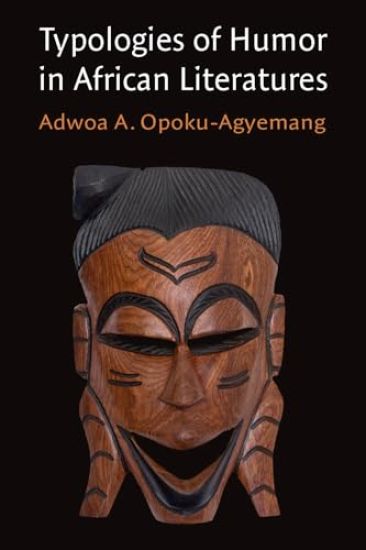
Typologies of Humor in African Literatures

Typologies of Humor in African Literatures

Adwoa A Opoku-Agyemang

THE UNIVERSITY OF MICHIGAN PRESS
2024
nidottu
Typologies of Humor in African Literatures is a study on the use of humor and comedy in African literary texts across the twentieth century. Despite humor being omnipresent in African societies and their literatures, discussions of contemporary African literature have largely dismissed it as being too lighthearted compared to the more serious issues of post-colonial history, class inequality, and politics. Adwoa A. Opoku-Agyemang, while acknowledging the seriousness of the subject matter, establishes humor as an essential component of African fiction. The book analyzes four comedic archetypes: the Trickster, who is unapologetically amoral and entertaining; the Mimic, whose everyday dealings exude ambiguity; the Interpreter, who demonstrates the comic potential of language differences while showing how a single message can mean contrasting things; and the Deviant, who throws norms into question all the while reinforcing them. These character types and the humor they produce present a constant pursuit of balance between contrasting worldviews and frames of reference within the imbrication of different languages, classes, political factions, genders, and (un)officialdoms. The product of these rowdy relations are people who take the weirdness and run with it to generate diegetic and intradiegetic laughs. By analyzing Francophone and Anglophone African writing and how it overlays local languages, Opoku-Agyemang contributes a uniquely African voice to the primarily Western-dominated field of humor studies.
Typologies of Humor in African Literatures

Typologies of Humor in African Literatures

Adwoa A Opoku-Agyemang

THE UNIVERSITY OF MICHIGAN PRESS
2024
sidottu
Typologies of Humor in African Literatures is a study on the use of humor and comedy in African literary texts across the twentieth century. Despite humor being omnipresent in African societies and their literatures, discussions of contemporary African literature have largely dismissed it as being too lighthearted compared to the more serious issues of post-colonial history, class inequality, and politics. Adwoa A. Opoku-Agyemang, while acknowledging the seriousness of the subject matter, establishes humor as an essential component of African fiction. The book analyzes four comedic archetypes: the Trickster, who is unapologetically amoral and entertaining; the Mimic, whose everyday dealings exude ambiguity; the Interpreter, who demonstrates the comic potential of language differences while showing how a single message can mean contrasting things; and the Deviant, who throws norms into question all the while reinforcing them. These character types and the humor they produce present a constant pursuit of balance between contrasting worldviews and frames of reference within the imbrication of different languages, classes, political factions, genders, and (un)officialdoms. The product of these rowdy relations are people who take the weirdness and run with it to generate diegetic and intradiegetic laughs. By analyzing Francophone and Anglophone African writing and how it overlays local languages, Opoku-Agyemang contributes a uniquely African voice to the primarily Western-dominated field of humor studies.
Abraham Lincoln's Humor: Yarns, Stories, and Anecdotes by and About Our 16th President
Today we think of Abraham Lincoln as America's greatest President. He's celebrated for his leadership and his numerous moving speeches, and for helping the nation through the dark time of the Civil War and out of slavery. Not as widely known was Lincoln's talent for humor and storytelling, and this collection shares many of his jokes and parables. Lincoln used homespun whimsy effectively as a traveling lawyer and later as a tool that helped him negotiate policy, gain influence, and teach subtle moral lessons. The joke was often on him: once when being accused of being two-faced, he responded: "If I had two faces, why would I be wearing this one?" Even longtime rival Stephen Douglas recognized the power of Lincoln's message and presentation, conceding that "When he begins to tell a story, I'm overmatched." To truly understand Lincoln, we must appreciate his witty style of communicating.
The Politics of Socratic Humor

The Politics of Socratic Humor

John Lombardini

University of California Press
2018
sidottu
Was Socrates an ironist? Did he mock his interlocutors and, in doing so, show disdain for both them and the institutions of Athenian democracy? These questions were debated with great seriousness by generations of ancient Greek writers and helped to define a primary strand of the western tradition of political thought. By reconstructing these debates, The Politics of Socratic Humor compares the very different interpretations of Socrates developed by his followers—including such diverse thinkers as Plato, Aristotle, Xenophon, Aristophanes, and the Hellenistic philosophers—to explore the deep ethical and political dimensions of Socratic humor and its implications for civic identity, democratic speech, and political cooperation. Irony has long been seen as one of Socrates’ most characteristic features, but as Lombardini shows, irony is only one part of a much larger toolkit of Socratic humor, the broader intellectual context of which must be better understood if we are to appropriate Socratic thought for our own modern ends.
Women and Humor in Classical Greece

Women and Humor in Classical Greece

Laurie O'Higgins

Cambridge University Press
2007
pokkari
Women and Humor in Classical Greece examines the role of women as producers of joking speech, especially within cults of Demeter. This speech, sometimes known as aischrologia, had considerable weight and vitality within its cultic context. It also shaped literary traditions, notably iambic and Attic old comedy that has traditionally been regarded as entirely male. The misogyny for which ancient iambic is infamous derives in part from an oral world in which women's derisive joking voices reverberated. O'Higgins considers this speech from its mythical origins in the Homeric Hymn to Demeter, through the reactive iambic tradition and into old comedy. She also examines the poems of Sappho and Corinna as literary jokers, responding in part to their own experience of joking women. The book concludes with an appraisal of the three great 'women's' plays of Aristophanes: Lysistrata, Thesmophoriasouzae, and Ecclesiazousae.
Understanding Language through Humor

Understanding Language through Humor

Stanley Dubinsky; Chris Holcomb

Cambridge University Press
2011
pokkari
Students often struggle to understand linguistic concepts through examples of language data provided in class or in texts. Presented with ambiguous information, students frequently respond that they do not 'get it'. The solution is to find an example of humour that relies on the targeted ambiguity. Once they laugh at the joke, they have tacitly understood the concept, and then it is only a matter of explaining why they found it funny. Utilizing cartoons and jokes illustrating linguistic concepts, this book makes it easy to understand these concepts, while keeping the reader's attention and interest. Organized like a course textbook in linguistics, it covers all the major topics in a typical linguistics survey course, including communication systems, phonetics and phonology, morphemes, words, phrases, sentences, language use, discourses, child language acquisition and language variation, while avoiding technical terminology.
Women and Humor in Classical Greece

Women and Humor in Classical Greece

Laurie O'Higgins

Cambridge University Press
2003
sidottu
Women and Humor in Classical Greece examines the role of women as producers of joking speech, especially within cults of Demeter. This speech, sometimes known as aischrologia, had considerable weight and vitality within its cultic context. It also shaped literary traditions, notably iambic and Attic old comedy that has traditionally been regarded as entirely male. The misogyny for which ancient iambic is infamous derives in part from an oral world in which women's derisive joking voices reverberated. O'Higgins considers this speech from its mythical origins in the Homeric Hymn to Demeter, through the reactive iambic tradition and into old comedy. She also examines the poems of Sappho and Corinna as literary jokers, responding in part to their own experience of joking women. The book concludes with an appraisal of the three great 'women's' plays of Aristophanes: Lysistrata, Thesmophoriasouzae, and Ecclesiazousae.
Understanding Language through Humor

Understanding Language through Humor

Dubinsky Stanley; Holcomb Chris

Cambridge University Press
2011
sidottu
Students often struggle to understand linguistic concepts through examples of language data provided in class or in texts. Presented with ambiguous information, students frequently respond that they do not 'get it'. The solution is to find an example of humour that relies on the targeted ambiguity. Once they laugh at the joke, they have tacitly understood the concept, and then it is only a matter of explaining why they found it funny. Utilizing cartoons and jokes illustrating linguistic concepts, this book makes it easy to understand these concepts, while keeping the reader's attention and interest. Organized like a course textbook in linguistics, it covers all the major topics in a typical linguistics survey course, including communication systems, phonetics and phonology, morphemes, words, phrases, sentences, language use, discourses, child language acquisition and language variation, while avoiding technical terminology.