Kirjojen hintavertailu. Mukana 11 342 296 kirjaa ja 12 kauppaa.

Kirjahaku

Etsi kirjoja tekijän nimen, kirjan nimen tai ISBN:n perusteella.

1000 tulosta hakusanalla Ian Merkel

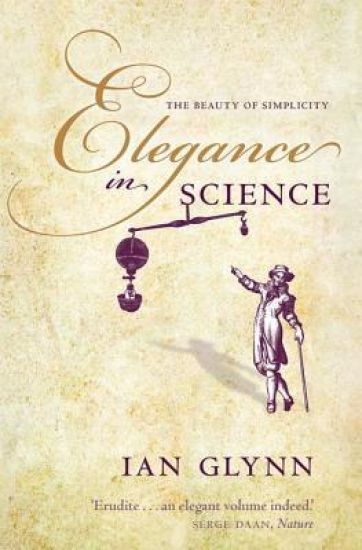
Elegance in Science

Elegance in Science

Ian Glynn

Oxford University Press
2013
nidottu
The idea of elegance in science is not necessarily a familiar one, but it is an important one. The use of the term is perhaps most clear-cut in mathematics - the elegant proof - and this is where Ian Glynn begins his exploration. Scientists often share a sense of admiration and excitement on hearing of an elegant solution to a problem, an elegant theory, or an elegant experiment. The idea of elegance may seem strange in a field of endeavour that prides itself in its objectivity, but only if science is regarded as a dull, dry activity of counting and measuring. It is, of course, far more than that, and elegance is a fundamental aspect of the beauty and imagination involved in scientific activity. Ian Glynn, a distinguished scientist, selects historical examples from a range of sciences to draw out the principles of science, including Kepler's Laws, the experiments that demonstrated the nature of heat, and the action of nerves, and of course the several extraordinary episodes that led to Watson and Crick's discovery of the structure of DNA. With a highly readable selection of inspiring episodes highlighting the role of beauty and simplicity in the sciences, the book also relates to important philosophical issues of inference, and Glynn ends by warning us not to rely on beauty and simplicity alone - even the most elegant explanation can be wrong.
Patmos in the Reception History of the Apocalypse

Patmos in the Reception History of the Apocalypse

Ian Boxall

Oxford University Press
2013
sidottu
This monograph explores the significance accorded to John's island of Patmos (Rev. 1:9) within the wider reception history of the Apocalypse. In contrast to the relatively scant attention paid to John's island in modern commentaries, this reception-historical survey reveals both the greater prominence accorded to Patmos by earlier interpreters, and the richer diversity of readings the text has provoked. These include interest in the physical character of Patmos and its significance as an island; the date and reason for John's sojourn there; attempts to locate Patmos in a geography which is sometimes more mythical than literal; the meaning of the name 'Patmos' in the context of a biblical book which treats other place-names symbolically. This diversity is supported by a close reading of Rev. 1:9, which highlights the extent to which even its literal sense is highly ambiguous. Ian Boxall brings together for the first time in a coherent narrative a wide range of interpretations of Patmos, reflecting different chronological periods, cultural contexts, and Christian traditions. Boxall understands biblical interpretation broadly, to include interpretations in biographical traditions about John, sermons, liturgy, and visual art as well as biblical commentaries.He also considers popular and marginal readings alongside magisterial and centrist ones, and draws analogies between similar hermeneutical strategies across the centuries. In the final chapter Boxall explores the wider implications of his study for biblical scholarship, advocating an approach which encourages use of the imagination and reader participation, and which works with a broader concept of 'meaning' than traditional historical criticism.
Pericyclic Reactions

Pericyclic Reactions

Ian Fleming

Oxford University Press
2015
nidottu
The renowned Oxford Chemistry Primer series, which provides focused introductions to a range of important topics in chemistry, has been refreshed and updated to suit the needs of today's students, lecturers, and postgraduate researchers. The rigorous, yet accessible, treatment of each subject area is ideal for those wanting a primer in a given topic to prepare them for more advanced study or research. Moreover, cutting-edge examples and applications throughout the texts show the relevance of the chemistry being described to current research and industry. Learning features provided in the primers, including questions at the end of every chapter and interactive online MCQs, encourage active learning and promote understanding. Furthermore, frequent diagrams, margin notes, further reading, and glossary definitions all help to enhance a student's understanding of these essential areas of chemistry. Pericyclic reactions constitute a major strand of organic chemistry, including such commercially important synthetic reactions as the Diels-Alder reaction. Reactions such as these are characterised by their predictable stereochemistry and cyclic transition structures. This primer reviews these reactions, explaining their theoretical basis via correlation diagrams, and showing students how to recognise the different types of pericyclic reaction, their mechanisms, and applications to organic synthesis.
Landscape Architecture

Landscape Architecture

Ian Thompson

Oxford University Press
2014
nidottu
Landscape architecture plays an important role in shaping the places in which we live and work. But what is it? Landscape architects are involved, amongst other things, in the layout of business parks, the reclamation of derelict industrial sites, the restoration of historic city parks, and the siting and design of major pieces of infrastructure such as motorways, dams, power stations, and flood defences, as well as the planning of parks and gardens. Taking a historical perspective, Ian Thompson looks at both the roots of landscape architecture and the people that established it. This Very Short Introduction explores some of the misconceptions about landscape architecture and considers the discipline's origins in landscape gardening. Thompson takes a look at a number of areas, including the influence of Modernism, the difference between landscape design and landscape planning, and the way that planning legislation has driven the growth of the discipline. He also explores contemporary environmentalism, the debate as to whether landscape architecture is an art or a science, landscape architecture in the community, post-industrial projects, and its relationship with ecological urbanism. ABOUT THE SERIES: The Very Short Introductions series from Oxford University Press contains hundreds of titles in almost every subject area. These pocket-sized books are the perfect way to get ahead in a new subject quickly. Our expert authors combine facts, analysis, perspective, new ideas, and enthusiasm to make interesting and challenging topics highly readable.
Light

Light

Ian A. Walmsley

Oxford University Press
2015
nidottu
Light enables us to see the world around us. Our sense of sight provides us with direct information about space and time, the physical arrangement of the world, and how it changes. This almost universal shared sensation of vision has led to a fascination with the nature and properties of light across the ages. But the light we see is just a small part of the whole spectrum of electromagnetic radiation, ranging from radio waves to gamma rays. In this Very Short Introduction Ian Walmsley discusses early attempts to explain light, and the development of apparently opposing particulate and wave theories by scientists such as Isaac Newton and Christiaan Huygens. He shows how light was recognized as an electromagnetic wave in the 19th century, and the development of the quantum mechanics view of wave-particle duality in the 20th century. He also describes the many applications of light, domestic and scientific, such as microwaves, DVDs, and lasers. We now use the whole range of electromagnetic radiation to peer both into the human body and deep into space. Turning to the future of optics, Walmsley concludes by looking at some of the most exciting new developments using quantum light sources in communications and computing. ABOUT THE SERIES: The Very Short Introductions series from Oxford University Press contains hundreds of titles in almost every subject area. These pocket-sized books are the perfect way to get ahead in a new subject quickly. Our expert authors combine facts, analysis, perspective, new ideas, and enthusiasm to make interesting and challenging topics highly readable.
Prisoners, Solitude, and Time

Prisoners, Solitude, and Time

Ian O'Donnell

Oxford University Press
2014
sidottu
Examining two overlapping aspects of the prison experience that, despite their central importance, have not attracted the scholarly attention they deserve, this book assesses both the degree to which prisoners can withstand the rigours of solitude and how they experience the passing of time. In particular, it looks at how they deal with the potentially overwhelming prospect of a long, or even indefinite, period behind bars. While the deleterious effects of penal isolation are well known, little systematic attention has been given to the factors associated with surviving, and even triumphing over, prolonged exposure to solitary confinement. Through a re-examination of the roles of silence and separation in penal policy, and by contrasting the prisoner experience with that of individuals who have sought out institutional solitariness (for example as members of certain religious orders), and others who have found themselves held in solitary confinement although they committed no crime (such as hostages and some political prisoners), Prisoners, Solitude, and Time seeks to assess the impact of long-term isolation and the rationality of such treatment. In doing so, it aims to stimulate interest in a somewhat neglected aspect of the prisoner's psychological world. The book focuses on an aspect of the prison experience - time, its meanderings, measures, and meanings - that is seldom considered by academic commentators. Building upon prisoner narratives, academic critiques, official publications, personal communications, field visits, administrative statistics, reports of campaigning bodies, and other data, it presents a new framework for understanding the prison experience. The author concludes with a series of reflections on hope, the search for meaning, posttraumatic growth, and the art of living.
Journalism

Journalism

Ian Hargreaves

Oxford University Press
2014
nidottu
Journalism entered the twenty-first century caught in a paradox. The world had more journalism, across a wider range of media, than at any time since the birth of the western free press in the eighteenth century. Western journalists had found themselves under a cloud of suspicion: from politicians, philosophers, the general public, anti-globalization radicals, religious groups, and even from fellow journalists. Critics argued that the news industry had lost its moral bearings, focusing on high investment returns rather than reporting and analysing the political, economic, and social issues of the day. Journalism has a central and profound impact on our worldview; we find it everywhere from newspapers and television, to radio and the Internet. In the new edition of this thought-provoking and provocative Very Short Introduction, Ian Hargreaves examines the world of contemporary journalism. By looking not only at what journalism has been in the past, but also what it is becoming in the digital age, he examines the big issues relating to reportage, warfare, celebrity culture, privacy, and technology worldwide. ABOUT THE SERIES: The Very Short Introductions series from Oxford University Press contains hundreds of titles in almost every subject area. These pocket-sized books are the perfect way to get ahead in a new subject quickly. Our expert authors combine facts, analysis, perspective, new ideas, and enthusiasm to make interesting and challenging topics highly readable.
Divided Nations

Divided Nations

Ian Goldin

Oxford University Press
2014
nidottu
With rapid globalization, the world is more deeply interconnected than ever before. While this has its advantages, it also brings with it systemic risks that are only just being identified and understood. Rapid urbanization, together with technological leaps, such as the Internet, mean that we are now physically and virtually closer than ever in humanity's history. We face a number of international challenges - climate change, pandemics, cyber security, and migration - which spill over national boundaries. It is becoming increasingly apparent that the UN, the IMF, the World Bank - bodies created in a very different world, more than 60 years ago - are inadequate for the task of managing such risk in the 21st century. Ian Goldin explores whether the answer is to reform the existing structures, or to consider a new and radical approach. By setting out the nature of the problems and the various approaches to global governance, Goldin highlights the challenges that we are to overcome and considers a road map for the future.
Divided Nations

Divided Nations

Ian Goldin

Oxford University Press
2013
sidottu
With rapid globalization, the world is more deeply interconnected than ever before. While this has its advantages, it also brings with it systemic risks that are only just being identified and understood. Rapid urbanization, together with technological leaps, such as the Internet, mean that we are now physically and virtually closer than ever in humanity's history. We face a number of international challenges - climate change, finance, pandemics, cyber security, and migration - which spill over national boundaries. It is becoming increasingly apparent that the UN, the IMF, the World Bank - bodies created in a very different world, more than 60 years ago - are inadequate for the task of managing such risk in the 21st century. Ian Goldin explores whether the answer is to reform the existing structures, or to consider a new and radical approach. By setting out the nature of the problems and the various approaches to global governance, Goldin highlights the challenges that we are to overcome and considers a road map for the future.
The Modernization of the Nursing Workforce

The Modernization of the Nursing Workforce

Ian Kessler; Paul Heron; Sue Dopson

Oxford University Press
2012
nidottu
The Modernization of the Nursing Workforce: Valuing the healthcare assistant is based on recently completed research exploring the role of healthcare assistants (HCA) in acute hospitals. Whilst a support role working alongside registered nurses has been a longstanding feature of the NHS, the contemporary HCA role has become increasingly central to the process of health service modernization. The role is now assuming even greater importance as the ramifications of financial constraints, restructuring and other pressures on the NHS play out. The issue is becoming increasingly relevant as the government has commissioned an independent review into the role of healthcare assistants, the Cavendish Review, which uses this book extensively. The HCA role is unregulated and low paid, but by taking-on direct care tasks from registered nurses, the role has become politically sensitive. The HCA remains a cheap and flexible source of labour, but the unregulated role encourages dilemmas and public scrutiny over risk and patient safety. The book explores how public policy reform of the health service feeds through to impact upon the management and structure of the healthcare workforce. More specifically, the book provides a timely evidence base for the extended and growing use of the HCA role. The book draws upon a multi-method research design from four geographically located hospital trusts in England, which during a three year period saw over 270 staff interviewed, focus groups and interviews with over 100 patients, some 275 hours of ward-based observation, and detailed survey responses from over 3,000 members of staff and hospital patients. The unusual richness of the data allows a definitive examination of who undertakes the HCA role, its shape, nature and diversity, along with the consequences for those with a stake in the role - hospital managers, the assistants themselves, the patients they care for and the nurses they work alongside, making The Modernization of the Nursing Workforce: Valuing the healthcare assistant essential reading for health care studies and public management communities, and those charged with training and education policy.
The Fat Tail

The Fat Tail

Ian Bremmer; Preston Keat

Oxford University Press Inc
2010
nidottu
As Ian Bremmer and Preston Keat reveal in this innovative book, volatile political events such as the 2008 Georgia-Russia confrontation--and their catastrophic effects on business--happen much more frequently than investors imagine. On the curve that charts both the frequency of these events and the power of their impact, the "tail" of extreme political instability is not reassuringly thin but dangerously fat. Featuring a new Foreword that accounts for the cataclysmic effects of the 2008 financial crisis, The Fat Tail is the first book to both identify the wide range of political risks that global firms face and show investors how to effectively manage them. Written by two of the world's leading figures in political risk management, it reveals that while the world remains exceedingly risky for businesses, it is by no means incomprehensible. Political risk is unpredictable, but it is easier to analyze and manage than most people think. Applying the lessons of world history, Bremmer and Keat survey a vast range of contemporary risky situations, from stable markets like the United States or Japan, where politically driven regulation can still dramatically effect business, to more precarious places like Iran, China, Russia, Turkey, Mexico, and Nigeria, where private property is less secure and energy politics sparks constant volatility. The book sheds light on a wide array of political risks--risks that stem from great power rivalries, terrorist groups, government takeover of private property, weak leaders and internal strife, and even the "black swans" that defy prediction. But more importantly, the authors provide a wealth of unique methods, tools, and concepts to help corporations, money managers, and policy makers understand political risk, showing when and how political risk analysis works--and when it does not. "The Fat Tail delivers practical wisdom on the impact of political risk on firms of every description and valuable advice on how to use it. Ian Bremmer and Preston Keat offer innovative thinking and useful insight that will help business decision-makers find fresh answers to questions they may not yet know they have." --Fareed Zakaria, best-selling author of The Post-American World "Political risk has become increasingly complex, and The Fat Tail provides a truly new way to quantitatively assess it in established and emerging markets. It is essential reading for any CEO with multinational interests." --Randall Stephenson, Chairman, CEO and President, AT&T Inc. "Should be essential reading for anyone involved in international business even--perhaps especially--in places that seem politically stable." --Bill Emmott, former editor-in-chief of The Economist
Perceiving in Depth, Volume 1

Perceiving in Depth, Volume 1

Ian P. Howard

Oxford University Press Inc
2012
sidottu
Perceiving in Depth is a sequel to Binocular Vision and Stereopsis and to Seeing in Depth, both by Ian P. Howard and Brian J. Rogers. This three-volume work is much broader in scope than previous texts and includes mechanisms of depth perception by all senses, including aural, electrosensory organs, and the somatosensory system. The work contains three extensively illustrated and referenced volumes. Volume 1 reviews sensory coding, psychophysical and analytic procedures, and basic visual mechanisms. Volume 2 reviews stereoscopic vision. Volume 3 reviews all mechanisms of depth perception other than stereoscopic vision. Together, these three volumes provide the most detailed review of all aspects of perceiving the three-dimensional world. Volume 1 contains a historical background and address basic coding process, an account of basic psychophysical procedures and principles of sensory coding, and an account of basic mechanisms underlying visual depth perception. It starts with a review of the history of investigations of visual depth perception from the ancient Greeks to the early 20th century. Depth-detection mechanisms in senses other than vision were not investigated before the 19th century. Special attention is devoted to the discovery of the principles of perspective in 15th century Florence, and the discovery of the principles of stereoscopic vision. The chapter ends with a review of early visual display systems, such as panoramas and peepshows, and the discovery and development of stereoscopes and stereophotography. One chapter reviews the psychophysical and analytic procedures used in behavioral investigations of depth perception. Another chapter deals with the broad topic of sensory coding, including the geometry of visual space, mechanisms of attention, and experience-dependent plasticity of visual functions. A review of the structure and physiology of the primate visual system proceeds from the eye through the LGN to the visual cortex and higher visual centers. This is followed by a review of the early evolution of visual systems and of the development of the mammalian visual system in the embryo and post-natal period, with an emphasis on mechanisms of neural plasticity. The development of perceptual functions, especially depth perception, in human infants is then reviewed. These chapters provide a foundation for a review of the effects of early visual deprivation during the critical period of neural plasticity on the development of the various types of amblyopia and of defects in visual depth perception. Various forms of deprivation are discussed, including dark rearing, binocular and monocular enucleation, strabismus, and eyelid suturing. Volume 1 ends with reviews of the accommodation mechanism of the human eye and vergence eye movements.
Perceiving in Depth, Volume 3

Perceiving in Depth, Volume 3

Ian P. Howard

Oxford University Press Inc
2012
sidottu
Perceiving in Depth is a sequel to Binocular Vision and Stereopsis and to Seeing in Depth, both by Ian P. Howard and Brian J. Rogers. This three-volume work is much broader in scope than previous texts and includes mechanisms of depth perception by all senses, including aural, electrosensory organs, and the somatosensory system. The work contains three extensively illustrated and referenced volumes. Volume 1 reviews sensory coding, psychophysical and analytic procedures, and basic visual mechanisms. Volume 2 reviews stereoscopic vision. Volume 3 reviews all mechanisms of depth perception other than stereoscopic vision. Together, these three volumes provide the most detailed review of all aspects of perceiving the three-dimensional world. Volume 3 addresses all depth-perception mechanisms other than stereopsis. The chapter starts with reviews of monocular cues to depth. These cues include accommodation, vergence eye movements, perspective, interposition, shading, and motion parallax. A perceptual constancy is the ability to judge a feature of a stimulus as constant in spite of variations in the retinal image. Constancies in depth perception, such as the ability to perceive the sizes, and 3-D shapes of objects as they move or rotate are reviewed. The ways in which different depth cues interact are discussed. They can complement each other, compete, or interact so as to increase the range of depth perception. The next chapter reviews sources of information, such as changing disparity, image looming, and vergence eye movements, used in the perception of objects moving in depth. Various pathologies of depth perception, including visual neglect, stereoanomalies, and albanism are reviewed. Visual depth-perception mechanisms through the animal kingdom are reviewed, starting with insects and progressing though crustaceans, fish, amphibians, retiles, birds, and mammals. Most animals respond to image looming, and many use perspective and motion parallax to detect depth. Stereoscopic vision based on binocular disparity has evolved in some insects, frogs, and mammals. The chapter includes a discussion of the way in which stereoscopic vision may have evolved. The next chapter describes how visual depth perception is used to guide reaching movements of the hand, avoiding obstacles, and walking to a distant object. The next three chapters review non-visual mechanisms of depth perception. Auditory mechanisms include auditory localization, echolocation in bats and marine mammals, and the lateral-line system of fish. Some fish emit electric discharges and then use electric sense organs to detect distortions of the electric field produced by nearby objects. Some beetles and snakes use heat-sensitive sense organs to detect sources of heat. The volume ends with a discussion of mechanisms used by animals to navigate to a distant site. Ants find their way back to the nest by using landmarks and by integrating their walking movements. Several animals navigate by the stars or by polarized sunlight. It seems to be established that animals in several phyla navigate by detecting the Earth's magnetic field.
How and Why People Change

How and Why People Change

Ian M. Evans

Oxford University Press Inc
2013
sidottu
Human beings change constantly; we are in an endless state of flux as we grow, mature, learn, and adapt to a myriad of physical, environmental, social, educational, and cultural influences. Change can be thought of as planful when it is motivated by the desire to be and feel different, such as the change that comes about as a result of deliberate intervention, usually initiated by a troubled individual and aided by another, typically a professional. In How and Why People Change Dr. Ian M. Evans revisits many of the fundamental principles of behavior change in order to deconstruct what it is we try to achieve in psychological therapies. All of the conditions that impact people when seeking therapy are brought together in one cohesive framework: assumptions of learning, motivation, approach and avoidance, barriers to change, personality dynamics, and the way that individual behavioral repertoires are inter-related. Special emphasis is placed on environmental, social, and cultural influences that allow people to manage their feelings and promote adaptive thoughts and activities. The result is a novel and refreshing look at factors that help people change, which can be mobilized by individuals themselves or their therapists. By looking past the formal techniques of cognitive-behavior therapy, this book explores the processes of therapy as well as the nature of meaningful, long-range, and lasting change. Drawing on a variety of classic and new research studies, this unifying approach is evidence-based, but in a different way from the empirical validation of standardized protocols and manuals. The aim is to encourage both novice therapists and experienced clinicians to re-evaluate basic psychological assumptions in order to promote innovative, individualized, and culturally acceptable interventions. By understanding the sources of change that most influence clients' functioning, the commonalities in apparently different therapeutic theories are recognized, providing a critical perspective for clinical researchers. Rather than suggesting how therapy should be conducted, Evans shows how many different approaches can be understood on the basis of common underlying principles.
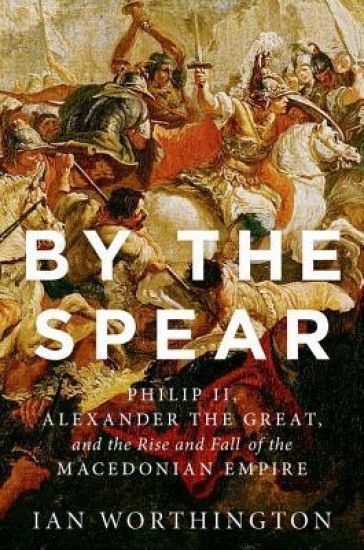
By the Spear

By the Spear

Ian Worthington

Oxford University Press Inc
2014
sidottu
Alexander the Great, arguably the most exciting figure from antiquity, waged war as a Homeric hero and lived as one, conquering native peoples and territories on a superhuman scale. From the time he invaded Asia in 334 to his death in 323, he expanded the Macedonian empire from Greece in the west to Asia Minor, the Levant, Egypt, Central Asia and "India" (Pakistan and Kashmir) in the east. Although many other kings and generals forged empires, Alexander produced one that was without parallel, even if it was short-lived. And yet, Alexander could not have achieved what he did without the accomplishments of his father, Philip II (r. 359-336). It was Philip who truly changed the course of Macedonian history, transforming a weak, disunited, and economically backward kingdom into a military powerhouse. A warrior king par excellence Philip left Alexander with the greatest army in the Greek world, a centralized monarchy, economic prosperity, and a plan to invade Asia. For the first time, By the Spear offers an exhilarating military narrative of the reigns of these two larger-than-life figures in one volume. Ian Worthington gives full breadth to the careers of father and son, showing how Philip was the architect of the Macedonian empire, which reached its zenith under Alexander, only to disintegrate upon his death. By the Spear also explores the impact of Greek culture in the East, as Macedonian armies became avatars of social and cultural change in lands far removed from the traditional sphere of Greek influence. In addition, the book discusses the problems Alexander faced in dealing with a diverse subject population and the strategies he took to what might be called nation building, all of which shed light on contemporary events in culturally dissimilar regions of the world. The result is a gripping and unparalleled account of the role these kings played in creating a vast empire and the enduring legacy they left behind.
Demosthenes of Athens and the Fall of Classical Greece

Demosthenes of Athens and the Fall of Classical Greece

Ian Worthington

Oxford University Press Inc
2013
sidottu
Regarded as ancient Greece's greatest orator, Demosthenes lived through and helped shape one of the most eventful epochs in antiquity. His political career spanned three decades, during which time Greece fell victim to Macedonian control, first under Philip II and then Alexander the Great. Demosthenes' resolute and courageous defiance of Philip earned for him a reputation as one of history's outstanding patriots. He also enjoyed a brilliant and lucrative career as a speechwriter, and his rhetorical skills are still emulated today by students and politicians alike. Yet he was a sickly child with an embarrassing speech impediment, who was swindled out of much of his family's estate by unscrupulous guardians after the death of his father. His story is one of triumph over adversity. Modern studies of his life and career take one of two different approaches: he is either lauded as Greece's greatest patriot or condemned as an opportunist who misjudged situations and contributed directly to the end of Greek freedom. This new biography, the first ever written in English for a popular audience, aims to determine which of these two people he was: self-serving cynic or patriot - or even a combination of both. Its chronological arrangement brings Demosthenes vividly to life, discussing his troubled childhood and youth, the obstacles he faced in his public career, his fierce rivalries with other Athenian politicians, his successes and failures, and even his posthumous influence as a politician and orator. It offers new insights into Demosthenes' motives and how he shaped his policy to achieve political power, all set against the rich backdrop of late classical Greece and Macedonia.
Natural Regulation of Animal Populations

Natural Regulation of Animal Populations

Ian A. McLaren

AldineTransaction
2006
nidottu
Surveying an area dense with conflicting observations and ideas, this volume vividly depicts the current state of knowledge as well as the great diversity of opinion in the field of population ecology. Ten papers by outstanding authorities focus on three main issues-the effects of environment and population density on population dynamics, the influence of animal behavior on population growth, and the possibilities of genetic feedback or short-term evolutionary change on control of animal populations. An incisive introduction by the editor establishes a frame of reference and supplies succinct resolutions of some of the important controversies dealt with in these pages.
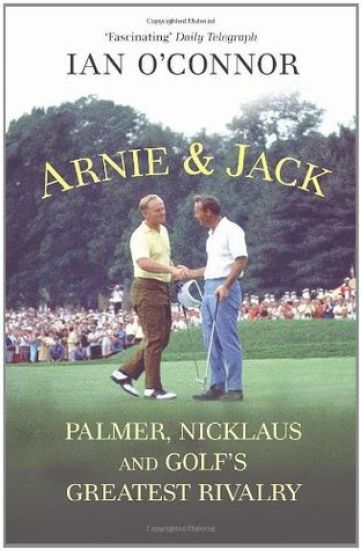
ArnieJack

ArnieJack

Ian O'Connor

Vintage
2009
pokkari
ultimately, each came to respsect his rival's dramatic and distinct impact on the game of golf. ArnieJack brilliantly brings to life the story of two men, their rivalry and a whole sport, in a gripping, no-holds-barred account of one of sport's most fascinating pairings.
Pervasive Prejudice?

Pervasive Prejudice?

Ian Ayres

University of Chicago Press
2001
sidottu
If you're a woman shopping for a new car, will you really get the best deal? If you're a man, will you fare better? If you're a black man waiting to receive an organ transplant, will you have to wait longer than a white man? In "Pervasive Prejudice?" Ian Ayres confronts these questions and more. In a series of important studies he finds overwhelming evidence that in a variety of markets - retail car sales, bail bonding, kidney transplantation and FCC licensing - blacks and females are consistently at a disadvantage. For example, when Ayres sent out agents of different races and genders posing as potential buyers to more than 200 car dealerships in Chicago, he found that dealers regularly charged blacks and women more than they charged white men. Other tests revealed that it is commonly more difficult for blacks than whites to receive a kidney transplant because of federal regulations. Moreover, Ayres found that minority male defendants are frequently required to post higher bail bonds than their Caucasian counterparts. Traditional economic theory predicts that free markets should drive out discrimination, but Ayres's startling findings challenge that position. Along with empirical research, Ayres offers game-theoretic and other economic methodologies to show how prejudice can enter the bargaining process even when participants are supposedly acting as rational economic agents. He also responds to critics of his previously published studies included here. These studies suggest that race and gender discrimination are neither a thing of the past nor merely limited to the handful of markets that have been the traditional focus of civil rights laws.