Kirjojen hintavertailu. Mukana 12 039 528 kirjaa ja 12 kauppaa.

Kirjahaku

Etsi kirjoja tekijän nimen, kirjan nimen tai ISBN:n perusteella.

1000 tulosta hakusanalla Ian Small

A First Course in Combinatorial Mathematics
The spirit and aim of this book is to present a compact introduction to the basic combinatorial tools - such as recurrence relations, generating functions, incidence matrices, and the inclusion-exclusion principle - that will give the reader a flavour of the distinctive characteristics of this attractive and increasingly important branch of mathematics. A studly of block designs is followed by a brief mention of applications to coding theory. In this new edition, Steiner triple systems are constructed and S(5,8,24) is obtained via the Golay code of length 24. The final chapter combines together the three combinatorial structures of the Leech lattice, the Golay codes, and Steiner systems. Also in this edition, an application of the marriage theorem to score sequences of tournaments has been included.
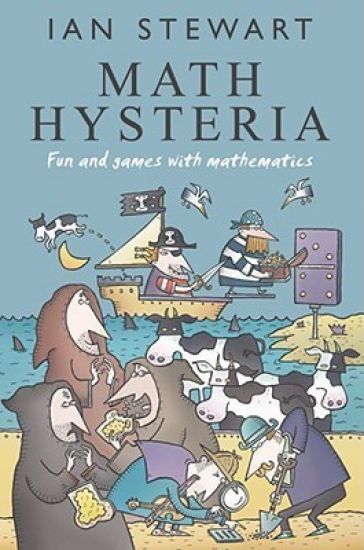
Math Hysteria

Math Hysteria

Ian Stewart

Oxford University Press
2004
nidottu
Welcome to Ian Stewart's strange and magical world of mathematics! In Math Hysteria, Professor Stewart presents us with a wealth of magical puzzles, each one spun around an amazing tale: Counting the Cattle of the Sun; The Great Drain Robbery; and Preposterous Piratical Predicaments; to name but a few. Along the way, we also meet many curious characters: in short, these stories are engaging, challenging, and lots of fun!
Computer Crimes and Digital Investigations

Computer Crimes and Digital Investigations

Ian Walden

Oxford University Press
2016
sidottu
Cybercrime and cybersecurity are of increasingly high profile not only within law enforcement but among policy makers, legal professionals and the general public. The establishment of the European Cybercrime Centre at Europol and the recent publication of guidelines on the prosecution of social media cases by the Director of Public Prosecutions serve as illustrations of the reach and impact of cybercrime related issues. As more of our day to day lives are conducted via digital mediums, cybercrime has ceased to be a purely specialist area and as technologies rapidly evolve and advance so do the challenges and threats raised, making it more important than ever for practitioners working in this area to stay up to date. Building on the detailed legal analysis in the first edition, this updated text remains the only comprehensive work to cover the complete lifecycle of cybercrimes, from their commission to their investigation and prosecution. With its clear and accesible structure, Computer Crimes and Digital Investigations provides essential guidance on the substantive and procedural aspects of cybercrimes for both experienced practitioners and for those new to the field. Substantial developments have occurred since the publication of the first edition of this work, in terms of the threats faced, the legislation and case law, and the response of law enforcement. The second edition will include new material on topics such as cyberwarfare; orders made against convicted criminals; and issues of surveillance and interception as well as expanded discussions of cyber security policy and laws, intermediary liability, developments in policing activities and prosecution policies, and developments in cross-border search and seizure and mutual legal assistance and extradition. An expanded comparative discussion of law and policy within the EU and under the Budapest Convention, as well as other international organisations such as the United Nations, places cybercrime in its international context.
The Foundations of Mathematics

The Foundations of Mathematics

Ian Stewart; David Tall

Oxford University Press
2015
nidottu
The transition from school mathematics to university mathematics is seldom straightforward. Students are faced with a disconnect between the algorithmic and informal attitude to mathematics at school, versus a new emphasis on proof, based on logic, and a more abstract development of general concepts, based on set theory. The authors have many years' experience of the potential difficulties involved, through teaching first-year undergraduates and researching the ways in which students and mathematicians think. The book explains the motivation behind abstract foundational material based on students' experiences of school mathematics, and explicitly suggests ways students can make sense of formal ideas. This second edition takes a significant step forward by not only making the transition from intuitive to formal methods, but also by reversing the process- using structure theorems to prove that formal systems have visual and symbolic interpretations that enhance mathematical thinking. This is exemplified by a new chapter on the theory of groups. While the first edition extended counting to infinite cardinal numbers, the second also extends the real numbers rigorously to larger ordered fields. This links intuitive ideas in calculus to the formal epsilon-delta methods of analysis. The approach here is not the conventional one of 'nonstandard analysis', but a simpler, graphically based treatment which makes the notion of an infinitesimal natural and straightforward. This allows a further vision of the wider world of mathematical thinking in which formal definitions and proof lead to amazing new ways of defining, proving, visualising and symbolising mathematics beyond previous expectations.
The Foundations of Mathematics

The Foundations of Mathematics

Ian Stewart; David Tall

Oxford University Press
2015
sidottu
The transition from school mathematics to university mathematics is seldom straightforward. Students are faced with a disconnect between the algorithmic and informal attitude to mathematics at school, versus a new emphasis on proof, based on logic, and a more abstract development of general concepts, based on set theory. The authors have many years' experience of the potential difficulties involved, through teaching first-year undergraduates and researching the ways in which students and mathematicians think. The book explains the motivation behind abstract foundational material based on students' experiences of school mathematics, and explicitly suggests ways students can make sense of formal ideas. This second edition takes a significant step forward by not only making the transition from intuitive to formal methods, but also by reversing the process- using structure theorems to prove that formal systems have visual and symbolic interpretations that enhance mathematical thinking. This is exemplified by a new chapter on the theory of groups. While the first edition extended counting to infinite cardinal numbers, the second also extends the real numbers rigorously to larger ordered fields. This links intuitive ideas in calculus to the formal epsilon-delta methods of analysis. The approach here is not the conventional one of 'nonstandard analysis', but a simpler, graphically based treatment which makes the notion of an infinitesimal natural and straightforward. This allows a further vision of the wider world of mathematical thinking in which formal definitions and proof lead to amazing new ways of defining, proving, visualising and symbolising mathematics beyond previous expectations.
Newman on Vatican II

Newman on Vatican II

Ian Ker

Oxford University Press
2014
sidottu
John Henry Newman is often described as 'the Father of the Second Vatican Council'. He anticipated most of the Council's major documents, as well as being an inspiration to the theologians who were behind them. His writings offer an illuminating commentary both on the teachings of the Council and the way these have been implemented and interpreted in the post-conciliar period. This book is the first sustained attempt to consider what Newman's reaction to Vatican II would have been. As a theologian who on his own admission fought throughout his life against theological liberalism, yet who pioneered many of the themes of the Council in his own day, Newman is best described as a conservative radical who cannot be classed simply as either a conservative or liberal Catholic. At the time of the First Vatican Council, Newman adumbrated in his private letters a mini-theology of Councils, which casts much light on Vatican II and its aftermath. Noted Newman scholar, Ian Ker, argues that Newman would have greatly welcomed the reforms of the Council, but would have seen them in the light of his theory of doctrinal development, insisting that they must certainly be understood as changes but changes in continuity rather than discontinuity with the Church's tradition and past teachings. He would therefore have endorsed the so-called 'hermeneutic of reform in continuity' in regard to Vatican II, a hermeneutic first formulated by Pope Benedict XVI and subsequently confirmed by his successor, Pope Francis, and rejected both 'progressive' and ultra-conservative interpretations of the Council as a revolutionary event. Newman believed that what Councils fail to speak of is of great importance, and so a final chapter considers the kind of evangelization -- a topic notably absent from the documents of Vatican II -- Newman thought appropriate in the face of secularization.
Pilgrimage

Pilgrimage

Ian Reader

Oxford University Press
2015
nidottu
Pilgrimage is found in most religious cultures, with large numbers of sites - from globally renowned places to regional shrines - flourishing historically and in the modern day. Pilgrimage centres around the world, including Mecca in Saudi Arabia, Guadalupe in Mexico, Lourdes in France, Santiago de Compostela in Spain, Haridwar in India, and Shikoku in Japan, attract millions of pilgrims annually, while a flourishing 'spiritual tourism' industry has grown to promote the practice. In the present day, new pilgrimage locations, including 'secular' ones with no official affiliation, such as Graceland, Elvis Presley's house, continue to emerge across the world. In this Very Short Introduction Ian Reader explores the factors that affect how pilgrimage has changed over time, from contemporary international developments, such as mass transportation to changing social attitudes reflected in the motives of pilgrims through the ages. He demonstrates the social and international aspects of pilgrimage, showing how it has become a way of expressing social identity and cultural heritage, as well as being entwined with themes of entertainment and tourism. Reader explores the key issues and themes of pilgrimage through history to the present, looking at its various forms, how people take part, what is learnt from the journeys, and why pilgrimage remains popular in an increasingly secular age. ABOUT THE SERIES: The Very Short Introductions series from Oxford University Press contains hundreds of titles in almost every subject area. These pocket-sized books are the perfect way to get ahead in a new subject quickly. Our expert authors combine facts, analysis, perspective, new ideas, and enthusiasm to make interesting and challenging topics highly readable.
The Cancer Prevention Manual

The Cancer Prevention Manual

Ian Olver; Fred Stephens

Oxford University Press
2015
nidottu
Stories in the media about the cancer-causing risks present in everyday life can cause alarm and confusion, and make it difficult to know how to alter one's lifestyle. The Cancer Prevention Manual, Second Edition, is a handy guide to all key issues in cancer prevention, presenting medical and scientific information in a plain, accessible style. Written by authors with distinguished careers studying the illness, and based on a solid scientific grounding, this book provides the facts about how our lifestyles pose cancer risks, and what we can do to change them.
Waging War

Waging War

Ian Clark

Oxford University Press
2015
sidottu
There is now a major new interest in ethical issues about warfare emerging from the wars in Iraq and Afghanistan, conflict in Syria and Libya, the war on terror, and the introduction of new weapon systems, such as unmanned drones. In this re-written version of the author's classic text, Waging War, Ian Clark asks probing questions about how we think about war, the changes it is undergoing, and what exactly it is we wage when we wage war. Waging War argues that much of what passes for ethical debate is actually a set of disagreements about what counts as war or not. This philosophical introduction provides a critical review of the various different ways in which the ethical debates are already framed, the questions that arise from these debates, and seeks to bring greater clarity and precision to the important moral arguments about political violence.
Waging War

Waging War

Ian Clark

Oxford University Press
2015
nidottu
There is now a major new interest in ethical issues about warfare emerging from the wars in Iraq and Afghanistan, conflict in Syria and Libya, the war on terror, and the introduction of new weapon systems, such as unmanned drones. In this re-written version of the author's classic text, Waging War, Ian Clark asks probing questions about how we think about war, the changes it is undergoing, and what exactly it is we wage when we wage war. Waging War argues that much of what passes for ethical debate is actually a set of disagreements about what counts as war or not. This philosophical introduction provides a critical review of the various different ways in which the ethical debates are already framed, the questions that arise from these debates, and seeks to bring greater clarity and precision to the important moral arguments about political violence.
Civics Beyond Critics

Civics Beyond Critics

Ian MacMullen

Oxford University Press
2015
sidottu
Should character formation be a goal of civic education in a liberal democracy? In addition to teaching knowledge and skills, should civic education shape children's values, beliefs, preferences, habits, identities, and sentiments? Most contemporary political and educational theorists who address these questions respond with a heavily qualified yes. They argue that education for civil character is vital to the survival and flourishing of liberal democracy but its content must be strictly limited to avoid compromising its recipients' ability to think and act as critically autonomous citizens. This means that civic character education should not extend beyond inculcating in children the basic and universal moral values that constitute the ideal of liberal democracy itself. Civics Beyond Critics argues that this orthodox view is wrong to prioritize critical autonomy over three other valuable character traits that have traditionally been fostered by civic education: law-abidingness, civic identification, and support for the fundamental political institutions of one's society. But the best alternative is not simply to reverse the priority. The goal of this book is to show how we can recognize the value of the kinds of character formation that civic education has traditionally involved without losing the portion of the truth that can be found in the orthodox view. Civics Beyond Critics warns against neglecting character traits that, although commonly labeled 'conservative', are realistically essential for the future of all liberal democracies. Oxford Political Theory presents the best new work in contemporary political theory. It is intended to be broad in scope, including original contributions to political philosophy, and also work in applied political theory. The series will contain works of outstanding quality with no restriction as to approach or subject matter. Series Editors: Will Kymlicka, David Miller, and Alan Ryan.
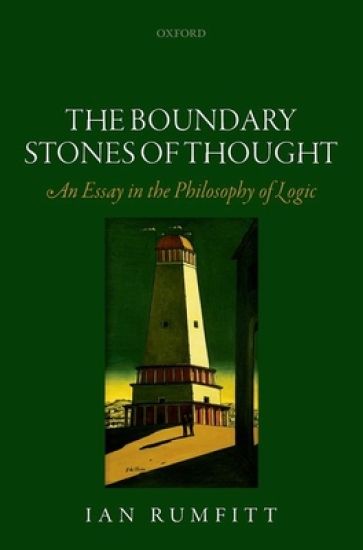
The Boundary Stones of Thought

The Boundary Stones of Thought

Ian Rumfitt

Oxford University Press
2015
sidottu
The Boundary Stones of Thought seeks to defend classical logic from a number of attacks of a broadly anti-realist character. Ian Rumfitt is sympathetic to many of the premisses underlying these attacks. Indeed, he regards some of them as effective challenges to certain principles of classical semantics, notably the Principle of Bivalence. He argues, though, that they are ineffective against classical logic itself. The book starts by considering the general problem of how conflicts over logical laws may be rationally discussed and adjudicated. This leads to a consideration of the nature of logic: Rumfitt identifies the particular features that mark out logical consequence from other consequence relations, and he advances a new argument for the ancient thesis that there is a modal element in the notion of logical consequence. He develops a theory of that modal element in terms of perhaps incomplete possibilities, rather than fully determinate possible worlds. Some prima facie powerful arguments against the validity of certain classical logical laws are then analysed in the light of this account of logic. Throughout, care is taken to separate lines of anti-classical argument that, although distinct, are often run together or confused. The analysis yields, as by-products, semantic theories for a number of problematical areas of discourse. These areas include our talk about sub-atomic particles, about the infinite, about infinitesimals, about sets, and vague discourse. Rumfitt concludes by defending his stance of accepting classical logic while rejecting Bivalence, against Aristotle's argument that a classical logician is committed to Bivalence. The ultimate aim is to liberate classical logic from the dead hand of classical semantics.
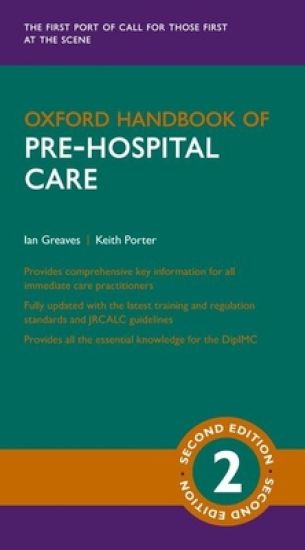
Oxford Handbook of Pre-hospital Care

Oxford Handbook of Pre-hospital Care

Ian Greaves; Sir Keith Porter

Oxford University Press
2021
muu
Fully updated for a second edition, the Oxford Handbook of Pre-hospital Care is the invaluable guide to providing high-quality care in a pre-hospital environment. Evidence-based and reflecting new developments in regulation and practice, this second edition is designed to provide key information for all immediate care practitioners, including doctors, paramedics, emergency medical technicians, and community responders. The text has been cross-referenced with the Joint Royal Colleges Ambulance Liaison Committee (JRCALC) handbook to ensure full clinical relevance. Reflecting the major advances in delivery of pre-hospital care, including the greater survival benefits for heart attacks and major trauma when delivering patients directly to higher levels of care, the evolution of the paramedic role into critical care paramedics, roadside rapid sequence induction of anaesthesia, and the introduction of mechanical chest compression devices, this new edition is the ideal companion for those involved in delivering pre-hospital care. It also links to relevant online databases and mobile apps that can assist with calculations, and contains key algorithms and formulae to ensure good care. The Oxford Handbook of Pre-hospital Care is the comprehensive quick-reference guide to all medical and trauma conditions regularly encountered in the immediate care setting.
Development

Development

Ian Goldin

Oxford University Press
2018
nidottu
What do we mean by development? How can citizens, governments and the international community foster development? The process by which nations escape poverty and achieve economic and social progress has been the subject of extensive examination for hundreds of years.The notion of development itself has evolved from an original preoccupation with incomes and economic growth to a much broader understanding of development. In this Very Short Introduction Ian Goldin considers the contributions that education, health, gender, equity, and other dimensions of human well-being make to development, and discusses why it is also necessary to include the role of institutions and the rule of law as well as sustainability and environmental concerns. ABOUT THE SERIES: The Very Short Introductions series from Oxford University Press contains hundreds of titles in almost every subject area. These pocket-sized books are the perfect way to get ahead in a new subject quickly. Our expert authors combine facts, analysis, perspective, new ideas, and enthusiasm to make interesting and challenging topics highly readable.
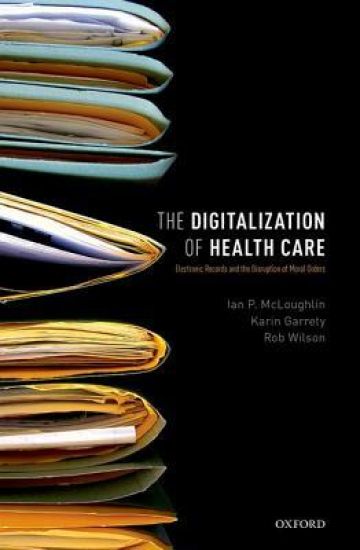
The Digitalization of Healthcare

The Digitalization of Healthcare

Ian P. McLoughlin; Karin Garrety; Rob Wilson

Oxford University Press
2017
sidottu
Electronic health records are widely regarded as the 'connective tissue' of any modern healthcare system. For some they represent a 'dangerous enthusiasm' and for others a key enabler of 'disruptive innovation'. Many governments have made major policy and financial investments in digitalizing health records but their implementation has frequently run into opposition from doctors, had lukewarm responses from patients, and raised considerable concerns for privacy advocates and others worried by the security of sensitive health data and the risks of national data-bases. This book draws upon the concept of 'orders of worth' to reveal the moral dimensions of the medical division of labour and to delve deeper into understanding why electronic records have been so difficult to implement and the sources of opposition to them. The authors argue that digitalization disrupts the moral orders which define rights and responsibilities for the sharing and exchanging of patient medical data. This is illustrated through longitudinal studies of two of the most controversial attempts to introduce national systems - a patient controlled electronic record in Australia and a national summary care record that was part of the ill-fated NHS national program for IT in England. The authors conclude by using the lessons from these national experiences and insights from two regional projects in each country to suggest how the idea of electronic records might be re-thought. It is a must read for anyone concerned about health information and the implications of how it is shared and exchanged in a digital world.
Expert Evidence and Criminal Jury Trials

Expert Evidence and Criminal Jury Trials

Ian Freckelton QC; Jane Goodman-Delahunty; Jacqueline Horan; Blake McKimmie

Oxford University Press
2016
sidottu
With expert evidence used more and more often in criminal jury cases, evaluation of its admissibility and presentation is being increasingly thrust into the spotlight. However, jury room secrecy has long prevented a rigorous analysis of its complexities. Expert Evidence and Criminal Jury Trials draws on an unprecedented study carried out in Commonwealth jurisdictions which have recently granted access to jurors, offering a unique exploration of the presentation and comprehension of expert evidence in criminal jury trials and a critical perspective on parallel UK processes. The authors combine empirical research conducted in the courtroom with expert academic analysis, examining, analysing, and comparing the views of not only real jurors, but also courtroom lawyers, judges, and experts across over 50 trials to gauge how complex and sometimes conflicting expert evidence is perceived and understood by all parties. Examples of modern technologies used in expert evidence, including DNA analysis and facial and body-mapping, are considered, and discussion of the challenges they pose covers not only issues of procedure and approach, but also perceptual issues and those of cognitive evaluation. This innovative study aims to facilitate a broader understanding of the use of expert evidence, what problems exist with it, and how such problems influence the communication of information to jurors. While the survey that informs the book relates to criminal trials in three Australian jurisdictions, the legal and psychological issues explored transcend national boundaries, allowing this book to fill a gap in the market for a practical discussion of expert evidence and its use that will be relevant to practitioners in any jurisdiction which utilises an adversarial trial system or juries in criminal trials.
Infinity

Infinity

Ian Stewart

Oxford University Press
2017
nidottu
Infinity is an intriguing topic, with connections to religion, philosophy, metaphysics, logic, and physics as well as mathematics. Its history goes back to ancient times, with especially important contributions from Euclid, Aristotle, Eudoxus, and Archimedes. The infinitely large (infinite) is intimately related to the infinitely small (infinitesimal). Cosmologists consider sweeping questions about whether space and time are infinite. Philosophers and mathematicians ranging from Zeno to Russell have posed numerous paradoxes about infinity and infinitesimals. Many vital areas of mathematics rest upon some version of infinity. The most obvious, and the first context in which major new techniques depended on formulating infinite processes, is calculus. But there are many others, for example Fourier analysis and fractals. In this Very Short Introduction, Ian Stewart discusses infinity in mathematics while also drawing in the various other aspects of infinity and explaining some of the major problems and insights arising from this concept. He argues that working with infinity is not just an abstract, intellectual exercise but that it is instead a concept with important practical everyday applications, and considers how mathematicians use infinity and infinitesimals to answer questions or supply techniques that do not appear to involve the infinite. ABOUT THE SERIES: The Very Short Introductions series from Oxford University Press contains hundreds of titles in almost every subject area. These pocket-sized books are the perfect way to get ahead in a new subject quickly. Our expert authors combine facts, analysis, perspective, new ideas, and enthusiasm to make interesting and challenging topics highly readable.
Scholarly Misconduct

Scholarly Misconduct

Ian Freckelton QC

Oxford University Press
2016
nidottu
Professional misconduct within the academic community is highly publicised. Retractions of falsified research have reached record levels and allegations of fraud and misconduct by scholars generate high-profile investigations and sometimes professional disgrace. Such cases frequently reach the courts, with tribunals determining whether research fraud, plagiarism, sexual misconduct, defamation, discrimination, forensic impropriety, thefts, and other forms of improper behaviour have been committed. With claims including patient deaths, miscarriages of justice, and exploitation of funding agencies, the legal, reputational, and financial stakes for the individuals and institutions concerned are extremely high. Scholarly Misconduct: Law, Regulation, and Practice is the first text of its kind to scrutinize the topic of academic integrity through a legal lens and across disciplines. Freckelton chronicles and analyses case law from around the globe, looking specifically at the legal and regulatory responses that were generated. The work also assesses the current policies and practices of academic and research institutions and government agencies worldwide. Finally, it reflects on the measures that need to be undertaken to reclaim and promote scholarly integrity and to institute rigorous, fair, and clear processes to establish whether scholars have indeed engaged in misconduct.
The Modern Origins of the Early Middle Ages

The Modern Origins of the Early Middle Ages

Ian Wood

Oxford University Press
2016
nidottu
The Early Middle Ages, which marked the end of the Roman Empire and the creation of the kingdoms of Western Europe, was a period central to the formation of modern Europe. This period has often been drawn into a series of discourses that are more concerned with the eighteenth, nineteenth, and twentieth centuries than with the distant past. In The Modern Origins of the Early Middle Ages, Ian Wood explores how Western Europeans have looked back to the Middle Ages to discover their origins and the origins of their society. Using historical records and writings about the Fall of Rome and the Early Middle Ages, Wood reveals how these influenced modern Europe and the way in which the continent thought about itself. He asks, and answers, the important question: why is early-medieval history, or indeed any pre-modern history, important? This volume promises to add to the debate on the significance of medieval history in the modern world.
Newman on Vatican II

Newman on Vatican II

Ian Ker

Oxford University Press
2016
nidottu
John Henry Newman is often described as 'the Father of the Second Vatican Council'. He anticipated most of the Council's major documents, as well as being an inspiration to the theologians who were behind them. His writings offer an illuminating commentary both on the teachings of the Council and the way these have been implemented and interpreted in the post-conciliar period. This book is the first sustained attempt to consider what Newman's reaction to Vatican II would have been. As a theologian who on his own admission fought throughout his life against theological liberalism, yet who pioneered many of the themes of the Council in his own day, Newman is best described as a conservative radical who cannot be classed simply as either a conservative or liberal Catholic. At the time of the First Vatican Council, Newman adumbrated in his private letters a mini-theology of Councils, which casts much light on Vatican II and its aftermath. The leading Newman scholar, Ian Ker, argues that Newman would have greatly welcomed the reforms of the Council, but would have seen them in the light of his theory of doctrinal development, insisting that they must certainly be understood as changes but changes in continuity rather than discontinuity with the Church's tradition and past teachings. He would therefore have endorsed the so-called 'hermeneutic of reform in continuity' in regard to Vatican II, a hermeneutic first formulated by Pope Benedict XVI and subsequently confirmed by his successor, Pope Francis, and rejected both 'progressive' and ultra-conservative interpretations of the Council as a revolutionary event. Newman believed that what Councils fail to speak of is of great importance, and so a final chapter considers the kind of evangelization--a topic notably absent from the documents of Vatican II--Newman thought appropriate in the face of secularization.