Kirjojen hintavertailu. Mukana 11 699 587 kirjaa ja 12 kauppaa.

Kirjahaku

Etsi kirjoja tekijän nimen, kirjan nimen tai ISBN:n perusteella.

1000 tulosta hakusanalla Ian Thomson

The Greeks

The Greeks

Ian Morris; Barry B. Powell

OXFORD UNIVERSITY PRESS INC
2022
nidottu
In The Greeks, Ian Morris and Barry B. Powell try to see ancient Greece as a whole: not just a narrative of events or an overview of culture, but history and culture taken together. From ancient Greece comes the modern conviction that through open discussion and the exercise of reason a society of free citizens can solve the problems that challenge it. In one period of Greek history, a society just so governed produced timeless masterpieces of literature, art, and rational thought at the same time that it waged terrible wars and committed countless cruelties. If we understand the past, we can live better in the present, but the past is hard to understand. In The Greeks, Morris and Powell offer new ways of thinking about old problems.
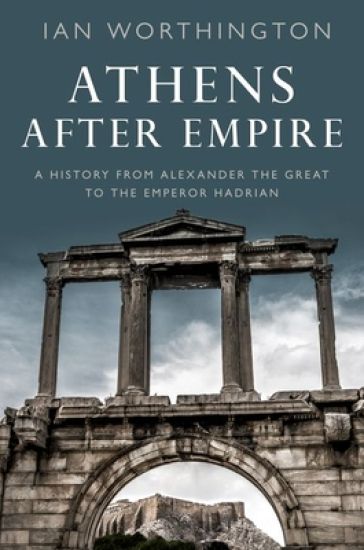
Athens After Empire

Athens After Empire

Ian Worthington

OXFORD UNIVERSITY PRESS INC
2023
nidottu
A major new history of Athens' remarkably long and influential life after the collapse of its empire. To many the history of post-Classical Athens is one of decline. True, Athens hardly commanded the number of allies it had when hegemon of its fifth-century Delian League or even its fourth-century Naval Confederacy, and its navy was but a shadow of its former self. But Athens recovered from its perilous position in the closing quarter of the fourth century and became once again a player in Greek affairs, even during the Roman occupation. Athenian democracy survived and evolved, even through its dealings with Hellenistic Kings, its military clashes with Macedonia, and its alliance with Rome. Famous Romans, including Julius Caesar and Mark Antony, saw Athens as much more than an isolated center for philosophy. Athens After Empire offers a new narrative history of post-Classical Athens, extending the period down to the aftermath of Hadrian's reign.
Faustian Bargain

Faustian Bargain

Ian Ona Johnson

OXFORD UNIVERSITY PRESS INC
2024
nidottu
When Nazi Germany invaded Poland on September 1, 1939, launching World War Two, its army seemed an unstoppable force. The Luftwaffe bombed towns and cities across the country, and fifty divisions of the Wehrmacht crossed the border. Yet only two decades earlier, at the end of World War One, Germany had been an utterly and abjectly defeated military power. Foreign troops occupied its industrial heartland and the Treaty of Versailles reduced the vaunted German army of World War One to a fraction of its size, banning it from developing new military technologies. When Hitler came to power in 1933, these strictures were still in effect. By 1939, however, he had at his disposal a fighting force of 4.2 million men, armed with the most advanced weapons in the world. How could this nearly miraculous turnaround have happened? The answer lies in Russia. Beginning in the years immediately after World War One and continuing for more than a decade, the German military and the Soviet Union--despite having been mortal enemies--entered into a partnership designed to overturn the order in Europe. Centering on economic and military cooperation, the arrangement led to the establishment of a network of military bases and industrial facilities on Soviet soil. Through their alliance, which continued for over a decade, Germany gained the space to rebuild its army. In return, the Soviet Union received vital military, technological and economic assistance. Both became, once again, military powers capable of a mass destruction that was eventually directed against one another. Drawing from archives in five countries, including new collections of declassified Russian documents, The Faustian Bargain offers the definitive exploration of a shadowy but fateful alliance.
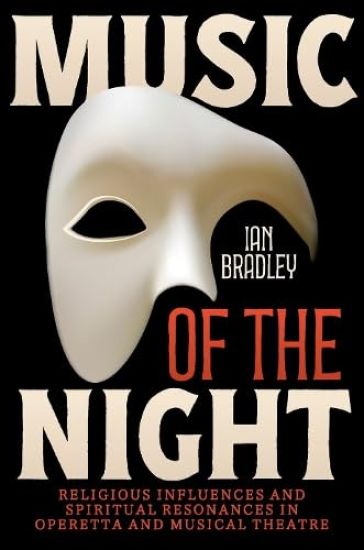
Music of the Night

Music of the Night

Ian Bradley

OXFORD UNIVERSITY PRESS INC
2025
sidottu
This book offers readers a fascinating new look into the spiritual side of operetta and musical theatre, two closely related genres often dismissed as trivial, shallow, and essentially secular. Bradley challenges these judgements and seeks to show that there have been clear religious influences and spiritual resonances in some of the best known and most popular works in both genres. He points to the darker and more serious side of operetta and musical theatre to analyse the work of Offenbach, Lehár, Gilbert and Sullivan, Rodgers and Hammerstein, Sondheim, Schwartz, Lloyd Webber, and Boublil and Schoenberg. Readers will never listen to The Mikado, The Sound of Music, Fiddler on the Roof, Sweeney Todd, Wicked, Les Miserables and The Lion King in the same way again. Using hitherto largely neglected sources, Music of the Night explores the Jewish and Catholic roots of French operetta composers, the impact of Franz Lehár's Catholic faith, the effect of Oscar Hammerstein's early exposure to Universalism, and the High Church aesthetic of Andrew Lloyd-Webber. Further chapters discuss Arthur Sullivan's softening and spiritualising effect on W. S. Gilbert's lyrics in the Savoy operas, Stephen Sondheim's secularism, and Stephen Schwartz as the 'reluctant pilgrim'. There is specific analysis of the religious influences and spiritual resonances in six key musicals: The Sound of Music, Fiddler on the Roof, Godspell, Jesus Christ Superstar, Les Misérables and The Lion King. A concluding chapter briefly surveys the musicals of the twenty-first century.
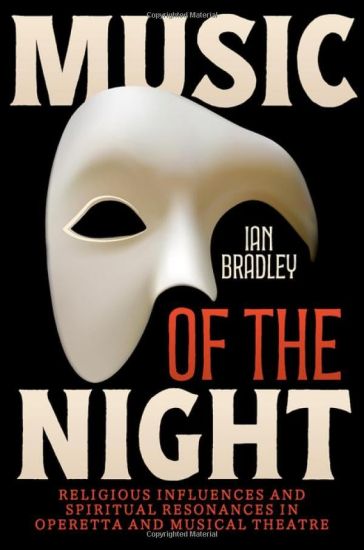
Music of the Night

Music of the Night

Ian Bradley

OXFORD UNIVERSITY PRESS INC
2025
nidottu
This book offers readers a fascinating new look into the spiritual side of operetta and musical theatre, two closely related genres often dismissed as trivial, shallow, and essentially secular. Bradley challenges these judgements and seeks to show that there have been clear religious influences and spiritual resonances in some of the best known and most popular works in both genres. He points to the darker and more serious side of operetta and musical theatre to analyse the work of Offenbach, Lehár, Gilbert and Sullivan, Rodgers and Hammerstein, Sondheim, Schwartz, Lloyd Webber, and Boublil and Schoenberg. Readers will never listen to The Mikado, The Sound of Music, Fiddler on the Roof, Sweeney Todd, Wicked, Les Miserables and The Lion King in the same way again. Using hitherto largely neglected sources, Music of the Night explores the Jewish and Catholic roots of French operetta composers, the impact of Franz Lehár's Catholic faith, the effect of Oscar Hammerstein's early exposure to Universalism, and the High Church aesthetic of Andrew Lloyd-Webber. Further chapters discuss Arthur Sullivan's softening and spiritualising effect on W. S. Gilbert's lyrics in the Savoy operas, Stephen Sondheim's secularism, and Stephen Schwartz as the 'reluctant pilgrim'. There is specific analysis of the religious influences and spiritual resonances in six key musicals: The Sound of Music, Fiddler on the Roof, Godspell, Jesus Christ Superstar, Les Misérables and The Lion King. A concluding chapter briefly surveys the musicals of the twenty-first century.
Conditions for Criticism

Conditions for Criticism

Ian Small

Clarendon Press
1991
sidottu
Conditions for Criticism studies changes in the practice of literary criticism in the nineteenth century and locates those changes within wider movements in British intellectual culture. The growth of knowledge and its subsequent institutionalization in universities produced new forms of intellectual authority. This book examines these processes in a wide variety of disciplines, including economics, historiography, sociology, psychology, and philosophical aesthetics, and explores their impact upon literary criticism. Its thesis is that the work of late nineteenth-century writers such as Walter Pater and Oscar Wilde can be best understood in terms of their engagement with, and reaction to, these general intellectual changes, a view which in its turn reveals the seriousness of their work.
Ben Jonson

Ben Jonson

Ian Donaldson

Oxford University Press
2011
sidottu
Ben Jonson was the greatest of Shakespeare's contemporaries. In the century following his death he was seen by many as the finest of all English writers, living or dead. His fame rested not only on the numerous plays he had written for the theatre, but on his achievements over three decades as principal masque-writer to the early Stuart court, where he had worked in creative, and often stormy, collaboration with Inigo Jones. One of the most accomplished poets of the age, he had become - in fact if not in title - the first Poet Laureate in England. Jonson's life was full of drama. Serving in the Low Countries as a young man, he overcame a Spanish adversary in single combat in full view of both the armies. His early satirical play, The Isle of Dogs, landed him in prison, and brought all theatrical activity in London to a temporary -- and very nearly to a permanent -- standstill. He was 'almost at the gallows' for killing a fellow actor after a quarrel, and converted to Catholicism while awaiting execution. He supped with the Gunpowder conspirators on the eve of their planned coup at Westminster. After satirizing the Scots in Eastward Ho! he was imprisoned again; and throughout his career was repeatedly interrogated about plays and poems thought to contain seditious or slanderous material. In his middle years, twenty stone in weight, he walked to Scotland and back, seemingly partly to fulfil a wager, and partly to see the land of his forebears. He travelled in Europe as tutor to the mischievous son of Sir Walter Ralegh, who 'caused him to be drunken and dead drunk' and wheeled provocatively through the streets of Paris. During his later years he presided over a sociable club in the Apollo Room in Fleet Street, mixed with the most learned scholars of his day, and viewed with keen interest the political, religious, and scientific controversies of the day. Ian Donaldson's new biography draws on freshly discovered writings by and about Ben Jonson, and locates his work within the social and intellectual contexts of his time. Jonson emerges from this study as a more complex and volatile character than his own self-declarations (and much modern scholarship) would allow, and as a writer whose work strikingly foresees - and at times pre-emptively satirizes - the modern age.
Pindar's Paeans

Pindar's Paeans

Ian Rutherford

Clarendon Press
2001
sidottu
The paean, or sacred hymn to Apollo, had a central place in the song-dance culture of classical Greece. The most celebrated examples of the genre in antiquity were Pindar's paeans, which became known to scholars in this century thanks to the discovery of papyrus fragments, some published as recently as 1989. Long overdue, this book offers the first comprehensive re-evaluation of the poems. It includes a text and translation of all the paeans of Pindar, newly classified, with a supplement comprising fragments from poems of uncertain genres. Dr Rutherford accompanies each fragment with an interpretation dealing with issues of religion, performance, and genre. A two-part comprehensive introduction looks at general aspects of the genre, including early history, functions, performance, form, eidographic determinacy, use in Greek tragedy, and paeanic ambiguity - as well as offering an overview of the Pindaric paeans and their Hellenistic edition.
Canons of Style in the Antonine Age

Canons of Style in the Antonine Age

Ian Rutherford

Clarendon Press
1998
sidottu
The purpose of this study is to explore the relationship between literature and stylistic theory in the Antonine Age. The literature is the prose literature of the Second Sophistic and the stylistic theory is the so-called idea-theory set out in the Peri Ideon of Hermogenes of Tarsus, as well as two anonymous works: the Peri Politikou Logou and the Peri Aphelous Logou. The author discusses the relationship between idea-theory and sophistic declamation, the relative value attributed to prose and poetry, attitudes towards Xenophon and Demosthenes, and the reputation of Aelius Aristides. He concludes that the links between literary theory and literary practice are greater than previously imagined. A translation of the anonymous Peri Aphelous Logou (`On Plain Language') is included as an appendix. This has not previously been translated although it is the major source for the reception of Xenoephon in this period.
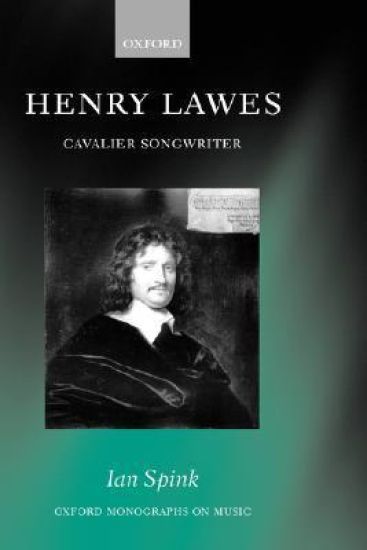
Henry Lawes

Henry Lawes

Ian Spink

Oxford University Press
2000
sidottu
Henry Lawes (1596-1662) has long been acknowledged as the most important and prolific English songwriter between the death of John Dowland in 1626 and the birth of Henry Purcell in 1659. He is celebrated as Milton's collaborator in Comus (1634). Although he wrote some church music, Lawess significance as a composer lies in his settings of many of the choicest lyrics by Cavalier poets such as Carew, Herrick, Suckling, and Waller–who, like Lawes himself, belonged to the brilliant court of Charles I. This book combines an account of his life with a study of his development as a songwriter during this fascinating historic period. Following the execution of the King in 1649, Lawes played an important part in establishing concerts in London during the 1650s, and was one of the composers of the first English opera, Davenant's The Siege of Rhodes (1656). At the Restoration he set Zadok the Priest for the coronation of Charles II, but died the following year. The last book on Lawes appeared in 1940, since when the importance of his songs has been increasingly recognized–thanks in part to Ian Spink's own previous study, English Song: Dowland to Purcell (1986), and his edition of Cavalier Songs: 1625-1660 for Musica Britannica.
Jonson's Magic Houses

Jonson's Magic Houses

Ian Donaldson

Clarendon Press
1997
sidottu
Ben Jonson was commonly regarded during his lifetime and the century following his death as a writer whose powers were equal, if not superior, to those of Shakespeare. By the middle of the eighteenth century, however, his reputation had sharply declined: while Shakespeare was increasingly venerated as a type of original genius, Jonson was contrastingly seen as a writer of patchy and derivative talents, excessively devoted to the authors of antiquity and to the social minutiae of his age, anxiously resentful of his great and 'gentle' rival. This popular, formalized contrast of the two men's characters and abilities profoundly affected the subsequent reputations of both Shakespeare and Jonson. In this new collection of biographical, critical and historical essays, Ian Donaldson challenges many long-held and recent assumptions about the nature of Jonson's personality and creative achievement, offering fresh readings of his life and art.
The Christian's ABC

The Christian's ABC

Ian Green

Clarendon Press
1996
sidottu
This is really three books in one: a study in church history; an essay in theology; and a bibliographical source for scholars working in various disciplines, and for librarians with catechisms of unsure provenance. Ian Green has written the first major study of the catechisms and techniques of catechizing used in early modern England, from the Reformation through to the Evangelical Revival. He begins by demonstrating the existence of several hundred different catechisms, with literally millions of copies circulating throughout the country, in parish churches, homes, schools and colleges. He then describes the techniques by which children, adolescents, and less well-educated adults were encouraged to master a specially simplified version of the core doctrines contained in the best-selling catechisms of the day, Ian Green goes on to indicate the high level of consensus and continuity in catechetical teaching, and suggests that such differences as there were consisted in either the disparity between the simpler message of many elementary works and the more demanding content of more sophisticated catechisms, or in the less predictable contrast between, on the one hand, the teaching of non-Calvinists and first generation Calvinists, and on the other, that of later Calvinists from Perkins to Westminster theologians. Catechetical teaching, especially on the Ten Commandments, covered all aspects of contemporary life and the book ends with an annotated list of catechisms which enables those with an interest in educational, literary, or linguistic history, or in political and social as well as religious history, to track down quickly works that could be of particular value to them.
Print and Protestantism in Early Modern England

Print and Protestantism in Early Modern England

Ian Green

Oxford University Press
2000
sidottu
In this highly innovative study, Ian Green examines the complete array of Protestant titles published in England from the 1530s to the 1720s. These range from the large specialist volumes at the top to cheap tracts at the bottom, from radical on one wing to conservative on the other, and from instructive and devotional manuals to edifying-cum-entertaining works such as religious verse and cautionary tales. Wherever possible the author adopts a statistical approach to permit a focus on those works which sold most copies over a number of years, and in an annotated Appendix provides a brief description of over seven hundred best selling or steady selling religious titles of the period. A close study of these texts and the forms in which they were offered to the public suggests a rapid diversification of both the types of work published and of the readerships at which they were targeted. It also demonstrates shrewd publishers' frequent attempts to plug gaps in a rapidly expanding market. Where previous studies of print have tended to focus on the polemical and the sensational, this one highlights the didactic, devotional, and consensual elements found in most steady selling works. It is also suggested that in these works there were at least three Protestantisms on offer an orthodox, clerical version, a moralistic, rational version favoured by the educated laity, and a popular version that was barely Protestant at all and that the impact of these probably varied both within and between different readerships. These conclusions shed much light not only on the means by which English Protestantism was disseminated, but also on the doctrinally and culturally diffused nature of English Protestantism by the end of the Stuart period. Both the text and the appendix should prove invaluable to anyone interested in the history of the Reformation or in printing as a medium of education and communication in early modern England.
The `Hitler Myth'

The `Hitler Myth'

Ian Kershaw

Clarendon Press
1987
sidottu
The personality of Hitler himself can hardly explain his immense hold over the German people. This study, a revised version of a book previously published in Germany under the title Der Hitler-Mythos: Volksmeinung und Propaganda im Dritten Reich, examines how the Nazis, experts in propaganda, accomplished the virtual deification of the Führer. Based largely on the reports of government officials, party agencies, and political opponents, Dr Kershaw charts the creation, growth, and decline of the 'Hitler Myth'.
The Existence of Space and Time

The Existence of Space and Time

Ian Hinckfuss

Oxford University Press
1974
sidottu
This book is intended as an introduction to the philosophical problems of space and time, suitable for any reader who has an interest in the nature of the universe and who has a secondary-school knowledge of physics and mathematics. In particular, it is hoped that the book may find a use in philosophy departments and physics departments within universities and other tertiary institutions. The attempt is always to introduce the problems from a twentieth-century point of view. It is preferable to introduce the history of the topic if and when that history becomes relevant to the development and solution of the problems, rather than to introduce a problem that was of importance in some previous age and to trace the development of it down the years.