The National Security Law Brief is devoted to examining United States national security law and policy. Through the hard work and dedication of our staff, advisors, and supporters, the Brief continues to be a leader national security law analysis. This issue of the seventh volume of the National Security Law Brief publishes incisive legal analysis and commentary concerning privacy rights, the mental health of national security practitioners, and cybersecurity. It contains the following articles: Strengthen Section 702: A Critical Intelligence Tool Vital to the Protection of our CountryThe United States possesses the most powerful intelligence collection capabilities in the world. Recent disclosures about these capabilities have caused a growing interest in privacy rights and sparked fears of a surveillance state. This article analyzes and makes recommendations about Section 702, which authorizes the collection of foreign intelligence information concerning non-United States persons located outside of the United States. The article argues against placing further constraints on the Government's capabilities to collect and view certain types of data. The article further posits that, in light of the increasing number of threats that face the United States is facing, certain provisions of Section 702 should be amended to allow the collection of information on certain U.S and non-United States citizens without individualized judicial review. The Mental Health of our National Security: Protecting the Minds that Protect the HomelandMental health is an often overlooked aspect of United States national security law. This poignant article depicts the psychological pain borne by those who protect our country and concludes that the United States is failing both its national security law practitioners and citizens by refusing to seriously address mental health. The article examines the legal framework for mental health support for our national security practitioners and argues for better resourcing, screening, and organizational cultures. Cybersecurity, Identity Theft, and Standing Law: A Framework for Data Breaches Using Substantial Risk in a post-Clapper WorldHigh profile cyberattacks targeting personal and confidential information have become commonplace in the digital age. This article posits that since Clapper v. Amnesty International USA, courts have disallowed standing for victims alleging heightened risk of injury due to identity theft. The article argues that Clapper did not actually alter Article III standing requirements. The article further argues that the courts should allow standing using a heightened-risk-of-identity theft.
"[Gangs in America's Communities] is one of the most comprehensive treatments of gangs in the marketplace. . . . I highly recommend its adoption as you will not be disappointed and, most importantly, neither will your students." —Elvira White-Lewis, Texas A&M University-Commerce Gangs in America's Communities, Third Edition blends theory with current research to help readers identify essential features associated with youth violence and gangs, as well as apply strategies for gang control and prevention. Authors Dr. James C. Howell and Dr. Elizabeth Griffiths introduce readers to theories of gang formation, illustrate various ways of defining and classifying gangs, and discuss national trends in gang presence and gang-related violence across American cities. They also offer evidence-based strategies for positioning communities to prevent, intervene, and address gang activity. New to the Third Edition: A series of new case studies document the evolution of numerous gangs in large cities, including the community aspect, evolutionary nature, and how cities influence levels of violence. New discussions highlighting the role of social media, insights into how gangs use it to recruit members, and the response from law enforcement. Current nationwide gang trends are discussed to encourage readers to analyze and interpret the most recent statistics for which representative data is available. Updated macro and micro gang theories enable readers to explore a recent encapsulation of leading developmental models. New discussions around female gang members offer readers potentially effective programs for discouraging females from joining gangs—along with highly regarded delinquency prevention and reduction programs that have the potency to be effective in reducing gang crimes among young women. A comprehensive gang prevention, intervention, and suppression program in Multnomah County, Oregon shows how theory was successfully applied to reduce gang activity in a local community. New research on "gang structures" and their rates of crime illustrate the connections between violent crimes and the amount of violent offenders within a gang. Additional discussion of distinguishing features (e.g., typologies) of major gangs, and numerous examples of gang symbols, tattoos, and graffiti has been added to help readers identify and differentiate various types of gangs.
"Am I crazy, Doctor? Am I vain? Why do I care so much?"After fifteen years as a facial plastic surgeon, Dr. James C. Marotta has repeatedly heard patients express shame and guilt about wanting to change their appearance. They second-guess themselves and worry about seeming superficial. They're afraid of being judged by friends and family. If you're considering plastic surgery, you're probably experiencing the same tumultuous emotions.You should not have to feel bad about wanting to look good. You're Not a Vanity Purchase offers a deep dive into history, sociology, and psychology to show why plastic surgery is a form of empowerment, not pride. The drive to look good is about far more than vanity. It's about being psychologically healthy, fulfilled, and confident. Using extensive research and case studies, Dr. Marotta offers support and teaches you how to ditch the guilt. Don't listen to the naysayers. Changing your appearance can change your life.
"Am I crazy, Doctor? Am I vain? Why do I care so much?"After fifteen years as a facial plastic surgeon, Dr. James C. Marotta has repeatedly heard patients express shame and guilt about wanting to change their appearance. They second-guess themselves and worry about seeming superficial. They're afraid of being judged by friends and family. If you're considering plastic surgery, you're probably experiencing the same tumultuous emotions.You should not have to feel bad about wanting to look good. You're Not a Vanity Purchase offers a deep dive into history, sociology, and psychology to show why plastic surgery is a form of empowerment, not pride. The drive to look good is about far more than vanity. It's about being psychologically healthy, fulfilled, and confident. Using extensive research and case studies, Dr. Marotta offers support and teaches you how to ditch the guilt. Don't listen to the naysayers. Changing your appearance can change your life.
How well do you know your church leaders and members? Space Brothers by James C. Blocker is a Christian sci-fi novel that weaves satanic-occult practices within the Christian church. It is a story of finding the real Jesus amid confusion and "signs and lying wonders" (2 Thess. 2:9). Kyle, a young college student, has an encounter with a "being" that at first appears to be extra-terrestrial. As events unfold, readers learn it is indeed supernatural, only not the godly supernatural. Instead of being otherworldly, its origin is demonic while its host is human, and Kyle learns an important truth: sometimes people are not who they portray themselves to be, and the reasons for this can be surprising. Come along with Kyle, Zig-Zag, Lilith, the "Oracle," and others, to discover what is real and who to trust. In Space Brothers, readers learn that some church members, even those in leadership, have deceptive motives, and their errors can cause us to lose those we love. In the end, thanks to friends and loved ones, Kyle realizes that he is a chosen vessel by God who is appointed to disrupt the plans of the devil. Even though we may suffer, God brings about healing and hope to those who trust in Him.
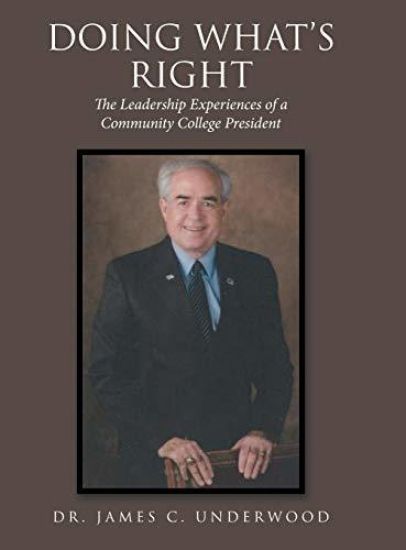
Growing up on a small farm in humble surroundings, serving a distinguished military career, and trying to be the best husband, father, grandfather, and college president he could be has taught Dr. James C. Underwood a lot about leadership. Even in retirement, hes still learningbecause thats what leaders do. In Doing Whats Right, he looks back on his formative years, including how his mother was left alone with eight children following the death of her spouse. She taught her children core values, including hard work, compassion, fairness, respect, honesty, and accountability. These values would serve Dr. Underwood well during his U.S. Army active and reserves military career, including combat duty in the Central Highlands of Vietnam and concluding as an Infantry Training Battalion Commander in the USAR. His educational leadership experiences expanded 45 years concurrent for the first 20 years with his military U.S. Army Reserve duty. In 2001, he was selected president of Kaskaskia College and served the final 14 years of his educational leadership career in that position until his retirement. He was driven as a college president by the same values that led his military career and early educational positions. During his educational career, he experienced a massive heart attack and two back-to-back open-heart surgeries. This life-threatening situation changed his life from a fast-paced and hard charging style to one focused on valuing life and the time we have left on earth. Through his faith and beliefs, Dr. Underwoods leadership principles were based on Doing Whats Right for people and organizations.
Growing up on a small farm in humble surroundings, serving a distinguished military career, and trying to be the best husband, father, grandfather, and college president he could be has taught Dr. James C. Underwood a lot about leadership. Even in retirement, hes still learningbecause thats what leaders do. In Doing Whats Right, he looks back on his formative years, including how his mother was left alone with eight children following the death of her spouse. She taught her children core values, including hard work, compassion, fairness, respect, honesty, and accountability. These values would serve Dr. Underwood well during his U.S. Army active and reserves military career, including combat duty in the Central Highlands of Vietnam and concluding as an Infantry Training Battalion Commander in the USAR. His educational leadership experiences expanded 45 years concurrent for the first 20 years with his military U.S. Army Reserve duty. In 2001, he was selected president of Kaskaskia College and served the final 14 years of his educational leadership career in that position until his retirement. He was driven as a college president by the same values that led his military career and early educational positions. During his educational career, he experienced a massive heart attack and two back-to-back open-heart surgeries. This life-threatening situation changed his life from a fast-paced and hard charging style to one focused on valuing life and the time we have left on earth. Through his faith and beliefs, Dr. Underwoods leadership principles were based on Doing Whats Right for people and organizations.
The rise in mutant population began in the 1900's. What man didn't understand they tried to destroy. It took almost 200 years for humanity to except mutants. No longer did we have to hide our abilities. Space travel began in the 1960's and once man landed on the moon, they drew the attention of the Narouse and Proxim species who later would form the Legion Empire. They watched for 140 years waiting for the right time to make contact. We sent crews to Mars, Neptune and even Saturn to create habital environments to sustain life but they found out that they were not alone. We were being slaughtered by the Knights of Prodigy when the Legion Empire came and defended the settlers. We found out that Earth had been under surveliance for a very long time by many alien species. Some of the alien life forms believed that mutants were the next stage of evolution and would take over the stars. Earth joined the Legion Empire to stand against those who would keep us from the stars but we soon discovered that not everyone was happy to see mutants joining. Once again, mutants had to hide their abilities for fear of being annihilated.
This second edition includes new material suggested by students in several class settings. In addition, indexes of scripture texts and subjects of discussion are now included. Beginning with Adam's rib and ending up with "Where is Heaven?" the writer looks carefully at seven things which "everyone knows" and yet which turn out to be rather different in the Bible or, in one case, actually missing. In each instance, he begins with "what the Bible doesn't say" and moved on to "what it does." Far from seeking to debunk any of these things, however, he notes things in the text which are "hidden in plain sight" and which give it fuller and richer meaning. Adam's rib, for instance, turns out, in the Hebrew text, not really to be a rib, after all; yet this discovery opens the text wider, rather than undermining it. The well-known story of the fall of Satan is found not to be in the Bible, although its source is discovered along with a greater understanding of the Foe who confronts us but whom we need not fear. What do we know about Jesus' descent into hell? And is Paradise heaven? Or is it in a different location that gives us even greater hope? The book does more than just probe interesting questions. The issues are indeed fascinating, but the approach itself is one that encourages paying close attention to the details of what is actually written as opposed to what we have always assumed is there. When all is said and done, we find that what the Bible actually does say is far greater than we previously imagined.
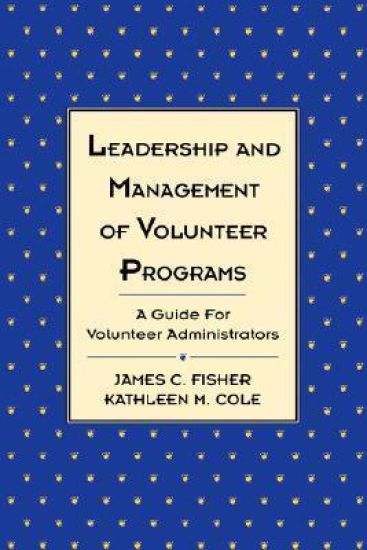
Describes the knowledge, skills, and abilities required of professional managers to effectively involve volunteers in the work of organizations. Offers thorough guidance on how to perform key tasks such as staffing, recruitment, motivation, program evaluation, and managing relationships between paid staff and volunteers.
Learn 200 quick, painless history lessons in one thoroughly researched book. An indispensable guide for Florida students, newcomers, and old-timers alike.Florida has a long and complex and very interesting history, but few of us have time to read it in depth. So here are 200 quick looks at Florida's 10,000 years of history, from the arrival of the first natives to the present. The distilled version is packed with unusual and little-known facts and stories.
This is the first in a series of collections of fiction and nonfiction about Florida by legendary writers who came here--some to escape the chilly North, some to find freedom, and some to investigate what the fuss was all about. From Audubon in 1834 to Dave Barry in 1990, these writers reveal Florida's natural beauty and her residents human foibles. In poetry, John Greenleaf Whittier exposes our shameful slave-holding past, and Elizabeth Bishop extols our turtles and sandbars and tropical rain. Jules Verne shoots a moon rocket off from Tampa, and Hunter Thompson delivers up his own gonzo brand of journalism in a story of marine salvage in the Keys. Hemingway rants about the governments laxity in the face of tragedy, while Harriet Beecher Stowe offers some advice on the time-honored practice of buying land in the Sunshine State.This anthology includes writing by of the following authors: John James AudubonNed BuntlineJohn MuirHarriet Beecher StoweJohn Greenleaf WhittierFrederick RemingtonJames Weldon JohnsonJules VerneStephen CraneDamon RunyonZora Neale HurstonRing LardnerJohn Dos PassosWallace StevensElizabeth BishopErnest HemingwayTennessee WilliamsJohn F. KennedyPatrick D. SmithIsaac Bashevis SingerHunter S. ThompsonRussell BanksCarl HiaasenDave BarryNext in series > >See all of the books in this series
"China's Bitter Victory" is a comprehensive analysis of China's epochal war with Japan. Striving for a holistic understanding of China's wartime experience, the contributors examine developments in the Nationalist, communist, and Japanese-occupied areas of the country. More than just a history of battles and conferences, the book portrays the significant impact of the war on every dimension of Chinese life, including politics, the economy, culture, legal affairs, and science. For within the overriding struggle for national survival, the competition for political goals continued. China ultimately triumphed, but at a price of between 15 and 20 million lives and vast destruction of property and resources. And China's bitter victory brought new trials for the Chinese people in the form of civil war and revolution. This book tells the story of China during a crucial period pregnant with consequences not only for China but also for Asia and the world as well. Addressed to students, scholars, and general readers, the book aims to fill a gap in the existing literature on modern Chinese history and on World War II.
The International Centre for Settlement of Investment Disputes (ICSID) and the Multilateral Investment Guarantee Agency (MIGA) are two of the more significant international agencies whose objective is to promote foreign direct investment in less developed countries (LDCs). This is the first detailed treatment of their establishment, the history of their operations, and an evaluation of these operations.ICSID, established in 1966, facilitates the arbitration or conciliation of investment contract disputes between foreign investors from countries that are signatories of the ICSID Convention and host signatory states. MIGA, whose first year of operations was 1988, insures foreign investment against political risks. Drawing on cases, Baker shows how the functions of these two agencies have encouraged a significant amount of foreign investment in LDCs and how the operations of these two agencies continue to grow in importance. Scholars, professionals, and policy makers will find this to be the most comprehensive description available of these important agencies.
In a world of increasing cross-border financial transactions, The Bank for International Settlements stands out as the oldest existing international financial institution and among the most controversial. For many it is a mystery: What does it actually do? For others it poses an ethical dilemma: What DID it do to aid the Nazis during World War II? Baker examines the history, administration, evolution, and operations of this reclusive institution. He discusses the work of its permanent committees, such as the Basle Concordats of 1975 and 1983 and the Basle Capital Accords of 1988 and 2001. Among other products and services he notes The BIS's studies of the use of derivatives by banks, its analysis of payment and settlement systems worldwide, and its supervision of the insurance and investment banking businesses. Then, in a cool and balanced appraisal, he looks at the Bank's operations during World War II, its relationship with the Nazis in their gold and foreign exchange transactions. Throughout, he underlines the importance of The BIS and its value in maintaining stability of the international monetary system. The result is a major academic study, a work of special interest to scholars, teachers, and students, and an important, readable, engrossing account for finance and investment professionals as well.