Kirjojen hintavertailu. Mukana 11 244 527 kirjaa ja 12 kauppaa.

Kirjahaku

Etsi kirjoja tekijän nimen, kirjan nimen tai ISBN:n perusteella.

1000 tulosta hakusanalla Jane Sinclair

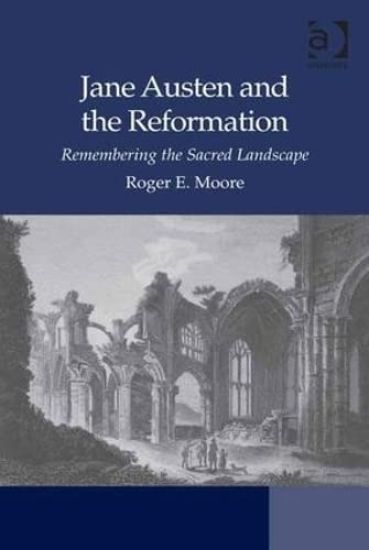
Jane Austen and the Reformation

Jane Austen and the Reformation

Roger Emerson Moore

Routledge
2015
sidottu
Jane Austen's England was littered with remnants of medieval religion. From her schooling in the gatehouse of Reading Abbey to her visits to cousins at Stoneleigh Abbey, Austen faced constant reminders of the wrenching religious upheaval that reordered the English landscape just 250 years before her birth. Drawing attention to the medieval churches and abbeys that appear frequently in her novels, Moore argues that Austen's interest in and representation of these spaces align her with a long tradition of nostalgia for the monasteries that had anchored English life for centuries until the Reformation. Converted monasteries serve as homes for the Tilneys in Northanger Abbey and Mr. Knightley in Emma, and the ruins of the 'Abbeyland' have a prominent place in Sense and Sensibility. However, these and other formerly sacred spaces are not merely picturesque backgrounds, but tangible reminders of the past whose alteration is a source of regret and disappointment. Moore uncovers a pattern of critique and commentary throughout Austen's works, but he focuses in particular on Northanger Abbey, Mansfield Park, and Sanditon. His juxtaposition of Austen's novels with sixteenth- and seventeenth-century texts rarely acknowledged as relevant to her fiction enlarges our understanding of Austen as a commentator on historical and religious events and places her firmly in the long national conversation about the meaning and consequences of the Reformation.
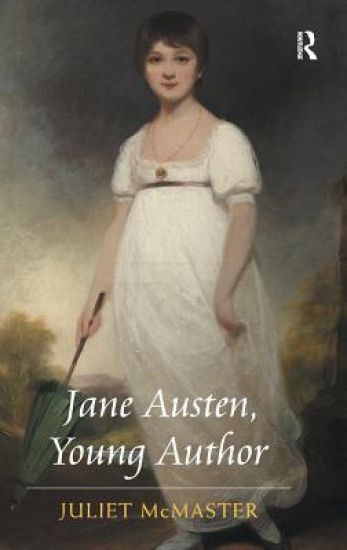
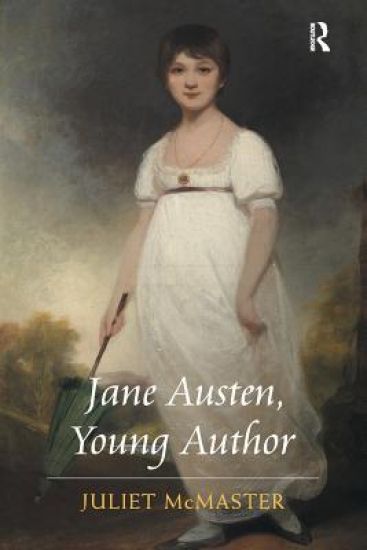
Jane Austen, Young Author

Jane Austen, Young Author

Juliet McMaster

Routledge
2015
sidottu
In her lively and accessibly written book, Juliet McMaster examines Jane Austen’s acute and frequently uproarious juvenile works as important in their own right and for the ways they look forward to her novels. Exploring the early works both collectively and individually, McMaster shows how young Austen’s fictional world, peopled by guzzlers and unashamed self-seekers, operates by an ethic of energy rather than the sympathy that dominates the novels. A fully self-conscious artist, young Jane experimented freely with literary modes - the epistolary, the omniscient, the drama. Early on, she developed brilliantly pointed dialogue to match her characters. Literary parody impels her creativity, and McMaster’s sustained study of Love and Friendship shows the same intricate relation of the parody to the work it parodies that we later see with Northanger Abbey and the Gothic novel. As an illustrator herself, McMaster is especially attuned to the explicit and sometimes hilarious descriptions of bodies that preceded Austen’s famous reticence about physicality. Rather than focusing on the immaturities of the juvenilia, McMaster maps the gradual shifts in tone and emphasis that signpost Austen’s journey as a writer. She shows, for instance, how the shameless husband-hunting in The Three Sisters and the vigorous partisanship of The History of England lead on to Pride and Prejudice. Her book will appeal to Austen’s critics and to passionate general readers, as well as to scholars working in the fields of juvenilia, children’s literature, and childhood studies.
Jane Austen, Young Author

Jane Austen, Young Author

Juliet McMaster

Routledge
2015
nidottu
In her lively and accessibly written book, Juliet McMaster examines Jane Austen’s acute and frequently uproarious juvenile works as important in their own right and for the ways they look forward to her novels. Exploring the early works both collectively and individually, McMaster shows how young Austen’s fictional world, peopled by guzzlers and unashamed self-seekers, operates by an ethic of energy rather than the sympathy that dominates the novels. A fully self-conscious artist, young Jane experimented freely with literary modes - the epistolary, the omniscient, the drama. Early on, she developed brilliantly pointed dialogue to match her characters. Literary parody impels her creativity, and McMaster’s sustained study of Love and Friendship shows the same intricate relation of the parody to the work it parodies that we later see with Northanger Abbey and the Gothic novel. As an illustrator herself, McMaster is especially attuned to the explicit and sometimes hilarious descriptions of bodies that preceded Austen’s famous reticence about physicality. Rather than focusing on the immaturities of the juvenilia, McMaster maps the gradual shifts in tone and emphasis that signpost Austen’s journey as a writer. She shows, for instance, how the shameless husband-hunting in The Three Sisters and the vigorous partisanship of The History of England lead on to Pride and Prejudice. Her book will appeal to Austen’s critics and to passionate general readers, as well as to scholars working in the fields of juvenilia, children’s literature, and childhood studies.
Jane Eyre's Fairytale Legacy at Home and Abroad
Exploring the literary microcosm inspired by Brontë's debut novel, Jane Eyre's Fairytale Legacy at Home and Abroad focuses on the nationalistic stakes of the mythic and fairytale paradigms that were incorporated into the heroic female bildungsroman tradition. Jane Eyre, Abigail Heiniger argues, is a heroic changeling indebted to the regional, pre-Victorian fairy lore Charlotte Brontë heard and read in Haworth, an influence that Brontë repudiates in her last novel, Villette. While this heroic figure inspired a range of female writers on both sides of the Atlantic, Heiniger suggests that the regional aspects of the changeling were especially attractive to North American writers such as Susan Warner and L.M. Montgomery who responded to Jane Eyre as part of the Cinderella tradition. Heiniger contrasts the reactions of these white women writers with that of Hannah Crafts, whose Jane Eyre-influenced The Bondwoman's Narrative rejects the Cinderella model. Instead, Heiniger shows, Crafts creates a heroic female bildungsroman that critiques fairytale narratives from the viewpoint of the obscure, oppressed workers who remain forever outside the tales of wonder produced for middle-class consumption. Heiniger concludes by demonstrating how Brontë's middle-class American readers projected the self-rise ethic onto Jane Eyre, miring the novel in nineteenth-century narratives of American identity formation.
Jane Austen and Sciences of the Mind
The essays in this volume interpret Jane Austen’s fiction through the lens of various sciences of the mind and brain, especially the cluster of disciplines implicated in the term cognitive science, including neuroscience, evolutionary biology, evolutionary and developmental psychology, and others. The field of cognitive literary studies has rapidly developed in the last few decades and achieved the status of an established (if still evolving) critical approach. One of the most popular authors to analyze from this perspective is Jane Austen. As numerous critics have noted, Austen was a keen observer of how the mind operates in its interactions with other minds, both when it functions successfully and when, as often happens, it goes awry, and her perceptions are often in synch with current neuroscientific and psychological research. Despite the widespread recognition of the special congruity between Austen’s novels and cognitive science, however, no book has been devoted to this subject. Jane Austen and Sciences of the Mind is the first monograph wholly comprised of readings of Austen’s oeuvre (juvenilia as well as all six completed novels) from cognitive and related psychological approaches. In addition, the volume operates under the assumption that cognitive and historicist approaches are compatible, and many essays situate Austen within the climate of ideas during her era as well as in relation to current research in the sciences and social sciences. Jane Austen and Sciences of the Mind offers a new lens for understanding and illuminating the concerns, techniques, and enduring appeal of Austen’s novels.
Jane Austen and her Works

Jane Austen and her Works

Sarah Tytler

Bloomsbury Academic
2013
sidottu
In one volume Sarah Tytler presents the most characteristic of Jane Austen’s novels, together with her life. The tales and the life are calculated to reflect on each other, and the arrangement of the tales – selected by the author as Austen wrote them, not as they happened to be published – allows the growth of Austen’s mind and taste to be recognised. The author touches on these great English novels in such a way as to make them readily accessible to all. She points out the great changes in social standards, customs and fashions that have occurred since Jane Austen wrote, but concludes that the human nature in her books remains the same as human nature in every generation.
Jane Austen, Virginia Woolf and Worldly Realism

Jane Austen, Virginia Woolf and Worldly Realism

Pam Morris

Edinburgh University Press
2017
sidottu
Who would have expected Jane Austen to be up-to-date on gun technology or Virginia Woolf to recognise the class politics of plumbing?Austen and Woolf are materialists, this book argues. 'Things' in their novels give us entry into some of the most contentious issues of the day. This wholly materialist understanding produces worldly realism, an experimental writing practice which asserts egalitarian continuity between people, things and the physical world. This radical redistribution of the importance of material objects and biological existence, challenges the traditional idealist hierarchy of mind over matter that has justified gender, class and race subordination. Entering their writing careers at the critical moments of the French Revolution and the First World War respectively, and sharing a political inheritance of Scottish Enlightenment scepticism, Austen's and Woolf's rigorous critiques of the dangers of mental vision unchecked by facts is more timely than ever in the current world dominated by fundamentalist neo-liberal, religious and nationalist belief systems.Key FeaturesThe book uses close readings from Sense and Sensibility, Mrs Dalloway, Emma, The Waves, Persuasion and The Years to demonstrate the materialist sensibilities of Austen and WoolfIt traces the anti-individualism of their view of self and consciousness as deriving from embodied experienceEach chapter foregrounds the constitutive interrelationship of things, people, social and physical worldsThe book reconceptualises a progressive view of realism worldly realism drawing upon Jacques Ranciere's thesis that a new democratic aesthetic regime is inaugurated around the end of the eighteenth century
Jane Austen, Virginia Woolf and Worldly Realism

Jane Austen, Virginia Woolf and Worldly Realism

Pam Morris

Edinburgh University Press
2018
nidottu
Who would have expected Jane Austen to be up-to-date on gun technology or Virginia Woolf to recognise the class politics of plumbing?Austen and Woolf are materialists, this book argues. 'Things' in their novels give us entry into some of the most contentious issues of the day. This wholly materialist understanding produces worldly realism, an experimental writing practice which asserts egalitarian continuity between people, things and the physical world. This radical redistribution of the importance of material objects and biological existence, challenges the traditional idealist hierarchy of mind over matter that has justified gender, class and race subordination. Entering their writing careers at the critical moments of the French Revolution and the First World War respectively, and sharing a political inheritance of Scottish Enlightenment scepticism, Austen's and Woolf's rigorous critiques of the dangers of mental vision unchecked by facts is more timely than ever in the current world dominated by fundamentalist neo-liberal, religious and nationalist belief systems.Key FeaturesThe book uses close readings from Sense and Sensibility, Mrs Dalloway, Emma, The Waves, Persuasion and The Years to demonstrate the materialist sensibilities of Austen and WoolfIt traces the anti-individualism of their view of self and consciousness as deriving from embodied experienceEach chapter foregrounds the constitutive interrelationship of things, people, social and physical worldsThe book reconceptualises a progressive view of realism worldly realism drawing upon Jacques Ranciere's thesis that a new democratic aesthetic regime is inaugurated around the end of the eighteenth century
Jane Porter, Thaddeus of Warsaw

Jane Porter, Thaddeus of Warsaw

Jane Porter

Edinburgh University Press
2021
nidottu
First scholarly edition of a bestselling historical novelExplores thesocio-political themes of the novel and deemed as relevant today as they were over 200 years agoSituates work in the genealogy of the historical novel and examines its literary and cultural influenceScholarly annotations clarify the historical context: the French Revolution, the related war in Poland, and Britain's response to Polish refugees in the 1790sPublished in 1803, Thaddeus of Warsaw is a beguiling romance that also exposes the hardships faced by migrants in Britain two hundred years ago. Jane Porter tells the story of a dashing Polish refugee, Thaddeus Sobieski, who must escape hostilities in his homeland. In London he faces poverty and prejudice, but his courage and goodness bring him to the attention of a circle of women who, in a surprising role reversal, either aid or woo him. He must also solve the mystery of his birth by discovering and confronting the British father who abandoned him.A carefully contextualised introduction to the novel and its author situates the work in the genealogy of the historical novel, examining its literary and cultural influence. Supporting materials include contemporary reviews, poems on Poland and correspondence regarding the novel's early success.
Jane is Trying

Jane is Trying

Isy Suttie

Weidenfeld Nicolson
2021
sidottu
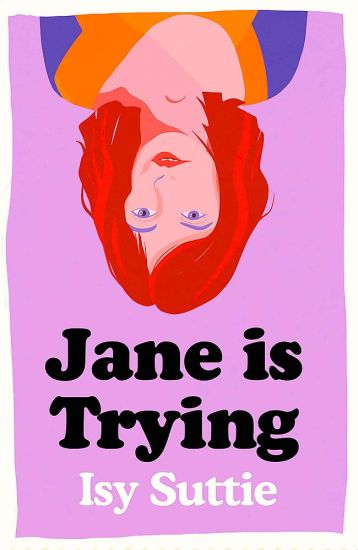
Jane is trying.She's been trying for a baby, with increasing desperation as her thirties sail by.Now, she's trying to make a new start back home with her overprotective, charades-obsessed parents - having left her career and cheating fiancé behind in London.And, she's trying to convince herself she didn't leave the front door unlocked, or the gas on. (Jane's not anxious. She just wants to make one hundred percent sure that nothing bad's going to happen to her. EVER.)With an increasing load on her plate, friends and family who think if she only listens to them she'll have a perfect life, and a brain which questions every decision she's ever made, can Jane conquer her demons and step forward on her own?
Jane is Trying

Jane is Trying

Isy Suttie

ORION PUBLISHING CO
2022
pokkari
'Tremendous' Adam Kay'Heart-warming' Sarah Pascoe'So well-observed' Daisy Buchanan'Hilarious' James Acaster'I LOVED it' Aisling Bea'The perfect concoction of warmth and grit' i Newspaper'Wonderful' StylistJane is trying.She's been trying for a baby, with increasing desperation as her thirties sail by.Now, she's trying to make a new start back home with her overprotective, charades-obsessed parents - having left her career and cheating fiancé behind in London.With an increasing load on her plate, friends and family who think she'll have a perfect life if she only listens to them, and a brain which questions every decision she's ever made, can Jane conquer her demons and step forward on her own?
Jane Austen

Jane Austen

Carol Shields

Weidenfeld Nicolson
2021
pokkari
Bestselling, award-winning novelist writing about one of the most popular and enduring English novelists - recently voted best author of all time.'Splendid ... a gem' LITERARY REVIEW'An excellent biography' MAIL ON SUNDAY'Shields on Austen offers up a delicious prospect. And we are not disappointed' SCOTSMANJane Austen was one of the world's most remarkable writers, whose characters are as alive today as they were two hundred years ago. Despite being one of the most perceptive writers about people and relationships, she never married and always lived with her parents and sister Cassandra.Perhaps unusual for women at that time, Jane Austen was acutely aware of the larger political and social world around her, but chose to focus her novels on the family as a microcosm through which to explore human nature.The prizewinning novelist Carol Shields gives us a beautifully written, perceptive look at the life of one of the finest and most popular English novelists of all time.
Jane is Trying

Jane is Trying

Suttie Isy

Weidenfeld Nicolson
2021
pokkari
Jane is trying.She's been trying for a baby, with increasing desperation as her thirties sail by.Now, she's trying to make a new start back home with her overprotective, charades-obsessed parents - having left her career and cheating fiancé behind in London.And, she's trying to convince herself she didn't leave the front door unlocked, or the gas on. (Jane's not anxious. She just wants to make one hundred percent sure that nothing bad's going to happen to her. EVER.)With an increasing load on her plate, friends and family who think if she only listens to them she'll have a perfect life, and a brain which questions every decision she's ever made, can Jane conquer her demons and step forward on her own?
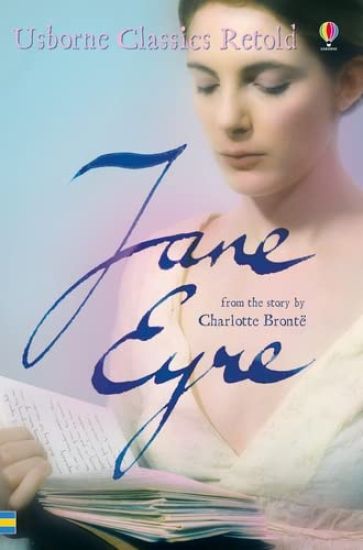
Jane Eyre

Jane Eyre

Charlotte Bronte

Usborne Publishing Ltd
2020
nidottu
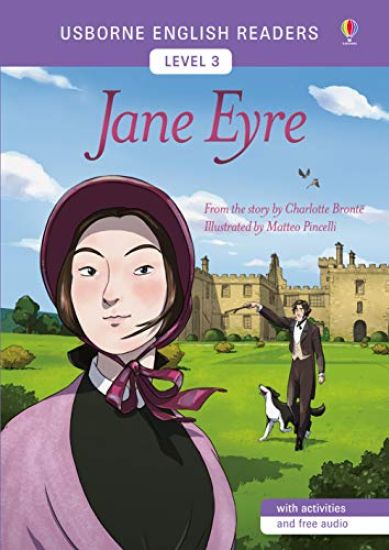
Jane Eyre is an orphan, poor and ordinary-looking. Her life is poor and ordinary too until she comes to Thornfield Hall and meets Mr. Rochester; but Thornfield hides a dangerous secret.Includes a word list, 5 pages of activities and free online audio (British English and American English).
Jane Eyre

Jane Eyre

Jane Bingham

Usborne Publishing Ltd
2019
nidottu
When Jane Eyre becomes a governess at Thornfield Hall, she falls in love with her mysterious employer, Mr. Rochester. But he hides a terrible secret that threatens to drive them apart... Clearly written in a modern, approachable style, this retelling of the classic story includes informative notes on both the author and the original text.
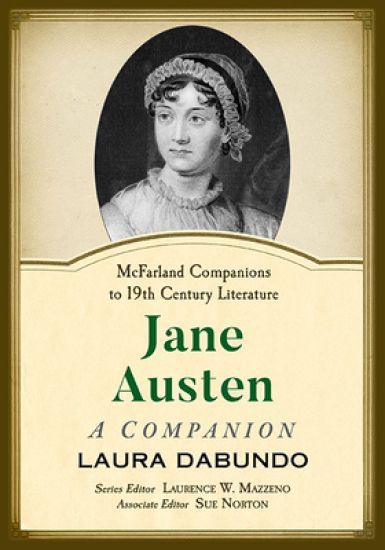
Jane Austen

Jane Austen

Laura Dabundo

McFarland Co Inc
2021
pokkari
Written for readers at all levels, this book situates Jane Austen in her time, and for all times. It provides a biography; locates her work in the context of literary history and criticism; explores her fiction; and features an encyclopedic, readable resource on the people, places and things of relevance to Austen the person and writer. Details on family members, beaux, friends, national affairs, church and state politics, themes, tropes, and literary devices ground the reader in Austen's world. Appendices offer resources for further reading and consider the massive modern industry that has grown up around Austen and her works.
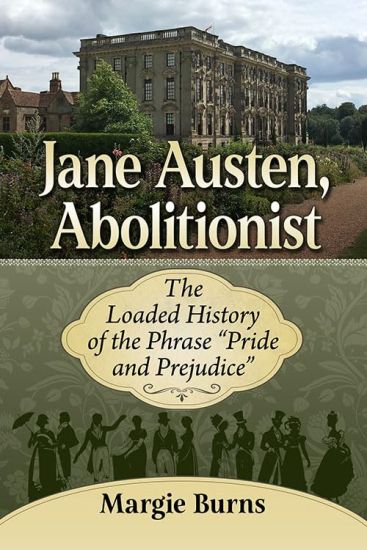
Jane Austen, Abolitionist

Jane Austen, Abolitionist

Margie Burns

MCFARLAND CO INC
2024
pokkari
The words "pride and prejudice" became the title of Jane Austen's most famous novel, but the history of the phrase before Austen is less famous. In particular, most of the reading public has never known that "pride and prejudice" was a traditional critique adopted by British and American antislavery writers. After Austen's lifetime, the antislavery associations intensified, especially in America. This is the only book about the tradition and the many newly discovered uses of "pride and prejudice" before and after Austen's popular novel. Hundreds of examples in an annotated list show the use of "pride and prejudice" used to uphold independence--independent judgment, independent ethical behavior, independence that repudiated all forms of oppression. The book demonstrates how, in a natural evolution, the phrase was used to criticize enslavement and the slave trade. Eighteenth-century revolutionary Thomas Paine used the phrase in Common Sense nineteenth-century abolitionist Frederick Douglass used it throughout his lifetime. Choosing her title for these resonances, Austen supported independent reason, reinforced writing by women, and opposed enslavement.