Kirjojen hintavertailu. Mukana 11 342 296 kirjaa ja 12 kauppaa.

Kirjahaku

Etsi kirjoja tekijän nimen, kirjan nimen tai ISBN:n perusteella.

1000 tulosta hakusanalla Jay Rayner

Raynaud's Phenomenon

Raynaud's Phenomenon

Jay D. Coffman

Oxford University Press Inc
1989
sidottu
Raynaud's Phenomenon is an auto-immune disorder which causes poor circulation in the digits and may affect up to 10% of all women. It is characterized by episodic blanching or cyanosis of one or more digits on exposure to cold; the phenomenon may occur with or without an underlying disease. This monograph presents the most up-to-date knowledge concerning Raynaud's Phenomenon, both as a primary disease and as the secondary result of an underlying disease, drug therapy or occupational exposure. The book reviews anatomy, physiology, the clinical picture, prevalance of the disease, diagnosis, prognosis, physiology and pathophysiology, and treatment.
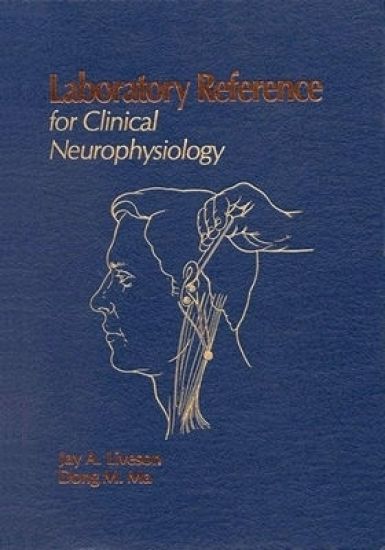
Laboratory Reference for Clinical Neurophysiology

Laboratory Reference for Clinical Neurophysiology

Jay A. Liveson; Dong M. Ma

Oxford University Press Inc
1999
sidottu
This text is an updated and expanded technical summary of all the electrodiagnostic techniques available in the clinical neurophysiology laboratory. It includes descriptions of the nerve to be studied, the stimulation procedure, technical comments and results of previous studies. The book also includes nearly 40 new drawings and new sections on evoked responses, motor unit potential studies and other tests. This comprehensive reference should be of use to every laboratory and physician who performs electrodiagnosis or refers patients. This book is intended for neurologists, rehabilitation medicine specialists, neurophysiologists.
Logic, Meaning, and Conversation

Logic, Meaning, and Conversation

Jay David Atlas

Oxford University Press Inc
2005
sidottu
This fresh look at the philosophy of language focuses on the interface between a theory of literal meaning and pragmatics--a philosophical examination of the relationship between meaning and language use and its contexts. Here, Atlas develops the contrast between verbal ambiguity and verbal generality, works out a detailed theory of conversational inference using the work of Paul Grice on Implicature as a starting point, and gives an account of their interface as an example of the relationship between Chomsky's Internalist Semantics and Language Performance. Atlas then discusses consequences of his theory of the Interface for the distinction between metaphorical and literal language, for Grice's account of meaning, for the Analytic/Synthetic distinction, for Meaning Holism, and for Formal Semantics of Natural Language. This book makes an important contribution to the philosophy of language and will appeal to philosophers, linguists, and cognitive scientists.
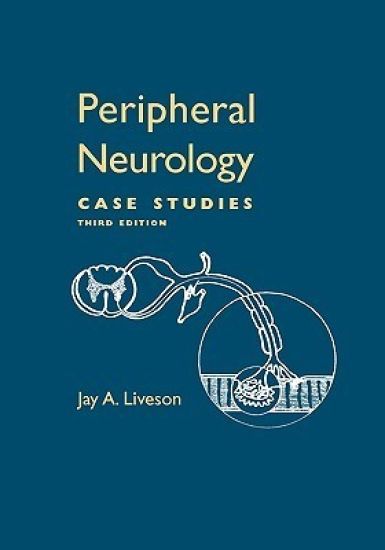
Peripheral Neurology

Peripheral Neurology

Jay Liveson

Oxford University Press Inc
2000
nidottu
Peripheral Neurology was the first book to make innovative use of case presentations as a vehicle for teaching peripheral neurology. In fact, it was the first to categorize the field of peripheral neurology, as most other neurology texts concentrated on diseases of the central nervous system. This case approach has since been emulated in many other texts and on various web sites. Emphasizing the clinical conditoin rather than the electrodiagnostic technique, each topic is thoroughly addressed, first in the Fundamental Concepts of Part I, and then in multiple Case Studies presented in Part II. The reader is able to simulate a true clinical environment where a diagnosis has to be arrived at with no organizational clues from the text. Formulating conclusions by analysing the history, physical, and laboratory data, and linking from case to related case, this is the only text which allows this type of "interactive" reading. The book addresses many rare entities that the author is able to present based on his 30-years of experience.
Space Physiology

Space Physiology

Jay C. Buckey

Oxford University Press Inc
2006
sidottu
This is the definitive handbook for space crews living and working in zero gravity, as well as for the wide community of scientists, physicians and engineers who support them. It offers advice on physiological and medical problems of bone loss, kidney stones, motion sickness, muscle loss, loss of balance, orthostatic intolerance, weight loss, radiation exposure, as well as on gender differences and extra-vehicular activity. Additional topics include preparatino for flight, long-duration medical planning and rehabilitation. This is the first book to combine modern space physiology with practical advice.
Bodily Sensibility

Bodily Sensibility

Jay Schulkin

Oxford University Press Inc
2004
sidottu
The brain is a cognitive organ, and regions of the brain that traverse brainstem and cortical sites orchestrate the expression of bodily sensibility: intelligent action. They can appear perfunctory or intimate, calculating a sum or selecting a mate. Schulkin presents neuroscientific research demonstrating that thought is not on one side and bodily sensibility on the other; from a biological point of view, they are integrated. Schulkin further argues that this integration has important implications for judgements about the emotions, art and music, moral sensibilities, attraction and revulsion, and our perpetual inclination to explain ourselves and our surroundings. He begins the book by setting forth a view of the emotions not as a bodily burden to be borne, but rather as a great source of information. He then moves on to other domains, claiming that underlying the experience of aesthetics in at least some instances is the interplay between expectation and disappointment from its infraction, and suggesting that, among other things, repulsion and attraction to the cries and joys of others constitutes moral responsiveness. This book should appeal to researchers in behavioural neuroscience, emotion, and psychophysiology, as well as cognitive and social psychologists and philosophers of mind.
Charles Dickens in Cyberspace

Charles Dickens in Cyberspace

Jay Clayton

Oxford University Press Inc
2003
sidottu
Charles Dickens in Cyberspace opens a window on a startling set of literary and scientific links between contemporary American culture and the nineteenth-century heritage it often repudiates. Surveying a wide range of novelists, scientists, filmmakers, and theorists from the past two centuries, Jay Clayton traces the concealed circuits that connect the telegraph with the Internet, Charles Babbage's Difference Engine with the digital computer, Frankenstein's monster with cyborgs and clones, and Dickens' life and fiction with all manner of contemporary popular culture--from comic books and advertising to recent novels and films. In the process, Clayton argues for two important principles: that postmodernism has a hidden or repressed connection with the nineteenth-century and that revealing those connections can aid in the development of a historical cultural studies. In Charles Dickens in Cyberspace nineteenth-century figures--Jane Austen, Charles Darwin, Charles Dickens, Thomas Hardy, Henry James, Ada Lovelace, Joseph Paxton, Mary Shelley, and Mary Somerville--meet a lively group of counterparts from today: Andrea Barrett, Greg Bear, Peter Carey, Hélène Cixous, Alfonso Cuarón, William Gibson, Donna Haraway, David Lean, Richard Powers, Salman Rushdie, Ridley Scott, Susan Sontag, Neal Stephenson, Bruce Sterling, and Tom Stoppard. The juxtaposition of such a diverse cast of characters leads to a new way of understanding the "undisciplined culture" the two eras share, an understanding that can suggest ways to heal the gap that has long separated literature from science. Combining storytelling and scholarship, this engaging study demonstrates in its own practice the value of a self-reflective stance toward cultural history. Its personal voice, narrative strategies, multiple points of view, recursive loops, and irony emphasize the improvisational nature of the methods it employs. Yet its argument is serious and urgent: that the afterlife of the nineteenth century continues to shape the present in diverse and sometimes conflicting ways.
Knowledge Capital

Knowledge Capital

Jay L. Chatzkel

Oxford University Press Inc
2003
sidottu
Knowledge Capital: How Knowledge-Based Enterprises Really Get Built is an integrated, structured set of conversations with thought leaders and key practitioners in the fields of intellectual capital and knowledge management, who examine-in the form of conversations-the steps necessary for creating and implementing the various dimensions of a knowledge-based enterprise. These are the dimensions that need to be effectively addressed for the organization to successfully make the transition from an activity-based organization to a truly knowledge-based enterprise. The conversations that make up Knowledge Capital are not studies of theory separated from practice or practice without a strong theoretical base. Rather, they are the stories of how knowledge-based enterprises really get built, in the words of the people who built them. While every contributor begins from his or her own unique perspective and background, each moves toward a convergent understanding of the core elements, perspectives, and practices involved. These systemic conversations provide a body of knowledge and experience on how to craft and implement strategies, as well as the how values, learning, performance, relationships, innovation, and change play in the development of usable knowledge environment. These explorations, together, lead to a mapping of what are quickly becoming the foundations of the next stage of the field. Knowledge Capital gives the reader a readily accessible collection of insights and experiences essential for the new era in intellectual capital and knowledge management.
The Vestibular System

The Vestibular System

Jay M. Goldberg; Victor J. Wilson; Kathleen E. Cullen; Dora E. Angelaki; Dianne M. Broussard; Jean Buttner-Ennever; Kikuro Fukushima; Lloyd B. Minor

Oxford University Press Inc
2012
sidottu
In The Vestibular System: A Sixth Sense, leading experts present an integrative, comprehensive and innovative look at the sense that Aristotle missed. The vestibular system plays a vital role in everyday life, contributing to a surprising range of functions from reflexes to the highest levels of perception and consciousness. This text not only offers a thorough and fresh review of the basicssensory transduction, the neurophysiology of peripheral and central pathwaysand how vestibular signals are processed in the control of gaze and posture; it significantly moves the discussion forward with its attention to the current research and the field's revolutionary advances, such as the understanding of neural correlates of self-motion and the basis of clinical disorders. In addition, the objective presentation of existing controversies is exciting reading and an extremely important contribution to the text's completeness. Dynamic, intellectually challenging, and unique in its level of integration of the material, this book is essential for anyone interested in understanding the vestibular system.
In Search of an American Catholicism

In Search of an American Catholicism

Jay P. Dolan

Oxford University Press Inc
2003
nidottu
For more than two hundred years American Catholics have struggled to reconcile their national and religious values. In this incisive and accessible account, distinguished Catholic historian Jay P. Dolan explores the way American Catholicism has taken its distinctive shape and follows how Catholics have met the challenges they have faced as New World followers of an Old World faith. Dolan argues that the ideals of democracy, and American culture in general, have deeply shaped Catholicism in the United States as far back as 1789, when the nation's first bishop was elected by the clergy (and the pope accepted their choice.) Dolan looks at the tension between democratic values and Catholic doctrine from the conservative reaction after the fall of Napoleon to the impact of the Second Vatican Council. Furthermore, he explores grassroots devotional life, the struggle against nativism, the impact and collision of different immigrant groups, and the disputed issue of gender. Today Dolan writes, the tensions remain, as we see signs of a resurgent traditionalism in the church in response to the liberalizing trend launched by John XXIII, and also a resistance to the conservatism of John Paul II. In this lucid account, the unfinished story of Catholicism in America emerges clearly and compellingly, illuminating the inner life of the church and of the nation. For more than two hundred years American Catholics have struggled to reconcile their national and religious values. In this incisive and accessible account, distinguished Catholic historian Jay P. Dolan explores the way American Catholicism has taken its distinctive shape and follows how Catholics have met the challenges they have faced as New World followers of an Old World faith. Dolan argues that the ideals of democracy, and American culture in general, have deeply shaped Catholicism in the United States as far back as 1789, when the nation's first bishop was elected by the clergy and approved by the pope. He also examines the tension between democratic values and Catholic doctrine from the conservative reaction after the fall of Napoleon to the impact of the Second Vatican Council. Dolan explores grassroots devotional life, the struggle against nativism, the impact and collision of different immigrant groups, and the disputed issue of gender. In this lucid account, the unfinished story of Catholicism in America emerges clearly and compellingly, illuminating the inner life of the church and of the nation.
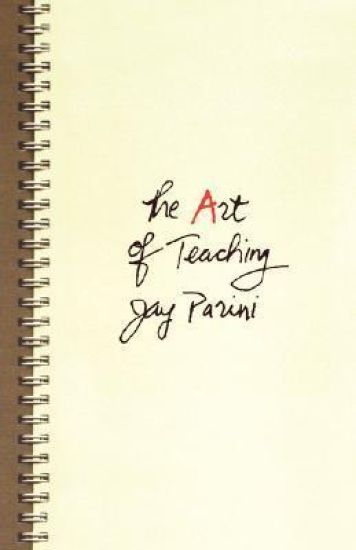
The Art of Teaching

The Art of Teaching

Jay Parini

Oxford University Press Inc
2005
sidottu
In a deeply personal memoir filled with humor, encouragement, and hard-won wisdom about the teacher's craft, the distinguished critic and author furnishes valuable insights into the many challenges educators face, as well as a discussion of such topics as politics in the classroom, the importance of a disciplined approach to life, fostering relationships with students, and balancing one's teaching load with research and writing.
Charles Dickens in Cyberspace

Charles Dickens in Cyberspace

Jay Clayton

Oxford University Press Inc
2006
nidottu
Charles Dickens in Cyberspace opens a window on a startling set of literary and scientific links between contemporary American culture and the nineteenth-century heritage it often repudiates. Surveying a wide range of novelists, scientists, filmmakers, and theorists from the past two centuries, Jay Clayton traces the concealed circuits that connect the telegraph with the Internet, Charles Babbage's Difference Engine with the digital computer, Frankenstein's monster with cyborgs and clones, and Dickens' life and fiction with all manner of contemporary popular culture--from comic books and advertising to recent novels and films. In the process, Clayton argues for two important principles: that postmodernism has a hidden or repressed connection with the nineteenth-century and that revealing those connections can aid in the development of a historical cultural studies. In Charles Dickens in Cyberspace nineteenth-century figures--Jane Austen, Charles Darwin, Charles Dickens, Thomas Hardy, Henry James, Ada Lovelace, Joseph Paxton, Mary Shelley, and Mary Somerville--meet a lively group of counterparts from today: Andrea Barrett, Greg Bear, Peter Carey, Hélène Cixous, Alfonso Cuarón, William Gibson, Donna Haraway, David Lean, Richard Powers, Salman Rushdie, Ridley Scott, Susan Sontag, Neal Stephenson, Bruce Sterling, and Tom Stoppard. The juxtaposition of such a diverse cast of characters leads to a new way of understanding the "undisciplined culture" the two eras share, an understanding that can suggest ways to heal the gap that has long separated literature from science. Combining storytelling and scholarship, this engaging study demonstrates in its own practice the value of a self-reflective stance toward cultural history. Its personal voice, narrative strategies, multiple points of view, recursive loops, and irony emphasize the improvisational nature of the methods it employs. Yet its argument is serious and urgent: that the afterlife of the nineteenth century continues to shape the present in diverse and sometimes conflicting ways.

The Oxford Handbook of World Philosophy

The Oxford Handbook of World Philosophy

Jay L. Garfield; William Edelglass

Oxford University Press Inc
2011
sidottu
The Oxford Handbook of World Philosophy provides the advanced student or scholar a set of introductions to each of the world's major non-European philosophical traditions. It offers the non-specialist a way in to unfamiliar philosophical texts and methods and the opportunity to explore non-European philosophical terrain and to connect her work in one tradition to philosophical ideas or texts from another. Sections on Chinese Philosophy, Indian Philosophy, Buddhist Philosophy, East Asian Philosophy, African Philosophy, and Recent Trends in Global Philosophy are each edited by an expert in the field. Each section includes a general introduction and a set of authoritative articles written by leading scholars, designed to provide the non-specialist a broad overview of a major topic or figure. This volume is an invaluable aid to those who would like to pursue philosophy in a global context, and to those who are committed to moving beyond Eurocentrism in academic philosophy.
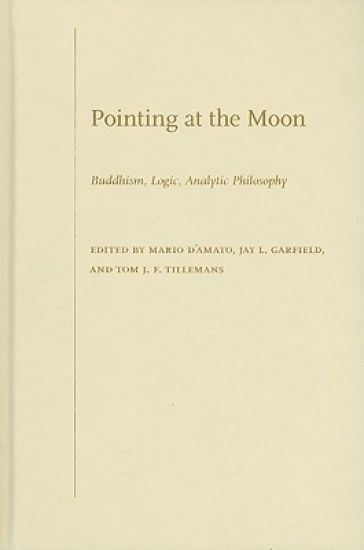
Pointing at the Moon

Pointing at the Moon

Jay L Garfield; Tom J.F. Tillemans; eds D'Amato

Oxford University Press Inc
2009
sidottu
This volume collects essays by philosophers and scholars working at the interface of Western philosophy and Buddhist Studies. Many have distinguished scholarly records in Western philosophy, with expertise in analytic philosophy and logic, as well as deep interest in Buddhist philosophy. Others have distinguished scholarly records in Buddhist Studies with strong interests in analytic philosophy and logic. All are committed to the enterprise of cross-cultural philosophy and to bringing the insights and techniques of each tradition to bear in order to illuminate problems and ideas of the other. These essays address a broad range of topics in the philosophy of mind, philosophy of language, logic, epistemology, and metaphysics, and demonstrate the fecundity of the interaction between the Buddhist and Western philosophical and logical traditions.
Pointing at the Moon

Pointing at the Moon

Jay L Garfield; Tom J.F. Tillemans; eds D'Amato

Oxford University Press Inc
2009
nidottu
This volume collects essays by philosophers and scholars working at the interface of Western philosophy and Buddhist Studies. Many have distinguished scholarly records in Western philosophy, with expertise in analytic philosophy and logic, as well as deep interest in Buddhist philosophy. Others have distinguished scholarly records in Buddhist Studies with strong interests in analytic philosophy and logic. All are committed to the enterprise of cross-cultural philosophy and to bringing the insights and techniques of each tradition to bear in order to illuminate problems and ideas of the other. These essays address a broad range of topics in the philosophy of mind, philosophy of language, logic, epistemology, and metaphysics, and demonstrate the fecundity of the interaction between the Buddhist and Western philosophical and logical traditions.
Specialty Competencies in Organizational and Business Consulting Psychology
Originally termed "Industrial-Organizational Psychology (I/O)," practitioners of this specialty emanate from varying backgrounds in business-psychology related fields. Although it was one of the "original four" specialties of the American Board of Professional Psychology established in 1947, the domain of contemporary I/O professional practice can best be thought of as a "hybrid" across multiple traditions. For this volume in the series, Jay Thomas describes this particular hybrid model. The original board reflecting the specialty of I/O psychology (i.e., the American Board of Industrial and Organizational Psychology) within the greater organization of the American Board of Professional Psychology (which at the time of this writing encompasses 13 differing specialty boards in professional psychology), reconstituted itself in 2005 to be the " American Board of Organizational and Business Consulting (OBC) Psychology." This name change was made in order to best capture the notion that specialists in this area can be educated and trained (and practice) in related, but somewhat differing traditions. Readers interested in this specialty area within psychology will find this text invaluable as the most current description of the competencies thought important to help define the OBC psychologist. Series in Specialty Competencies in Professional Psychology Series Editors Arthur M. Nezu and Christine Maguth Nezu As the field of psychology continues to grow and new specialty areas emerge and achieve recognition, it has become increasingly important to define the standards of professional specialty practice. Developed and conceived in response to this need for practical guidelines, this series presents methods, strategies, and techniques for conducting day-to-day practice in any given psychology specialty. The topical volumes address best practices across the functional and foundational competencies that characterize the various psychology specialties, including clinical psychology, cognitive and behavioral psychology, school psychology, geropsychology, forensic psychology, clinical neuropsychology, couples and family psychology, and more. Functional competencies include common practice activities like assessment and intervention, while foundational competencies represent core knowledge areas such as ethical and legal issues, cultural diversity, and professional identification. In addition to describing these competencies, each volume provides a definition, description, and development timeline of a particular specialty, including its essential and characteristic pattern of activities, as well as its distinctive and unique features. Written by recognized experts in their respective fields, volumes are comprehensive, up-to-date, and accessible. These volumes offer invaluable guidance to not only practicing mental health professionals, but those training for specialty practice as well.
Transnational Crime and the 21st Century: Criminal Enterprise, Corruption, and Opportunity
Transnational crime is to the early twenty-first century what city gangs and Al Capone were to the early twentieth century. In Transnational Crime and the 21st Century: Criminal Enterprise, Corruption, and Opportunity, noted criminologist Jay S. Albanese uses case studies, interviews, and the most up-to-date research to explore the connections between transnational crime and organized crime. A concise and affordable supplement for courses in comparative, international, and organized crime, this provocative text offers students a solid basis for understanding the nature of transnational crime. FEATURES* Uses clear, straightforward language, making the text accessible to students of all levels* Categorizes crimes by type (rather than by topic) in order to help students better grasp the interrelationships between transnational and organized crime* Examines the nine most serious forms of transnational crime: drug trafficking, stolen property, counterfeiting, human trafficking, fraud and cybercrime, commercialized sex, extortion and racketeering, money laundering, and corruption* Proposes concrete solutions for preventing organized crime syndicates and networks* Takes a systematic approach to risk assessment, delving into the factors that generate illicit markets and allow criminals to be successful
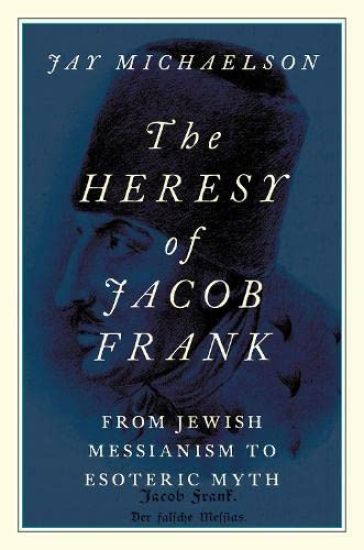
The Heresy of Jacob Frank

The Heresy of Jacob Frank

Jay Michaelson

OXFORD UNIVERSITY PRESS INC
2023
sidottu
The Heresy of Jacob Frank is the first monograph length study on the religious philosophy of Jacob Frank (1726-1791), who, in the wake of false messiah Sabbetai Zevi, led the largest mass apostasy in Jewish history. Based on close readings of Frank's late teachings, recorded in 1784 and 1790, this book challenges scholarly presentations of Frank that depict him as a sex-crazed "degenerate," and presents Frank as an original and prescient figure at the crossroads of tradition and modernity, reason and magic, Kabbalah and Western Esotericism. Frank's worldview combines a skeptical rejection of religious law as ineffectual and repressive with a supernatural, esoteric myth of immortal beings, material magic, and worldly power. With close readings of the theological and narrative passages of Frank's teachings, Michaelson shows how the Frankist sect evolved from its Sabbatean roots and the infamous 1757-59 disputations before the Catholic Church, into a Western Esoteric society based on alchemy, secrecy, and sexual liberation. Sexual ritual, apparently tightly limited and controlled by the sect, was not a libertine bacchanal but an enactment of the messianic reality, a corporealization of what would later become known as spirituality. While Frank was undoubtedly a manipulative, even abusive leader whose sect mostly disappeared from history, Michaelson suggests that his ideology anticipated themes that would become predominant in the Haskalah, Early Hasidism, and even contemporary 'New Age' Judaism. In an inversion of traditional religious values, Frank's antinomian theology held personal flourishing to be a religious virtue, affirmed only the material, and transferred messianic eros into social, sexual, and political reality.
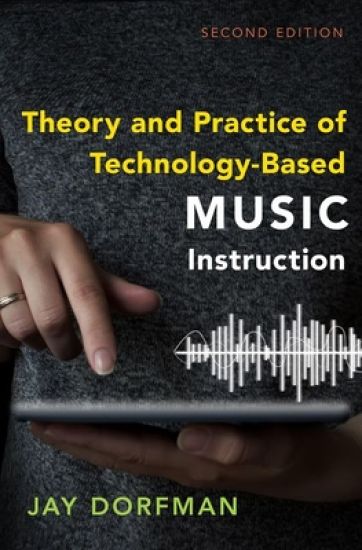
Theory and Practice of Technology-Based Music Instruction

Theory and Practice of Technology-Based Music Instruction

Jay Dorfman

OXFORD UNIVERSITY PRESS INC
2022
sidottu
Technology is an increasingly popular part of music education in schools that attracts students to school music who might not otherwise be involved. In many teacher preparation programs, music technology is an afterthought that does not receive the same extensive treatment as do traditional areas of music teaching such as band, orchestra, choir, and general music. This book helps to establish a theoretical and practical foundation for how to teach students to use technology as the major means for developing their musicianship. Including discussions of lesson planning, lesson delivery, and assessment, readers will learn how to gain comfort in the music technology lab. Theory and Practice of Technology-Based Music Instruction also includes “profiles of practice” that dive into the experiences of real teachers in music technology classes, their struggles, their successes, and lessons we can learn from both. In this second edition, new profiles feature Teachers of Color who use technology extensively in their varied types of music teaching. This edition encourages readers to think about issues of inequity of social justice in music education technology and how teachers might begin to address those concerns. Also updated are sections about new standards that may guide music education technology practice, about distance and technology-enhanced learning during the global pandemic, and about ways to integrate technology in emerging contexts.
Theory and Practice of Technology-Based Music Instruction

Theory and Practice of Technology-Based Music Instruction

Jay Dorfman

OXFORD UNIVERSITY PRESS INC
2022
nidottu
Technology is an increasingly popular part of music education in schools that attracts students to school music who might not otherwise be involved. In many teacher preparation programs, music technology is an afterthought that does not receive the same extensive treatment as do traditional areas of music teaching such as band, orchestra, choir, and general music. This book helps to establish a theoretical and practical foundation for how to teach students to use technology as the major means for developing their musicianship. Including discussions of lesson planning, lesson delivery, and assessment, readers will learn how to gain comfort in the music technology lab. Theory and Practice of Technology-Based Music Instruction also includes “profiles of practice” that dive into the experiences of real teachers in music technology classes, their struggles, their successes, and lessons we can learn from both. In this second edition, new profiles feature Teachers of Color who use technology extensively in their varied types of music teaching. This edition encourages readers to think about issues of inequity of social justice in music education technology and how teachers might begin to address those concerns. Also updated are sections about new standards that may guide music education technology practice, about distance and technology-enhanced learning during the global pandemic, and about ways to integrate technology in emerging contexts.