Kirjojen hintavertailu. Mukana 11 417 157 kirjaa ja 12 kauppaa.

Kirjahaku

Etsi kirjoja tekijän nimen, kirjan nimen tai ISBN:n perusteella.

1000 tulosta hakusanalla Jeffrey B Perry

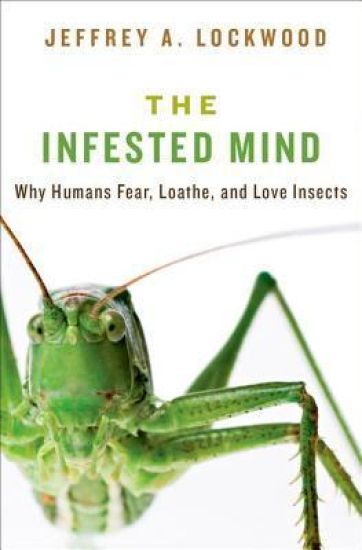
The Infested Mind

The Infested Mind

Jeffrey Lockwood

Oxford University Press Inc
2013
sidottu
The psychological connections between humans and insects are tantalizing and complex. Through both evolutionary associations and cultural representations, insects have deeply infested our minds. They frighten, disgust, and sometimes enchant us. Whatever the case, few of us are ambivalent in the face of wasps, cockroaches, spiders, maggots, crickets or butterflies. They arouse terror, nausea, fascination-but rarely, if ever, indifference. And the costs of fear can be high, both in terms of the quality of individual lives and with regard to our social responses, from soaking our food with insecticides to overlooking our dependence on the ecological roles of insects (including those on the brink of extinction). The book is an examination of what scientists, philosophers, and writers have learned about the human-insect relationship. Jeffrey Lockwood is an entomologist himself and yet still experiences bouts of entomophobia; in fact, his seemingly paradoxical response to certain insects and scenarios is what prompted him to write this book. The book explores the nature of anxiety and phobia and the line between them. It examines entomophobia in the context of the nature-nurture debate, posing the question: how much of our fear of insects can be attributed to our ancestors' predisposition to avoid insects to benefit their own survival, and how much is learned through parents? Using his own and others' experiences with entomophobia as case studies, Lockwood breaks down common reactions to insects, distinguishing between fear and disgust, and inviting the reader to consider his/her own emotional, cognitive, and physiological reactions to insects in a new light.
Imprisoned by the Past

Imprisoned by the Past

Jeffrey L. Kirchmeier

Oxford University Press Inc
2015
sidottu
In 1987, the United States Supreme Court decided a case that could have ended the death penalty in the United States. Imprisoned by the Past: Warren McCleskey and the American Death Penalty examines the long history of the American death penalty and its connection to the case of Warren McCleskey, revealing how that case marked a turning point for the history of the death penalty. In this book, Jeffrey L. Kirchmeier explores one of the most important Supreme Court cases in history, a case that raised important questions about race and punishment, and ultimately changed the way we understand the death penalty today. McCleskey's case resulted in one of the most important Supreme Court decisions in U.S. history, where the Court confronted evidence of racial discrimination in the administration of capital punishment. The case currently marks the last time that the Supreme Court had a realistic chance of completely striking down capital punishment. As such, the case also marked a turning point in the death penalty debate in the country. Going back nearly four centuries, this book connects McCleskey's life and crime to the issues that have haunted the American death penalty debate since the first executions by early settlers through the modern twenty-first century death penalty. Imprisoned by the Past ties together three unique American stories. First, the book considers the changing American death penalty across centuries where drastic changes have occurred in the last fifty years. Second, the book discusses the role that race played in that history. And third, the book tells the story of Warren McCleskey and how his life and legal case brought together the other two narratives.
The Ethics of Private Practice

The Ethics of Private Practice

Jeffrey E. Barnett; Jeffrey Zimmerman; Steven Walfish

Oxford University Press Inc
2014
nidottu
Mental health professionals in private practice strive for clinical and financial success. Yet, there are myriad ethical issues and dilemmas awaiting every practitioner that serve as challenges to being successful for even the most clinically competent and savvy business persons. Some ethics issues are obvious while others are more subtle and can undermine the best intentions of practitioners who have not prepared for these challenges. Graduate training programs in the mental health professions offer courses in ethics for their students, but few offer practical training in the application of ethics to the business of practice. A resource focusing specifically on these challenges has been sorely needed. The Ethics of Private Practice helps mental health professionals understand the essential ethical issues related to many of the challenges of being in independent mental health practice. Seasoned clinicians Barnett, Zimmerman, and Walfish offer readers astute insight to help them build a practice that is designed to minimize unintended ethical violations and reduce associated risks. Each chapter focuses on a major aspect of the business of practice and incorporates relevant standards from the ethics codes of four mental health professions. Topics addressed include planning one's private practice, successfully running and managing one's practice, documentation and record keeping, dealing with third parties and protecting confidentiality, managing practice finances and making financial decisions, staff training and office policies, advertising and the effective marketing of one's practice, continuing professional development activities, and the closing of a private practice. The authors discuss important questions such as: What do you do as a practitioner when your best referral source wants to become your client? What is appropriate use of social media? How should you respond when a managed care company denies authorization for treatment for a client that you know is in obvious need of further treatment? Full of practical tips that can be readily implemented, The Ethics of Private Practice is sure to be a handy, go-to resource for mental health clinicians in private practice.
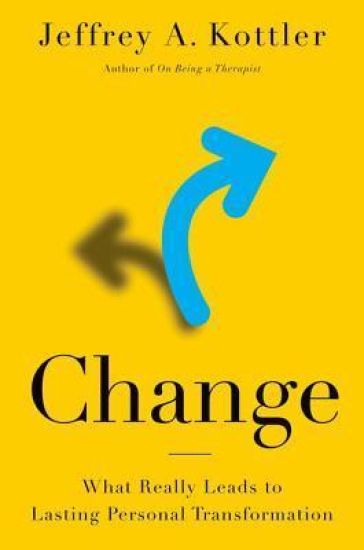
Change

Change

Jeffrey A. Kottler

Oxford University Press Inc
2014
sidottu
Change is often a mystery, one that baffles doctors, therapists, teachers, coaches, parents-and especially those of us who struggle to alter bad habits or simply make lasting improvements in our lives. Why do we suddenly change for the better after years of failed efforts? Why do some of us never escape our self-destructive behaviors, even when we desperately want to? What is it that most reliably and effectively produces growth, learning and development that persist over time? In this vividly written volume, psychotherapist Jeffrey Kottler weaves together inspiring stories and the latest research, taking the reader on a fascinating exploration of human behavior while highlighting what does-and does not-lead to lasting change. Kottler illuminates our many efforts to change-to stop taking drugs, reduce dependencies, leave a destructive relationship, find new and more meaningful work, or adjust to a devastating accident or trauma. Readers are invited to explore key triggers such as hitting bottom, moments of clarity, the power of altruism and service, travel to new surroundings, reading or listening to stories, religious conversion, and much more. Kottler also explores why most changes don't last and what we can do to prevent relapses. Throughout the book, Kottler recounts stories of colleagues and patients-and even recalls episodes from his own life-often moving tales of remarkable, unexpected, and lasting transformation. He looks for instance at a young black basketball star, confined to a wheelchair for life after being shot four times, who turned his life around, becoming a scholar and a PhD. An intriguing glimpse into the complexity of the human psyche, Change will engage anyone who has ever struggled to alter a habit, enrich relationships, recover from disappointment or failure, strive for more meaningful and productive work, deal with anxiety, loneliness, fears, stress, and depression, or transform their lives in any kind of significant way.
Linear Optimal Control

Linear Optimal Control

Jeffrey Burl

Pearson
1999
nidottu
Linear Optimal Control: H2 and H??? Methods is a reader-friendly book that features recent research results on robustness, H??? control, and ???m- synthesis. Linear Optimal Control combines these new results with previous work on optimal control to form a complete picture of control system design and analysis. A comprehensive book, Linear Optimal Control covers the analysis of control systems, H2 (linear quadratic Gaussian), and H??? to a degree not found in many texts. Its logical organization and its focus on establishing a solid grounding in the basics be fore tackling mathematical subtleties make Linear Optimal Control an ideal teaching text.
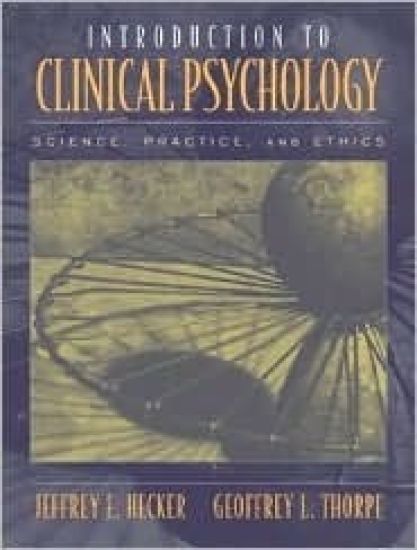
Introduction to Clinical Psychology

Introduction to Clinical Psychology

Jeffrey Hecker; Thorpe Geoffrey

Psychology Press
2004
nidottu
This introductory textbook gives students an appreciation of the field of clinical psychology as an applied science by teaching them the history and future of the field as well as ethical dilemmas facing psychologists today. It is organized around four key themes: • Science: the text analyzes and critiques research and practice in clinical psychology from a scientific perspective. • Controversies: the text examines the conflict and controversies that continue to shape the discipline of Psychology. • Currency: the text surveys the field of contemporary clinical psychology. • Ethics: the text discusses ethical dilemmas faced by clinical psychologists in every chapter.
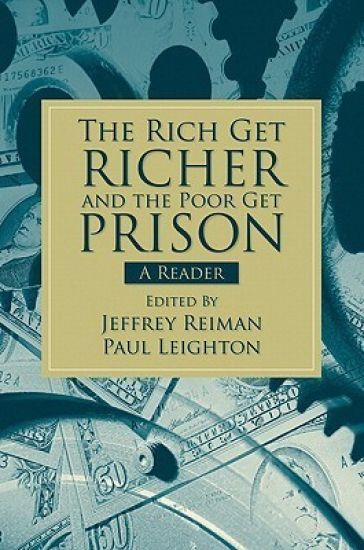
The Rich Get Richer and the Poor Get Prison

The Rich Get Richer and the Poor Get Prison

Jeffrey Reiman; Leighton Paul

Routledge Member of the Taylor and Francis Group
2009
nidottu
This book shows students that much that goes on in the criminal justice system violates their own sense of basic fairness, presents evidence that the system malfunctions, and sketches a whole theoretical perspective from which they might understand the failures and evaluate them morally.
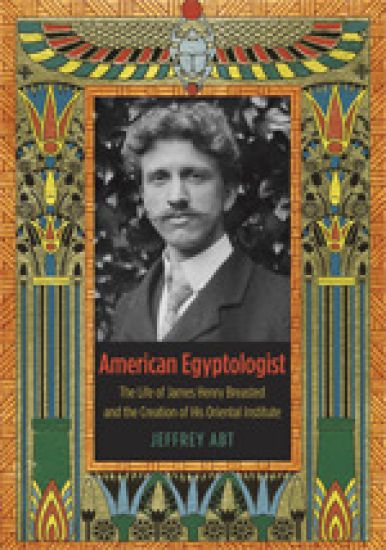
American Egyptologist

American Egyptologist

Jeffrey Abt

University of Chicago Press
2012
sidottu
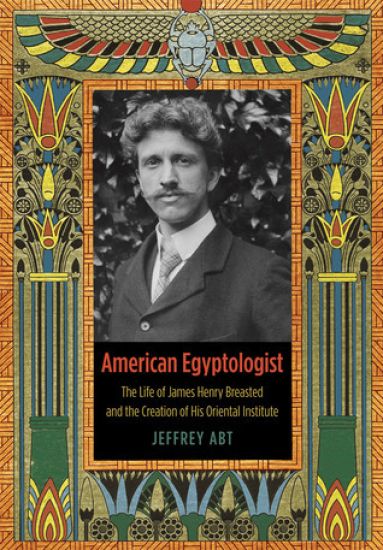
James Henry Breasted (1865-1935) had a career that epitomizes our popular image of the archaeologist. Daring, handsome, and charismatic, he travelled on expeditions to remote and politically unstable corners of the Middle East, helped identify the tomb of King Tut, and was on the cover of "Time" magazine. But Breasted was more than an Indiana Jones - he was an accomplished scholar, academic entrepreneur, and talented author who brought ancient history to life not just for students but for such notables as Teddy Roosevelt and Sigmund Freud. In "American Egyptologist", Jeffrey Abt weaves together the disparate strands of Breasted's life, from his small-town origins following the Civil War to his evolution into the father of American Egyptology and the founder of the Oriental Institute in the early years of the University of Chicago. Abt explores the scholarly, philanthropic, diplomatic, and religious contexts of his ideas and projects, providing insight into the origins of America's most prominent center for Near Eastern archaeology. An illuminating portrait of the nearly forgotten man who demystified ancient Egypt for the general public, "American Egyptologist" restores James Henry Breasted to the world and puts forward a brilliant case for his place as one of the most important scholars of modern times.
American Egyptologist

American Egyptologist

Jeffrey Abt

University of Chicago Press
2013
nidottu
James Henry Breasted (1865-1935) had a career that epitomizes our popular image of the archaeologist. Daring, handsome, and charismatic, he travelled on expeditions to remote and politically unstable corners of the Middle East, helped identify the tomb of King Tut, and was on the cover of "Time" magazine. But Breasted was more than an Indiana Jones - he was also an accomplished scholar, academic, entrepreneur, and talented author who brought ancient history to life not just for students but for such notables as Teddy Roosevelt and Sigmund Freud. In "American Egyptologist", Jeffrey Abt weaves together the disparate strands of Breasted's life, from his small-town origins following the Civil War to his evolution into the father of American Egyptology and the founder of the Oriental Institute in the early years of the University of Chicago. Abt explores the scholarly, philanthropic, diplomatic, and religious contexts of his ideas and projects, providing insight into the origins of America's most prominent center for Near Eastern archaeology. An illuminating portrait of the nearly forgotten man who demystified ancient Egypt for the general public, "American Egyptologist" restores James Henry Breasted to the world and puts forward a brilliant case for his place as one of the most important scholars of modern times.
Democracy against Development

Democracy against Development

Jeffrey Witsoe

University of Chicago Press
2013
sidottu
Hidden behind the much-touted success story of India's emergence as an economic superpower is another, far more complex narrative of the nation's recent history, one in which economic development is frequently countered by profoundly unsettling, and often violent, political movements. In Democracy against Development, Jeffrey Witsoe investigates this counternarrative, uncovering an antagonistic relationship between recent democratic mobilization and development-oriented governance in India. Witsoe looks at the history of colonialism in India and its role in both shaping modern caste identities and linking locally powerful caste groups to state institutions, which has effectively created a postcolonial patronage state. He then looks at the rise of lower-caste politics in one of India's poorest and most populous states, Bihar, showing how this increase in democratic participation has radically threatened the patronage state by systematically weakening its institutions and disrupting its development projects. By depicting democracy and development as they truly are in India - in tension - Witsoe reveals crucial new empirical and theoretical insights about the long-term trajectory of democratization in the larger postcolonial world.
Democracy against Development

Democracy against Development

Jeffrey Witsoe

University of Chicago Press
2013
nidottu
Hidden behind the much-touted success story of India's emergence as an economic superpower is another, far more complex narrative of the nation's recent history, one in which economic development is frequently countered by profoundly unsettling, and often violent, political movements. In Democracy against Development, Jeffrey Witsoe investigates this counternarrative, uncovering an antagonistic relationship between recent democratic mobilization and development-oriented governance in India. Witsoe looks at the history of colonialism in India and its role in both shaping modern caste identities and linking locally powerful caste groups to state institutions, which has effectively created a postcolonial patronage state. He then looks at the rise of lower-caste politics in one of India's poorest and most populous states, Bihar, showing how this increase in democratic participation has radically threatened the patronage state by systematically weakening its institutions and disrupting its development projects. By depicting democracy and development as they truly are in India - in tension - Witsoe reveals crucial new empirical and theoretical insights about the long-term trajectory of democratization in the larger postcolonial world.
Sexual Discretion

Sexual Discretion

Jeffrey Q. McCune

University of Chicago Press
2014
sidottu
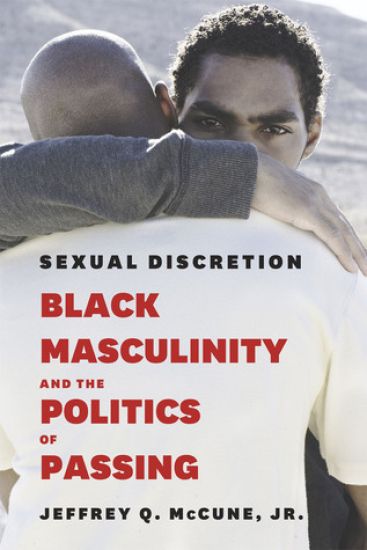
African American men who have sex with men while maintaining a heterosexual lifestyle in public are attracting increasing interest from both the general media and scholars. Commonly referred to as "down low" or "DL" men, many continue to have relationships with girlfriends and wives who remain unaware of their same-sex desires, and in much of the media, DL men have been portrayed as carriers of HIV who spread the virus to black women. Sexual Discretion explores the DL phenomenon, offering refreshingly innovative analysis of the significance of media, space, and ideals of black masculinity in understanding down low communities. In Sexual Discretion, Jeffrey Q. McCune Jr. provides the first in-depth examination of how the social expectations of black masculinity intersect and complicate expressions of same-sex affection and desire. Within these underground DL communities, men aren't as highly policed-and thus are able to maintain their public roles as "properly masculine." McCune draws from sources that range from R&B singer R. Kelly's epic hip-hopera series "Trapped in the Closet" to Oprah's high-profile expose on DL subculture; from E. Lynn Harris' contemporary sexual passing novels to McCune's own interviews and ethnography in nightclubs and online chat rooms. Sexual Discretion details the causes, pressures, and negotiations driving men who rarely disclose their intimate secrets.
In the House of the Hangman

In the House of the Hangman

Jeffrey K. Olick

University of Chicago Press
2013
nidottu
The central question for both the victors and the vanquished of World War II was just how widely the stain of guilt would spread over Germany. Political leaders and intellectuals on both sides of the conflict debated whether support for National Socialism tainted Germany's entire population and thus discredited the nation's history and culture. The tremendous challenge that Allied officials and German thinkers faced as the war ended, then, was how to limn a postwar German identity that accounted for National Socialism without irrevocably damning the idea and character of Germany as a whole. In the House of the Hangman chronicles this delicate process, exploring key debates about the Nazi past and German future during the later years of World War II and its aftermath. Jeffrey K. Olick explores the processes of accommodation and rejection that Allied plans for a new German state inspired among the German intelligentsia. He also examines heated struggles over the value of Germany's institutional and political heritage. Along the way, he demonstrates how the moral and political vocabulary for coming to terms with National Socialism in Germany has been of enduring significance - as a crucible not only of German identity but also of contemporary thinking about memory and social justice more generally.
Secret Body – Erotic and Esoteric Currents in the History of Religions
Over the course of his twenty-five-year career, Jeffrey J. Kripal's study of religion has had two major areas of focus: the erotic expression of mystical experience and the rise of the paranormal in American culture. This book brings these two halves together in surprising ways through a blend of memoir, manifesto, and anthology, drawing new connections between these two realms of human experience and revealing Kripal's body of work to be a dynamic whole that has the potential to renew and reshape the study of religion. Kripal tells his story, biographically, historically and politically contextualizing each of the six books of his Chicago corpus, from Kali's Child to Mutants and Mystics, all the while answering his censors and critics and exploring new implications of his thought. In the process, he begins to sketch out a speculative "new comparativism" in twenty theses. The result is a new vision for the study of religion, one that takes in the best of the past, engages with outside critiques from the sciences and the humanities, and begins to blaze a new positive path forward. A major work decades in the making, Secret Body will become a landmark in the study of religion.
Crucibles of Black Empowerment

Crucibles of Black Empowerment

Jeffrey Helgeson

University of Chicago Press
2014
sidottu
The term "community organizer" was deployed repeatedly against Barack Obama during the 2008 presidential campaign as a way to paint him as an inexperienced politician unfit for the presidency. The implication was that the job of a community organizer wasn't a serious one, and that it certainly wasn't on the list of credentials needed for a presidential resume. In reality, community organizers have played key roles in the political lives of American cities for decades, perhaps never more so than during the 1970s in Chicago, where African Americans laid the groundwork for further empowerment as they organized against segregation, discrimination, and lack of equal access to schools, housing, and jobs. In Crucibles of Black Empowerment, Jeffrey Helgeson recounts the rise of African American political power and activism from the 1930s onward, revealing how it was achieved through community building. His book tells stories of the housewives who organized their neighbors, building tradesmen who used connections with federal officials to create opportunities in a deeply discriminatory sector, and the social workers, personnel managers, and journalists who carved out positions in the white-collar workforce. Looking closely at black liberal politics at the neighborhood level in Chicago, Helgeson explains how black Chicagoans built the networks that eventually would overthrow the city's seemingly invincible political machine.
Mutants and Mystics

Mutants and Mystics

Jeffrey J. Kripal

University of Chicago Press
2015
nidottu
In many ways, twentieth-century America was the land of superheroes and science fiction. From Superman and Batman to the Fantastic Four and the X-Men, these pop-culture juggernauts, with their "powers and abilities far beyond those of mortal men," thrilled readers and audiences - and simultaneously embodied a host of our dreams and fears about modern life and the onrushing future. But that's just scratching the surface, says Jeffrey J. Kripal. In Mutants and Mystics, Kripal offers a brilliantly insightful account of how comic book heroes have helped their creators and fans alike explore and express a wealth of paranormal experiences ignored by mainstream science. Delving deeply into the work of major figures in the field - from Jack Kirby's cosmic superhero sagas and Philip K. Dick's futuristic head - trips to Alan Moore's sex magic and Whitley Strieber's communion with visitors - Kripal shows how creators turned to science fiction to convey the reality of the inexplicable and the paranormal they experienced in their lives. Expanded consciousness found its language in the metaphors of sci-fi-incredible powers, unprecedented mutations, time-loops, and vast intergalactic intelligences - and the deeper influences of mythology and religion that these in turn drew from; the wildly creative work that followed caught the imaginations of millions. A bravura performance, beautifully illustrated in full color throughout and brimming over with incredible personal stories, Mutants and Mystics is that rarest of things: a book that is guaranteed to broaden-and maybe even blow-your mind.
Beyond Glasnost

Beyond Glasnost

Jeffrey C. Goldfarb

University of Chicago Press
1992
nidottu
"Beyond Glasnost is a thoughtful exploration of the past decade's cultural and political ferment in Eastern Europe. It is also something else: an argument—in a deceptively unassuming, anti-ideological voice—about how to conceive of and move toward freedom; an argument that could hardly be more relevant to the roiling debates on the Western left."—Ellen Willis, Village Voice
On Cultural Freedom

On Cultural Freedom

Jeffrey C. Goldfarb

University of Chicago Press
1983
nidottu
In this timely study, Jeffrey C. Goldfarb explores the nature and prospects of cultural freedom by examining the conditions that favor or threaten its development in the political East and West. Goldfarb—who examines conditions in the Soviet Union, the United States, and their respective European allies—focuses most closely upon Poland and the United States. He investigates a wide range of concrete cases, including the Polish opposition movement and Solidarity, the migration of artists, the American television and magazine industries, American philanthropy, and communist cultural conveyor belts. From these cases, Goldfarb derives a definitive set of sociological conditions for cultural freedom: critical creativity which resists systematic constraints, continuity of cultural tradition, and a relatively autonomous public realm for the reception of culture. Cultural freedom, Goldfarb shows, is not a static state but a process of achievement. Its parameters and content are determined by social practice in cultural institutions and by their relations with other components and the totality of social structure. So defined, cultural freedom is transformed from an ideological concept into one with real critical and analytical power. Through it we can appreciate the invisible nature of constraint in the West and the unapparent but acting supports of cultural freedom existing in socialist countries. Most importantly, Goldfarb's conclusions provide a framework for understanding more clearly than before the circumstance of cultural freedom in both East and West so that citizens may utilize their full creative abilities as they address the problems of the present day.
The Cynical Society

The Cynical Society

Jeffrey C. Goldfarb

University of Chicago Press
1991
sidottu
The Cynical Society is a study of the political despair and abdication of (individual) responsibility Goldfarb calls cynicism—a central but unexamined aspect of contemporary American political and social life. Goldfarb reveals with vivid strokes how cynicism undermines our capacity to think about society's strengths and weaknesses. Drawing on thinkers from Alexis de Tocqueville to Allan Bloom and on such recent works as Beloved, Bonfire of the Vanities, and Mississippi Burning, The Cynical Society celebrates cultural pluralism's role in democracy.
The Cynical Society

The Cynical Society

Jeffrey C. Goldfarb

University of Chicago Press
1992
nidottu
The Cynical Society is a study of the political despair and abdication of (individual) responsibility Goldfarb calls cynicism—a central but unexamined aspect of contemporary American political and social life. Goldfarb reveals with vivid strokes how cynicism undermines our capacity to think about society's strengths and weaknesses. Drawing on thinkers from Alexis de Tocqueville to Allan Bloom and on such recent works as Beloved, Bonfire of the Vanities, and Mississippi Burning, The Cynical Society celebrates cultural pluralism's role in democracy.