Kirjojen hintavertailu. Mukana 12 083 983 kirjaa ja 12 kauppaa.

Kirjahaku

Etsi kirjoja tekijän nimen, kirjan nimen tai ISBN:n perusteella.

1000 tulosta hakusanalla Jill Eileen Smith; Guideposts

Tackling Under-performance in Teachers

Tackling Under-performance in Teachers

Jill Earnshaw; Lorrie Marchington; Eve Ritchie; Derek Torrington

Routledge
2003
sidottu
All headteachers will be faced with a member of staff who is under performing at some stage in their career, but knowing how to deal with the problem to everyone's benefit is not always easy.Through the use of case studies the expert authors examine ways under-performance can be handled in a range of circumstances. Clear guidance is given on procedures that should be followed to ensure actions are within a legal framework and within current directives on performance management.Key sections include:* how to handle capability issues* ill health and capability* procedures and the legal framework* performance management.Tackling Under-performance in Teachers will be a valuable resource for headteachers, school governors and LEA officers involved in school management.
Tackling Under-performance in Teachers

Tackling Under-performance in Teachers

Jill Earnshaw; Lorrie Marchington; Eve Ritchie; Derek Torrington

Routledge
2003
nidottu
All headteachers will be faced with a member of staff who is under performing at some stage in their career, but knowing how to deal with the problem to everyone's benefit is not always easy.Through the use of case studies the expert authors examine ways under-performance can be handled in a range of circumstances. Clear guidance is given on procedures that should be followed to ensure actions are within a legal framework and within current directives on performance management.Key sections include:* how to handle capability issues* ill health and capability* procedures and the legal framework* performance management.Tackling Under-performance in Teachers will be a valuable resource for headteachers, school governors and LEA officers involved in school management.
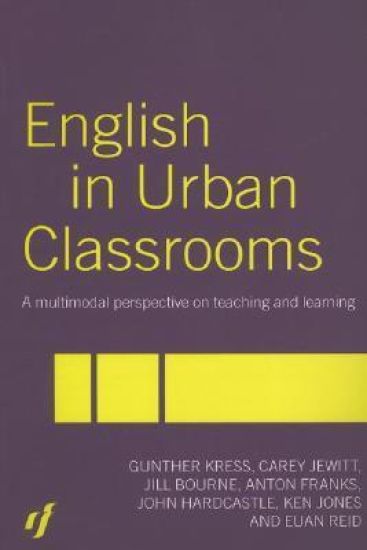
English in Urban Classrooms

English in Urban Classrooms

Jill Bourne; Anton Franks; John Hardcastle; Carey Jewitt; Ken Jones; Gunther Kress; Euan Reid

Routledge
2004
sidottu
English in Urban Classrooms is a ground-breaking text that spans a range of issues central to school English today. It extends not only to the spoken and written language of classrooms, but also to other modes of representation and communication that are important in English teaching. This includes image, gesture, gaze, movement and spatial organisation.The team of experienced and expert authors collectively examine how English is shaped by policy, institutions and the social relations of the classroom. By connecting issues of policy and social context, the book provides a detailed account of factors such as:the characteristics of urban multi-cultural schoolsteacher formation and traditionthe ethos of school English departmentsthe institutional changes that have shaped school English in urban classroomsstudents' experiences of learning.This book offers a fascinating and enlightening read, not only to those involved in English teaching, but also to educational researchers, policymakers, linguists and those interested in semiotics and multi-modality.
English in Urban Classrooms

English in Urban Classrooms

Jill Bourne; Anton Franks; John Hardcastle; Carey Jewitt; Ken Jones; Gunther Kress; Euan Reid

Routledge
2004
nidottu
English in Urban Classrooms is a ground-breaking text that spans a range of issues central to school English today. It extends not only to the spoken and written language of classrooms, but also to other modes of representation and communication that are important in English teaching. This includes image, gesture, gaze, movement and spatial organisation.The team of experienced and expert authors collectively examine how English is shaped by policy, institutions and the social relations of the classroom. By connecting issues of policy and social context, the book provides a detailed account of factors such as:the characteristics of urban multi-cultural schoolsteacher formation and traditionthe ethos of school English departmentsthe institutional changes that have shaped school English in urban classroomsstudents' experiences of learning.This book offers a fascinating and enlightening read, not only to those involved in English teaching, but also to educational researchers, policymakers, linguists and those interested in semiotics and multi-modality.
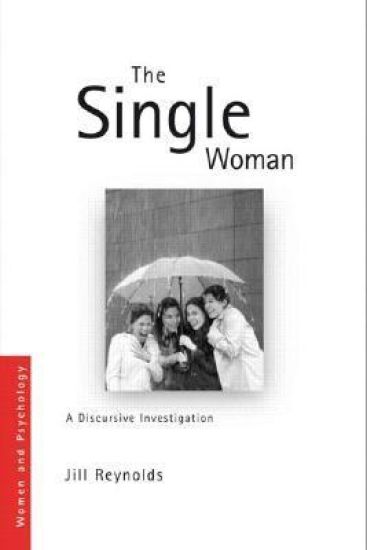
The Single Woman

The Single Woman

Jill Reynolds

Routledge
2008
nidottu
The increase in numbers of single people has been described as one of the greatest social phenomena of western society. Most women will spend periods of their lives alone, without a committed partner relationship. Yet there is still a degree of social stigma attached to this status. Single women are a crucial group for study in relation to perceived changes in family life and relationships. This book provides a new understanding of what is often taken-for-granted – female single identity.In an examination of extracts from her interviews with women aged 30 to 60 years and living alone, Jill Reynolds explores how women deal with this potentially stigmatized identity. She focuses on identity and self-representation through consideration of discourse and the conversational moves made by the participants. Her analysis highlights that the culturally available and familiar resources for understanding singleness are highly polarized. Single women weave their way through the extreme contrasts of a denigrated or an empowered identity. Thus, while most participants give very positive accounts, they also pay attention to widespread social expectations that success in life involves a long-term committed relationship.This book makes an important contribution to the understanding of the lives of single women and represents a challenge to the considerable literature on gender and family life which has inadequately theorized singleness. It will be of great interest to academics and students in social psychology, sociology, social work and social policy. It will also be of particular interest to students of gender studies, qualitative research, narrative studies, conversation analysis and discourse analysis.
Research Methods in Second Language Psycholinguistics

Research Methods in Second Language Psycholinguistics

Jill Jegerski; Bill VanPatten

Routledge
2018
sidottu
Addressing a rapidly growing interest in second language research, this hands-on text provides students and researchers with the means to understand and use current methods in psycholinguistics. With a focus on the actual methods, designs, and techniques used in psycholinguistics research as they are applied to second language learners, this book offers the practical guidance readers need to determine which method is the best for what they wish to investigate as well as the tools that will enhance their research. Each methods chapter is written by a leading expert who describes, discusses, and comments on how a method is used and what its strengths and limitations are for second language research. These chapters follow a specific format to ensure cohesion and a predictable structure across all chapters. The chapters also inform the novice researcher on such key issues as ease of use, costs, potential pitfalls, and other related matters, each of which impact decisions that researchers make about the paths they take. With the most reliable information available from experienced reseachers, Research Methods in Second Language Psycholinguistics is an essential resource for anyone interested in conducting second language reserach using psycholinguistic methods.
Research Methods in Second Language Psycholinguistics

Research Methods in Second Language Psycholinguistics

Jill Jegerski; Bill VanPatten

Routledge
2013
nidottu
Addressing a rapidly growing interest in second language research, this hands-on text provides students and researchers with the means to understand and use current methods in psycholinguistics. With a focus on the actual methods, designs, and techniques used in psycholinguistics research as they are applied to second language learners, this book offers the practical guidance readers need to determine which method is the best for what they wish to investigate as well as the tools that will enhance their research. Each methods chapter is written by a leading expert who describes, discusses, and comments on how a method is used and what its strengths and limitations are for second language research. These chapters follow a specific format to ensure cohesion and a predictable structure across all chapters. The chapters also inform the novice researcher on such key issues as ease of use, costs, potential pitfalls, and other related matters, each of which impact decisions that researchers make about the paths they take. With the most reliable information available from experienced reseachers, Research Methods in Second Language Psycholinguistics is an essential resource for anyone interested in conducting second language reserach using psycholinguistic methods.
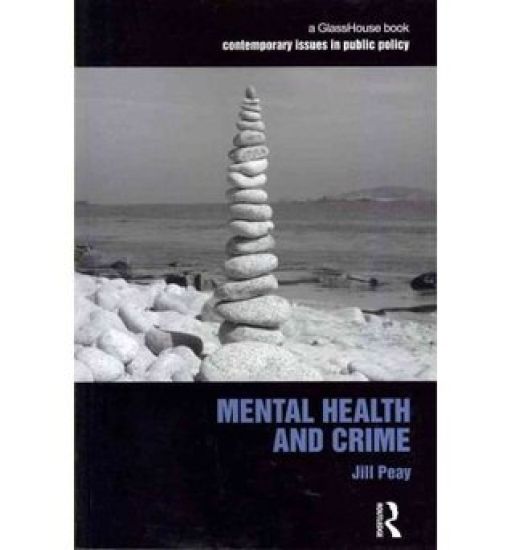
Mental Health and Crime

Mental Health and Crime

Jill Peay

Routledge Cavendish
2012
nidottu
Does mental disorder cause crime? Does crime cause mental disorder? And if either of these could be proved to be true what consequences should stem for those who find themselves deemed mentally disordered offenders? Mental Health and Crime examines the nature of the relationship between mental disorder and crime. It concludes that the broad definition of what is an all too common human condition – mental disorder – and the widespread occurrence of an equally all too common human behaviour – that of offending – would make unlikely any definitive or easy answer to such questions. For those who offend in the context of mental disorder, many aspects of the criminal justice process, and of the disposals that follow, are adapted to take account of a relationship between mental disorder and crime. But if the very relationship is questionable, is the way in which we deal with such offenders discriminatory? Or is it perhaps to their benefit to be thought of as less responsible for their offending than fully culpable offenders? The book thus explores not only the nature of the relationship, but also the human rights and legal issues arising. It also looks at some of the permutations in the therapeutic process that can ensue when those with mental health problems are treated in the context of their offending behaviour.
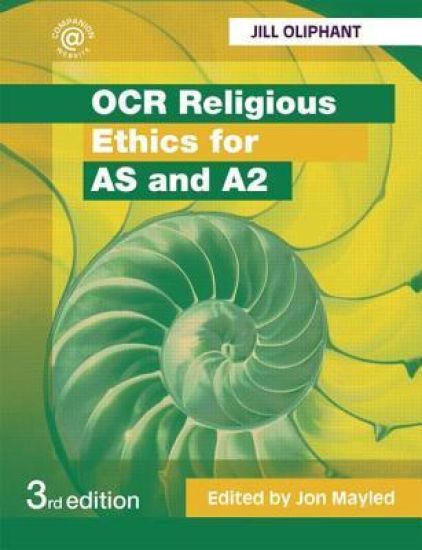
OCR Religious Ethics for AS and A2

OCR Religious Ethics for AS and A2

Jill Oliphant

Routledge
2014
nidottu
Structured directly around the specification of the OCR, this is the definitive textbook for students of Advanced Subsidiary or Advanced Level courses. The updated third edition covers all the necessary topics for Religious Ethics in an enjoyable student-friendly fashion. Each chapter includes: a list of key issuesOCR specification checklistexplanations of key terminologyoverviews of key scholars and theoriesself-test review questionsexam practice questions.To maximise students' chances of success, the book contains a section dedicated to answering examination questions. It comes complete with diagrams and tables, lively illustrations, a comprehensive glossary and full bibliography. Additional resources are available via the companion website.
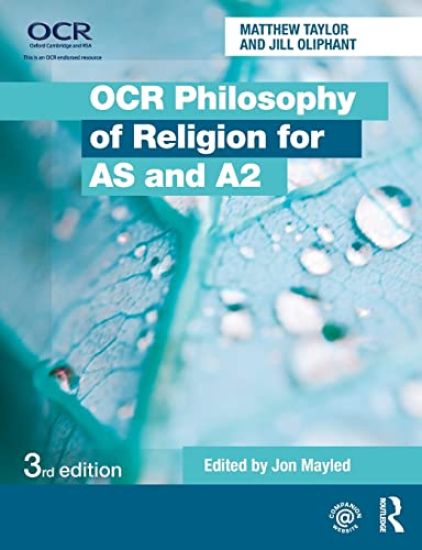
OCR Philosophy of Religion for AS and A2

OCR Philosophy of Religion for AS and A2

Jill Oliphant; Matthew Taylor

Routledge
2015
nidottu
Structured directly around the specification of the OCR, this is the definitive textbook for students of Advanced Subsidiary or Advanced Level courses. The updated third edition covers all the necessary topics for Philosophy of Religion in an enjoyable student-friendly fashion. Each chapter includes: a list of key issues OCR specification checklist explanations of key terminology overviews of key scholars and theories self-test review and exam practice questions.To maximise students’ chances of success, the book contains a section dedicated to answering examination questions. It comes complete with diagrams and tables, lively illustrations, a comprehensive glossary and full bibliography. Additional resources are available via the companion website at www.routledge.com/cw/mayled.
Human Rights Law and Personal Identity
This book explores the role human rights law plays in the formation, and protection, of our personal identities. Drawing from a range of disciplines, Jill Marshall examines how human rights law includes and excludes specific types of identity, which feed into moral norms of human freedom and human dignity and their translation into legal rights. The book takes on a three part structure. Part I traces the definition of identity, and follows the evolution of, and protects, a right to personal identity and personality within human rights law. It specifically examines the development of a right to personal identity as property, the inter-subjective nature of identity, and the intercession of power and inequality. Part II evaluates past and contemporary attempts to describe the core of personal identity, including theories concerning the soul, the rational mind, and the growing influence of neuroscience and genetics in explaining what it means to be human. It also explores the inter-relation and conflict between universal principles and culturally specific rights. Part III focuses on issues and case law that can be interpreted as allowing self-determination. Marshall argues that while in an age of individual identity, people are increasingly obliged to live in conformed ways, pushing out identities that do not fit with what is acceptable. Drawing on feminist theory, the book concludes by arguing how human rights law would be better interpreted as a force to enable respect for human dignity and freedom, interpreted as empowerment and self-determination whilst acknowledging our inter-subjective identities.In drawing on socio-legal, philosophical, biological and feminist outlooks, this book is truly interdisciplinary, and will be of great interest and use to scholars and students of human rights law, legal and social theory, gender and cultural studies.
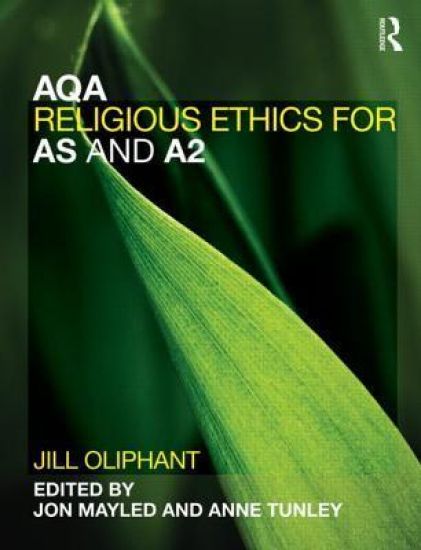
AQA Religious Ethics for AS and A2

AQA Religious Ethics for AS and A2

Jill Oliphant

Routledge
2011
nidottu
Structured directly around the specification of the AQA, this is the definitive textbook for students of Advanced Subsidiary or Advanced Level courses. It covers all the necessary topics for Religious Ethics in an enjoyable student-friendly fashion. Each chapter includes: a list of key issuesAQA specification checklistexplanations of key terminologyhelpful summariesself-test review questionsexam practice questions.To maximise students' chances of exam success, the book contains a section dedicated to answering examination questions. It comes complete with lively illustrations, a comprehensive glossary, full bibliography and a companion website.
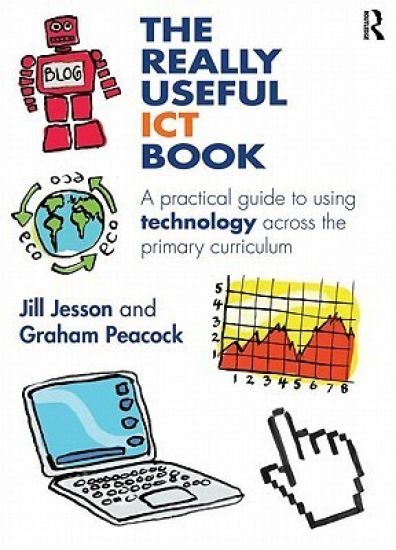
The Really Useful ICT Book

The Really Useful ICT Book

Jill Jesson; Graham Peacock

Routledge
2011
nidottu
The Really Useful ICT Book is a practical and easy-to-use guide to give you all the confidence you need to use ICT really effectively inside and outside the primary classroom. It makes clear how ICT can be taught as a standalone subject, and how it can be used easily and imaginatively to enhance teaching other subjects. Jam-packed with ideas and templates to save you time, this friendly handbook offers an introduction to: using ICT inside the classroom – including interactive whiteboards, computer suites, VLEs and e-safety using ICT outside the classroom – including word processors, laptops, data loggers and digital cameras when and how to use a wide range of software and hardware – from spreadsheet packages through to digital photography, e-portfolios and software simulation using ICT in all subject areas practical suggestions for using ICT in cross-curricular topics using ICT to develop teacher and pupil creativity using ICT for assessment and in your professional role.With an emphasis on developing children’s creativity and on progression from Key Stage 1 to Key Stage 2, The Really Useful ICT Book is a comprehensive compendium of advice and inspiration for all training, newly qualified and experienced teachers, as well as those in support roles in primary schools.
Women in Nazi Society

Women in Nazi Society

Jill Stephenson

Routledge
2012
sidottu
This fascinating book examines the position of women under the Nazis. The National Socialist movement was essentially male-dominated, with a fixed conception of the role women should play in society; while man was the warrior and breadwinner, woman was to be the homemaker and childbearer. The Nazi obsession with questions of race led to their insisting that women should be encouraged by every means to bear children for Germany, since Germany’s declining birth rate in the 1920s was in stark contrast with the prolific rates among the 'inferior' peoples of eastern Europe, who were seen by the Nazis as Germany’s foes. Thus, women were to be relieved of the need to enter paid employment after marriage, while higher education, which could lead to ambitions for a professional career, was to be closed to girls, or, at best, available to an exceptional few. All Nazi policies concerning women ultimately stemmed from the Party’s view that the German birth rate must be dramatically raised.
The Nazi Organisation of Women

The Nazi Organisation of Women

Jill Stephenson

Routledge
2012
sidottu
The Nazi’s were implacably opposed to feminism and women’s independence. Rosa Luxemburg became a symbol of all that most horrified them in German society, in particular because of her involvement in active politics. Nazi ideology saw women in the activist role of 'wives, mothers and home-makers', and their task was to support their fighting menfolk by providing food and making and mending uniforms and flags.The miscellany of women’s organisations was dissolved and reunified by Gregor Strasser in 1931, and in 1934 Gertrud Scholtz-Klink became an overall leader of the Nazi Women’s Group, after which it functioned primarily as a propaganda channel. Part of the policy of Gleichschaltung (co-ordination) meant that even to join a sewing group, women had to choose the party group or nothing. This book provides a detailed and fascinating picture of the origins, development and functions of the specifically women’s organisations associated with the NSDAP from their beginnings in the early 1920s, until their demise in 1945. It traces the history of the Nazi Women’s Group, the sources of its members and analyses their ambitions and hopes from the Frauenwerk. Its purpose is above all to make an important contribution to the study of National Socialism as a movement which attracted and held the enthusiasm of a small minority of Germans who, given the chance from 1933, attempted to impose their will on the majority.
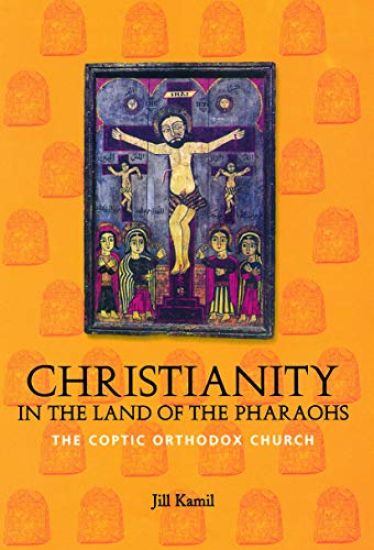
Christianity in the Land of the Pharaohs
The Copts - the indigenous Christians of Egypt - declared their independence from Byzantine Christianity when they appointed their own patriarchs in the sixth century. Jill Kamil has written an angaging and accessible survey of the history of Christianity on Egypt, through its development under Rome, Byzantium and Islam, to modern times.Drawing on personal travel to all the Christian sites of Egypt, and conversations with scholars, monks, museum directors, and scores of lay Egyptians both Copt and Muslim, the author tells us about the fundamental importance of Coptic religion and culture in Egypt. Weaving together historical research with absorbing stories, she explores questions as:* How did Christianity suceed in an Egypt that already had an established religion which had lasted for more than 300 years?* What part did Egypt play in the evolvement of the early Christian movement?* What led the Copts to develop monasticism?* Why were there so many Egyptian martyrs?* What caused the Coptic Church to break away from the rest of orthodox Christianity in the sixth century AD?Lavishly illustrated with more than 120 photographs, drawings and maps, Christianity in the Land of the Pharaohs offers a captivating insight into a side if Egypt that will be new to many readers. It is ideal not only for students of Egyptian history and Christianity, as well as those with a more general interst in Egypt's past and present.
Classroom Language: What Sort (RLE Edu O)
The acquisition and use of language are just as vital to children’s learning when the newer classroom methods are being employed as ever they were when the more traditional approaches were being used. Child centred learning has increasingly influenced language use and language work in the classroom – mainly in the primary sector, but also in the teaching of English, and indirectly in the teaching of other subject areas including the sciences.Interest in school learning and the special language it requires, compared with the language demands of everyday life, have recently developed in answer to the concern about allocation of the time available within the school timetable for each subject-based learning experience.In this volume the author focuses mainly on the language of subject learning in the secondary schools. She looks critically at some current notions concerned with language and learning and examines their translation into classroom practice. She then develops a picture of the language demands made by other subject areas using collected language material and finally, in the light of this evidence, she attempts to identify the range of language in everyday use in schools, goes on to draw conclusions and then makes recommendations.
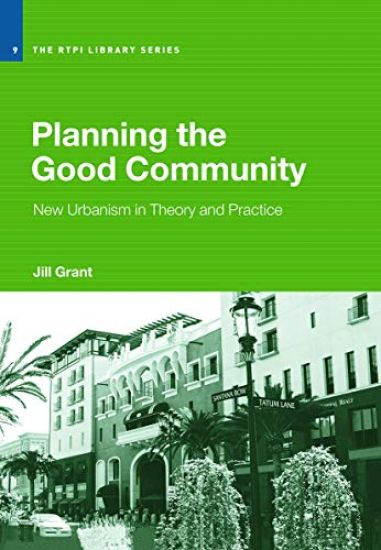
Planning the Good Community

Planning the Good Community

Jill Grant

Routledge
2005
sidottu
An examination of new urban approaches both in theory and in practice. Taking a critical look at how new urbanism has lived up to its ideals, the author asks whether new urban approaches offer a viable path to creating good communities.With examples drawn principally from North America, Europe and Japan, Planning the Good Community explores new urban approaches in a wide range of settings. It compares the movement for urban renaissance in Europe with the New Urbanism of the United States and Canada, and asks whether the concerns that drive today’s planning theory – issues like power, democracy, spatial patterns and globalisation- receive adequate attention in new urban approaches. The issue of aesthetics is also raised, as the author questions whether communities must be more than just attractive in order to be good.With the benefit of twenty years’ hindsight and a world-wide perspective, this book offers the reader unparalleled insight as well as a rigorous and considered critical analysis.
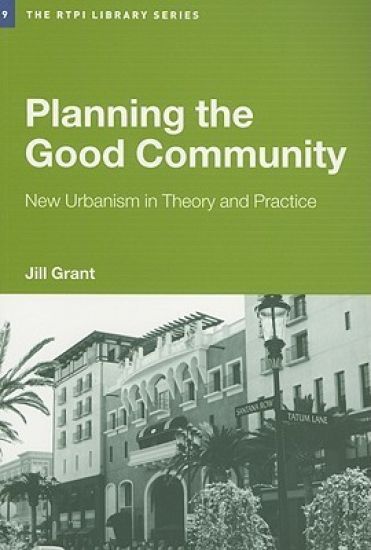
Planning the Good Community

Planning the Good Community

Jill Grant

Routledge
2005
nidottu
An examination of new urban approaches both in theory and in practice. Taking a critical look at how new urbanism has lived up to its ideals, the author asks whether new urban approaches offer a viable path to creating good communities.With examples drawn principally from North America, Europe and Japan, Planning the Good Community explores new urban approaches in a wide range of settings. It compares the movement for urban renaissance in Europe with the New Urbanism of the United States and Canada, and asks whether the concerns that drive today’s planning theory – issues like power, democracy, spatial patterns and globalisation- receive adequate attention in new urban approaches. The issue of aesthetics is also raised, as the author questions whether communities must be more than just attractive in order to be good.With the benefit of twenty years’ hindsight and a world-wide perspective, this book offers the reader unparalleled insight as well as a rigorous and considered critical analysis.
The Nazi Organisation of Women

The Nazi Organisation of Women

Jill Stephenson

Routledge
2014
nidottu
The Nazi’s were implacably opposed to feminism and women’s independence. Rosa Luxemburg became a symbol of all that most horrified them in German society, in particular because of her involvement in active politics. Nazi ideology saw women in the activist role of 'wives, mothers and home-makers', and their task was to support their fighting menfolk by providing food and making and mending uniforms and flags.The miscellany of women’s organisations was dissolved and reunified by Gregor Strasser in 1931, and in 1934 Gertrud Scholtz-Klink became an overall leader of the Nazi Women’s Group, after which it functioned primarily as a propaganda channel. Part of the policy of Gleichschaltung (co-ordination) meant that even to join a sewing group, women had to choose the party group or nothing. This book provides a detailed and fascinating picture of the origins, development and functions of the specifically women’s organisations associated with the NSDAP from their beginnings in the early 1920s, until their demise in 1945. It traces the history of the Nazi Women’s Group, the sources of its members and analyses their ambitions and hopes from the Frauenwerk. Its purpose is above all to make an important contribution to the study of National Socialism as a movement which attracted and held the enthusiasm of a small minority of Germans who, given the chance from 1933, attempted to impose their will on the majority.