Kirjojen hintavertailu. Mukana 11 342 296 kirjaa ja 12 kauppaa.

Kirjahaku

Etsi kirjoja tekijän nimen, kirjan nimen tai ISBN:n perusteella.

1000 tulosta hakusanalla John Kitchen

John Donne: The Critical Heritage
Contains writings about John Donne from 1873 to 1923, including Henry Morley, Edmund Gosse, W.F. Collier, Rudyard Kipling, Charles Eliot Norton, Henry Augustin Beers, Thomas Hardy, W.B. Yeats, Ezra Pound, T.S. Eliot, and many others. Together these works present a record of how, from the nineteenth century onwards, critics viewed Donne, and how he became part of today's literary canon.
John Skelton

John Skelton

Routledge
2015
nidottu
The Critical Heritage gathers together a large body of critical sources on major figures in literature. Each volume presents contemporary responses to a writer's work, enabling student and researcher to read the material themselves.
John Stuart Mill on Economic Theory and Method
This book, the third in the series of Samuel Hollander's essays, covers twelve key studies on the economic theory and method of John Stuart Mill. This volume provides an accessible sourcebook on Mill's relationship with David Ricardo, and the 'Classical School', as well as confirming his relevance for modern economics and for the place of economics within the social sciences.
John Ruskin's Political Economy

John Ruskin's Political Economy

William Henderson

Routledge
2014
nidottu
This volume offers an exciting new reading of John Ruskin's economic and social criticism, based on recent research into rhetoric in economics. Willie Henderson uses notions derived from literary criticism, the rhetorical turn in economics and more conventional approaches to historical economic texts to reevaluate Ruskins economic and social criticism. By identifying Ruskin's rhetoric, and by reading his work through that of Plato, Xenophon, and John Stuart Mill, Willie Henderson reveals how Ruskin manipulated a knowledge base. Moreover in analysis of the writings of William Smart, John Bates Clark and Alfred Marshall, the author shows that John Ruskin's influence on the cultural significance of economics and on notions of economic well-being has been considerable.
John Winthrop

John Winthrop

Michael Parker

Routledge
2013
sidottu
Puritan politician, lawyer, and lay theologian John Winthrop fled England in 1630 when it looked like Charles I had successfully blocked all hopes of passing Puritan-inspired reforms in Parliament. Leading a migration, he came to New England in the hopes of creating an ideal Puritan community and eventually became the governor of Massachusetts. Winthrop is remembered for his role in the Puritan migration to the colonies and for delivering what is probably the most famous lay sermon in American history, "A Model of Christian Charity." In it he proclaimed that New England would be "a city upon a hill"--an example for future colonies. In John Winthrop: Founding the City upon a Hill, Michael Parker examines the political and religious history of this iconic figure. In this short biography, bolstered by letters, sermons, and maps, John Winthrop introduces students to the colonial world, the Pequot Wars, and the history of American Exceptionalism.
John Winthrop

John Winthrop

Michael Parker

Routledge
2013
nidottu
Puritan politician, lawyer, and lay theologian John Winthrop fled England in 1630 when it looked like Charles I had successfully blocked all hopes of passing Puritan-inspired reforms in Parliament. Leading a migration, he came to New England in the hopes of creating an ideal Puritan community and eventually became the governor of Massachusetts. Winthrop is remembered for his role in the Puritan migration to the colonies and for delivering what is probably the most famous lay sermon in American history, "A Model of Christian Charity." In it he proclaimed that New England would be "a city upon a hill"--an example for future colonies. In John Winthrop: Founding the City upon a Hill, Michael Parker examines the political and religious history of this iconic figure. In this short biography, bolstered by letters, sermons, and maps, John Winthrop introduces students to the colonial world, the Pequot Wars, and the history of American Exceptionalism.
John Brown and the Era of Literary Confrontation
Radical abolitionist and freedom-fighter John Brown inspired literary America to confrontation during his short but dramatic career as a public figure in antebellum America. Emerging from obscurity during the violent struggle to determine how Kansas would enter the Union in 1856, John Brown captured the imagination of the most prominent Eastern literary figures following his dramatic, though failed raid on Harper’s Ferry. Impressed by Brown’s forthright defense of his attempt to initiate the end of slavery, Whittier, Whitman, Melville, Longfellow, and Howells responded to the abolitionist with poetic tributes suggesting that Brown was a liberating hero, while Emerson and Thoreau celebrated his effort to inspire the nation to a new moral awareness of the common humanity of all men. Responses, however, were not uniform, as these and other figures debated the merits and meanings of Brown’s actions. This exceptional book sheds new light on how John Brown inspired America’s most significant intellects to take a public stand against the inertia of moral compromise and social degeneracy, bringing the nation to the brink of civil war.
John Dos Passos
This set comprises 40 volumes covering 19th and 20th century European and American authors. These volumes will be available as a complete set, mini boxed sets (by theme) or as individual volumes. This second set complements the first 68 volume set of Critical Heritage published by Routledge in October 1995.
John Locke

John Locke

Geraint Parry

Routledge
2013
nidottu
From earliest times Locke's writings have been the subject of controversy. An intellectual caught up in the politics of late 17th century England, his writings on politics reveal a man attempting to combine an analysis of the underlying principles of society with a deep commitment to a specific political stance and party. This study, first published in 1978 explains why Locke's vision of political life has continued to fascinate political thinkers of many different persuasions.
John Lydus and the Roman Past

John Lydus and the Roman Past

Michael Maas

Routledge
2013
nidottu
John Lydus and the Roman Past offers a new interpretation of the emergence of Byzantine society as viewed through the eyes of John Lydus, a sixth-century scholar and civil servant. Maas show that control of classical inheritance was politically contested in the reign of Justinian. He demonstrates how the past could be used to convey legitimacy and social definition at a time of profound change.
John Stuart Mill and Freedom of Expression
The arguments advanced in the second chapter of On Liberty (1859) have become the touchstone for practically every discussion of freedom of speech, yet the broader development of John Stuart Mill's ideas concerning intellectual liberty has generally been neglected. This work attempts to fill that lacuna by looking beyond On Liberty, in order to understand the evolution of Mill's ideas concerning freedom of thought and discussion.
John Clare

John Clare

Routledge
2013
nidottu
The Critical Heritage gathers together a large body of critical sources on major figures in literature. Each volume presents contemporary responses to a writer's work, enabling students and researchers to read for themselves, for example, comments on early performances of Shakespeare's plays, or reactions to the first publication of Jane Austen's novels. The carefully selected sources range from landmark essays in the history of criticism to journalism and contemporary opinion, and little published documentary material such as letters and diaries. Significant pieces of criticism from later periods are also included, in order to demonstrate the fluctuations in an author's reputation. Each volume contains an introduction to the writer's published works, a selected bibliography, and an index of works, authors and subjects.
John Ruskin

John Ruskin

Routledge
2013
nidottu
The Critical Heritage gathers together a large body of critical sources on major figures in literature. Each volume presents contemporary responses to a writer's work, enabling students and researchers to read for themselves, for example, comments on early performances of Shakespeare's plays, or reactions to the first publication of Jane Austen's novels. The carefully selected sources range from landmark essays in the history of criticism to journalism and contemporary opinion, and little published documentary material such as letters and diaries. Significant pieces of criticism from later periods are also included, in order to demonstrate the fluctuations in an author's reputation. Each volume contains an introduction to the writer's published works, a selected bibliography, and an index of works, authors and subjects. The Collected Critical Heritage set will be available as a set of 68 volumes and the series will also be available in mini sets selected by period (in slipcase boxes) and as individual volumes.
John Dryden

John Dryden

Routledge
2013
nidottu
The Critical Heritage gathers together a large body of critical sources on major figures in literature. Each volume presents contemporary responses to a writer's work, enabling students and researchers to read for themselves, for example, comments on early performances of Shakespeare's plays, or reactions to the first publication of Jane Austen's novels. The carefully selected sources range from landmark essays in the history of criticism to journalism and contemporary opinion, and little published documentary material such as letters and diaries. Significant pieces of criticism from later periods are also included, in order to demonstrate the fluctuations in an author's reputation. Each volume contains an introduction to the writer's published works, a selected bibliography, and an index of works, authors and subjects. The Collected Critical Heritage set will be available as a set of 68 volumes and the series will also be available in mini sets selected by period (in slipcase boxes) and as individual volumes.
John F. Kennedy

John F. Kennedy

Jason K. Duncan

Routledge
2014
sidottu
Half a century after his assassination, John F. Kennedy continues to evoke widespread fascination, looming large in America’s historical memory. Popular portrayals often show Kennedy as a mythic, heroic figure, but these depictions can obscure the details of the president’s actual achievements and challenges. Despite the short length of his time in office, during his presidency, Kennedy dealt with many of the issues that would come to define the 1960s, including the burgeoning Cold War and the growing Civil Rights movement.In John F. Kennedy: The Spirit of Cold War Liberalism, Jason K. Duncan explains Kennedy’s significance as a political figure of the 20th century in U.S. and world history. Duncan contextualizes Kennedy’s political career through his personal life and addresses the legacy the president left behind. In a concise narrative supplemented by primary documents, including presidential speeches and critical reviews from the left and right, Duncan builds a biography that elucidates the impact of this iconic president and the history of the 1960s.
John F. Kennedy

John F. Kennedy

Jason K. Duncan

Routledge
2013
nidottu
Half a century after his assassination, John F. Kennedy continues to evoke widespread fascination, looming large in America’s historical memory. Popular portrayals often show Kennedy as a mythic, heroic figure, but these depictions can obscure the details of the president’s actual achievements and challenges. Despite the short length of his time in office, during his presidency, Kennedy dealt with many of the issues that would come to define the 1960s, including the burgeoning Cold War and the growing Civil Rights movement.In John F. Kennedy: The Spirit of Cold War Liberalism, Jason K. Duncan explains Kennedy’s significance as a political figure of the 20th century in U.S. and world history. Duncan contextualizes Kennedy’s political career through his personal life and addresses the legacy the president left behind. In a concise narrative supplemented by primary documents, including presidential speeches and critical reviews from the left and right, Duncan builds a biography that elucidates the impact of this iconic president and the history of the 1960s.
John Cassian and the Reading of Egyptian Monastic Culture
This book examines the method of meditative reading encouraged by John Cassian (c. 360-435) in his ascetic writings, the bulk of which are fictive dialogues that purportedly record the instruction he had received from Egyptial Christian monks. This instruction was at its core an interactive experience, depending upon both the discernment of the master and diligent application of instruction by the student. Driver examines Cassian's understanding of the act of reading and suggests the implications of this for Cassian's monastic teaching and it interprets Cassian's method of reading in light of contemporary discussions of reading and the self.
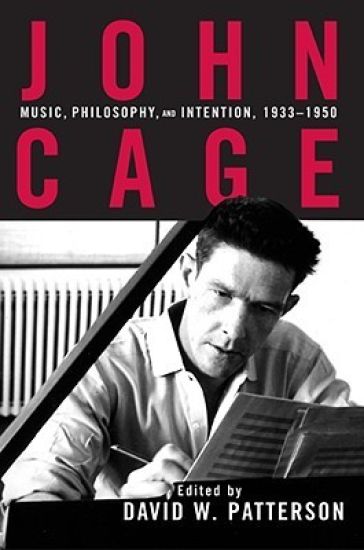
John Cage

John Cage

Routledge
2008
nidottu
John Cage: Music, Philosophy, and Intention, 1933--1950 explores the early part of John Cage’s life and career, concentrating on the "pre-chance" period from roughly 1933 to 1950. These essays consider influences on Cage’s work, his early percussion pieces, his evolving aesthetic, and his movement toward an ideology that would later shape his own work, arguing that a reevaluation of this early period is crucial to understanding his later work. It includes contributions from an international group of music and art scholars.
John Brown and the Era of Literary Confrontation
Radical abolitionist and freedom-fighter John Brown inspired literary America to confrontation during his short but dramatic career as a public figure in antebellum America. Emerging from obscurity during the violent struggle to determine how Kansas would enter the Union in 1856, John Brown captured the imagination of the most prominent Eastern literary figures following his dramatic, though failed raid on Harper’s Ferry. Impressed by Brown’s forthright defense of his attempt to initiate the end of slavery, Whittier, Whitman, Melville, Longfellow, and Howells responded to the abolitionist with poetic tributes suggesting that Brown was a liberating hero, while Emerson and Thoreau celebrated his effort to inspire the nation to a new moral awareness of the common humanity of all men. Responses, however, were not uniform, as these and other figures debated the merits and meanings of Brown’s actions. This exceptional book sheds new light on how John Brown inspired America’s most significant intellects to take a public stand against the inertia of moral compromise and social degeneracy, bringing the nation to the brink of civil war.