Jonathan Franzen is one of the most influential, critically-significant and popular contemporary American novelists. This book is the first full-length study of his work and attempts to articulate where American fiction is headed after postmodernism. Stephen Burn provides a comprehensive analysis of each of Franzen's novels - from his early work to the major success of The Corrections - identifying key sources, delineating important narrative strategies, and revealing how Franzen's themes are reinforced by each novel's structure. Supplementing this analysis with comparisons to key contemporaries, David Foster Wallace and Richard Powers, Burn suggests how Franzen's work is indicative of the direction of experimental American fiction in the wake of the so-called end of postmodernism.
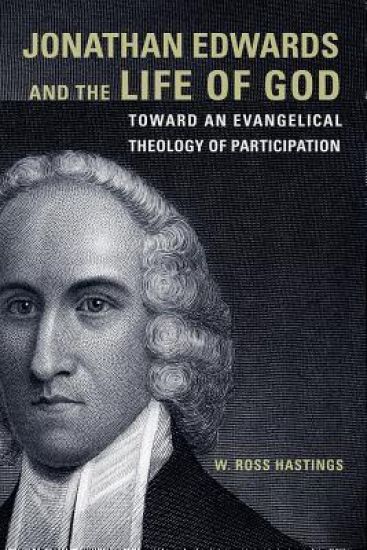
Jonathan Edwards and the Life of God aims to offer a retrieval of Edwards' theology of participation for contemporary evangelical theology. It critically expounds and elucidates the concept of participation in God, or theosis, in Edwards' Trinitarian theology as it relates to around three unions: the three persons of the Trinity, the hypostatic union of the divine and human in Christ, and that of believers with Christ. This volume brings Edwards' rich theological work into conversation with the patristic (Augustine and the Cappadocians) and Reformed traditions (Calvin and, especially, Barth), in order to construct with Edwards a more hopeful, liberating, and truly human version of Christian life. Consideration of the life of God in Edwards thus moves "beyond" in two senses: first, perspectives on participation beyond those of Edwards from Barth, Volf, the Cappadocian Fathers, and others in the tradition, are engaged in order to locate and critique and enhance it; and secondly, in the sense that, as Hastings argues, participation leads, for Edwards and others, into the "beyond" of the beatific vision-the glory of God.
In a work that will be of interest to students and scholars of American Literature, Romanticism, Transcendentalism, the History of Ideas,and Religious Studies, Brad Bannon examines Samuel Taylor Coleridge’s engagement with the philosophical theology of Jonathan Edwards. A closer look at Coleridge’s response to Edwards clarifies the important influence that both thinkers had on seminal works of the nineteenth century, ranging from the antebellum period to the aftermath of the American Civil War—from Poe’s fiction and Emerson’s essays to Melville’s Billy Budd and Crane’s The Red Badge of Courage. Similarly, Coleridge’s early espousal of an abolitionist theology that had evolved from Edwards and been shaped by John Woolman and Olaudah Equiano sheds light on the way that American Romantics later worked to affirm a philosophy of supernatural self-determination. Ultimately, what Coleridge offered the American Romantics was a supernatural modification of Edwards’ theological determinism, a compromise that provided Emerson and other nineteenth-century thinkers with an acceptable extension of an essentially Calvinist theology. Indeed, a thoroughgoing skepticism with respect to salvation, as well as a faith in the absolute inscrutability of Providence, led both the Transcendentalists and the Dark Romantics to speculate freely on the possibility of supernatural self-determination while doubting that anything other than God, or nature, could harness the power of causation.
A fantastical, competitive 2-4 player game for board gamers and fans of the books alike, based on the cult-classic novel by Susanna Clarke.1806. England is beleaguered by the long war, and centuries have passed since magicians faded from view. But one remains...Set during the events of the cult-classic book, Jonathan Strange & Mr Norrell sees players delve into the world of English magic, developing their talents and expanding their social reach as they aim to become the most celebrated magician of the age.Take on the role of an aspiring magician, including the titular characters Jonathan Strange and Mr Norrell themselves, and start them down the path to greatness. Build up your power and status by travelling across Europe and London, performing feats of magic and attending social engagements. The most celebrated magician must face a powerful and dangerous fairy king, the gentleman with the thistle-down hair – but only the strongest will defeat him.Number of Players: 2-4Ages: 14+Playing Time: 60-80 minutesComponents: Map of Europe, 4 Magician boards, 4 Player markers, Fairy marker, 12 Cards of Marseilles, 170+ cards including spells, invitations, Feats of Magic, and more.
Tenants living on the banks of the Mersey once spoke humorously, of their non-paying guests . Small children, animals seen mostly out the corner of the eye, a shadow on the stairs. Then slowly it changed, not so funny now, their whimpering and scampering about in the dead of the night. The elderly shivered in their beds, they pulled the sheets to cover their face, as they watched the shadowy children, they glared back, with gaunt faces, hardly human. 'Lost souls' the old folk whispered, as they crossed themselves. The hauntings became omens, always followed by terrible events. The tenant's children were out of control, wicked and angry. The young men in particular, fell into deep depressions, unable to cope with the sightings and sounds when they were alone. They felt unable to confide, who would believe them? Where had they come from? Why had they attached themselves to the riverside dwellings? Who was Jonathan? They heard his name called eerily in the darkness by a young girl. What part of history had landlocked them, or had they always been there? If the tenants had known the battle that was going on to capture their children's spirits, they would have fled as far as they could, from the murky, haunted, waters of the river