Between 1850 and 1950, at least 115 women were lynched by mobs in the United States. The majority of these women were black. This book examines the phenomenon of the lynching of women, a much more rare occurence than the lynching of men. Over the same hundred year period covered in this text, more than 1,000 white men were lynched, while thousands of black men were murdered by mobs. Of particular importance in this examination is the role of race in lynching, particularly the increase in the number of lynchings of black women as the century progressed. Details are provided--when available--in an attempt to shine a light on this form of deadly mob violence.
This text examines the eyewear industry in America from 1900 to 2008, a period which mirrors an increased demand for eyewear. Eyeglasses, sunglasses and contacts are discussed. Topics covered include the marketing and selling of eyewear with particular attention paid to advertising strategies and the internal structures of the industry and its regulations, which have sometimes helped and sometimes hurt consumers. This critical examination reveals how a relatively simple and functional item such as corrective eyewear could be transformed through marketing into a fashion accessory and a personal statement.
The poverty that drives people to begging has been a pressing social issue in the United States since the beginning. This historical work explores begging1and beggars in the period 1850 to 1940, with emphasis on how the police, the courts, the media and private charity organizations dealt with them. Efforts to suppress mendicancy are explored, including legislation, police crackdowns, and public vouchers for meals and shelter. Of particular interest is the way in which media portrayals have guided public perception of mendicants. Despite the massive social upheavals the last two centuries have brought, all efforts to suppress begging have failed. Many of the complaints and arguments made against beggars and begging in 1850 and 1900 and 1940 were also made into the 21st century because, in the end, the public continued to give alms.
With its decentralized urban areas, pollution, and mostly inadequate public transit systems, America pays a heavy price for its dependency on cars. This volume explores one of the more pressing aspects of the problem--storage--from 1910 to the end of World War II, contrasting the reality and perception of car parking as found in the pages of the popular newspapers and magazines. From early bans on street parking to street widening efforts to the introduction of parking lots, garages, and parking meters, the book chronicles attempts to accommodate the ever-increasing number of cars. By failing to effect any meaningful regulations along the way, this work shows, Americans slowly ceded authority and dominance to the automobile, to the detriment of present-day society.
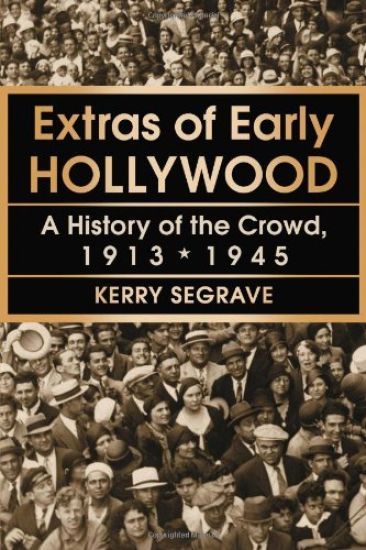
Pity the "extras." Mostly overlooked and forgotten. Especially those in the major Hollywood films 1913 to 1945--right through the dream factory's golden era. The struggles of extras to unionize were followed by internal struggles as the extras fought for a voice within that union. There were just too few jobs for far too many extras, some of whom were lured to Hollywood by what seemed to be rags-to-riches tales of stardom (but which were likely little more than industry publicity plants). Once lured to the film capital the reality was much different: low pay, little or no work, ripoffs from private employment agencies, and sexual harassment of the women, likely very much underreported. Some extras had special skills or language abilities, some had wardrobes replete with many period costumes.
Payola is as old as the music industry and continues today. Contrary to popular belief, the acceptance of payola is legal. (Only the nonreporting of it would be illegal.) The recipients of payola and the reasons behind it are discussed decade-by-decade. The early bribes to the minstrel groups and vaudeville players are traced, as are modern-day payments to disc jockeys and radio station program directors, where drugs are often given instead of cash. Particular attention is paid to 1959 and 1960 when federal investigators attempted to eradicate the practice.
While sexual harassment of women in the workplace has been discussed for decades it is still a pervasive problem. This book looks at the history of that harassment from the 1600s (!) to the early 1990s, from long forgotten domestic servants in England of the 1600s to abused Japanese textile workers of 1900, to Anita Hill in 1991 America. Coverage is worldwide with emphasis on the United States and the period 1800 to the present. Harassment affects women from all walks of life; from unskilled to professional, those in traditionally female jobs, those in traditionally male jobs, and all the rest. Harassment occurs in factories, coal mines, construction sites, law offices, dental offices, government offices, Capitol Hill, and at every other work site. So bad was it in some factories that women took to carrying knives for self-protection. Women have put their economic existence on the line by striking over sexual harassment.
Once the major Hollywood studios got over their loathing of television as an entertainment medium, they moved quickly to try to dominate both domestic and international programming. In the United States, the eight major studios controlled an overwhelming majority of all television programming by the early 1950s. Their efforts in foreign markets were not quite so successful, but by the 1990s U.S. distributors controlled about 75 percent of the international television trade. Hollywood's efforts in television were often thwarted by governments that recognized the airwaves as a public resource and intervened in varying degrees to keep the studios' programing off the air in their countries. Still the U.S. industry found various ways to provide American fare to foreign viewers. Even into the 1980s, for example, some Hollywood shows could be bought by foreign broadcasters for fees as low as $25 per segment. Despite these efforts the American studios have never been able to completely dominate foreign airwaves: Viewers usually prefer their own, domestic fare to that offered by Hollywood. This history fully documents the U.S. television industry's efforts in foreign markets and how it continues to look for new markets.
It is at 31.4 years of age that the average woman multiple murderer kills the first of her 17 victims, whom she usually knows or is related to. The preferred method is poison, usually arsenic. She is more likely to prey on the vulnerable--the very young or the very old--than is her male counterpart. Her killing spree lasts five years; when caught, she shows little remorse. This study of 85 women focuses on those who have killed at least three people, not including themselves in murder-suicide cases. Though the work is international, emphasis is on the United States during the late 19th and 20th centuries. Excluded are accomplices who, though legally guilty of multiple murders, were in fact passive participants. The life of each killer is examined, as well as descriptions of the murders, the methods, and the trial.
Women in policing have seen three phases of acceptance. Beginning in about 1880, they were admitted as police matrons with extremely limited duties. Next they were accepted as policewomen around 1910-1916, when that title was officially bestowed on them. Finally came assignment of females as general duty officers in the late 1960s and early 1970s. Not coincidentally, an active women's movement was the driving force behind all three phases. As women in policing went from matrons to regular officers, they faced harassment and discrimination that only worsened as they neared equality. Many still face it today. This book examines the history of policewomen from 1880 to 2012--particularly in the U.S.--and tells the story of their gradual recognition by the professional establishment of male officers.
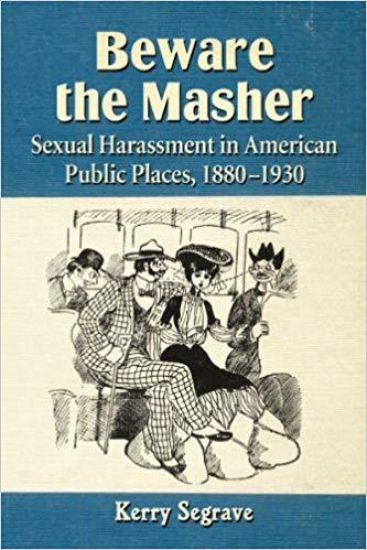
This book examines the history of sexual harassment in America's public places, such as on the streets and on public transit vehicles, in the period 1880 to 1930. Such behavior was referred to then as mashing with the harasser most commonly being called a masher. It began around 1880 as a response to the women's movement as females in America increased their efforts to gain more freedom of movement and greater independence. Women going out and about on their own, or only with other women, threatened male dominance and control of society. One response by men was to turn to the sexual harassment of those women when they were alone in public places. This book looks at the extent of the problem, editorial opinions on the subject, the tendency to blame the victim, and the responses of women in the streets to the harassment. As well, the actions and reactions of the courts and the actions and reactions of the police are studied. Much of the sexual harassment of this period took place in the daytime hours, in busy areas of cities.
Following the 2013 revelations of Edward Snowden, Americans have come to realize that many of us may be under surveillance at any time. It all started 150 years ago on the battlefields of the Civil War, where each side tapped the other's telegraph lines. It continued in 1895, when the New York Police Department began to tap telephone lines. It was 20 years before it was public knowledge, and by then the NYPD was so busy tapping they had a separate room set aside for the purpose. Wiretapping really took off in 1910, when the dictograph--the first ready-to-use bug that anyone could operate--arrived, making it easier still to engage in electronic surveillance. Politicians bugged other politicians, corporations bugged labor unions, stockbrokers bugged other stockbrokers, and the police bugged everybody. And we were well on our way to the future that George Orwell envisioned, the world Edward Snowden revealed: Big Brother had arrived.
Americans began chewing gum long before 1850, scraping resin from spruce trees, removing any bits of bark or insects and chewing the finished product. Commercially-made gum was of limited availability and came in three types--tree resin, pretroleum-based paraffin and chicle-based--the latter, a natural latex, ultimately eclipsing its rivals by 1920. Once considered a women-only bad habit, chewing gum grew in popularity and was soon indulged in by all segments of society. The gum industry tried vigorously to export the habit, but it proved uniquely American and would not stick abroad. This book examines the chewing gum industry in the United States from 1850 to 1920, the rise and spread of gum chewing and the reactions--nearly all negative--to the habit from editorial writers, reformers, religious figures, employers and the courts. The age-old problem of what to do with chewed gum--some saved it in lockets around their neck; some shared it with friends--is also covered.
If you're one of the billions of people in the world who work for someone else, you'll definitely want to see what's inside Defective Bosses: Working for the “Dysfunctional Dozen.” This how-to, how-not-to, why, and why-not tour guide is packed to the hilt with a bevy of tested and proven survival skills and coping techniques for those of you who are trapped in that daily labyrinth of mind games and self-defeating work rituals--and all because of that slightly off-center superior you have to answer to every day. You'll find twelve of the most common defects presented to you in clear and understandable terms so you can detect the defect, protect state of mind, and correct the problem before your life at the office becomes a complete wreck.Firmly grounded in psychiatric literature, Defective Bosses takes you to levels of workplace happiness that other similar publications fail to reach. In contrast to other books that lack a solid theoretical base, this comprehensive, systematic look at dysfunctional bosses takes an in-depth look at twelve of the most prevalent disorders managers and superiors inflict on their employees in the workplace, giving equal treatment to each category and providing you with equal strategies for each situation you might encounter. These and other areas will help you turn your dead-end job into a dream occupation:an overview of why we have defective bosses dealing with self-centered bosses (narcissistic, sociopathic, paranoid, and histrionic) handling controlling bosses (authoritarian, obsessive-compulsive, explosive, and passive-aggressive) living with neurotic bosses (masochistic, dependent, depressive, anxious) end-of-the-chapter quizzes to help you diagnose your own boss “I need it yesterday!” “Can you handle this for me? I've got the company lunch.” “If you don't get this in, it's your job!” If these are all-too-common phrases in your workplace, then you need to make a memo to yourself to order Defective Bosses. Its thorough psychological base and examples gleaned from real-life scenarios will give you so much guidance, advice, and direction for positive change, you'll find that you're the boss when it comes to good departmental relationships and a more mutually enjoyable work environment.
If you're one of the billions of people in the world who work for someone else, you'll definitely want to see what's inside Defective Bosses: Working for the “Dysfunctional Dozen.” This how-to, how-not-to, why, and why-not tour guide is packed to the hilt with a bevy of tested and proven survival skills and coping techniques for those of you who are trapped in that daily labyrinth of mind games and self-defeating work rituals--and all because of that slightly off-center superior you have to answer to every day. You'll find twelve of the most common defects presented to you in clear and understandable terms so you can detect the defect, protect state of mind, and correct the problem before your life at the office becomes a complete wreck.Firmly grounded in psychiatric literature, Defective Bosses takes you to levels of workplace happiness that other similar publications fail to reach. In contrast to other books that lack a solid theoretical base, this comprehensive, systematic look at dysfunctional bosses takes an in-depth look at twelve of the most prevalent disorders managers and superiors inflict on their employees in the workplace, giving equal treatment to each category and providing you with equal strategies for each situation you might encounter. These and other areas will help you turn your dead-end job into a dream occupation:an overview of why we have defective bosses dealing with self-centered bosses (narcissistic, sociopathic, paranoid, and histrionic) handling controlling bosses (authoritarian, obsessive-compulsive, explosive, and passive-aggressive) living with neurotic bosses (masochistic, dependent, depressive, anxious) end-of-the-chapter quizzes to help you diagnose your own boss “I need it yesterday!” “Can you handle this for me? I've got the company lunch.” “If you don't get this in, it's your job!” If these are all-too-common phrases in your workplace, then you need to make a memo to yourself to order Defective Bosses. Its thorough psychological base and examples gleaned from real-life scenarios will give you so much guidance, advice, and direction for positive change, you'll find that you're the boss when it comes to good departmental relationships and a more mutually enjoyable work environment.
Highlighting 52 significant masterpieces, this elegant card deck is a unique way to enjoy and learn about the world-renowned works of the great master artists. The Musee du Louvre, the museum that inhabits the Louvre Palace, is the world s largest and most famous museum. With 10 million visitors every year, the Louvre houses and displays many of the most celebrated and important paintings of all time. This art deck is a curated showcase of 52 magnificent works from this spectacular museum. Flip through the cards and tour the museum s halls with works like the Lisa and Liberty Leading the PeopleAngelico, Ghirlandaio, Botticelli, Leonardo, Raphael, Titian, Veronese, Caravaggio, Van Eyck, Breughel, Memling, Holbein, Van Dyck, Rembrandt, Vermeer, David, Delacroix, La Tour, Fragonard, Gericault, Ingres, Poussin, El Greco, Goya, Velasquez, and many more. Each of the 52 cards features a beautiful reproduction on one side, while the other side includes text on the key attributes of the work; what to look for when viewing it; the artist s biography, inspirations, and techniques; and more. Perfect for students, art lovers, and armchair travelers alike, the cards give the experience of standing in front of a particular work with a docent at your side.
They braved the rough voyage across the ocean to attain the American dream, but the ancestors of America's rich and diverse social landscape first struggled to make a life in their new homeland. Through the immigrants' own words and contemporary photographs and illustrations, these inspiring volumes not only tell the story of each immigrant group, but also provide insight on what it means to be an American today. They fled starvation and poverty in Ireland for America's prosperity, only to be stereotyped as commoners. Today, respect for Irish Americans has grown so much that Americans celebrate St. Patrick's Day.
The Japanese passion for photography is almost a cliché, but how did it begin? Although Japanese art photography has been widely studied this book is the first to demonstrate how photography became an everyday activity. Japan's enthusiasm for photography emerged alongside a retail and consumer revolution that marketed products and activities that fit into a modern, tasteful, middle-class lifestyle. Kerry Ross examines the magazines and merchandise promoted to ordinary Japanese people in the early twentieth century that allowed Japanese consumers to participate in that lifestyle, and gave them a powerful tool to define its contours. Each chapter discusses a different facet of this phenomenon, from the revolution in retail camera shops, to the blizzard of socially constructive how-to manuals, and to the vocabulary of popular aesthetics that developed from enthusiasts sharing photos. Ross looks at the quotidian activities that went into the entire picture-making process, activities not typically understood as photographic in nature, such as shopping for a camera, reading photography magazines, and even preserving one's pictures in albums. These very activities, promoted and sponsored by the industry, embedded the camera in everyday life as both a consumer object and a technology for understanding modernity, making it the irresistible enterprise that Eastman encountered in his first visit to Japan in 1920 when he remarked that the Japanese people were "almost as addicted to the Kodak habit as ourselves."
The Japanese passion for photography is almost a cliché, but how did it begin? Although Japanese art photography has been widely studied this book is the first to demonstrate how photography became an everyday activity. Japan's enthusiasm for photography emerged alongside a retail and consumer revolution that marketed products and activities that fit into a modern, tasteful, middle-class lifestyle. Kerry Ross examines the magazines and merchandise promoted to ordinary Japanese people in the early twentieth century that allowed Japanese consumers to participate in that lifestyle, and gave them a powerful tool to define its contours. Each chapter discusses a different facet of this phenomenon, from the revolution in retail camera shops, to the blizzard of socially constructive how-to manuals, and to the vocabulary of popular aesthetics that developed from enthusiasts sharing photos. Ross looks at the quotidian activities that went into the entire picture-making process, activities not typically understood as photographic in nature, such as shopping for a camera, reading photography magazines, and even preserving one's pictures in albums. These very activities, promoted and sponsored by the industry, embedded the camera in everyday life as both a consumer object and a technology for understanding modernity, making it the irresistible enterprise that Eastman encountered in his first visit to Japan in 1920 when he remarked that the Japanese people were "almost as addicted to the Kodak habit as ourselves."
New discoveries about the genetic underpinnings of many kinds of human experience are now continually being made. This book explores the impact of these discoveries on the ways in which the common mental disorders are best conceptualized and treated.Most people think of research in genetics as the search for genes. This is only one focus of effort, and even with the reliable identification of susceptibility genes, the clinical applications of their discovery, such as gene therapies and new drug development, are a long way off. For the present, the impact of genetic research on our understanding of mental illness is tied to our ability to estimate the effect of all genes by means of family, twin, and adoption studies. The results of these studies challenge some deeply cherished ideas and theories, and support others.Of course, the effect of genes is only half the equation. The role of experience, environment, and living conditions accounts for as much, often considerably more, of the variability in psychopathology. In this book, Kerry Jang attempts not to answer questions about what is "genetic" and what is not, but about what a knowledge of the relative influence of genes versus environment means at a psychological level of analysis--to show how it changes common assumptions about classification, etiology, diagnosis, and intervention.He first offers an overview of contemporary behavioral genetics, dispels common misconceptions, responds to the criticisms that have been leveled at this new field, and describes in basic terms how genetic and environmental effects are estimated and how susceptibility genes are pinpointed. He then points to new directions in which standard nosological systems are likely to evolve as new information about vulnerabilities and covariances emerges. Finally, he synthesizes and evaluates the consistency of the last decade's findings for the most common categories of psychopathology that have been studied by behavior geneticists: mood, personality, and anxiety disorders, substance abuse; and schizophrenia and the psychotic disorders.Clinicians and researchers alike need to understand the genetic influences on the feelings and behaviors they are seeking to change or study if they are to be effective in their work. The Behavioral Genetics of Psychopathology: A Clinical Guide empowers them with this understanding.