Kirjojen hintavertailu. Mukana 12 390 323 kirjaa ja 12 kauppaa.

Kirjahaku

Etsi kirjoja tekijän nimen, kirjan nimen tai ISBN:n perusteella.

1000 tulosta hakusanalla Kevin Secours

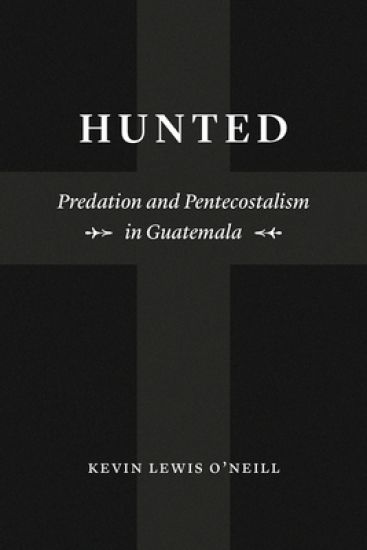
Hunted

Hunted

Kevin Lewis O'Neill

University of Chicago Press
2019
sidottu
“It’s not a process,” one pastor insisted, “rehabilitation is a miracle.” In the face of addiction and few state resources, Pentecostal pastors in Guatemala City are fighting what they understand to be a major crisis. Yet the treatment centers they operate produce this miracle of rehabilitation through extraordinary means: captivity. These men of faith snatch drug users off the streets, often at the request of family members, and then lock them up inside their centers for months, sometimes years.Hunted is based on more than ten years of fieldwork among these centers and the drug users that populate them. Over time, as Kevin Lewis O’Neill engaged both those in treatment and those who surveilled them, he grew increasingly concerned that he, too, had become a hunter, albeit one snatching up information. This thoughtful, intense book will reframe the arc of redemption we so often associate with drug rehabilitation, painting instead a seemingly endless cycle of hunt, capture, and release.

Hunted

Hunted

Kevin Lewis O'Neill

University of Chicago Press
2019
nidottu
“It’s not a process,” one pastor insisted, “rehabilitation is a miracle.” In the face of addiction and few state resources, Pentecostal pastors in Guatemala City are fighting what they understand to be a major crisis. Yet the treatment centers they operate produce this miracle of rehabilitation through extraordinary means: captivity. These men of faith snatch drug users off the streets, often at the request of family members, and then lock them up inside their centers for months, sometimes years.Hunted is based on more than ten years of fieldwork among these centers and the drug users that populate them. Over time, as Kevin Lewis O’Neill engaged both those in treatment and those who surveilled them, he grew increasingly concerned that he, too, had become a hunter, albeit one snatching up information. This thoughtful, intense book will reframe the arc of redemption we so often associate with drug rehabilitation, painting instead a seemingly endless cycle of hunt, capture, and release.

Billion-Dollar Fish

Billion-Dollar Fish

Kevin M. Bailey

University of Chicago Press
2021
nidottu
Alaska pollock is everywhere. If you’re eating fish but you don’t know what kind it is, it’s almost certainly pollock. Prized for its generic fish taste, pollock masquerades as crab meat in california rolls and seafood salads, and it feeds millions as fish sticks in school cafeterias and Filet-O-Fish sandwiches at McDonald’s. That ubiquity has made pollock the most lucrative fish harvest in America—the fishery in the United States alone has an annual value of over one billion dollars. But even as the money rolls in, pollock is in trouble: in the last few years, the pollock population has declined by more than half, and some scientists are predicting the fishery’s eventual collapse. In Billion-Dollar Fish, Kevin M. Bailey combines his years of firsthand pollock research with a remarkable talent for storytelling to offer the first natural history of Alaska pollock. Crucial to understanding the pollock fishery, he shows, is recognizing what aspects of its natural history make pollock so very desirable to fish, while at the same time making it resilient, yet highly vulnerable to overfishing. Bailey delves into the science, politics, and economics surrounding Alaska pollock in the Bering Sea, detailing the development of the fishery, the various political machinations that have led to its current management, and, perhaps most important, its impending demise. He approaches his subject from multiple angles, bringing in the perspectives of fishermen, politicians, environmentalists, and biologists, and drawing on revealing interviews with players who range from Greenpeace activists to fishing industry lawyers. Seamlessly weaving the biology and ecology of pollock with the history and politics of the fishery, as well as Bailey’s own often raucous tales about life at sea, Billion-Dollar Fish is a book for every person interested in the troubled relationship between fish and humans, from the depths of the sea to the dinner plate.
Sounds Beyond

Sounds Beyond

Kevin C. Karnes

University of Chicago Press
2021
sidottu
Sounds Beyond charts the origins of Arvo Pärt’s most famous music, which was created in dialogue with underground creative circles in the USSR. In Sounds Beyond, Kevin C. Karnes studies the interconnected alternative music and art scenes in the USSR during the second half of the 1970s, revealing the audacious origins of some of Estonian composer Arvo Pärt’s most famous music. Karnes shows how Pärt’s work was created within a vital yet forgotten culture of collective experimentation, the Soviet underground. Mining archives and oral history from across the former USSR, Sounds Beyond carefully situates modes of creative experimentation within their late socialist contexts. In documenting Pärt’s work, Karnes reveals the rich creative culture that thrived covertly in the USSR and the network of figures that made underground performances possible: students, audio engineers, sympathetic administrators, star performers, and aspiring DJs. Sounds Beyond advances a new understanding of Pärt’s music as an expression of the aesthetic and religious commitments shared, nurtured, and celebrated by many in Soviet underground circles. At the same time, this story attests to the lasting power of Pärt’s music. Dislodging the mythology of the solitary creative genius, Karnes shows that Pärt’s work would be impossible without community.
Why Everyone Hates White Liberals (Including White Liberals)

Why Everyone Hates White Liberals (Including White Liberals)

Kevin M. Schultz

THE UNIVERSITY OF CHICAGO PRESS
2025
sidottu
A bracing, accessible history of white American liberals—and why it’s time to change the conversation about them. If there’s one thing most Americans can agree on, it’s that everyone hates white liberals. Conservatives hate them for being culturally tolerant and threatening to usher in communism. Libertarians hate them for believing in the power of the state. Socialists hate them for serving as capitalism’s beard. Even liberals hate liberals—either because they can’t manage to overcome their own prejudices, or precisely because they’re so self-hating. This is the starting point for Kevin M. Schultz’s lively new history of white liberals in the United States. He efficiently lays out the array of objections to liberals—ineffective, spineless, judgmental, authoritarian, and more—in a historical frame that shows how protean the concept has been throughout the past hundred years. It turns out, he declares, that how you define a “white liberal” is less a reflection of reality and more a Rorschach test revealing your own anxieties. Sharply assessing how decades of attacks on liberals and liberalism have steadily hollowed out the center of American political life, Schultz also explains precisely what needs to be done to avoid digging ourselves even further into the hole of polarization. The ultimate goal, he argues, is to achieve political fragmentation that will fuel the rise of a true multiparty system, where ideology will matter more, not less. With a tight command of postwar American history and a spirited voice, Why Everyone Hates White Liberals (Including White Liberals) is a must-read for anyone wishing to understand—and envision a way forward in—the complicated landscape of American politics.
Democracy for Busy People

Democracy for Busy People

Kevin J. Elliott

THE UNIVERSITY OF CHICAGO PRESS
2023
sidottu
Advances an alternative approach to democratic reform that focuses on building institutions that empower people who have little time for politics. How do we make democracy more equal? Although in theory, all citizens in a democracy have the right to participate in politics, time-consuming forms of participation often advantage some groups over others. Where some citizens may have time to wait in long lines to vote, to volunteer for a campaign, to attend community board meetings, or to stay up to date on national, state, and local news, other citizens struggle to do the same. Since not all people have the time or inclination to devote substantial energy to politics, certain forms of participation exacerbate existing inequalities. Democracy for Busy People takes up the very real challenge of how to build a democracy that empowers people with limited time for politics. While many plans for democratic renewal emphasize demanding forms of political participation and daunting ideals of democratic citizenship, political theorist Kevin J. Elliott proposes a fundamentally different approach. He focuses instead on making democratic citizenship undemanding so that even busy people can be politically included. This approach emphasizes the core institutions of electoral democracy, such as political parties, against deliberative reforms and sortition. Timely and action-focused, Democracy for Busy People is necessary reading.
Democracy for Busy People

Democracy for Busy People

Kevin J. Elliott

THE UNIVERSITY OF CHICAGO PRESS
2023
nidottu
Advances an alternative approach to democratic reform that focuses on building institutions that empower people who have little time for politics. How do we make democracy more equal? Although in theory, all citizens in a democracy have the right to participate in politics, time-consuming forms of participation often advantage some groups over others. Where some citizens may have time to wait in long lines to vote, to volunteer for a campaign, to attend community board meetings, or to stay up to date on national, state, and local news, other citizens struggle to do the same. Since not all people have the time or inclination to devote substantial energy to politics, certain forms of participation exacerbate existing inequalities. Democracy for Busy People takes up the very real challenge of how to build a democracy that empowers people with limited time for politics. While many plans for democratic renewal emphasize demanding forms of political participation and daunting ideals of democratic citizenship, political theorist Kevin J. Elliott proposes a fundamentally different approach. He focuses instead on making democratic citizenship undemanding so that even busy people can be politically included. This approach emphasizes the core institutions of electoral democracy, such as political parties, against deliberative reforms and sortition. Timely and action-focused, Democracy for Busy People is necessary reading.
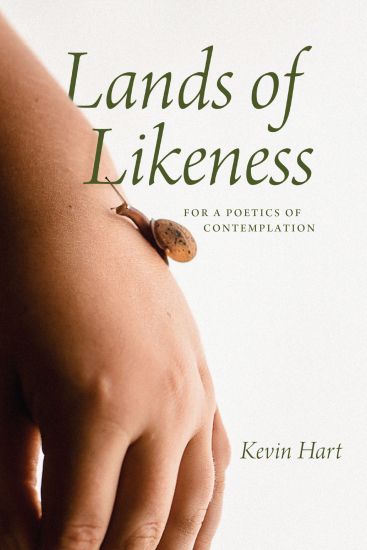
Lands of Likeness

Lands of Likeness

Kevin Hart

THE UNIVERSITY OF CHICAGO PRESS
2023
sidottu
An original and profound exploration of contemplation from philosopher, theologian, and poet Kevin Hart. In Lands of Likeness, Kevin Hart develops a new hermeneutics of contemplation through a meditation on Christian thought and secular philosophy. Drawing on Kant, Schopenhauer, Coleridge, and Husserl, Hart first charts the emergence of contemplation in and beyond the Romantic era. Next, Hart shows this hermeneutic at work in poetry by Gerard Manley Hopkins, Marianne Moore, Wallace Stevens, and others. Delivered in its original form as the prestigious Gifford Lectures, Lands of Likeness is a revelatory meditation on contemplation for the modern world.
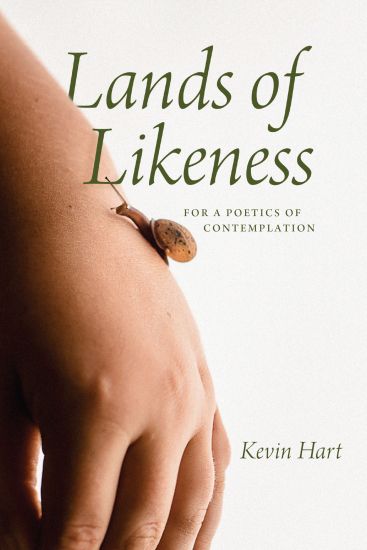
Lands of Likeness

Lands of Likeness

Kevin Hart

THE UNIVERSITY OF CHICAGO PRESS
2023
nidottu
An original and profound exploration of contemplation from philosopher, theologian, and poet Kevin Hart. In Lands of Likeness, Kevin Hart develops a new hermeneutics of contemplation through a meditation on Christian thought and secular philosophy. Drawing on Kant, Schopenhauer, Coleridge, and Husserl, Hart first charts the emergence of contemplation in and beyond the Romantic era. Next, Hart shows this hermeneutic at work in poetry by Gerard Manley Hopkins, Marianne Moore, Wallace Stevens, and others. Delivered in its original form as the prestigious Gifford Lectures, Lands of Likeness is a revelatory meditation on contemplation for the modern world.
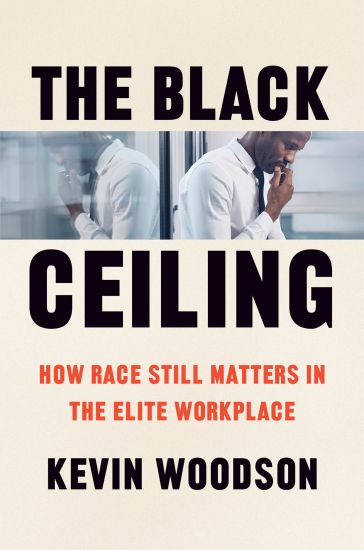
The Black Ceiling

The Black Ceiling

Kevin Woodson

THE UNIVERSITY OF CHICAGO PRESS
2023
sidottu
A revelatory assessment of workplace inequality in high-status jobs that focuses on a new explanation for a pernicious problem: racial discomfort. America’s elite law firms, investment banks, and management consulting firms are known for grueling hours, low odds of promotion, and personnel practices that push out any employees who don’t advance. While most people who begin their careers in these institutions leave within several years, work there is especially difficult for Black professionals, who exit more quickly and receive far fewer promotions than their White counterparts, hitting a “Black ceiling.” Sociologist and law professor Kevin Woodson knows firsthand what life at a top law firm feels like as a Black man. Examining the experiences of more than one hundred Black professionals at prestigious firms, Woodson discovers that their biggest obstacle in the workplace isn’t explicit bias but racial discomfort, or the unease Black employees feel in workplaces that are steeped in Whiteness. He identifies two types of racial discomfort: social alienation, the isolation stemming from the cultural exclusion Black professionals experience in White spaces, and stigma anxiety, the trepidation they feel over the risk of discriminatory treatment. While racial discomfort is caused by America’s segregated social structures, it can exist even in the absence of racial discrimination, which highlights the inadequacy of the unconscious bias training now prevalent in corporate workplaces. Firms must do more than prevent discrimination, Woodson explains, outlining the steps that firms and Black professionals can take to ease racial discomfort. Offering a new perspective on a pressing social issue, The Black Ceiling is a vital resource for leaders at preeminent firms, Black professionals and students, managers within mostly White organizations, and anyone committed to cultivating diverse workplaces.
A Supreme Court Unlike Any Other

A Supreme Court Unlike Any Other

Kevin J. McMahon

THE UNIVERSITY OF CHICAGO PRESS
2024
sidottu
A data-rich examination of the US Supreme Court's unprecedented detachment from the democratic processes that buttress its legitimacy. Today’s Supreme Court is unlike any other in American history. This is not just because of its jurisprudence but also because the current Court has a tenuous relationship with the democratic processes that help establish its authority. Historically, this “democracy gap” was not nearly as severe as it is today. Simply put, past Supreme Courts were constructed in a fashion far more in line with the promise of democracy—that the people decide and the majority rules. Drawing on historical and contemporary data alongside a deep knowledge of court battles during presidencies ranging from FDR to Donald Trump, Kevin J. McMahon charts the developments that brought us here. McMahon offers insight into the altered politics of nominating and confirming justices, the shifting pool of Supreme Court hopefuls, and the increased salience of the Court in elections. A Supreme Court Unlike Any Other is an eye-opening account of today’s Court within the context of US history and the broader structure of contemporary politics.
A Supreme Court Unlike Any Other

A Supreme Court Unlike Any Other

Kevin J. McMahon

THE UNIVERSITY OF CHICAGO PRESS
2024
nidottu
A data-rich examination of the US Supreme Court's unprecedented detachment from the democratic processes that buttress its legitimacy. Today’s Supreme Court is unlike any other in American history. This is not just because of its jurisprudence but also because the current Court has a tenuous relationship with the democratic processes that help establish its authority. Historically, this “democracy gap” was not nearly as severe as it is today. Simply put, past Supreme Courts were constructed in a fashion far more in line with the promise of democracy—that the people decide and the majority rules. Drawing on historical and contemporary data alongside a deep knowledge of court battles during presidencies ranging from FDR to Donald Trump, Kevin J. McMahon charts the developments that brought us here. McMahon offers insight into the altered politics of nominating and confirming justices, the shifting pool of Supreme Court hopefuls, and the increased salience of the Court in elections. A Supreme Court Unlike Any Other is an eye-opening account of today’s Court within the context of US history and the broader structure of contemporary politics.
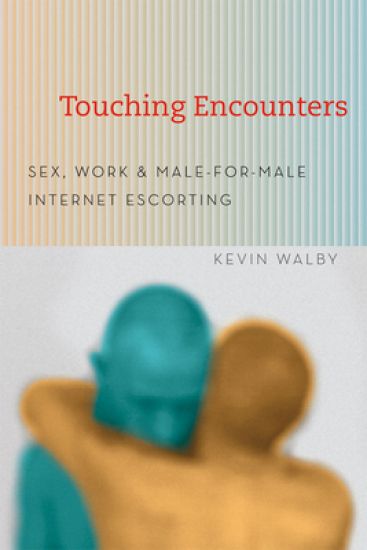
Touching Encounters

Touching Encounters

Kevin Walby

University of Chicago Press
2012
sidottu
Often depicted as deviant or pathological by public health researchers, psychoanalysts, and sexologists, male-with-male sex and sex work is, in fact, an increasingly mainstream pursuit. Based on a qualitative investigation of the practices involved in male-for-male - or m4m - Internet escorting, "Touching Encounters" is the first book to explicitly address how masculinity and sexuality shape male commercial sex in this era of Internet communications. By looking closely at the sex and work of male escorts, Kevin Walby tries to reconcile the two extremes of m4m sex - the stereotypical idea of a quick cash transaction and the tendency toward friendship and mutuality. In doing so, Walby draws on the work of Foucault to make visible the play of power in these physical and commercial relations between men. At once a contribution to the sociology of work and a much-needed critical engagement with queer theory, "Touching Encounters" responds to calls from across the social sciences to connect Foucault with sociologies of sex, sexuality, and intimacy. Walby does this and more, tying this sexual practice back to society at large.
Touching Encounters

Touching Encounters

Kevin Walby

University of Chicago Press
2012
nidottu
Often depicted as deviant or pathological by public health researchers, psychoanalysts, and sexologists, male-with-male sex and sex work is, in fact, an increasingly mainstream pursuit. Based on a qualitative investigation of the practices involved in male-for-male - or m4m - Internet escorting, "Touching Encounters" is the first book to explicitly address how masculinity and sexuality shape male commercial sex in this era of Internet communications. By looking closely at the sex and work of male escorts, Kevin Walby tries to reconcile the two extremes of m4m sex - the stereotypical idea of a quick cash transaction and the tendency toward friendship and mutuality. In doing so, Walby draws on the work of Foucault to make visible the play of power in these physical and commercial relations between men. At once a contribution to the sociology of work and a much-needed critical engagement with queer theory, "Touching Encounters" responds to calls from across the social sciences to connect Foucault with sociologies of sex, sexuality, and intimacy. Walby does this and more, tying this sexual practice back to society at large.
Transatlantic Upper Canada

Transatlantic Upper Canada

Kevin Hutchings

McGill-Queen's University Press
2020
sidottu
Literature emerging from nineteenth-century Upper Canada, born of dramatic cultural and political collisions, reveals much about the colony's history through its contrasting understandings of nature, ecology, deforestation, agricultural development, and land rights. In the first detailed study of literary interactions between Indigenous people and colonial authorities in Upper Canada and Britain, Kevin Hutchings analyzes the period's key figures and the central role that romanticism, ecology, and environment played in their writings. Investigating the ties that bound Upper Canada and Great Britain together during the early nineteenth century, Transatlantic Upper Canada demonstrates the existence of a cosmopolitan culture whose implications for the land and its people are still felt today. The book examines the writings of Haudenosaunee leaders John Norton and John Brant and Anishinabeg authors Jane Johnston Schoolcraft, Peter Jones, and George Copway, as well as European figures John Beverley Robinson, John Strachan, Anna Brownell Jameson, and Sir Francis Bond Head. Hutchings argues that, despite their cultural differences, many factors connected these writers, including shared literary interests, cross-Atlantic journeys, metropolitan experiences, mutual acquaintance, and engagement in ongoing dialogue over Indigenous territory and governance. A close examination of relationships between peoples and their understandings of land, Transatlantic Upper Canada creates a rich portrait of the nineteenth-century British Atlantic world and the cultural and environmental consequences of colonialism and resistance.
Transatlantic Upper Canada

Transatlantic Upper Canada

Kevin Hutchings

McGill-Queen's University Press
2020
nidottu
Literature emerging from nineteenth-century Upper Canada, born of dramatic cultural and political collisions, reveals much about the colony's history through its contrasting understandings of nature, ecology, deforestation, agricultural development, and land rights. In the first detailed study of literary interactions between Indigenous people and colonial authorities in Upper Canada and Britain, Kevin Hutchings analyzes the period's key figures and the central role that romanticism, ecology, and environment played in their writings. Investigating the ties that bound Upper Canada and Great Britain together during the early nineteenth century, Transatlantic Upper Canada demonstrates the existence of a cosmopolitan culture whose implications for the land and its people are still felt today. The book examines the writings of Haudenosaunee leaders John Norton and John Brant and Anishinabeg authors Jane Johnston Schoolcraft, Peter Jones, and George Copway, as well as European figures John Beverley Robinson, John Strachan, Anna Brownell Jameson, and Sir Francis Bond Head. Hutchings argues that, despite their cultural differences, many factors connected these writers, including shared literary interests, cross-Atlantic journeys, metropolitan experiences, mutual acquaintance, and engagement in ongoing dialogue over Indigenous territory and governance. A close examination of relationships between peoples and their understandings of land, Transatlantic Upper Canada creates a rich portrait of the nineteenth-century British Atlantic world and the cultural and environmental consequences of colonialism and resistance.
The Tantramar Re-Vision

The Tantramar Re-Vision

Kevin Irie

McGill-Queen's University Press
2021
nidottu
I've lived the way a field is sometimes / a shelter for mice / or sometimes a source of game / for a hawkInspired by the literary landscape of the late poet John Thompson, Kevin Irie's The Tantramar Re-Vision presents a portrait of nature where the benign and the bedevilled coexist, collude, or collide.The Tantramar Re-Vision charts routes of discovery as it follows trails, waterways, flights, and fears, be it through the woods, the wilds, the page, or the mind where "it's hard to admit / you are not to your taste." It questions an existence in which the inhuman thrives, ignorant of divinity, while the human psyche continues to search for answers as "life takes directions / away from" it. The Tantramar Marsh setting of John Thompson's Stilt Jack resonates with Irie's landscapes of birds, fish, plants, and wildlife, all still within reach yet part of a world where "wind carries sounds / it cannot hear."Insightful and meditative, The Tantramar Re-Vision is poetry of the inner self and the outside observer, a poetic testament to the ways literature creates its own landmarks and nature survives without knowing a word.
Hidden Scourge

Hidden Scourge

Kevin P. Timoney

McGill-Queen's University Press
2021
sidottu
This book began when Kevin Timoney noticed a suspicious pattern in data reported by the Alberta Energy Regulator. For tens of thousands of spills, recovery volumes exactly matched the reported spill volumes. In short, the data were too good to be true. And so began a search for the scientific truth about spills. In western North America crude oil and saline water spills – both small and large – occur daily and cause permanent damage to ecosystems that remains largely hidden from public view.Hidden Scourge takes the reader on a journey into a covert world of energy industry spills with environmental incident data from over 100,000 spills in Alberta, Saskatchewan, North Dakota, Montana, and the Northwest Territories. Timoney evaluates the truthfulness of regulatory reporting in light of evidence from peer-reviewed scientific data, original field observations, industrial and government reports, interviews, and documents obtained under freedom of information. In stark contrast to a halcyon picture of prosperity and "world-class" environmental management, the reality is rampant destruction of biodiversity, persistent soil contamination, failed reclamation, and thousands of undocumented spills.Hidden Scourge grounds existential debates about climate and ecological crises in evidence of how hydrocarbon-based economies change the ecosystems where fossil fuels are extracted. The science is clear: the industry consistently damages ecosystems wherever it operates. If energy-industry regulators cannot act independently, honestly, and in the public interest, they profoundly undermine democratic institutions. The result is a legacy of contaminated sites that will burden future generations with great uncertainty and cost.
Hidden Scourge

Hidden Scourge

Kevin P. Timoney

McGill-Queen's University Press
2021
nidottu
This book began when Kevin Timoney noticed a suspicious pattern in data reported by the Alberta Energy Regulator. For tens of thousands of spills, recovery volumes exactly matched the reported spill volumes. In short, the data were too good to be true. And so began a search for the scientific truth about spills. In western North America crude oil and saline water spills – both small and large – occur daily and cause permanent damage to ecosystems that remains largely hidden from public view.Hidden Scourge takes the reader on a journey into a covert world of energy industry spills with environmental incident data from over 100,000 spills in Alberta, Saskatchewan, North Dakota, Montana, and the Northwest Territories. Timoney evaluates the truthfulness of regulatory reporting in light of evidence from peer-reviewed scientific data, original field observations, industrial and government reports, interviews, and documents obtained under freedom of information. In stark contrast to a halcyon picture of prosperity and "world-class" environmental management, the reality is rampant destruction of biodiversity, persistent soil contamination, failed reclamation, and thousands of undocumented spills.Hidden Scourge grounds existential debates about climate and ecological crises in evidence of how hydrocarbon-based economies change the ecosystems where fossil fuels are extracted. The science is clear: the industry consistently damages ecosystems wherever it operates. If energy-industry regulators cannot act independently, honestly, and in the public interest, they profoundly undermine democratic institutions. The result is a legacy of contaminated sites that will burden future generations with great uncertainty and cost.
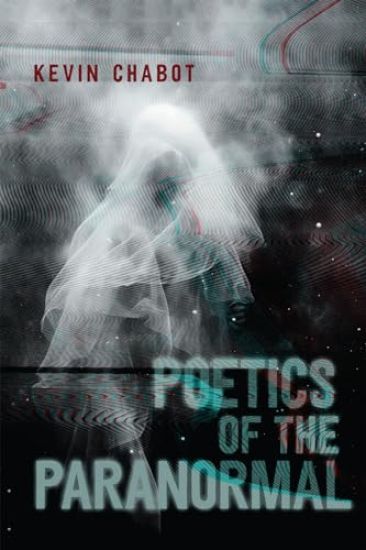
Poetics of the Paranormal

Poetics of the Paranormal

Kevin Chabot

MCGILL-QUEEN'S UNIVERSITY PRESS
2024
sidottu
The appearance of ghosts in art and popular culture has transformed throughout history. From the undead corpse of the medieval tradition to the transparent forms of photographic film, to the infrared and thermal images that now populate reality television, the paranormal has literally changed shape over the centuries.In Poetics of the Paranormal Kevin Chabot articulates the idea of spectrality, demonstrating how the paranormal is far from a stable, metaphysical category: it is a dynamic and historically contingent discourse, the contours of which shift over time. Specific media, Chabot argues, present the ghost in distinct ways that emphasize the ghostly qualities of the medium and, conversely, the technological qualities of the ghost. Through detailed analyses of nineteenth-century spirit photography, horror films, ghost-hunting reality television, and the viral internet phenomenon Slender Man, Chabot shows how the paranormal both shapes and is shaped by media.Exploring key historical shifts in contemporary media while providing a rich and novel theoretical framework, Poetics of the Paranormal addresses with renewed rigour the relationships between media, perception, temporality, and the elusive concept of the evidential.