
Kirjahaku
Etsi kirjoja tekijän nimen, kirjan nimen tai ISBN:n perusteella.
1000 tulosta hakusanalla Lydia Lo
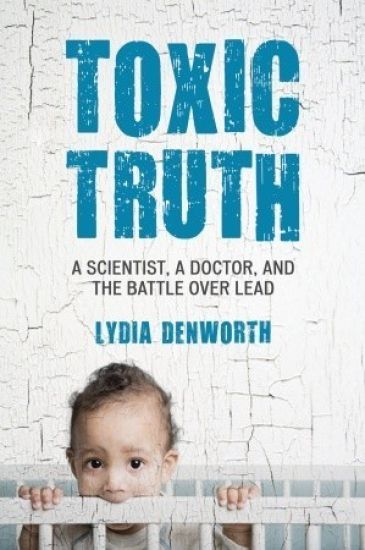
They didn't start out as environmental warriors. Clair Patterson was a geochemist focused on determining the age of the Earth. Herbert Needleman was a pediatrician treating inner-city children. But in the chemistry lab and the hospital ward, they met a common enemy: lead. It was literally everywhere-in gasoline and paint, of course, but also in water pipes and food cans, toothpaste tubes and toys, ceramics and cosmetics, jewelry and batteries. Though few people worried about it at the time, lead was also toxic. In "Toxic Truth," journalist Lydia Denworth tells the little-known stories of these two men who were among the first to question the wisdom of filling the world with such a harmful metal. Denworth follows them from the ice and snow of Antarctica to the schoolyards of Philadelphia and Boston as they uncovered the enormity of the problem and demonstrated the irreparable harm lead was doing to children. In heated conferences and courtrooms, the halls of Congress and at the Environmental Protection Agency, the scientist and doctor were forced to defend their careers and reputations in the face of incredible industry opposition. It took courage, passion, and determination to prevail against entrenched corporate interests and politicized government bureaucracies. But Patterson, Needleman, and their allies did finally get the lead out - since it was removed from gasoline, paint, and food cans in the 1970s, the level of lead in Americans' bodies has dropped 90 percent. Their success offers a lesson in the dangers of putting economic priorities over public health, and a reminder of the way science-and individuals-can change the world. The fundamental questions raised by this battle-what constitutes disease, how to measure scientific independence, and how to quantify acceptable risk-echo in every environmental issue of today: from the plastic used to make water bottles to greenhouse gas emissions. And the most basic question-how much do we need to know about what we put in our environment-is perhaps more relevant today than it has ever been.
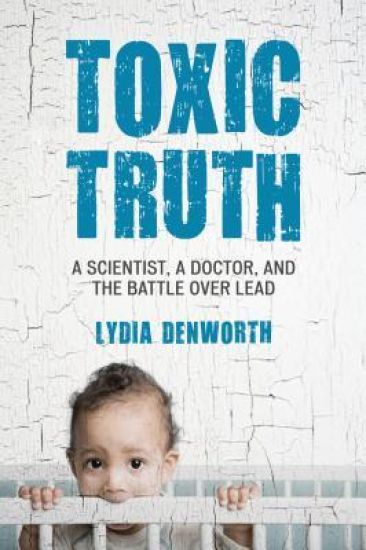
They didn't start out as environmental warriors. Clair Patterson was a geochemist focused on determining the age of the Earth. Herbert Needleman was a pediatrician treating inner-city children. But in the chemistry lab and the hospital ward, they met a common enemy: lead. It was literally everywhere-in gasoline and paint, of course, but also in water pipes and food cans, toothpaste tubes and toys, ceramics and cosmetics, jewelry and batteries. Though few people worried about it at the time, lead was also toxic. In Toxic Truth, journalist Lydia Denworth tells the little-known stories of these two men who were among the first to question the wisdom of filling the world with such a harmful metal. Denworth follows them from the ice and snow of Antarctica to the schoolyards of Philadelphia and Boston as they uncovered the enormity of the problem and demonstrated the irreparable harm lead was doing to children. In heated conferences and courtrooms, the halls of Congress and at the Environmental Protection Agency, the scientist and doctor were forced to defend their careers and reputations in the face of incredible industry opposition. It took courage, passion, and determination to prevail against entrenched corporate interests and politicized government bureaucracies. But Patterson, Needleman, and their allies did finally get the lead out - since it was removed from gasoline, paint, and food cans in the 1970s, the level of lead in Americans' bodies has dropped 90 percent. Their success offers a lesson in the dangers of putting economic priorities over public health, and a reminder of the way science-and individuals-can change the world. The fundamental questions raised by this battle-what constitutes disease, how to measure scientific independence, and how to quantify acceptable risk-echo in every environmental issue of today: from the plastic used to make water bottles to greenhouse gas emissions. And the most basic question-how much do we need to know about what we put in our environment-is perhaps more relevant today than it has ever been.
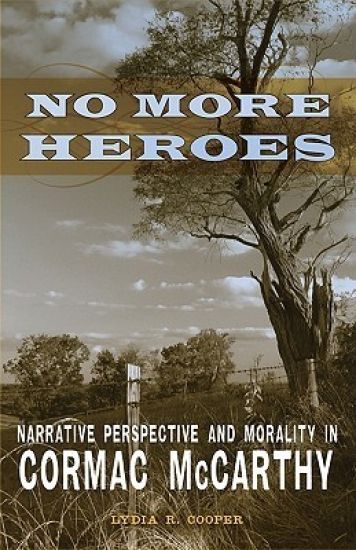
Critics often trace the prevailing mood of despair and purported nihilism in the works of Cormac McCarthy to the striking absence of interior thought in his seemingly amoral characters. In No More Heroes, however, Lydia Cooper reveals that though McCarthy limits inner revelations, he never eliminates them entirely. In certain crucial cases, he endows his characters with ethical decisions and attitudes, revealing a strain of heroism exists in his otherwise violent and apocalyptic world.Cooper evaluates all of McCarthy's work to date, carefully exploring the range of his narrative techniques. The writer's overwhelmingly distant, omniscient third-person narrative rarely shifts to a more limited voice. When it does deviate, however, revelations of his characters' consciousness unmistakably exhibit moral awareness and ethical behavior. The quiet, internal struggles of moral men such as John Grady Cole in The Border Trilogy and the father in The Road demonstrate an imperfect but very human heroism.Even when the writing moves into the minds of immoral characters, McCarthy draws attention to the characters' humanity, forcing the perceptive reader to identify with even the most despicable representatives of the human race. Cooper shows that this rare yet powerful recognition of commonality and the internal yearnings for community and a commitment to justice or compassion undeniably exist in McCarthy's work.No More Heroes directly addresses the essential question about McCarthy's brutal and morally ambiguous universe and reveals poignant new answers.

Dancing Through Space: Dr. Mae Jemison Soars to New Heights
Lydia Lukidis
Albert Whitman Company
2024
sidottu
"A quick but lyrical character study."--Kirkus Reviews "The sky proves no limit in Lukidis's encouraging biography of Black female astronaut Mae Jemison."--Publishers Weekly "This makes a good addition to STEAM literature." -- Booklist The true story of Dr. Mae Jemison, whose lifelong passions of science and dance prepared her to become a trailblazing astronaut. Today, Dr. Mae Jemison is famous for being the first Black woman to travel into outer space. But when she was growing up, she felt torn between two passions: science and dance. It seemed like an impossible choice. There had to be some way to make room for both--and Mae found one. As an adult, she combined her gifts of scientific logic and artistic creativity and became an astronaut.

Case Studies in Building Equity Through Family Advocacy in Special Education
Lydia Ocasio-Stoutenburg; Beth Harry
Teachers' College Press
2021
nidottu
You've read the history and the background, now meet the families! This companion book to Meeting Families Where They Are traces the advocacy journeys of 12 caregivers across a range of racial, ethnic, social, disability, economic, and family identities. The stories reflect the unique lives, histories, and needs of each family, as well as the different approaches they employ to meet the needs of their children. Caregivers indicate when they began to advocate; describe how they continue their efforts across schools, medical offices, therapies, communities, and virtual spaces; and discuss how they adapt to changing social and health climates and educational delivery modes. They also share their collective wisdom to assist other parents who are new to the advocacy platform or are feeling discouraged with the process. This is must-reading for family members, teachers, administrators, health care personnel, and everyone invested in creating a culture of respect, love, and understanding.Book Features:Emphasizes how families have resisted the deficit-based view of their children while still utilizing systems of support.Identifies gaps and challenges across multiple systems, as well as "what's working."Incorporates the fields of special education and disability studies in education.Uses the framework of DisCrit to explore how disability and other social identities operate in tandem, examining concepts such as power, access, privilege, and barriers. Positions caregivers as experts in their children's lives, illustrating how they advocate for their children, teens, and young adults. Takes a deep dive into the nuances of generational, cultural, organizational, and geographical factors that impact how caregivers advocate. Resists approaches that typically involve professionals dictating what families need, centering instead on a collaborative model that includes families and professionals.

Case Studies in Building Equity Through Family Advocacy in Special Education
Lydia Ocasio-Stoutenburg; Beth Harry
Teachers' College Press
2021
sidottu
You've read the history and the background, now meet the families! This companion book to Meeting Families Where They Are traces the advocacy journeys of 12 caregivers across a range of racial, ethnic, social, disability, economic, and family identities. The stories reflect the unique lives, histories, and needs of each family, as well as the different approaches they employ to meet the needs of their children. Caregivers indicate when they began to advocate; describe how they continue their efforts across schools, medical offices, therapies, communities, and virtual spaces; and discuss how they adapt to changing social and health climates and educational delivery modes. They also share their collective wisdom to assist other parents who are new to the advocacy platform or are feeling discouraged with the process. This is must-reading for family members, teachers, administrators, health care personnel, and everyone invested in creating a culture of respect, love, and understanding.Book Features:Emphasizes how families have resisted the deficit-based view of their children while still utilizing systems of support.Identifies gaps and challenges across multiple systems, as well as "what's working."Incorporates the fields of special education and disability studies in education.Uses the framework of DisCrit to explore how disability and other social identities operate in tandem, examining concepts such as power, access, privilege, and barriers. Positions caregivers as experts in their children's lives, illustrating how they advocate for their children, teens, and young adults. Takes a deep dive into the nuances of generational, cultural, organizational, and geographical factors that impact how caregivers advocate. Resists approaches that typically involve professionals dictating what families need, centering instead on a collaborative model that includes families and professionals.
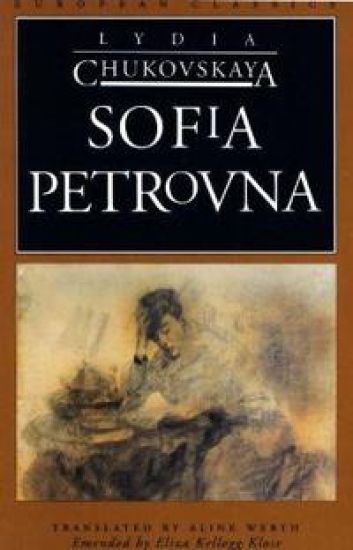
Sofia Petrovna is Lydia Chukovskaya's fictional account of the Great Purge. Sofia is a Soviet Everywoman, a doctor's widow who works as a typist in a Leningrad publishing house. When her beloved son is caught up in the maelstrom of the purge, she joins the long lines of women outside the prosecutor's office, hoping against hope for good news. Confronted with a world that makes no moral sense, Sofia goes mad, a madness which manifests itself in delusions little different from the lies those around her tell every day to protect themselves.
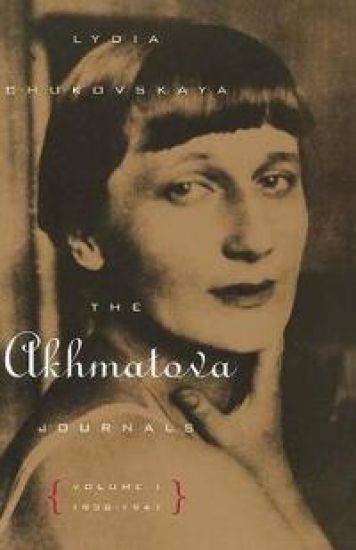
The Akhmatova Journals Vol 1; 1938-1941
Lydia Chukovskaya
Northwestern University Press
2002
nidottu
Even in her own day Anna Akhmatova was ranked as one of the great Russian poets of the century. Yet she suffered scathing attacks from the Soviet establishment, was famously denounced as ""half-nun, half-whore"", and was finally expelled from the Writers' Union. Lydia Chukovskaya, an admirer who became the poet's close friend, kept intimate diaries that reveal the day-to-day life of a passionate artist forced to endure sorrow and oppression, yet still able to create poetry and friendship. This volume contains the journals kept between the years 1938 and 1941.

Adept at capturing the experience of the upper-middle-class African American, Diamond lays out two families' worth of secrets in this precise play. With only six characters, she constructs a vivid weekend of crossed pasts and uncertain but optimistic futures. On Martha's Vineyard, an affluent African American family gathers in their vacation home, joined by the housekeeper's daughter, who is filling in for her mother. The family patriarch is a philandering physician; one of his sons has followed in his footsteps, while the other, after numerous false starts in a variety of careers, is a struggling novelist.Both bring along their current girlfriends, to meet the family for the first time. With such highly - perhaps overly - educated vacationers, the conversation and the barbs fly, on subjects ranging from race to economics to politics. But there is also more than enough human drama, which reaches its climax when an old family secret comes out. Through lively exchanges and simmering wit, the family tackles a history filled with complications both within the family and in the outer world.
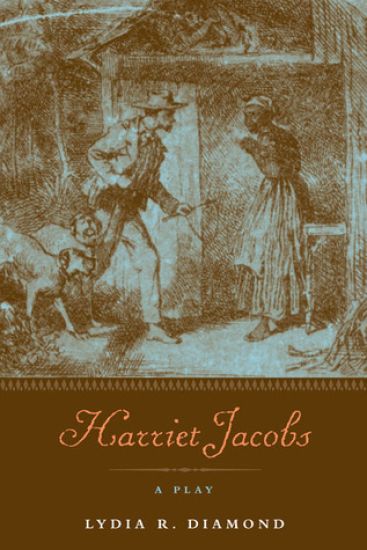
Harriet Jacobs
Lydia Diamond; Megan Sandberg-Zaki; Jean Fagan Yel
Northwestern University Press
2011
nidottu
Throughout her meteoric rise into the upper ranks of young playwrights, Lydia R. Diamond has boldly challenged assumptions about African American culture. In Harriet Jacobs, she turns one of the greatest of American slave narratives, Jacobs’ Incidents in the Life of a Slave Girl, into a penetrating, rousing work of theatre.
In Hegel on Political Identity, Lydia Moland provocatively draws on Hegel's political philosophy to engage sometimes contentious contemporary issues such as patriotism, national identity, and cosmopolitanism. Moland argues that patriotism for Hegel indicates an attitude toward the state, whereas national identity is a response to culture. The two combine, Hegel claims, to enable citizens to develop concrete freedom. Moland argues that Hegel s account of political identity extends to his notorious theory of world history; she also proposes that his resistance to cosmopolitanism be reassessed in response to our globalized world. By focusing on Hegel s depiction of political identity as a central part of modern life, Moland shows the potential of Hegel s philosophy to address issues that lie at the heart of ethical and political philosophy.

Lydia Moland provocatively draws on Hegel's political philosophy to engage sometimes contentious contemporary issues such as patriotism, national identity, and cosmopolitanism. By focusing on Hegel's depiction of political identity as a central part of modern life, Moland shows the potential of Hegel's philosophy to address issues that lie at the heart of ethical and political philosophy.
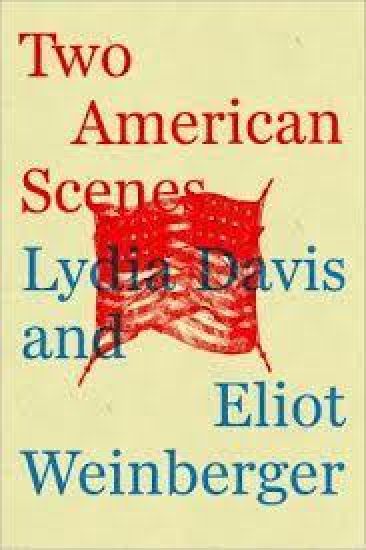
Two American Scenes
Lydia Davis; Eliot Weinberger
New Directions Publishing Corporation
2013
nidottu
Part of our revived "Poetry Pamphlet" series, Two American Scenes features two masters of the essay discussing "found material." Excerpts: It was given to me, in the nineteenth century, to spend a lifetime on this earth. Along with a few of the sorrows that are appointed unto men, I have had innumerable enjoyments; and the world has been to me, even from childhood,a great museum. — Lydia Davis Bad rapids. Bradley is knocked over the side; his foot catches under the seat and he is dragged, head under water. Camped on a sand beach, the wind blows a hurricane. Sand piles over us like a snow-drift. — Eliot Weinberge

Poetry Pamphlets 1-4
Lydia Davis; Eliot Weinberger; Susan Howe; Bernadette Mayer; Sylvia Legris
New Directions Publishing Corporation
2023
nidottu
The first four collections in our revitalized Poetry Pamphlet series, established to highlight original work from writers around the world as well as forgotten treasures lost in the cracks of literary history. Included are: Two American Scenes: Our Village & A Journey on the Colorado River, by Lydia Davis and Eliot Weinberger; Sorting Facts, or Nineteen Ways of Looking at Chris Marker, by Susan Howe; The Helens of Troy, New York, by Bernadette Mayer; and Pneumatic Antiphonal, by Sylvia Legris.

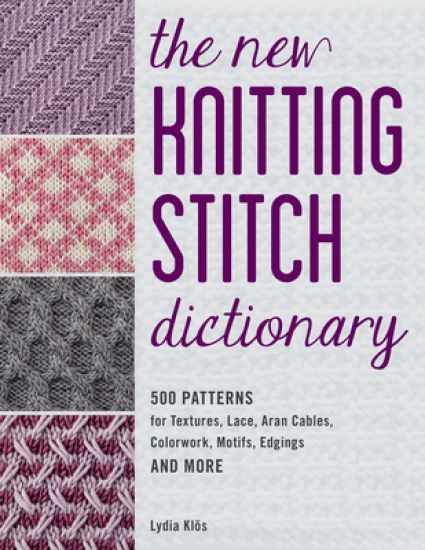
Inspiration at your fingertips!Within the pages of The New Knitting Stitch Dictionary you will find not only 500 innovative knitting stitch patterns, but dozens of ideas popping through your mind. Cables may inspire designs for sweaters or blankets, cozy textures for scarves, colorwork for hats, mittens, and more. You will turn to this book again and again for fresh ideas!The stitches are divided into sections by type of stitch to make it easy to find what you want: texture, lace, cables, Aran cables, flower and leaf patterns, bobbles, lifted stitches, Fair Isle, intarsia, borders, and more. Instructions for each stitch are charted so that you can easily visualize the pattern and use it in your own design. You will find this stitch dictionary to be an invaluable reference on your knitting bookshelf.
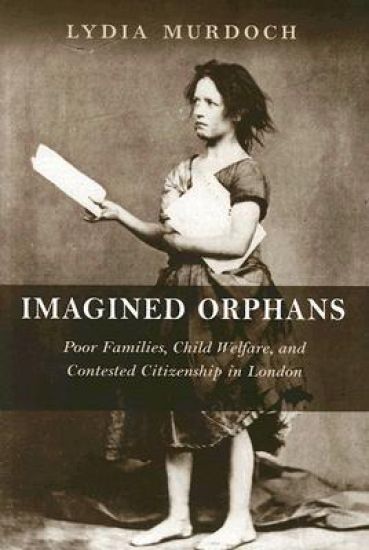
With his dirty, tattered clothes and hollowed-out face, Oliver Twist is the enduring symbol of the young indigent spilling out of orphanages and haunting the streets of late-nineteenth-century London. Although poor children were often portrayed as real-life Oliver Twists—either orphaned or abandoned by unworthy parents—they in fact frequently maintained contact and were eventually reunited with their families.In Imagined Orphans, Lydia Murdoch focuses on this discrepancy between the representation and the reality of children’s experiences within welfare institutions—a discrepancy that she argues stems from conflicts over middle- and working-class notions of citizenship that arose in the 1870s and persisted until the First World War. Reformers’ efforts to depict poor children as either orphaned or endangered by abusive or “no-good” parents fed upon the poor’s increasing exclusion from the Victorian social body. Reformers used the public’s growing distrust and pitiless attitude toward poor adults to increase charity and state aid to the children.With a critical eye to social issues of the period, Murdoch urges readers to reconsider the complex situations of families living in poverty. While reformers’ motivations seem well intentioned, she shows how their methods solidified the public’s antipoor sentiment and justified a minimalist welfare state that engendered a cycle of poverty. As they worked to fashion model citizens, reformers’ efforts to protect and care for children took on an increasingly imperial cast that would continue into the twentieth century.

Over the past two hundred years, Americans have reproduced George Washington’s Mount Vernon plantation house more often, and in a greater variety of media, than any of their country’s other historic buildings. In this highly original new book, Lydia Mattice Brandt chronicles America’s obsession with the first president’s iconic home through advertising, prints, paintings, popular literature, and the full-scale replication of its architecture. Even before Washington’s 1799 death, his house was an important symbol for the new nation. His countrymen used it to idealize the past as well as to evoke contemporary--and even divisive--political and social ideals. In the wake of the mid-nineteenth century’s revival craze, Mount Vernon became an obvious choice for architects and patrons looking to reference the past through buildings in residential neighborhoods, at world’s fairs, and along the commercial strip. The singularity of the building’s trademark piazza and its connection to Washington made it immediately recognizable and easy to replicate. As a myriad of Americans imitated the building’s architecture, the Mount Vernon Ladies’ Association carefully interpreted and preserved its fabric. Purchasing the house in 1859 amid intense scrutiny, the organization safeguarded Washington’s home and ensured its accessibility as the nation’s leading historic house museum. Tension between popular images of Mount Vernon and the organization’s ""official"" narrative for the house over the past 150 years demonstrates the close and ever-shifting relationship between historic preservation and popular architecture.In existence for roughly as long as the United States itself, Mount Vernon’s image has remained strikingly relevant to many competing conceptions of our country’s historical and architectural identity.

The Sketch, the Tale, and the Beginnings of American Literature
Lydia G. Fash
University of Virginia Press
2020
sidottu
Accounts of the rise of American literature often start in the 1850s with a cluster of "great American novels"—Hawthorne's The Scarlet Letter, Melville's Moby-Dick and Stowe's Uncle Tom's Cabin. But these great works did not spring fully formed from the heads of their creators. All three relied on conventions of short fiction built up during the "culture of beginnings," the three decades following the War of 1812 when public figures glorified the American past and called for a patriotic national literature. Decentering the novel as the favored form of early nineteenth-century national literature, Lydia Fash repositions the sketch and the tale at the center of accounts of American literary history, revealing how cultural forces shaped short fiction that was subsequently mined for these celebrated midcentury novels and for the first novel published by an African American. In the shorter works of writers such as Washington Irving, Catharine Sedgwick, Edgar Allan Poe, and Lydia Maria Child, among others, the aesthetic of brevity enabled the beginning idea of a story to take the outsized importance fitted to the culture of beginnings. Fash argues that these short forms, with their ethnic exclusions and narrative innovations, coached readers on how to think about the United States' past and the nature of narrative time itself. Combining history, print history, and literary criticism, this book treats short fiction as a vital site for debate over what it meant to be American, thereby offering a new account of the birth of a self-consciously national literary tradition.