Kirjojen hintavertailu. Mukana 11 342 296 kirjaa ja 12 kauppaa.

Kirjahaku

Etsi kirjoja tekijän nimen, kirjan nimen tai ISBN:n perusteella.

1000 tulosta hakusanalla Mario Jacoby

Stanley Kubrick

Stanley Kubrick

Mario Falsetto

Praeger Publishers Inc
2001
sidottu
The second edition of Mario Falsetto's extensive analysis of Kubrick's films carefully examines the filmmaker's oeuvre in its entirety--from smaller, early films (The Killing) through mid-career masterpieces (Dr. Strangelove; 2001: A Space Odyssey; A Clockwork Orange), later films such as Full Metal Jacket, and his final work, 1999's Eyes Wide Shut. The author, offering close readings supported by precise shot descriptions, shows us how Kubrick's body of work represents a stylistically and thematically consistent cinematic vision, one that merges formal experimentation with great philosophical complexity. Falsetto explores many of Kubrick's often-used devices, including the long-take aesthetic, voice-overs, and moving camera, and discusses the thematic uses to which these techniques are applied. Finally, he presents the very first formal analysis of Eyes Wide Shut, the director's final, very much underrated masterwork.
Stanley Kubrick

Stanley Kubrick

Mario Falsetto

Praeger Publishers Inc
2001
nidottu
The second edition of Mario Falsetto's extensive analysis of Kubrick's films carefully examines the filmmaker's oeuvre in its entirety--from smaller, early films (The Killing) through mid-career masterpieces (Dr. Strangelove; 2001: A Space Odyssey; A Clockwork Orange), later films such as Full Metal Jacket, and his final work, 1999's Eyes Wide Shut. The author, offering close readings supported by precise shot descriptions, shows us how Kubrick's body of work represents a stylistically and thematically consistent cinematic vision, one that merges formal experimentation with great philosophical complexity. Falsetto explores many of Kubrick's often-used devices, including the long-take aesthetic, voice-overs, and moving camera, and discusses the thematic uses to which these techniques are applied. Finally, he presents the very first formal analysis of Eyes Wide Shut, the director's final, very much underrated masterwork.
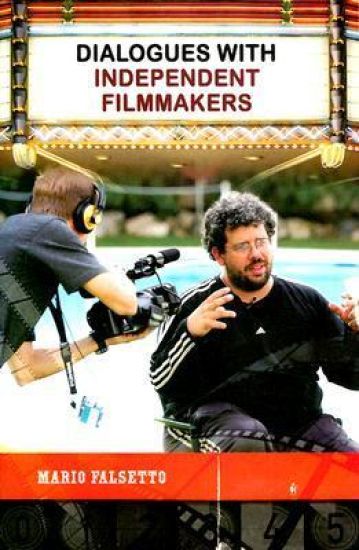
The Making of Alternative Cinema

The Making of Alternative Cinema

Mario Falsetto

Praeger Publishers Inc
2007
nidottu
The massive investments made in Hollywood today mandate tight studio controls on mainstream cinema. As a result, one must often look to alternative outlets in order to see a movie intended primarily as art—or even as a sincere effort at entertainment—instead of as a simple source of revenue. Foreign and independent movies thus often play the role of bellwether for the Hollywood studios that are unable to experiment themselves: behind the look of the studio smash Sin City, for instance, was the rigorous pulp style of Road to Perdition; before the sadism and cynicism of many current thrillers and horror movies there was the work of Neil Labute; and where would Hollywood's plots be without the harsh, fragmented narratives of Guillermo Arriaga and Alejandro Inarritu? By looking at these films, and at the people who created them,we can obtain a clearer sense of what movies really are at heart, and what they may still want to become.Elaborate measures are thus taken everywhere and at all points to maintain a grip on the public's imagination, but the more adept Hollywood becomes at giving the public what it wants, the less any given studio is able to say anything new or truly innovative. Inside of the United States, this means looking to independent films; outside of the United States, it means filtering through an enormous mass of movies and moviemakers.In Volume 1 of this revealing set, Mario Falsetto presents extended interviews with nine of the most prominent independent film directors working in America today; while in Volume 2, Liza Béar gives prominent international filmmakers the opportunity to address essential issues surrounding creativity and production in a number of different geographical setting and contexts.
Católicos

Católicos

Mario T. García

University of Texas Press
2008
pokkari
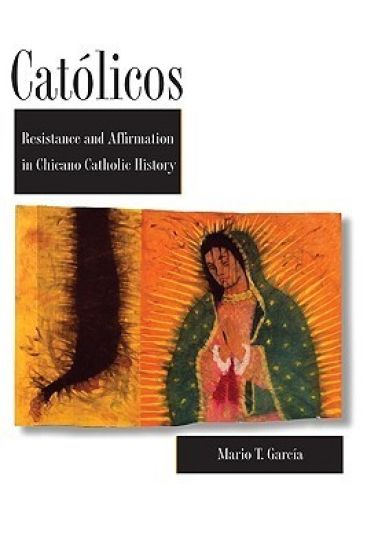
Chicano Catholicism-both as a popular religion and a foundation for community organizing-has, over the past century, inspired Chicano resistance to external forces of oppression and discrimination including from other non-Mexican Catholics and even the institutionalized church. Chicano Catholics have also used their faith to assert their particular identity and establish a kind of cultural citizenship. Based exclusively on original research and sources, Mario T. GarcÍa here offers the first major historical study to explore the various dimensions of the role of Catholicism in Chicano history in the twentieth century. This is also one of the first significant studies in the still limited field of Chicano religious history. Topics range from how early Chicano Catholic intellectuals and civil rights leaders were influenced by Catholic Social Doctrine, to the role that popular religion has played in the lives of ordinary men and women in both rural and urban areas. GarcÍa also examines faith-based Chicano community movements like CatÓlicos Por La Raza in the 1960s and the Sanctuary movement in Los Angeles in the 1980s. While Latino/a history and culture has been, for the most part, inextricably linked with the tenets and practices of Catholicism, there has been very little written, until recently, about Chicano Catholic history. GarcÍa helps to fill that void and explore the impact-both positive and negative-that the Catholic experience has had on the Chicano community.
Roman Tragedy

Roman Tragedy

Mario Erasmo

University of Texas Press
2004
pokkari
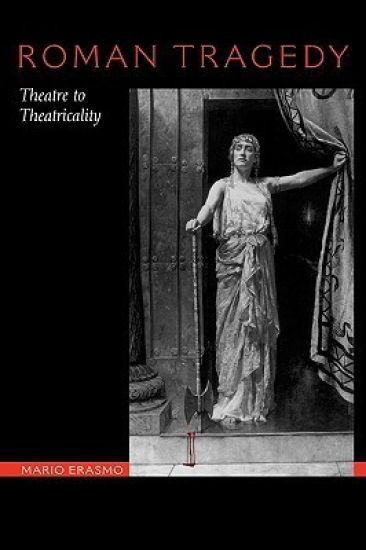
Roman tragedies were written for over three hundred years, but only fragments remain of plays that predate the works of Seneca in the mid-first century C.E., making it difficult to define the role of tragedy in ancient Roman culture. Nevertheless, in this pioneering book, Mario Erasmo draws on all the available evidence to trace the evolution of Roman tragedy from the earliest tragedians to the dramatist Seneca and to explore the role played by Roman culture in shaping the perception of theatricality on and off the stage. Performing a philological analysis of texts informed by semiotic theory and audience reception, Erasmo pursues two main questions in this study: how does Roman tragedy become metatragedy, and how did off-stage theatricality come to compete with the theatre? Working chronologically, he looks at how plays began to incorporate a rhetoricized reality on stage, thus pointing to their own theatricality. And he shows how this theatricality, in turn, came to permeate society, so that real events such as the assassination of Julius Caesar took on theatrical overtones, while Pompey's theatre opening and the lavish spectacles of the emperor Nero deliberately blurred the lines between reality and theatre. Tragedy eventually declined as a force in Roman culture, Erasmo suggests, because off-stage reality became so theatrical that on-stage tragedy could no longer compete.
Luis Leal

Luis Leal

Mario T. García

University of Texas Press
2000
pokkari
Professor Luis Leal is one of the most outstanding scholars of Mexican, Latin American, and Chicano literatures and the dean of Mexican American intellectuals in the United States. He was one of the first senior scholars to recognize the viability and importance of Chicano literature, and, through his perceptive literary criticism, helped to legitimize it as a worthy field of study. His contributions to humanistic learning have brought him many honors, including Mexico's Aquila Azteca and the United States' National Humanities Medal. In this testimonio or oral history, Luis Leal reflects upon his early life in Mexico, his intellectual formation at Northwestern University and the University of Chicago, and his work and publications as a scholar at the Universities of Illinois and California, Santa Barbara. Through insightful questions, Mario García draws out the connections between literature and history that have been a primary focus of Leal's work. He also elicits Leal's assessment of many of the prominent writers he has known and studied, including Mariano Azuela, William Faulkner, Octavio Paz, Carlos Fuentes, Juan Rulfo, Gabriel García Márquez, Jorge Luis Borges, Tomás Rivera, Rolando Hinojosa, Rudolfo Anaya, Elena Poniatowska, Sandra Cisneros, Richard Rodríguez, and Ana Castillo.
Desert Immigrants

Desert Immigrants

Mario T. García

Yale University Press
1982
pokkari
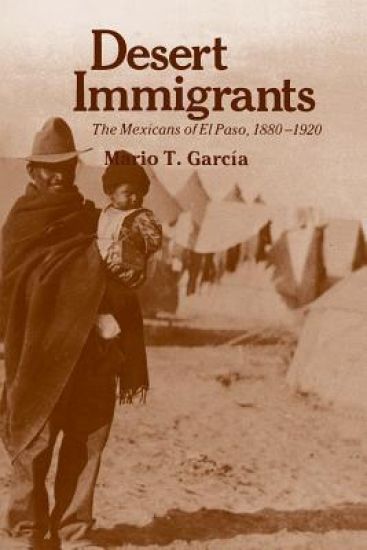
García explores the relationship of class, race, and labor in El Paso, documenting the evolution of work, housing, education, politics, and culture in the Mexican community. Desert Immigrants makes a significant contribution not only to Chicano and Mexican history, but to the history of immigration and labor and urban studies as well.
Mexican Americans

Mexican Americans

Mario T. García

Yale University Press
1991
pokkari
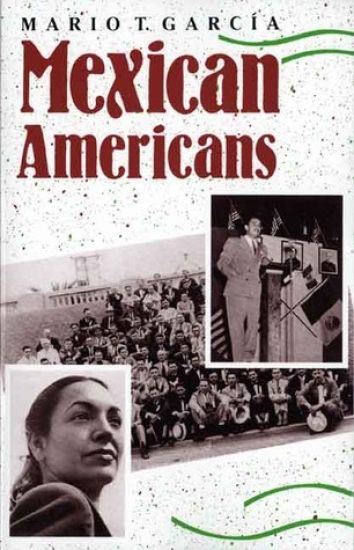
A pioneering political and intellectual history of the Chicano leaders who emerged from the barrios of the Southwest between 1930 and 1960—Ignacio L. López, George I. Sanchez, Josefina Fierro de Bright, and others—and of their effort to capture first-class citizenship for Mexican Americans. Drawing extensively on archival material and oral history, Mario T. García discusses the key figures, organizations, and issues of the movement; in so doing he casts new light not only on Chicano history but also on the histories of American ethnicity and civil rights movements.
Finding Philosophy in Social Science

Finding Philosophy in Social Science

Mario Bunge

Yale University Press
1996
sidottu
Written by an eminent and original thinker in the philosophy of science, this book takes a fresh, unorthodox look at the key philosophical concepts and assumptions of the social sciences. Mario Bunge contends that social scientists (anthropologists, sociologists, political scientists, economists, and historians) ought not to leave philosophy to philosophers who have little expertise in or knowledge of the social sciences. Bunge urges social scientists to engage in serious philosophizing and philosophers to participate in social research. The two fields are interrelated, he says, and important advances in each can supply tools for solving problems in the other.Bunge analyzes such concepts as fact, cause, and value that the fields of philosophy and social science share. He discusses assumptions and misassumptions involved in such current approaches as idealism, materialism, and subjectivism, and finds that none of the best-known philosophies helps to advance or even understand social science. In a highly critical appraisal of rational choice theories, Bunge insists that these models provide no solid substantive theory of society, nor do they help guide rational action. He offers ten criteria by which to evaluate philosophies of social science and proposes novel solutions to social science's methodological and philosophical problems. He argues forcefully that a particular union of rationalism, realism, and systemism is the logical and viable philosophical stance for social science practitioners.
Modern Portuguese

Modern Portuguese

Mário A. Perini

Yale University Press
2002
sidottu
This is the first comprehensive modern Portuguese grammar written for the English-speaking reader. The book covers in detail all the patterns of modern Portuguese as spoken and written in Brazil, focusing on those points which are especially challenging for the English-speaking student, such as the use of the subjunctive, use of the definite article, preterit vs. imperfect verb forms, prepositions, and many others. With a wealth of examples to clarify every topic and an extensive index, this indispensable grammar offers students and teachers easy access to all the information they need for in-depth study of Portuguese. Key features of the book:focuses on the needs of the English-speaking readerincorporates the results of recent linguistic research in jargon-free languageemphasizes modern spoken Brazilian usagedescribes current Brazilian pronunciation in detaildevotes a separate chapter to spelling problemsdiscusses trends of the modern spoken language
Human Learned Helplessness

Human Learned Helplessness

Mario Mikulincer

Kluwer Academic/Plenum Publishers
1994
sidottu
Summarizing 25 years of research, the author integrates virtually the entire published literature on the phenomenon of learned helplessness, as well as some unpublished data, into a single coherent theoretical framework. Dr. Mikulincer accounts for the complex nature of the phenomenon by focusing on cognitive, motivational, and emotional processes, and then details a new coping perspective to deal with uncontrollable events. His groundbreaking work will become an essential reference for all future work in the field.
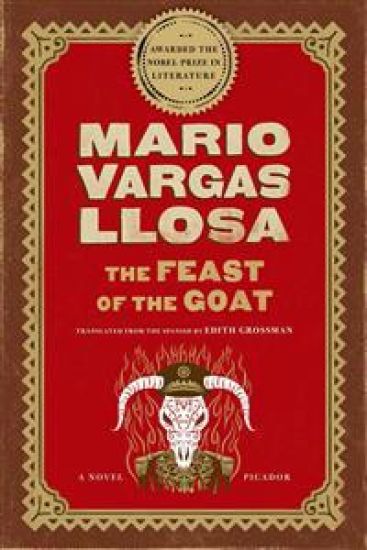
The Feast of the Goat

The Feast of the Goat

Mario Vargas Llosa

Picador USA
2002
nidottu
Haunted all her life by feelings of terror and emptiness, forty-nine-year-old Urania Cabral returns to her native Dominican Republic - and finds herself reliving the events of l961, when the capital was still called Trujillo City and one old man terrorized a nation of three million. Rafael Trujillo, the depraved ailing dictator whom Dominicans call the Goat, controls his inner circle with a combination of violence and blackmail. In Trujillo's gaudy palace, treachery and cowardice have become a way of life. But Trujillo's grasp is slipping. There is a conspiracy against him, and a Machiavellian revolution already underway that will have bloody consequences of its own. In this 'masterpiece of Latin American and world literature, and one of the finest political novels ever written' (Bookforum), Mario Vargas Llosa recounts the end of a regime and the birth of a terrible democracy, giving voice to the historical Trujillo and the victims, both innocent and complicit, drawn into his deadly orbit.
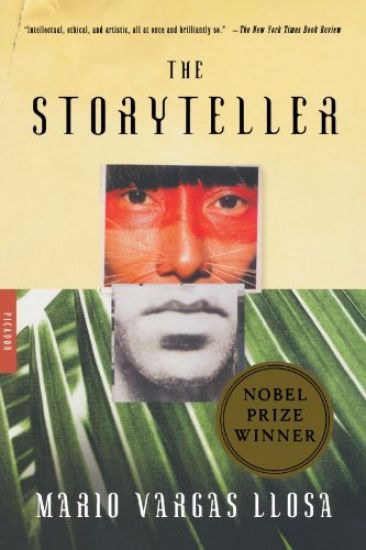
The Storyteller

The Storyteller

Mario Vargas Llosa

Picador Paper
2001
nidottu
WINNER OF THE NOBEL PRIZE IN LITERATURE At a small gallery in Florence, a Peruvian writer happens upon a photograph of a tribal storyteller deep in the jungles of the Amazon. He is overcome with the eerie sense that he knows this man...that the storyteller is not an Indian at all but an old school friend, Saul Zuratas. As recollections of Zuratas flow through his mind, the writer begins to imagine Zuratas's transformation from a modern to a central member of the unacculturated Machiguenga tribe. Weaving the mysteries of identity, storytelling, and truth, Vargas Llosa has created a spellbinding tale of one man's journey from the modern world to our origins, abandoning one in order to find meaning in both.
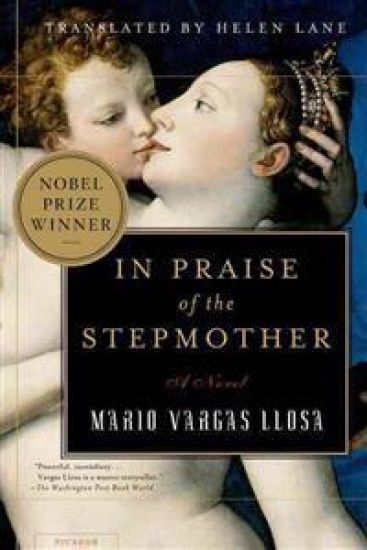
In Praise of the Stepmother

In Praise of the Stepmother

Mario Vargas Llosa

St. Martins Press-3pl
2002
nidottu
WINNER OF THE NOBEL PRIZE IN LITERATURE With meticulous observation and the seductive skill of a great storyteller, Vargas Llosa lures the reader into the shadow of perversion that, little by little, darkens the extraordinary happiness and harmony of his characters. The mysterious nature of happiness and above all, the corrupting power of innocence are the themes that underlie these pages, and the author has perfectly met the demands of the erotic novel, never dimming for an instant the fine poetic polish of his writing.
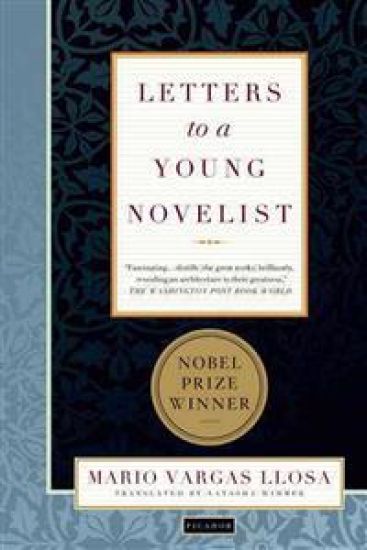
Letters to a Young Novelist

Letters to a Young Novelist

Mario Vargas Llosa

St. Martins Press-3pl
2003
nidottu
WINNER OF THE NOBEL PRIZE IN LITERATURE Mario Vargas Llosa condenses a lifetime of writing, reading, and thought into an essential manual for aspiring writers. Drawing on the stories and novels of writers from around the globe-Borges, Bierce, C line, Cort zar, Faulkner, Kafka, Robbe-Grillet-he lays bare the inner workings of fiction, all the while urging young novelists not to lose touch with the elemental urge to create. Conversational, eloquent, and effortlessly erudite, this little book is destined to be read and re-read by young writers, old writers, would-be writers, and all those with a stake in the world of letters.
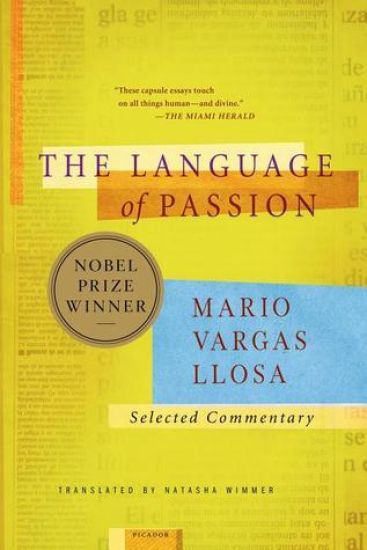
The Language of Passion: Selected Commentary

The Language of Passion: Selected Commentary

Mario Vargas Llosa

Picador USA
2004
nidottu
WINNER OF THE NOBEL PRIZE IN LITERATURE Internationally acclaimed novelist Mario Vargas Llosa has contributed a biweekly column to Spain's major newspaper, El Pa s, since 1977. In this collection of columns from the 1990s, Vargas Llosa weighs in on the burning questions of the last decade, including the travails of Latin American democracy, the role of religion in civic life, and the future of globalization. But Vargas Llosa's influence is hardly limited to politics. In some of the liveliest critical writing of his career, he makes a pilgrimage to Bob Marley's shrine in Jamaica, celebrates the sexual abandon of Carnaval in Rio, and examines the legacies of Vermeer, Bertolt Brecht, Frida Kahlo, and Octavio Paz, among others.
The Way to Paradise

The Way to Paradise

Mario Vargas Llosa

St. Martins Press-3pl
2004
nidottu
WINNER OF THE NOBEL PRIZE IN LITERATURE A New York Times Notable Book Flora Trist n, the illegitimate child of a wealthy Peruvian father and French mother, grows up in poverty and journeys to Peru to demand her inheritance. On her return in 1844, she makes her name as a champion of the downtrodden, touring the French countryside to recruit members for her Workers' Union. In 1891, Flora's grandson, struggling painter and stubborn visionary Paul Gauguin, abandons his wife and five children for life in the South Seas, where his dreams of paradise are poisoned by syphilis, the stifling forces of French colonialism, and a chronic lack of funds, though he has his pick of teenage Tahitian lovers and paints some of his greatest works. Flora died before her grandson was born, but their travels and obsessions unfold side by side in this double portrait, a rare study in passion and ambition, as well as the obstinate pursuit of greatness in the face of illness and death.
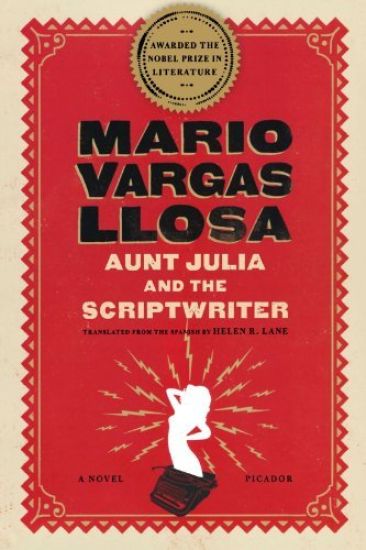
Aunt Julia and the Scriptwriter

Aunt Julia and the Scriptwriter

Mario Vargas Llosa

Picador USA
2007
nidottu
WINNER OF THE NOBEL PRIZE IN LITERATURE Mario Vargas Llosa's brilliant, multilayered novel is set in the Lima, Peru, of the author's youth, where a young student named Marito is toiling away in the news department of a local radio station. His young life is disrupted by two arrivals. The first is his aunt Julia, recently divorced and thirteen years older, with whom he begins a secret affair. The second is a manic radio scriptwriter named Pedro Camacho, whose racy, vituperative soap operas are holding the city's listeners in thrall. Pedro chooses young Marito to be his confidant as he slowly goes insane. Interweaving the story of Marito's life with the ever-more-fevered tales of Pedro Camacho, Vargas Llosa's novel is hilarious, mischievous, and masterful, a classic named one of the best books of the year by the New York Times Book Review.
Death in the Andes

Death in the Andes

Mario Vargas Llosa

Picador USA
2007
nidottu
Set in an isolated, rundown community in the Peruvian Andes, Vargas Llosa's novel tells the story of a series of mysterious disappearances involving the Shining Path guerrillas and a local couple performing cannibalistic sacrifices with strange similiarities to the Dionysian rituals of ancient Greece. Part detective novel and part political allegory, it offers a panoramic view of Peruvian society; not only of the current political violence and social upheaval, but also of the country's past and its connection to Indian culture and pre-Hispanic mysticism.