Le p re de Matin, un comte autoritaire, d prav , sans coeur, abandonne son fils d s son plus jeune ge. Ce dernier conna tra la vie des enfants trouv s de cette poque. Mais gr ce son bon fond, il surmontera sa vie abominable, et retrouvera son p re dans un pilogue tr s moral...Ce roman est aussi l'occasion pour Eug ne Sue d'exposer sa th se socialiste, et d noncer l'affreuse mis re des travailleurs et des nantis.
Le p re de Matin, un comte autoritaire, d prav , sans coeur, abandonne son fils d s son plus jeune ge. Ce dernier conna tra la vie des enfants trouv s de cette poque. Mais gr ce son bon fond, il surmontera sa vie abominable, et retrouvera son p re dans un pilogue tr s moral...Ce roman est aussi l'occasion pour Eug ne Sue d'exposer sa th se socialiste, et d noncer l'affreuse mis re des travailleurs et des nantis.
Le p re de Matin, un comte autoritaire, d prav , sans coeur, abandonne son fils d s son plus jeune ge. Ce dernier conna tra la vie des enfants trouv s de cette poque. Mais gr ce son bon fond, il surmontera sa vie abominable, et retrouvera son p re dans un pilogue tr s moral...Ce roman est aussi l'occasion pour Eug ne Sue d'exposer sa th se socialiste, et d noncer l'affreuse mis re des travailleurs et des nantis.
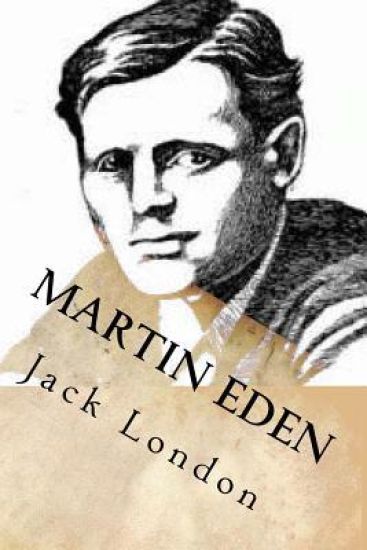
Martin Eden is a 1909 novel by American author Jack London about a young proletarian autodidact struggling to become a writer. It was first serialized in The Pacific Monthly magazine from September 1908 to September 1909 and published in book form by Macmillan in September 1909. *Plot summary* Living in Oakland at the beginning of the 20th century, Martin Eden struggles to rise above his destitute, proletarian circumstances through an intense and passionate pursuit of self-education, hoping to achieve a place among the literary elite. His principal motivation is his love for Ruth Morse. Because Eden is a rough, uneducated sailor from a working-class background 4] and the Morses are a bourgeois family, a union between them would be impossible unless and until he reached their level of wealth and refinement.Over a period of two years, Eden promises Ruth that success will come, but just before it does, Ruth loses her patience and rejects him in a letter, saying, "if only you had settled down ... and attempted to make something of yourself". By the time Eden attains the favour of the publishers and the bourgeoisie who had shunned him, he has already developed a grudge against them and become jaded by toil and unrequited love. Instead of enjoying his success, he retreats into a quiet indifference, interrupted only to rail mentally against the genteelness of bourgeois society or to donate his new wealth to working-class friends and family. He felt that people did not value him for himself or for his work but only for his fame. The novel ends with Eden's committing suicide by drowning, which contributed to what researcher Clarice Stasz calls the "biographical myth" that Jack London's own death was a suicide. London's oldest daughter Joan commented that in spite of its tragic ending, the book is often regarded as "a 'success' story ... which inspired not only a whole generation of young writers but other different fields who, without aid or encouragement, attained their objectives through great struggle"... ohn Griffith "Jack" London (born John Griffith Chaney, January 12, 1876 - November 22, 1916)was an American novelist, journalist, and social activist. A pioneer in the then-burgeoning world of commercial magazine fiction, he was one of the first fiction writers to obtain worldwide celebrity and a large fortune from his fiction alone. Some of his most famous works include The Call of the Wild and White Fang, both set in the Klondike Gold Rush, as well as the short stories "To Build a Fire", "An Odyssey of the North", and "Love of Life". He also wrote of the South Pacific in such stories as "The Pearls of Parlay" and "The Heathen", and of the San Francisco Bay area in The Sea Wolf. London was part of the radical literary group "The Crowd" in San Francisco and a passionate advocate of unionization, socialism, and the rights of workers. He wrote several powerful works dealing with these topics, such as his dystopian novel The Iron Heel, his non-fiction expos The People of the Abyss, and The War of the Classes.
Gemma Ebworthy is eighteen, pregnant, and alone. Now that she's been evicted, she finds herself sleeping in a barn, never dreaming that tomorrow could bring kindness of a life-changing magnitude.The Martins aren't a typical family-even for rural Kansas. With more kids than can be counted on one hand and a full-time farm, Gemma must make a lot of adjustments to fit in. But despite their many differences, Gemma finds herself drawn to this family and their radical Christian faith.When Gemma's past collides with her yet again, she must begin revealing her colorful history. With every detail Gemma concedes, she fears she will lose the Martins' trust and the stable environment she desires for herself and her unborn child. Just how far can the Martins' love and God's forgiveness go?
" Au temps jadis, il y avait bien loin d'ici, au pays des Mores, un petit prince qui tait merveilleusement beau. Il tait si beau qu'avant sa naissance on avait pr dit que, si jamais le roi, son p re, venait le voir il en perdrait la vue. Le monarque, qui tenait ses yeux, fit lever son fils au fond d'un vieux ch teau dans un lieu d sert; mais l'enfant atteignait peine sa dixi me ann e, qu'ennuy de sa solitude, il trompa la vigilance de ses gardiens et s' chappa. Il fut recueilli par un de ces camp naires qui prom nent leur baudet aux quatre coins du monde, en criant: Marchand de blanc sable ou: A cerises pour du vieux fer ..."
In the case of "Hunted Down," a first-person narrative in the manner of Wilkie Collins, the motivation was decidedly pecuniary. "Its subject has been taken from the life of a notorious criminal . . ., and its principal claim to notice was the price paid for it. For a story not longer than half of one of the numbers of Chuzzlewit or Copperfield, he had received a thousand pounds" (Forster 344). For John Forster, the installment of a novel was worth more aesthetically than a short story, representative of a genre that he seems to regard as an inferior. In fact, Dickens's biographers from Forster to Ackroyd have paid scant attention to "Hunted Down," aside from the large sum paid for it and the possible connection between the story's antagonist and such real-life models as the poisoners Thomas Wainewright. Another notorious criminal who may have sat for the story's villainous Slinkton, according to Philip Collins, is " Dr.] Palmer of Rugeley another wholesale murderer of persons.
Living in Oakland at the beginning of the 20th century, Martin Eden struggles to rise above his destitute, proletarian circumstances through an intense and passionate pursuit of self-education, hoping to achieve a place among the literary elite. His principal motivation is his love for Ruth Morse. Because Eden is a rough, uneducated sailor from a working-class background and the Morses are a bourgeois family, a union between them would be impossible unless and until he reached their level of wealth and refinement.Over a period of two years, Eden promises Ruth that success will come, but just before it does, Ruth loses her patience and rejects him in a letter, saying, "if only you had settled down ... and attempted to make something of yourself". By the time Eden attains the favour of the publishers and the bourgeoisie who had shunned him, he has already developed a grudge against them and become jaded by toil and unrequited love. Instead of enjoying his success, he retreats into a quiet indifference, interrupted only to rail mentally against the genteelness of bourgeois society or to donate his new wealth to working-class friends and family. He felt that people did not value him for himself or for his work but only for his fame.
The Story Early 20th century. Martin Eden is a young Oakland sailor born in the shallows (as well as in ignorance and violence). His life is made up of adventures, travels, but also brutality and work. This is how he defends a young man in a brawl. He comes from the wealthy class and invites him to dinner to thank him. On this occasion Martin meets his sister Ruth Morse, delicate girl from a bourgeois family of which he falls in love. He decides to learn to conquer it. Little by little, first to please the girl he loves, then for real taste of study, he forges an encyclopedic culture and strives to become famous by becoming a writer. But despite the talent he thinks he has, he can not live by his pen. Ruth, who becomes his fianc e, would prefer that he find a safe situation, rather than continue writing. He finds that the bourgeoisie, which was his initial model, understands nothing about culture, only a few people like his friend Russ Brissenden actually talk to him. Following the publication of an article in a local paper in which he is presented as a socialist, what he is not, Ruth leaves. Brissenden dies while Eden has published his poem. He no longer likes to write, but suddenly he becomes a successful author. He sends to the magazines the works he had submitted previously but this time the publishers accept them and ask for more, propelling it to the top. Wanting to free himself from the invading hypocrisy, Martin Eden leaves to settle on an island of the Pacific. On the boat, having no longer any taste for anything, he lets himself slip into the sea.