Kirjojen hintavertailu. Mukana 11 699 587 kirjaa ja 12 kauppaa.

Kirjahaku

Etsi kirjoja tekijän nimen, kirjan nimen tai ISBN:n perusteella.

1000 tulosta hakusanalla Mauri Kunnas

The Maori King

The Maori King

J. E. Gorst

Cambridge University Press
2011
pokkari
The British politician and lawyer Sir John Eldon Gorst (1835–1916) arrived in New Zealand in 1860, shortly after the outbreak of the Taranaki Wars (from 1860 onwards), with idealistic intentions of working with Bishop Selwyn and the Maori. He took on various governmental roles that required contact with the Maori, including those of school inspector, magistrate and, later, Civil Commissioner for the Waikato region, whose powerful chiefs had not signed the 1840 Treaty of Waitangi. In 1864 he published this book analysing the social and economic situation in New Zealand, the rapid deterioration of relations between Maori and Europeans (which he ascribes largely to errors and neglect on the part of the British administration) and Maori demands for self-government. He describes, often as an eye-witness, the complex political wrangling that took place, and sets out his own views about the past and future relations between the two ethnic groups.
Revival: Maori Symbolism (1926)

Revival: Maori Symbolism (1926)

Ettie A. Rout

Routledge
2018
sidottu
‘Maori Symbolism’ is a story of a great race as told in their own Sacred Legends. And it is even more than this. It is an accurate record of the inner meaning of Life Symbolism on which the civilization of the Dark-Whites all over the world is founded. That symbolism stands for Cultivation – of the race, of the body and of the land. The numerous illustrations are to be regarded as documents supporting the evidence reported in the text. Some of this is of startling interest, as for insurance that concerning the casting of ancient statues and megaliths from molten lava. The Sacred Legends concerning the origin and migration of the New Zealand Maori are reported at some length, and the evidence given throws fresh light on the important ‘Diffusion’ controversy. Maori land cultivation is shown to have been far in advance of European. Maori cultivation of the body, expressed in native dances, is demonstrated to be an ordered system of physical education, designed to improve and preserve the fittest. Maori race culture is exhibited as based on a lofty code of social and sexual ethics. Maori religion and philosophy, as expressed in symbolic decoration and writing, are for the first time truthfully explained and interpreted.
Revival: Maori Symbolism (1926)

Revival: Maori Symbolism (1926)

Ettie A. Rout

Routledge
2018
nidottu
‘Maori Symbolism’ is a story of a great race as told in their own Sacred Legends. And it is even more than this. It is an accurate record of the inner meaning of Life Symbolism on which the civilization of the Dark-Whites all over the world is founded. That symbolism stands for Cultivation – of the race, of the body and of the land. The numerous illustrations are to be regarded as documents supporting the evidence reported in the text. Some of this is of startling interest, as for insurance that concerning the casting of ancient statues and megaliths from molten lava. The Sacred Legends concerning the origin and migration of the New Zealand Maori are reported at some length, and the evidence given throws fresh light on the important ‘Diffusion’ controversy. Maori land cultivation is shown to have been far in advance of European. Maori cultivation of the body, expressed in native dances, is demonstrated to be an ordered system of physical education, designed to improve and preserve the fittest.
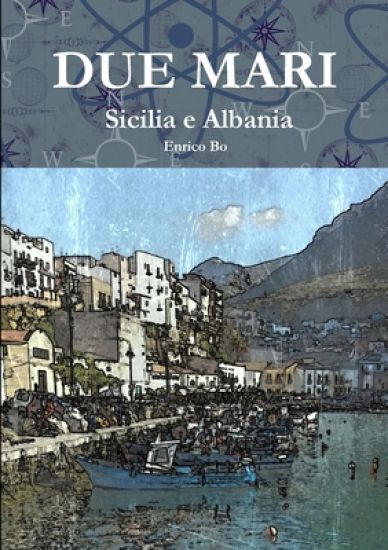
Due mari - Sicilia e Albania
Un'ennesima "falsa" guida di viaggio che l'autore stila non appena ritorna da qualcuno dei suoi giri piu o meno impegnativi. Siamo ormai al settimo appuntamento e la falsariga non cambia. Il libro contiene come sempre alcuni appunti ed indicazioni certamente utili per chi si appresta a compiere un viaggio in questi luoghi, ma e soprattutto una raccolta di impressioni, di spunti di discussione raccolti per la via e storie da raccontare per tratteggiare i chiaroscuri di mondi diversi tra di loro, anche se spesso si ritroveranno piu simili di quanto non ci si possa attendere. Due paesi, Sicilia ed Albania, in fondo non troppo lontani, che hanno visto la propria gente scappare, andarsene lasciando le proprie radici per cercare vita migliore. Un invito al viaggio da compiere come sempre alla scoperta di realta spesso in contrasto con i nostri pregiudizi. Insomma il viaggio come scopo in se al di la del luogo che si andra a visitare, anche se la ninfa che vi abita cerchera di convincerci a rimanere per sempre.
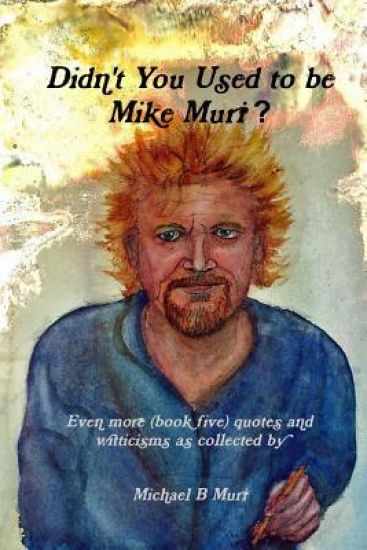
Didn't You Used to be Mike Muri
My fifth book of quotes and witticisms I have heard throughout the years. Humorous, enlightening and nonsensical thing ordinary people have said. A friend, Mark Moore said of my first book You're Just Like Me..."It's amazing...you pick this book up and read it and you start laughing...and everybody likes to laugh." I hope that is still the result of reading this latest work of Love and Laughter.
Plays Maori and Pakeha; Volume 2

Plays Maori and Pakeha; Volume 2

Janet McLeod; Caxton Press; Leslie J Lockerbie

Sagwan Press
2018
pokkari
This work has been selected by scholars as being culturally important, and is part of the knowledge base of civilization as we know it. This work was reproduced from the original artifact, and remains as true to the original work as possible. Therefore, you will see the original copyright references, library stamps (as most of these works have been housed in our most important libraries around the world), and other notations in the work.This work is in the public domain in the United States of America, and possibly other nations. Within the United States, you may freely copy and distribute this work, as no entity (individual or corporate) has a copyright on the body of the work.As a reproduction of a historical artifact, this work may contain missing or blurred pages, poor pictures, errant marks, etc. Scholars believe, and we concur, that this work is important enough to be preserved, reproduced, and made generally available to the public. We appreciate your support of the preservation process, and thank you for being an important part of keeping this knowledge alive and relevant.
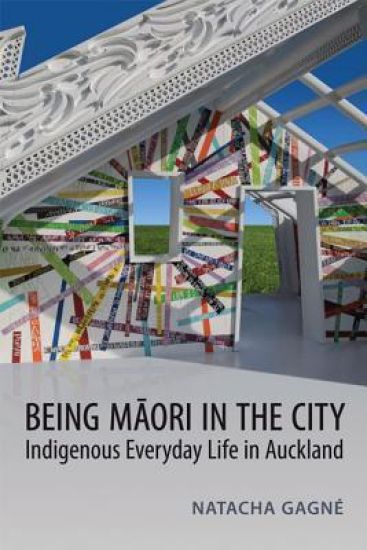
Being Maori in the City

Being Maori in the City

Natacha Gagné

University of Toronto Press
2013
pokkari
Indigenous peoples around the world have been involved in struggles for decolonization, self-determination, and recognition of their rights, and the Maori of Aotearoa-New Zealand are no exception. Now that nearly 85% of the Maori population have their main place of residence in urban centres, cities have become important sites of affirmation and struggle. Grounded in an ethnography of everyday life in the city of Auckland, Being Maori in the City is an investigation of what being Maori means today. One of the first ethnographic studies of Maori urbanization since the 1970s, this book is based on almost two years of fieldwork, living with Maori families, and more than 250 hours of interviews. In contrast with studies that have focused on indigenous elites and official groups and organizations, Being Maori in the City shines a light on the lives of ordinary individuals and families. Using this approach, Natacha Gagné adroitly underlines how indigenous ways of being are maintained and even strengthened through change and openness to the larger society.
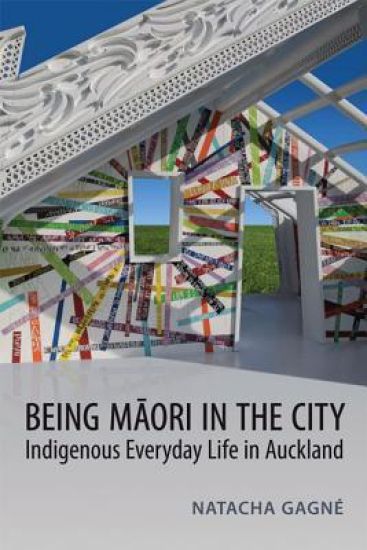
Being Maori in the City

Being Maori in the City

Natacha Gagné

University of Toronto Press
2013
sidottu
Indigenous peoples around the world have been involved in struggles for decolonization, self-determination, and recognition of their rights, and the Maori of Aotearoa-New Zealand are no exception. Now that nearly 85% of the Maori population have their main place of residence in urban centres, cities have become important sites of affirmation and struggle. Grounded in an ethnography of everyday life in the city of Auckland, Being Maori in the City is an investigation of what being Maori means today. One of the first ethnographic studies of Maori urbanization since the 1970s, this book is based on almost two years of fieldwork, living with Maori families, and more than 250 hours of interviews. In contrast with studies that have focused on indigenous elites and official groups and organizations, Being Maori in the City shines a light on the lives of ordinary individuals and families. Using this approach, Natacha Gagné adroitly underlines how indigenous ways of being are maintained and even strengthened through change and openness to the larger society.