A great Learn to read Children's book. Family fun reading for parents to their children. The story of Teagan and how she fills her time with rhyme and the importance of when to focus.
English Title: The Drama of ScriptureLE GRAND R CIT DE LA BIBLE raconte l'histoire biblique de la r demption en tant que narration unique et coh rente de l'oeuvre continue de Dieu au sein de son royaume. Nous sommes nombreux avoir lu la Bible comme si elle n' tait qu'une mosa que de petits fragments. Par contre, en lisant la Bible de mani re aussi fragment e, nous faisons fi de l'intention de son auteur divin de fa onner notre vie au moyen de son r cit. Pour que le r cit de la Bible fa onne notre vie, il y a deux choses que nous devons bien comprendre: l'histoire biblique constitue une unit incontestable dont nous pouvons d pendre et chacun de nous a un r le jouer dans cette histoire.Dans le pr sent livre, Craig G. Bartholomew et Michael W. Goheen d montrent comment l'histoire biblique constitue le fondement d'une vision chr tienne du monde. Ils nous invitent nous approprier cette histoire, d couvrir la place que nous y occupons et en jouir pleinement.
This book guides the reader through the design of circuits and wireless IoT devices deployed in applications demanding low power, small size, and high levels of integration. The design of a sub-1V wireless-LAN receiver is detailed along with associated calibration algorithms. Some of the key circuits detailed include a successive approximation analog-to-digital converter, a rail-to-rail comparator, a digitally programmable CMOS low-noise amplifier, an RF voltage to current converter, and a fifth-order Chebyshev analog programmable filter. Helpful appendices are included teaching operational amplifier design, CMOS and SiGe low-noise amplifier design, impedance matching, noise and distortion analysis. While theory and design equations are presented throughout the book for the various circuit designs, practical implementation and design tradeoffs are emphasized so the reader can immediately apply knowledge gained. Receiver and calibration circuits are designed in a standard CMOS technology using a 900mV power supply.Provides readers with analytical tools and practical help, conveyed in a clear and concise manner, which will assist not only in understanding the material, but also in practical and functional implementation of the concepts demonstrated;Focuses on long range and broad-band IoT applications with a wireless-LAN focus, emphasizing detailed design techniques, helping readers transition from theoretical understanding to practical application;Bridges the gap between system level understanding and practical design implementation, providing readers with tools and techniques which can be applied immediately to their designs;Serves as a handy technical resource for practical design techniques, as well as a quick reference guide for design equations and examples pertinent to realistic applications.
This book guides the reader through the design of circuits and wireless IoT devices deployed in applications demanding low power, small size, and high levels of integration. The design of a sub-1V wireless-LAN receiver is detailed along with associated calibration algorithms. Some of the key circuits detailed include a successive approximation analog-to-digital converter, a rail-to-rail comparator, a digitally programmable CMOS low-noise amplifier, an RF voltage to current converter, and a fifth-order Chebyshev analog programmable filter. Helpful appendices are included teaching operational amplifier design, CMOS and SiGe low-noise amplifier design, impedance matching, noise and distortion analysis. While theory and design equations are presented throughout the book for the various circuit designs, practical implementation and design tradeoffs are emphasized so the reader can immediately apply knowledge gained. Receiver and calibration circuits are designed in a standard CMOS technology using a 900mV power supply.Provides readers with analytical tools and practical help, conveyed in a clear and concise manner, which will assist not only in understanding the material, but also in practical and functional implementation of the concepts demonstrated;Focuses on long range and broad-band IoT applications with a wireless-LAN focus, emphasizing detailed design techniques, helping readers transition from theoretical understanding to practical application;Bridges the gap between system level understanding and practical design implementation, providing readers with tools and techniques which can be applied immediately to their designs;Serves as a handy technical resource for practical design techniques, as well as a quick reference guide for design equations and examples pertinent to realistic applications.
The future of gene editing in humans will involve the use of CRISPR. How we think about the combination of the scientific, ethical, and moral aspects of this technology is paramount to the success or failure of CRISPR in humans. Unfortunately, the current scientific discussion around CRISPR in humans has left ethics trailing behind due to the rapid pace of innovation. New modes of ethics and stakeholder participation are needed to keep pace with rapid scientific advances and provide the necessary policy and ethical frameworks necessary to help CRISPR flourish as an important health care tool to treat human disease. This requires intense interdisciplinary collaboration and discussion between scientists and philosophers, policymakers and legal scholars, and the public.Dr. Michael W. Nestor (a neuroscientist who actively uses CRISPR in pre-clinical research) and Professor Richard Wilson (a philosopher who focuses on anticipatory ethics) set out to develop a new ethical approachconsidering the use of CRISPR in human targeted therapies. The field of anticipatory ethics is uniquely poised to tackle questions in fast-evolving technical areas where the pace of innovation outstrips traditional philosophical approaches. Furthermore, because of its “anticipatory” nature, this type of analysis provides the opportunity to look ahead and into the future concerning potential uses of CRISPR in humans, uses that are not currently possible. Nestor and Wilson collaborate both scientifically and philosophically in this book to forecast potential outcomes as the scientific and medical community goes beyond using CRISPR to correct genes that underlie diseases where a single gene is involved. Instead, Nestor and Wilson envision CRISPR in complex, multigenic disorders with a specific focus on the use of CRISPR to edit genes involved in mental traits like IQ or other cognitive characteristics. They argue that the use of CRISPR to modify genes that are potentially important for mental traits represents a particular category for special consideration from scientists, policymakers, the public, and other stakeholders. Nestor and Wilson explain why using CRISPR to alter mental states is very different from treating a disease like cancer by combining the latest scientific advancements with anticipatory ethics and philosophical phenomenology. Their analysis considers the role that mental states play in personhood and the lived experience-as genes that can change mental/cognitive attributes like IQ have wide-ranging effects on the lived experience in ways that are categorically different from other attributes. This book was written to set a non-exhaustive framework for shared understanding and discussion across disciplines and appeal to scientists and non-scientists alike. This appeal is made inclusively, inviting all stakeholders to engage in active dialogue about the appropriate context for using CRISPRand other gene-editing technologies in humans. It provides policy analysis and recommendations for assuring the most inclusive, equitable, and ethically sound use of CRISPR in humans, concerning its positive potential to treat mental conditions like depression, schizophrenia, Alzheimer’s disease, autism, and the potential to induce other cognitive enhancements.
The future of gene editing in humans will involve the use of CRISPR. How we think about the combination of the scientific, ethical, and moral aspects of this technology is paramount to the success or failure of CRISPR in humans. Unfortunately, the current scientific discussion around CRISPR in humans has left ethics trailing behind due to the rapid pace of innovation. New modes of ethics and stakeholder participation are needed to keep pace with rapid scientific advances and provide the necessary policy and ethical frameworks necessary to help CRISPR flourish as an important health care tool to treat human disease. This requires intense interdisciplinary collaboration and discussion between scientists and philosophers, policymakers and legal scholars, and the public.Dr. Michael W. Nestor (a neuroscientist who actively uses CRISPR in pre-clinical research) and Professor Richard Wilson (a philosopher who focuses on anticipatory ethics) set out to develop a new ethical approachconsidering the use of CRISPR in human targeted therapies. The field of anticipatory ethics is uniquely poised to tackle questions in fast-evolving technical areas where the pace of innovation outstrips traditional philosophical approaches. Furthermore, because of its “anticipatory” nature, this type of analysis provides the opportunity to look ahead and into the future concerning potential uses of CRISPR in humans, uses that are not currently possible. Nestor and Wilson collaborate both scientifically and philosophically in this book to forecast potential outcomes as the scientific and medical community goes beyond using CRISPR to correct genes that underlie diseases where a single gene is involved. Instead, Nestor and Wilson envision CRISPR in complex, multigenic disorders with a specific focus on the use of CRISPR to edit genes involved in mental traits like IQ or other cognitive characteristics. They argue that the use of CRISPR to modify genes that are potentially important for mental traits represents a particular category for special consideration from scientists, policymakers, the public, and other stakeholders. Nestor and Wilson explain why using CRISPR to alter mental states is very different from treating a disease like cancer by combining the latest scientific advancements with anticipatory ethics and philosophical phenomenology. Their analysis considers the role that mental states play in personhood and the lived experience-as genes that can change mental/cognitive attributes like IQ have wide-ranging effects on the lived experience in ways that are categorically different from other attributes. This book was written to set a non-exhaustive framework for shared understanding and discussion across disciplines and appeal to scientists and non-scientists alike. This appeal is made inclusively, inviting all stakeholders to engage in active dialogue about the appropriate context for using CRISPRand other gene-editing technologies in humans. It provides policy analysis and recommendations for assuring the most inclusive, equitable, and ethically sound use of CRISPR in humans, concerning its positive potential to treat mental conditions like depression, schizophrenia, Alzheimer’s disease, autism, and the potential to induce other cognitive enhancements.
In the past fifteen years, the theory of right-angled Artin groups and special cube complexes has emerged as a central topic in geometric group theory. This monograph provides an account of this theory, along with other modern techniques in geometric group theory. Structured around the theme of group actions on contractible polyhedra, this book explores two prominent methods for constructing such actions: utilizing the group of deck transformations of the universal cover of a nonpositively curved polyhedron and leveraging the theory of simple complexes of groups. The book presents various approaches to obtaining cubical examples through CAT(0) cube complexes, including the polyhedral product construction, hyperbolization procedures, and the Sageev construction. Moreover, it offers a unified presentation of important non-cubical examples, such as Coxeter groups, Artin groups, and groups that act on buildings. Designed as a resource for graduate students and researchers specializing in geometric group theory, this book should also be of high interest to mathematicians in related areas, such as 3-manifolds.
This book, now in a revised and extended second edition, offers an in-depth account of Coxeter groups through the perspective of geometric group theory. It examines the connections between Coxeter groups and major open problems in topology related to aspherical manifolds, such as the Euler Characteristic Conjecture and the Borel and Singer Conjectures. The book also discusses key topics in geometric group theory and topology, including Hopf’s theory of ends, contractible manifolds and homology spheres, the Poincaré Conjecture, and Gromov’s theory of CAT(0) spaces and groups. In addition, this second edition includes new chapters on Artin groups and their Betti numbers. Written by a leading expert, the book is an authoritative reference on the subject.
This book is a re-edition and detailed study of a parchment codex from Egypt of the fourth century CE with Greek and Coptic recipes for healing through magic and pharmacology (Ann Arbor, University of Michigan Library Ms. 136). A text and annotated translation were published in a brief journal article by William H. Worrell in 1935, but the codex has been understudied since then. This new edition offers advances in readings and interpretation, a thorough philological commentary, and accompanying studies on the ritual and medical traditions to which the codex belongs and its position in the linguistic landscape of Egypt. The recipes comprise magical rituals for healing and broader personal advancement, pharmacological and related medical recipes, and advice for the management of a household. Traditional Egyptian religion and ritual are illustrated in interaction with medical practices of Hellenic culture more recently introduced to Egypt, and the archaic, even poetic language of some of the Coptic invocations featuring the Egyptian gods Amun and Thoth share pages with an incantation constructed from the verses of Homer.
Während der globalen Finanzkrise sahen sich Hoheitsträger in vielen Staaten veranlasst, zur Wiederherstellung der Finanzmarktstabilität in individuelle Rechtspositionen von Eigen- und Fremdkapitalgebern sowie Staatsgläubigern einzugreifen. Einen zentralen Prüfstein der gerichtlichen und schiedsgerichtlichen Aufarbeitung dieser Eingriffe bilden in allen untersuchten Rechtsordnungen verfassungs- und völkerrechtliche Garantien des Privateigentums. Auf dieser Grundlage erschließt Michael W. Müller die strukturbildende Funktion des Eigentums für das öffentliche Finanzmarktrecht. Dabei zeigt er, dass das Institut grund- und menschenrechtlichen Eigentumsschutzes in der Lage ist, den Konflikt individueller Anlage- und kollektiver Stabilitätsinteressen theoretisch abzubilden. Durch seine rechtsvergleichende Analyse gewinnt der Autor Prinzipien für den hoheitlichen Umgang mit Finanzkrisen, die Gegenstand einer internationalen Verständigung sein könnten.
This monograph provides a tool-set for hybrid estimation that can successfully monitor the behavior of complex artifacts with a large number of possible operational and failure modes such as production plants, automotive or aeronautic systems, and autonomous robots. For this purpose, ideas from the fields of System Theory and Artificial Intelligence are taken and hybrid estimation is reformulated as a search problem. This allows to focus the estimation onto highly probably operational modes, without missing symptoms that might be hidden among the noise in the system. Additionally a novel approach to continue hybrid estimation in the presence of unknown behavioral modes and to automate system analysis and synthesis tasks for on-line operation are presented. This leads to a flexible model-based hybrid estimation scheme for complex artifacts that robustly copes with unforeseen situations.
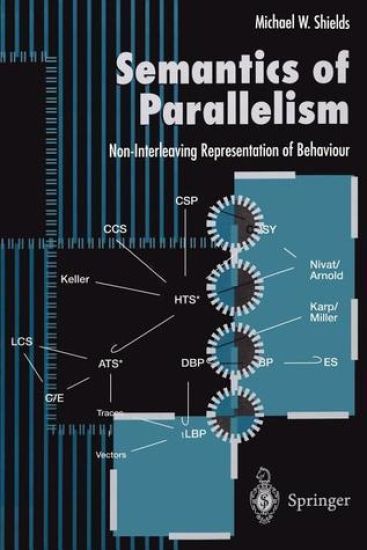
Semantics of Parallelism is the only book which provides a unified treatment of the non-interleaving approach to process semantics (as opposed to the interleaving approach of the process algebraists). Many results found in this book are collected for the first time outside conference and journal articles on the mathematics of non-interleaving semantics. It gives the reader a unified view of various attempts to model parallelism within one conceptual frame work. It is aimed at postgraduates in theoretical computer science and academics who are teaching and researching in the modelling of discrete, concurrent/distributed systems. Workers in the information technology industry who are interested in available theoretical studies on parallelism will also be interested in this book.
"Postpartum Depression: Causes and Consequences" chronicles a decade and a half of research into this relatively common mood disorder experienced in various forms by between 10-40% of all women following delivery. The author has conducted three major studies all of which are presented in this volume. The most recent study comprises the bulk of the monograph and presents the results with regard to psychological, social and hormonal factors in postpartum depression and the blues. Information regarding the epidemiology, etiology and treatment of postpartum depression is also included. The work described in this volume represents the attempt by the author to begin to address several of the major unresolved questions regarding the prevalence, causes, and consequences of postpartum mood disorders. The important negative implications of poor maternal adjustment for both the new mother and her family as well as the increased awareness of childbearing women who are now demanding answers and information make this book indispensable for all practitioners in psychology, psychiatry and obstetrics-gynecology as well as for the students of these disciplines.
This new edition of Impact of Information on Society takes account of a number of new developments affecting information's impact on our lives. It also incorporates lessons to be learnt from prominent events. For example, a 'UK Freedom of Information Act', forecast in the 1st edition, is now law and so updating is necessary. The growing significance of knowledge management today requires a closer look at this field and clarification of its relation to information management. The first edition has been reviewed critically and sections have been amplified and rearranged, with new material being added where necessary. To mention just a few points: since the 1st edition, there have been amendments to copyright, data protection legislation and human rights legislation. The consequences of the enormous and growing level of use of the Internet, eMail and mobile phones (including text messaging) also requires reassessment.
Die Kommission der Europaischen Gemeinschaften ist berechtigt, bei Verstossen gegen die gemeinschaftsrechtlichen Wettbewerbsregeln Geldbussen zu verhangen. Diese Bussen, die als strafrechtliche Sanktionen im weiteren Sinne gewertet werden mussen, richten sich gegen Unternehmen und konnen Millionenbetrage erreichen. Im Hinblick auf die Frage, ob der Einwand von Irrtum oder Unkenntnis die Strafbarkeit beeinflussen kann, werden die wichtigsten nationalen Rechtsordnungen sowie die Entscheidungspraxis der Kommission und des Gerichtshofs untersucht. Im Ergebnis muss der Irrtum - entsprechend dem gemeinsamen Grundgedanken im Recht der Mitgliedsstaaten - auch im supranationalen Recht grundsatzlich anerkannt werden, wenngleich bei einzelnen Irrtumsvarianten Einschrankungen zu gelten haben. Das Sanktionsrecht der Gemeinschaften ist erst im Entstehen begriffen, doch wird es - nicht nur durch die Verwirklichung des europaischen Binnenmarktes - standig an Bedeutung gewinnen."