Kirjojen hintavertailu. Mukana 12 459 402 kirjaa ja 12 kauppaa.

Kirjahaku

Etsi kirjoja tekijän nimen, kirjan nimen tai ISBN:n perusteella.

1000 tulosta hakusanalla Mohamed Hashim

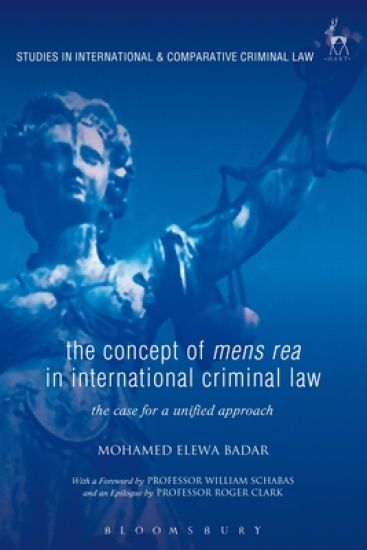
The Concept of Mens Rea in International Criminal Law
This is an endeavour to find a unified approach to the doctrine of mens rea in the sphere of international criminal law, based on an in-depth comparative analysis of the world’s majorlegal systems and the jurisprudence of international criminal tribunals. The study also examines the general principles that underlie the various approaches to the subjective elementrequired in perpetration and participation in crimes and the interrelation between mistake of law and mistake of fact with the subjective element.
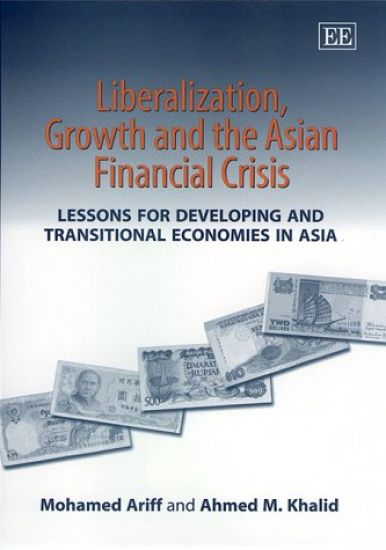
Liberalization, Growth and the Asian Financial Crisis

Liberalization, Growth and the Asian Financial Crisis

Mohamed Ariff; Ahmed M. Khalid

Edward Elgar Publishing Ltd
2000
sidottu
This timely book examines the effects of financial liberalization in the more advanced economies of Southeast Asia. The book also analyses the degree to which emerging and transitional economies in East and South Asia can benefit from this example. The weakness of the banking sector is examined in order to explain the reasons behind the currency crisis and to prescribe policies to avoid a similar episode in the future.Further, the book documents the individual steps taken to liberalize the economies over a period of about 20-30 years in each country. The analyses reveal that liberalization led to high growth in economies undertaking such reforms while unwillingness to take such reforms appear to have led to poor growth and hence low social development. This finding contradicts the common belief that liberalization led to the financial crisis and then to growth collapse.An efficient and liberalized financial sector is an essential precondition for promoting and accelerating economic growth and welfare. Arguments supporting this policy are based on the experience of Southeast Asian economies, particularly the pioneers such as Malaysia, Singapore, Indonesia and Thailand. This has led some less developed countries in East and South Asia to initiate the process of financial sector reforms and to realize the potential benefits of such reforms. The authors analyse the reform process and the lessons to be drawn from the experiences of these economies in their quest for sustained development in East and South Asia.
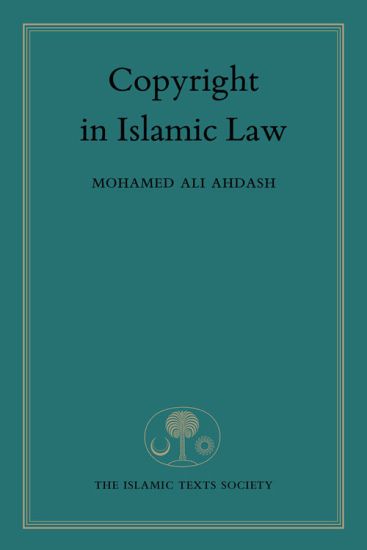
Copyright in Islamic Law

Copyright in Islamic Law

Mohamed Ali Ahdash

The Islamic Texts Society
2016
sidottu
Copyright in Islamic Law is the first work in English to discuss systematically the ideas of intellectual property and copyright from an Islamic perspective. In so doing, the author, Dr Mohamed Ahdash, adopts the discipline of usul al-fiqh (principles of Islamic jurisprudence) to see if key terms associated with one's legal rights--such as the right to ownership (milkiyya), wealth (ma l) and utility (manfa'a)--can be applied to copyright. Dr Ahdash then seeks evidence for copyright in the primary sources of Islamic law--the Qur'a n and the Hadith--before looking at how the secondary sources of analogy (qiyas), public interest (maslaha), custom ('urf) and legal maxims (qawa'id fiqhiyya) can be applied to copyright. The result of this study is a framework wherein the concept of copyright is defined and understood according to Sharia law. This gives a consistent approach from which specific legal rulings can be derived. Copyright in Islamic Law is both a ground-breaking study in Shari'a law and a valuable contribution to the ongoing debates on copyright in general.
Copyright in Islamic Law

Copyright in Islamic Law

Mohamed Ali Ahdash

The Islamic Texts Society
2016
nidottu
Copyright in Islamic Law is the first work in English to systematically address the ideas of intellectual property and copyright from an Islamic perspective. The author builds a framework from within Shari'a law to address the concepts of intellectual property and copyright. In so doing, he adopts the classical usul al-fiqh approach by firstly defining the key terms associated with the field, namely: right (haq), ownership (milkiyya), wealth (mal), and utility (manfa'a). Dr Ahdash then analyses how these terms are used in the Qur'an and in the Hadith before looking at how the secondary sources of qiyas (analogy), maslaha (public interest), 'urf (custom) and al-qawa'id al-fiqhiyya (legal maxims) can be applied to copyright. The result of this study is a framework wherein the concept of copyright is defined and understood in an Islamic manner. This then gives a consistent approach from which specific rulings can be derived. Copyright in Islamic Law is a ground-breaking study not only within Shari'a law, but also by making a contribution to the on-going debates on copyright in general.
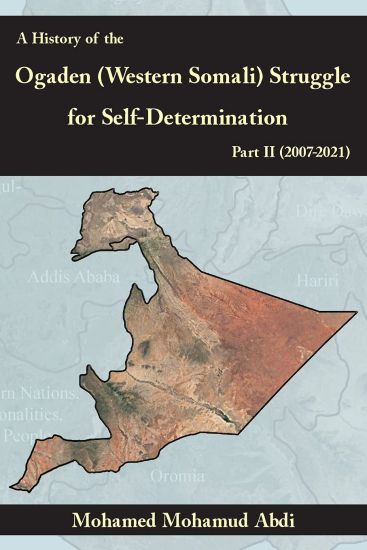
A History Of The Ogaden (Western Somali) Struggle For Self-Determination Part II (2007-2021)
The Ogaden region/Somali state is inhabited by Somalis and is geographically and administratively part of Ethiopia, but its political status remains unsettled. The war between Ethiopia and the resistance began with the Ethiopian incursion into the territory and intensified after the completion of the occupation but has never stopped. Because the inhabitants rejected the Ethiopian annexation, successive Ethiopian regimes pursued repressive policies to continue the occupation. This repression and the ensuing resistance to both the occupation and subsequent violations of human rights has meant that the region has not seen real peace since its forced incorporation into Ethiopia. The consequences of this protracted war and the subsequent crackdowns have adversely and severely affected the lives and livelihoods of the inhabitants. As a result of this insecurity and the persistent repression by successive Ethiopian governments, normal life has become unattainable there, and instead, persistent hunger, refugee crises and human rights abuses have become the norms. The inhabitants are constantly displaced internally and externally. Over a million people fled to neighbouring countries during the 1970s and 1980s. This historical analysis consists of two parts. The first part begins with the root causes of the Ogaden conflict, highlights the different stages of the fighting and its impacts on the living conditions of the inhabitants, and ends with a discussion on the prospects for a resolution to the conflict. The second part picks up the history from where the first one ended, casting light on the progress and political and humanitarian consequences of the conflict for the inhabitants of the Somali Region and for the wider Horn of Africa. It concludes with a prediction of the future scenarios for conflict resolution.The Ogaden conflict is the main source of the wars and instability that persist in the Horn of Africa region. Because of this conflict's wider impacts on that part of the African continent, a resolution to this conflict will not only lead to the alleviation of the suffering of the inhabitants of the Ogaden region but will also immensely contribute to peace in the Horn of Africa. As a foundation for the study of Somali society in the Ogaden region, this historical book aims to shed light on the main issues affecting the conflict to contribute to the understanding of the problem and thereby hopefully to the resolution of the conflict.
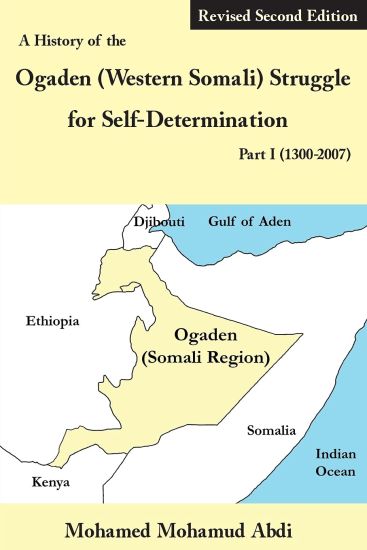
A History of the Ogaden (Western Somali) Struggle for Self-Determination Part I (1300-2007)
This book is about the history of the Ogaden region. Since its forced incorporation into Ethiopia, the region has been a zone of conflict. The war between the Ethiopian occupiers and the resistance forces of the Somalis began with the first Ethiopian incursions. It intensified after the completion of the occupation and still persists despite intermittent periods of respite. Because of the inhabitants' rejection of the annexation, the oppressive policies that successive Ethiopian regimes pursued to maintain the occupation and the ensuing resistance to both the occupation and the subsequent violations of human rights, the region has not seen real peace since the occupation began. The protracted war and persistent repression have made normal life unattainable there, and instead, hunger, refugee crises and human rights abuses have become the norm. The inhabitants are constantly being displaced. Over a million people fled to neighbouring countries during the 1970s and 1980s. Despite the long suffering of the inhabitants of the Ogaden region, the victims did not receive the attention that was due from the international community. This history work consists of two parts. The first part begins with the root causes of the conflict and highlights the different stages of the struggle and its impacts. It ends with a discussion of the case for self-determination and the prospects for a resolution to the conflict. The second part picks up the history from where the first part ended, casting light on the political and humanitarian consequences of the conflict for the region's inhabitants and for the wider Horn region. It concludes with a prediction about future resolution scenarios.The Ogaden issue is crucial to the Horn of Africa. Because of the wider impacts that the conflict is having on this part of the African continent, a resolution to the Ogaden conflict would not only lead to the alleviation of the suffering of the inhabitants of the Ogaden region but also make that part of the world a better place to live in. Despite the superpowers' involvement in the conflict and its devastating consequences, serious attempts have not been made to resolve it. Ethiopia's voice has always been louder than that of the Ogaden region, and as a result, the issue has been misrepresented in international arenas. As a foundation for the study of the Somali Ogaden region, this history work aims to shed light on the main issues affecting the conflict, in order to contribute to a better understanding of the problem and, hopefully, to the resolution of the conflict.
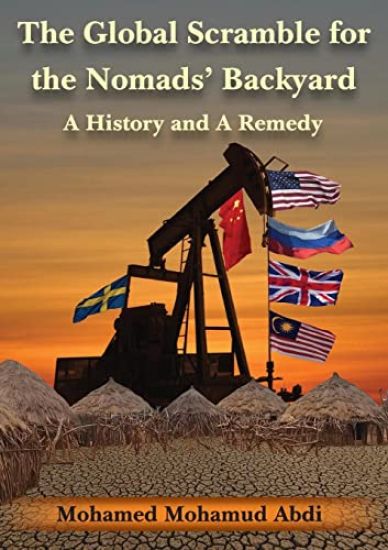
The Global Scramble for the Nomads' Backyard

The Global Scramble for the Nomads' Backyard

Mohamed Mohamud Abdi

Safis Publishing Limited
2022
pokkari
The book is about the exploitation of the natural energy resources in the Ogaden Basin by foreigners without the consent of the Somali Region's indigenous inhabitants. The exploitation started over a century ago and continues to the present day. The scramble for the geological resources in the Ogaden Basin, the consequent menace and how to repair the damage resulting from the scramble are the main topics of the book.The history section details the history of the scramble and its consequences for the Somali Region, for the Horn of Africa and for world peace. Recommended remediation measures for the scramble based on legal economic and environmental considerations follow that historical overview. The remedy aims to redress the negative impacts of the scramble and also construct a management framework that can lead to the optimal utilisation of the natural energy resources in the region.The book presents the management frameworks of the oil and gas industries of Norway and Nigeria as lessons in natural energy resource management. The models of these two countries are contrasting experiments in terms of success, but both provide useful lessons.The book ends with an ongoing discussion in the forum regarding the future of the oil and gas resources in the Somali Region. The forum under the tree is a continuous debate forum exclusively attended by the indigenous inhabitants who aim to protect the region's natural resources and environment and ensure optimal utilisation of the resources.
Somalia The Untold History 1941-1969

Somalia The Untold History 1941-1969

Mohamed Issa Trunji

Looh Press
2024
sidottu
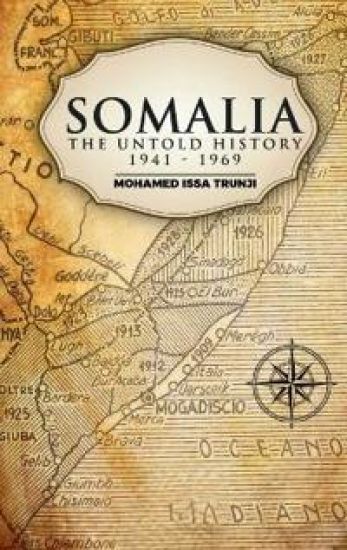
THIS STUDY COVERS THE PERIOD OF TIME BETWEEN 1941 and 1969 - almost three decades which undoubtedly represent a crucial time in Somalia's history. The period is divided into three distinct phases in which the country came under the rule of three different administrations: British military administration, UN Trusteeship and, finally, an independent Somali civilian administration, each of which left its imprint not only on the country but also on the lives of its people. The aim of this study is to shed light on misconceptions held by a large segment of Somalis, and assist them as they become acquainted with major political developments which characterized this period but have been largely ignored, except at the peripheral level. The existing literature on this important historical period is scanty, shallow and incomplete by nature; it is the work of foreign writers, and consequently does not provide a comprehensive or clear picture of major events. Owing to lack of investment in writing and teaching history, generations of young Somalis are growing up ignorant of their heritage or exposed to distorted presentations of it. This study does not purport to be a comprehensive history of the events which took place during the period it covers. It does, however, focus on major political and social transformations. It examines the difficult economic conditions Somalis endured under British military occupation and the political liberalization introduced by British colonial authorities, which paved the way for the formation of the first social and political movements.
Somalia The Untold History 1941-1969

Somalia The Untold History 1941-1969

Mohamed Issa Trunji

Looh Press
2024
pokkari
THIS STUDY COVERS THE PERIOD OF TIME BETWEEN 1941 and 1969 - almost three decades which undoubtedly represent a crucial time in Somalia's history. The period is divided into three distinct phases in which the country came under the rule of three different administrations: British military administration, UN Trusteeship and, finally, an independent Somali civilian administration, each of which left its imprint not only on the country but also on the lives of its people. The aim of this study is to shed light on misconceptions held by a large segment of Somalis, and assist them as they become acquainted with major political developments which characterized this period but have been largely ignored, except at the peripheral level. The existing literature on this important historical period is scanty, shallow and incomplete by nature; it is the work of foreign writers, and consequently does not provide a comprehensive or clear picture of major events. Owing to lack of investment in writing and teaching history, generations of young Somalis are growing up ignorant of their heritage or exposed to distorted presentations of it. This study does not purport to be a comprehensive history of the events which took place during the period it covers. It does, however, focus on major political and social transformations. It examines the difficult economic conditions Somalis endured under British military occupation and the political liberalization introduced by British colonial authorities, which paved the way for the formation of the first social and political movements.
President Aden Abdulla

President Aden Abdulla

Mohamed Issa Trunji

Looh Press
2024
pokkari
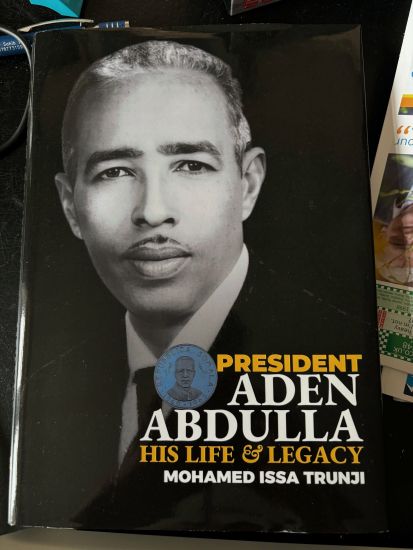
❝This meticulously researched book offers a comprehensive and fascinating insight into the personal and political life of the legendary figure who played a pivotal role in Somalia's emergence as an independent African nation. Readers are taken through Somalia's tumultuous history, including the colonial era and the struggle for independence.First of its kind, what sets this biography apart from others is the rich and diverse sources the author draws from. These include Aden Abdulla's personal diary and official government communications that provide a rare glimpse into the man, and his politics and social milieu. These materials, which have never before been fully considered in a published work, offer a fascinating and unique insight into Somalia's character and political upheaval during his presidency. It detailed his innermost thoughts and feelings on political matters and personal struggles. This book is a treasure trove rich in resource for historians. It provides readers with a rare and intimate view of the man at the centre of Somalia's political landscape. Writing this biography was not without its challenges.A must-read for anyone who wishes to understand the complexities of this fascinating period in Somali history. "President Aden Abdulla: His Life & Legacy" is a brilliantly written, thoroughly researched piece of literature that will shape how Somali political biographies are written for generations to come.❞- Mohammed Abdullah ArtanDirecting Manager of Looh PressMohamed Issa Trunji was born in Beledweyn, Somalia, in 1943. After the Secondary School in 1962, he joined the Ministry of Education as Teacher for elementary school pupils. In 1964 he joined the staff of the National Assembly of Somalia (Parliament) as interpreter, a position he held until October 1969. In 1972, after graduating from Somalia National University, Faculty of Law, he joined the Ministry of Justice as judge, a position he held until 1980. From 1981, after completing a Diploma Course at the University College London (UCL) in Maritime Law, he became member of the Somalia delegation to the annual sessions of the UN Conference on the Law of the Sea held in Geneva, New York and Kingston, Jamaica, which ended with the adoption in 1982 of the Third UN Convention on the Law of the Sea.In 1983 he was placed on secondment to the office of the National Commission for Refugees (NRC) as Chairman of the Eligibility Committee, a position he held up to 1991. From 1992 to 2005, he served the United Nations Agency for the Refugees, the UNHCR, as Senior Protection Officer in Iran, Iraq, Sudan, Ethiopia and Zambia. After retirement in 2005, he enrolled on a Master's Degree in International Human Rights Law at the University of Essex, UK, graduating in 2006. For his dissertation, he wrote a paper entitled 'Prosecution of past Human Rights Violations", a subject closely related to the events of the last three decades in Somalia. He is the author of 'Somalia The Untold History: 1941-1969' (Looh Press, 2015); 'President Aden Abdulla: His Life & Legacy' (Looh Press, 2023).
President Aden Abdulla

President Aden Abdulla

Mohamed Issa Trunji

Looh Press
2024
sidottu
❝This meticulously researched book offers a comprehensive and fascinating insight into the personal and political life of the legendary figure who played a pivotal role in Somalia's emergence as an independent African nation. Readers are taken through Somalia's tumultuous history, including the colonial era and the struggle for independence.First of its kind, what sets this biography apart from others is the rich and diverse sources the author draws from. These include Aden Abdulla's personal diary and official government communications that provide a rare glimpse into the man, and his politics and social milieu. These materials, which have never before been fully considered in a published work, offer a fascinating and unique insight into Somalia's character and political upheaval during his presidency. It detailed his innermost thoughts and feelings on political matters and personal struggles. This book is a treasure trove rich in resource for historians. It provides readers with a rare and intimate view of the man at the centre of Somalia's political landscape. Writing this biography was not without its challenges.A must-read for anyone who wishes to understand the complexities of this fascinating period in Somali history. "President Aden Abdulla: His Life & Legacy" is a brilliantly written, thoroughly researched piece of literature that will shape how Somali political biographies are written for generations to come.❞- Mohammed Abdullah ArtanDirecting Manager of Looh PressMohamed Issa Trunji was born in Beledweyn, Somalia, in 1943. After the Secondary School in 1962, he joined the Ministry of Education as Teacher for elementary school pupils. In 1964 he joined the staff of the National Assembly of Somalia (Parliament) as interpreter, a position he held until October 1969. In 1972, after graduating from Somalia National University, Faculty of Law, he joined the Ministry of Justice as judge, a position he held until 1980. From 1981, after completing a Diploma Course at the University College London (UCL) in Maritime Law, he became member of the Somalia delegation to the annual sessions of the UN Conference on the Law of the Sea held in Geneva, New York and Kingston, Jamaica, which ended with the adoption in 1982 of the Third UN Convention on the Law of the Sea.In 1983 he was placed on secondment to the office of the National Commission for Refugees (NRC) as Chairman of the Eligibility Committee, a position he held up to 1991. From 1992 to 2005, he served the United Nations Agency for the Refugees, the UNHCR, as Senior Protection Officer in Iran, Iraq, Sudan, Ethiopia and Zambia. After retirement in 2005, he enrolled on a Master's Degree in International Human Rights Law at the University of Essex, UK, graduating in 2006. For his dissertation, he wrote a paper entitled 'Prosecution of past Human Rights Violations", a subject closely related to the events of the last three decades in Somalia. He is the author of 'Somalia The Untold History: 1941-1969' (Looh Press, 2015); 'President Aden Abdulla: His Life & Legacy' (Looh Press, 2023).