Kirjojen hintavertailu. Mukana 11 581 866 kirjaa ja 12 kauppaa.

Kirjahaku

Etsi kirjoja tekijän nimen, kirjan nimen tai ISBN:n perusteella.

1000 tulosta hakusanalla Mohammad Awad

Diesel Generator Auxiliary Systems and Instruments
This book is written for all people working in diesel generators business and specially for design and technical sales engineers who are welling to increase their knowledge in this subject. The book has nine chapters and covers all diesel generator auxiliary systems and instruments. It provides useful information, and is considered to be a good introductory book on diesel generator design. The book covers the diesel engine ratings and categorization, engine components, speed governing, electronic engine controls, fuel system, cooling system, coolant specs, lube oil system, oil specs, exhaust system, exhaust muffler and pipe sizing, electric starting system, battery and battery charger sizing, genset sensing instruments (switches, senders, RTD's, TC's, MPU's), genset indicating instruments. The book includes some tutorial questions at the end of each chapter.
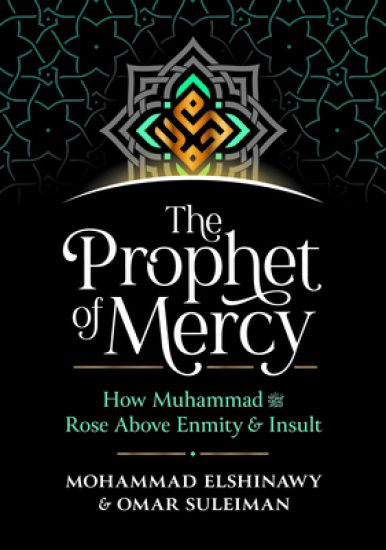
The Prophet of Mercy

The Prophet of Mercy

Mohammad Elshinawy; Omar Suleiman

Kube Publishing Ltd
2022
sidottu
To delegitimize the Messenger ??? ???? ???? ???? is to call into question the entire message. During his time, the Makkans called hima poet, a magician, and a madman, among other names. Today, he is insulted with other labels. The question of whether or not he sacrificed his principles in the pursuit of conveying his message successfully is one that requires an in-depth look
The Final Prophet

The Final Prophet

Mohammad Elshinawy

Kube Publishing Ltd
2022
pokkari
FOURTEEN CENTURIES AGO, the final revelation descended upon Muhammad (PBUH). This message, Islam, spread rapidly across Arabia to nearby lands, and across the world. Today, over a billion people believe in and follow his message. But who was Muhammad (PBUH) and how can we develop certainty that he was the true messenger of God?In this book, Sh. Mohammad Elshinawy shares the multitude of proof surrounding Muhammad’s ? prophethood. There are abundant comprehensive rational pathways that lead to this one certain conclusion: Muhammad (PBUH) was indeed the final messenger of God to this world.
Meaning and Intentionality. A Dialogical Approach

Meaning and Intentionality. A Dialogical Approach

Mohammad Shafiei

College Publications
2018
pokkari
The objective of the present work is to develop a theory of meaning based on the method of transcendental phenomenology. The key idea of the project is to explain the constitution of the meaning by means of the analyses of the intentionality. We have investigated different intentional acts which are functioning in the expression and in constructing the meanings. In this regard we have studied, first, the act of the primordial expression, in which a content of an intuition is raised to the realm of the ideal, and then the acts of the categorial synthesis, in which further meanings are constituted in the absence of their proper intuition. We have investigated the effects of the phenomenological theory of meaning to the conception of pure logic. Dialogical semantics is shown to be an adequate framework, from the phenomenological point of view, to interpret logical reasoning and to explain the meaning of the logical constants as well. We have also discussed the meanings of some logical connectives, and their formalizations, using our phenomenologico-dialogical method. In particular, the meaning explanations of negation(s), strict implication and necessity are given in a way which is not model theoretic nor proof theoretic, but based on the transcendental intentionality as manifested in the course of the dialogue.
Shari'ah Law

Shari'ah Law

Mohammad Hashim Kamali

Oneworld Publications
2008
nidottu
Providing a comprehensive and accessible examination of Shari’ah Law, this well considered introduction examines the sources, characteristic features, and schools of thought of a system often stereotyped for its severity in the West. In a progressive and graduated fashion, Mohammad Hashim Kamali discusses topics ranging from juristic disagreement to independent reasoning. Also broaching more advanced topics such as the principle of legality and the role and place of Shari’ah-oriented policy, Kamali controversially questions whether Islam is as much of a law-based religion as it has often been made out to be. Complete with a bibliography and glossary, and both a general index and an index of Arabic quotations, this wide-ranging exploration will prove an indispensable resource for Islamic students and scholars, and an informative guide to a complex topic for the general reader.
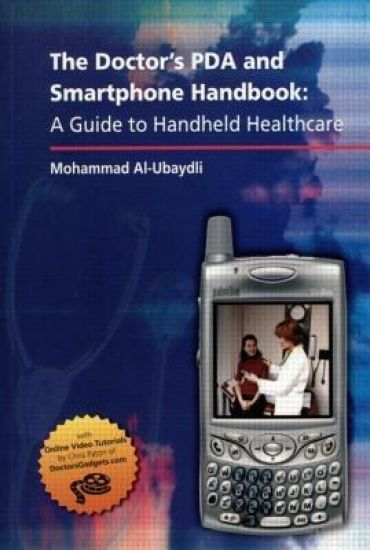
The Doctor's PDA and Smartphone Handbook: A Guide to Handheld Healthcare

The Doctor's PDA and Smartphone Handbook: A Guide to Handheld Healthcare

Mohammad Al-Ubaydli

Royal Society of Medicine Press Ltd
2006
nidottu
This is an essential guide for doctors wishing to maximise the potential of their PDA or smartphones and is the only book available to address the specific needs of doctors in relation to PDAs and smartphones.Handheld computers, or PDAs, are computers small enough to hold in your hand or fit into your pocket. Smartphones are PDAs which also allow the user to make and receive phone calls. For doctors, PDAs are possibly the most clinically appropriate of all the computer devices created.The Doctor's PDA and Smartphone Handbook aims to introduce readers to the basics of PDAs. Comprehensive in its approach and easily accessible to those with no technical knowledge, the first few chapters demonstrate how the devices are used and how effective they can be in day-to-day clinical care and in training activities. Communication and sharing data and clinical information is enhanced if the full team is equipped with PDAs, and later chapters discuss more advanced uses and issues that should be considered if planning to equip the whole team. The text is accompanied by invaluable teaching videos and vignettes illustrating how teaching points covered in each chapter can be applied to realistic scenarios.Written by one of the world's leading experts on the clinical uses of mobile computing, Dr Mohammad Al-Ubaydli is now a researcher in the USA. The online videos are by Dr Chris Paton, Director of New Media New Medicine and creator of some of the world's leading websites for clinical education. Together, they have combined their expertise and have created a highly informative and effective text.
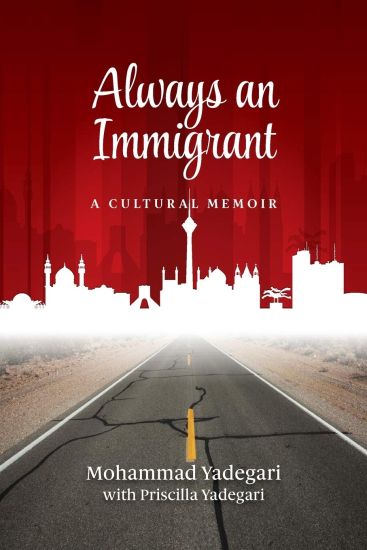
Always an Immigrant

Always an Immigrant

Mohammad Yadegari

White River Press
2020
pokkari
Iraq to Iran to America...This collection of personal stories engages, entertains, and educates about cultural norms and mores of the 1940s, 1950s, and the beginning of the 1960s in the Middle East when Mohammad Yadegari was growing up there.Serious, yet often humorous, the stories describe the truths behind such topics as temporary marriage, veiling and seclusion of women, ceremonial politeness, racism, and bigotry. A great storyteller, Dr. Yadegari regales his readers with tales of his life experiences that prepared him for his immigrant experience when he arrived in New York in 1964.At the same time, the book debunks some of the misconceptions that are common in both the Middle East and the United States.
The Dignity of Man

The Dignity of Man

Mohammad Hashim Kamali

The Islamic Texts Society
2002
nidottu
"The Dignity of Man: An Islamic Perspective" is the first volume in Prof M. H. Kamali's Fundamental Rights and Liberties in Islam Series. In "The Dignity of Man", Prof M. H. Kamali demonstrates how Islam considers the dignity of man to be the foundation for all humanity's rights and liberties. The author sets out the proclamations on human dignity found in the Qur'an and then discusses topics pertaining to or resulting from human dignity: the physical and spiritual nobility of man; God's love for humanity; the sanctity of life; and the necessity for freedom, equality and accountability. Finally, Prof M. H. Kamali examines the measures that the Sharia has taken to protect human dignity and to promote it in social interaction. The discussion is here presented in the light of the debate on the universality of human rights as enshrined in the Universal Declaration of Human Rights. "The Dignity of Man" goes a long way towards exploring an alternative to Western concepts of human rights and can be read in conjunction with the other six volumes in Prof M H Kamali's Fundamental Rights and Liberties in Islam Series.
Freedom, Equality and Justice in Islam

Freedom, Equality and Justice in Islam

Mohammad Hashim Kamali

The Islamic Texts Society
2002
nidottu
In 'Freedom, Equality and Justice in Islam', M H Kamali presents the reader with an analysis of the three concepts of freedom, equality and justice from an Islamic point of view and their manifestations in the religious, social, legal and political fields. The author discusses the evidence to be found for these concepts in the Qur'an and 'Sunna', and reviews the interpretations of the earlier schools of law. The work also looks at more recent contributions by Muslim jurists who have advanced fresh interpretations of freedom, equality and justice in the light of the changing realities of contemporary Muslim societies. 'Freedom, Equality and Justice in Islam' is part of a series dedicated to the fundamental rights and liberties in Islam and should be read in conjunction with 'The Dignity of Man: An Islamic Perspective and Freedom of Expression in Islam.'
Freedom, Equality and Justice in Islam

Freedom, Equality and Justice in Islam

Mohammad Hashim Kamali

The Islamic Texts Society
2002
sidottu
In 'Freedom, Equality and Justice in Islam', M H Kamali presents the reader with an analysis of the three concepts of freedom, equality and justice from an Islamic point of view and their manifestations in the religious, social, legal and political fields. The author discusses the evidence to be found for these concepts in the Qur'an and 'Sunna', and reviews the interpretations of the earlier schools of law. The work also looks at more recent contributions by Muslim jurists who have advanced fresh interpretations of freedom, equality and justice in the light of the changing realities of contemporary Muslim societies. 'Freedom, Equality and Justice in Islam' is part of a series dedicated to the fundamental rights and liberties in Islam and should be read in conjunction with 'The Dignity of Man: An Islamic Perspective and Freedom of Expression in Islam.'
The Dignity of Man

The Dignity of Man

Mohammad Hashim Kamali

The Islamic Texts Society
2002
sidottu
"The Dignity of Man: An Islamic Perspective" is the first volume in Prof M. H. Kamali's Fundamental Rights and Liberties in Islam Series. In "The Dignity of Man", Prof M. H. Kamali demonstrates how Islam considers the dignity of man to be the foundation for all humanity's rights and liberties. The author sets out the proclamations on human dignity found in the Qur'an and then discusses topics pertaining to or resulting from human dignity: the physical and spiritual nobility of man; God's love for humanity; the sanctity of life; and the necessity for freedom, equality and accountability. Finally, Prof M. H. Kamali examines the measures that the Sharia has taken to protect human dignity and to promote it in social interaction. The discussion is here presented in the light of the debate on the universality of human rights as enshrined in the Universal Declaration of Human Rights. "The Dignity of Man" goes a long way towards exploring an alternative to Western concepts of human rights and can be read in conjunction with the other six volumes in Prof M H Kamali's Fundamental Rights and Liberties in Islam Series.
Equity and Fairness in Islam

Equity and Fairness in Islam

Mohammad Hashim Kamali

The Islamic Texts Society
2005
sidottu
"Equity and Fairness in Islam" is the first work in the English language to deal specifically with the subjects of equity and fairness in Islamic law. Prof M. H. Kamali relates these concepts to the Islamic legal notion of "istihsan", thus taking these concepts back to their origin in the Qur'an, the sayings of the Prophet Muhammad and the era of the Companions of the Prophet in the first two centuries of Islam.---"Equity and Fairness in Islam" is divided into two parts. In Part One, Prof M. H. Kamali explores equity and its applications, especially as a basis for the formulation of Islamic law, comparing it with other concepts essential for law making such as general consensus (ijma), analogical reasoning (qiyas) and considerations of public interest (maslaha). Equity and fairness are then looked at from the points of view of three of the schools of law: the Hanafi, the Maliki and the Hanbali. In Part Two, Prof M. H. Kamali attempts to apply the concepts of equity and fairness to certain issues of contemporary concern and especially to commercial transactions. The issues raised here are related to Islamic banking, sale transactions, charitable endowments, pensions funds and other long-term saving accounts.---The concluding part of the "Equity and Fairness in Islam" deals with the relationship between the concepts of equity and fairness, and the goals and objectives of Islamic law, and how these two concepts can work as instruments for securing the objectives of Islamic law. "Equity and Fairness in Islam" can be read in conjunction with other Prof M. H. Kamali's titles, especially "Islamic Commercial Law".
Equity and Fairness in Islam

Equity and Fairness in Islam

Mohammad Hashim Kamali

The Islamic Texts Society
2005
nidottu
"Equity and Fairness in Islam" is the first work in the English language to deal specifically with the subjects of equity and fairness in Islamic law. Prof M. H. Kamali relates these concepts to the Islamic legal notion of "istihsan", thus taking these concepts back to their origin in the Qur'an, the sayings of the Prophet Muhammad and the era of the Companions of the Prophet in the first two centuries of Islam.---"Equity and Fairness in Islam" is divided into two parts. In Part One, Prof M. H. Kamali explores equity and its applications, especially as a basis for the formulation of Islamic law, comparing it with other concepts essential for law making such as general consensus (ijma), analogical reasoning (qiyas) and considerations of public interest (maslaha). Equity and fairness are then looked at from the points of view of three of the schools of law: the Hanafi, the Maliki and the Hanbali. In Part Two, Prof M. H. Kamali attempts to apply the concepts of equity and fairness to certain issues of contemporary concern and especially to commercial transactions. The issues raised here are related to Islamic banking, sale transactions, charitable endowments, pensions funds and other long-term saving accounts.---The concluding part of the "Equity and Fairness in Islam" deals with the relationship between the concepts of equity and fairness, and the goals and objectives of Islamic law, and how these two concepts can work as instruments for securing the objectives of Islamic law. "Equity and Fairness in Islam" can be read in conjunction with other Prof M. H. Kamali's titles, especially "Islamic Commercial Law".
The Right to Life, Security, Privacy and Ownership in Islam

The Right to Life, Security, Privacy and Ownership in Islam

Mohammad Hashim Kamali

The Islamic Texts Society
2008
sidottu
"The Right to Life, Security, Privacy and Ownership in Islam" is the fifth volume in Prof M. H. Kamali's "Fundamental Rights and Liberties in Islam Series". In this volume, Prof M. H. Kamali addresses the most basic of all the fundamental rights and liberties-a person's right to life, personal security, privacy, and ownership-from the perspective of Islam, as found in the Qur'an, and the obligations of Sharia.---Prof M. H. Kamali begins "The Right to Life, Security, Privacy and Ownership in Islam" with the right to life. The discussion of this fundamental right includes: the sanctity of life, unintentional killing, murder, the death penalty and compensations for victims, abortion, suicide, and euthanasia. Chapter Two discusses the right to security and includes: the security against unlawful arrest, the right to fair treatment, the right to counsel, freedom from aggression and torture. In Chapter Three, Prof Kamali expounds on a person's right to privacy, the privacy of one's home, confidential correspondence, and immunity against invasion of privacy in the forms of interception of correspondence, eavesdropping and other such violations. Finally, in Chapter Four, Prof M. H. Kamali concludes "The Right to Life, Security, Privacy and Ownership in Islam" with the discussion of the right of ownership, legitimate and illegitimate means of acquisition, and the restrictions that the Sharia imposes on the exercise of this right including taxation, inheritance and bequests.
The Right to Life, Security, Privacy and Ownership in Islam

The Right to Life, Security, Privacy and Ownership in Islam

Mohammad Hashim Kamali

The Islamic Texts Society
2008
nidottu
Exploring the ideas of human rights according to the laws of Islam, this discussion examines the sanctity of life, murder, unintentional killing, the death penalty, abortion, suicide, and euthanasia. The arguments are introduced by Qur'anic quotations and prophetic anecdotes and include practical examples of both medieval and contemporary applications. Relevant to the current international interest of multicultural perspectives on human rights, this analysis also covers security against unlawful arrest, freedom from torture, immunity against invasion of privacy, and restrictions imposed by the Shari'a on the exercises of these rights.
The Right to Education, Work and Welfare in Islam

The Right to Education, Work and Welfare in Islam

Mohammad Hashim Kamali

The Islamic Texts Society
2011
sidottu
Discussing rights and liberties in Islam, this examination focuses on three connected and complementary areaseducation, work, and welfareand how each is treated in the Qur an. The Prophet and Pious Caliphs are used as examples as the bookargues that the educated are more likely to enter the workforce and contribute to the community. Touching upon various topics, including the institutionalization of learning, the role of governments, and the responsibility to care for individuals in need, this record offers an understanding of human rights from an Islamic perspective. Those interested in Islamic Studies, law, and philosophy will be particularly intrigued."
The Right to Education, Work and Welfare in Islam

The Right to Education, Work and Welfare in Islam

Mohammad Hashim Kamali

The Islamic Texts Society
2011
nidottu
Discussing rights and liberties in Islam, this examination focuses on three connected and complementary areas--education, work, and welfare--and how each is treated in the Qur'an. The Prophet and Pious Caliphs are used as examples as the book argues that the educated are more likely to enter the workforce and contribute to the community. Touching upon various topics, including the institutionalization of learning, the role of governments, and the responsibility to care for individuals in need, this record offers an understanding of human rights from an Islamic perspective. Those interested in Islamic Studies, law, and philosophy will be particularly intrigued.
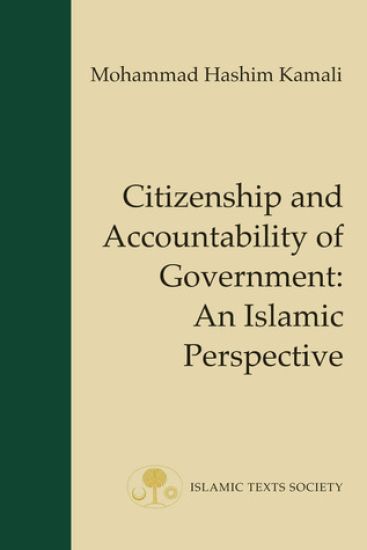
Citizenship and Accountability of Government

Citizenship and Accountability of Government

Mohammad Hashim Kamali

The Islamic Texts Society
2011
sidottu
Citizenship and Accountability of Government: An Islamic Perspective is the final volume in Prof. M. H. Kamali's series on fundamental rights and liberties in Islam. It includes discussions of: the definitions of citizenship; the rights of citizens; the duties of citizens; citizenship laws; the concepts of dar al-Islam (abode of Islam), dar al-harb (abode of war) and the dar al-'ahd (abode of treaty); the ummah and the nation-state; government as a trust; the selection of officials; the relationship between authority and citizens; corruption and the misuse of public funds; despotism and dynastic misrule; the right of complaint; the limits of obedience; impeachment of officials and heads of state; the foundation of institutions of accountability. In addition to the topics of citizenship and accountability of government, this volume contains a discussion of freedom of movement in Islam which is the last of the fundamental rights in Prof. M. H. Kamali's series.
Citizenship and Accountability of Government

Citizenship and Accountability of Government

Mohammad Hashim Kamali

The Islamic Texts Society
2011
nidottu
Citizenship and Accountability of Government: An Islamic Perspective is the final volume in Prof. M. H. Kamali's series on fundamental rights and liberties in Islam. It includes discussions of: the definitions of citizenship; the rights of citizens; the duties of citizens; citizenship laws; the concepts of dar al-Islam (abode of Islam), dar al-harb (abode of war) and the dar al-ahd (abode of treaty); the ummah and the nation-state; government as a trust; the selection of officials; the relationship between authority and citizens; corruption and the misuse of public funds; despotism and dynastic misrule; the right of complaint; the limits of obedience; impeachment of officials and heads of state; the foundation of institutions of accountability. In addition to the topics of citizenship and accountability of government, this volume contains a discussion of freedom of movement in Islam which is the last of the fundamental rights in Prof. M. H. Kamali's series.
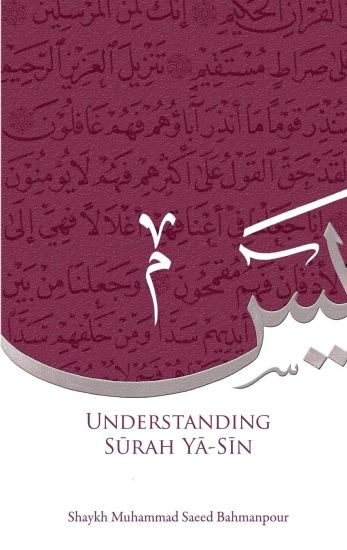
Understanding Surah Yasin

Understanding Surah Yasin

Mohammad Saeed Bahmanpour

Sun Behind the Cloud Publications
2018
nidottu
"Yā Sīn is the heart of the Qurʼān, no worshipper would recite it for the sake of God and seeking the Final Abode, unless all their sins are forgiven. So recite it over your deceased ones." Prophet MuhammadThis book contains Surah Yasin in Arabic and English and a verse by verse commentary of the surah by world renowed scholar Shaykh Muhammad Saeed Bahmanpour.