Kirjojen hintavertailu. Mukana 11 342 296 kirjaa ja 12 kauppaa.

Kirjahaku

Etsi kirjoja tekijän nimen, kirjan nimen tai ISBN:n perusteella.

1000 tulosta hakusanalla Muhammad H. Rashid

The Birth of The Prophet Muhammad

The Birth of The Prophet Muhammad

Marion Holmes Katz

Routledge
2009
nidottu
In the medieval period, the birth of the Prophet Muhammad (the mawlid) was celebrated in popular narratives and ceremonies that expressed the religious agendas and aspirations of ordinary Muslims, including women. This book examines the Mawlid from its origins to the present day and provides a new insight into how an aspect of everyday Islamic piety has been transformed by modernity. The book gives a window into the religious lives of medieval Muslim women, rather than focusing on the limitations that were placed on them and shows how medieval popular Islam was coherent and meaningful, not just a set of deviations from scholarly norms. Concise in both historical and textual analysis, this book is an important contribution to our understanding of contemporary Muslim devotional practices and will be of great interest to postgraduate students and researchers of Islam, religious studies and medieval studies.
Narratives of the Life of Muhammad

Narratives of the Life of Muhammad

Gurdofarid Miskinzoda

Routledge
2025
sidottu
Sira stands for al-sira al-nabawiyya, meaning the biography of Prophet Mu?ammad, and is one of the earliest types of literature in the Muslim tradition, shaping the identity and content of this tradition as it has also developed alongside it. This book represents a shift away from the prevalent view that the main value of sira lies in its utility as a historical source for the life of Mu?ammad. It examines the nature and role of sira as a distinct genre of the Muslim literary and historical tradition and as an independent scholarly discipline. Beginning with a discussion of contemporary scholarship and approaches to the study of sira, the book then outlines a number of defining characteristics typical of sira as a genre, as well as examining the role of the chronological narrative, the textual and functional role of variant reports and the divergences between them, and the centrality of the relationship between the text of the Qur’an and sira. Particular attention is paid to the question of narrativity and historical discourse as it occurs in sira, and the ability of sira authors to resort to a number of other scholarly disciplines in order to extrapolate further meaning from their source material.Taking an interdisciplinary approach to provide a concise and original insight into the nature of sira as a distinct form of literature, this book is essential reading for students and scholars interested in the historiography of Islam, and early Islamic history and literature.
The Birth of The Prophet Muhammad

The Birth of The Prophet Muhammad

Marion Holmes Katz

Routledge
2007
sidottu
In the medieval period, the birth of the Prophet Muhammad (the mawlid) was celebrated in popular narratives and ceremonies that expressed the religious agendas and aspirations of ordinary Muslims, including women. This book examines the Mawlid from its origins to the present day and provides a new insight into how an aspect of everyday Islamic piety has been transformed by modernity. The book gives a window into the religious lives of medieval Muslim women, rather than focusing on the limitations that were placed on them and shows how medieval popular Islam was coherent and meaningful, not just a set of deviations from scholarly norms. Concise in both historical and textual analysis, this book is an important contribution to our understanding of contemporary Muslim devotional practices and will be of great interest to postgraduate students and researchers of Islam, religious studies and medieval studies.
The Roman World from Romulus to Muhammad
This volume provides a detailed examination of nearly 1,400 years of Roman history, from the foundation of the city in the eighth century BC until the evacuation of Roman troops from Alexandria in AD 642 in the face of the Arab conquests. Drawing on a vast array of ancient texts written in Latin, Greek, Syriac, Armenian, and Arabic, and relying on a host of inscriptions, archaeological data, and the evidence from ancient art, architecture, and coinage, The Roman World from Romulus to Muhammad brings to the fore the men and women who chronicled the story of the city and its empire. Richly illustrated with 71 maps and 228 illustrations—including 20 in colour—and featuring a detailed glossary and suggestions for further reading, this volume examines a broad range of topics, including ancient climate change, literature, historiography, slavery, war and conquest, the development of Christianity, the Jewish revolts, and the role of powerful imperial women. The author also considers the development of Islam within a Roman historical context, examines the events that led to the formation of the post-Roman states in Western Europe, and contemplates aff airs on the imperial periphery in the Caucasus, Ethiopia, and the Arabian Peninsula. Emphasising the voices of antiquity throughout, The Roman World from Romulus to Muhammad is an invaluable resource for students and scholars interested in the beguiling history of the world’s most famous empire.
The Roman World from Romulus to Muhammad
This volume provides a detailed examination of nearly 1,400 years of Roman history, from the foundation of the city in the eighth century BC until the evacuation of Roman troops from Alexandria in AD 642 in the face of the Arab conquests. Drawing on a vast array of ancient texts written in Latin, Greek, Syriac, Armenian, and Arabic, and relying on a host of inscriptions, archaeological data, and the evidence from ancient art, architecture, and coinage, The Roman World from Romulus to Muhammad brings to the fore the men and women who chronicled the story of the city and its empire. Richly illustrated with 71 maps and 228 illustrations—including 20 in colour—and featuring a detailed glossary and suggestions for further reading, this volume examines a broad range of topics, including ancient climate change, literature, historiography, slavery, war and conquest, the development of Christianity, the Jewish revolts, and the role of powerful imperial women. The author also considers the development of Islam within a Roman historical context, examines the events that led to the formation of the post-Roman states in Western Europe, and contemplates aff airs on the imperial periphery in the Caucasus, Ethiopia, and the Arabian Peninsula. Emphasising the voices of antiquity throughout, The Roman World from Romulus to Muhammad is an invaluable resource for students and scholars interested in the beguiling history of the world’s most famous empire.
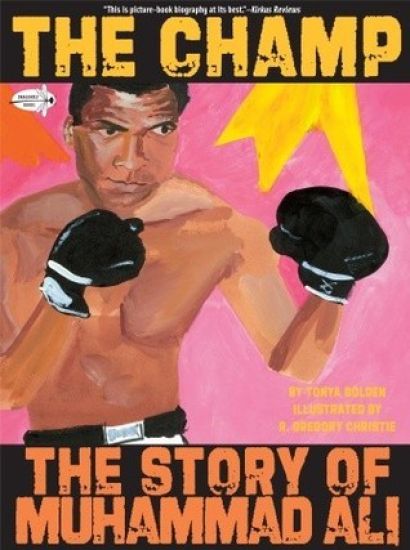
The Champ: The Story of Muhammad Ali

The Champ: The Story of Muhammad Ali

Tonya Bolden

Random House USA Inc
2007
pokkari
An engaging look at life and legacy of Muhammad Ali for readers of all ages Muhammad Ali was one of the world's best-known figures, and this incredible biography delves into precisely why. From his unlikely beginnings as a skinny, young Cassius Clay learning to box at a local gym to becoming the heavyweight champion of the world at the famous "Rumble in the Jungle," where even the skies let loose with rain right after his victory, Ali has captivated the world. Tonya Bolden's careful research and elegant telling, paired with R. Gregory Christie's incredible paintings, make this a book that will inform and inspire readers of all ages. Bolden's engaging text has a free-verse structure punctuated with enthusiastic exclamations that is enjoyable to read aloud.... The illustrations are striking. --School Library Journal (Starred review)
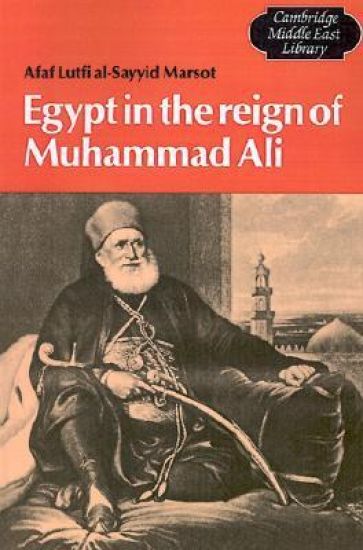
Egypt in the Reign of Muhammad Ali

Egypt in the Reign of Muhammad Ali

Afaf Lutfi Al-Sayyid Marsot

Cambridge University Press
1984
pokkari
This account of Egyptian society in the reign of Muhammad Ali traces the beginnings of the nation state in Egypt. It considers Muhammad Ali as part of a social group whose economic interests led them in the direction of trade with Europe as a means of raising money for further investments. They attempted to increase agricultural exports and to use the profits to create industry; then, following the logic of imperialists, their next step was to seek to conquer the surrounding areas to find markets for their industries and sources of raw materials. These policies brought them into conflict with their suzerain, the Ottoman sultan, and with England, since England needed markets in the Middle East and sought to destroy the new regime in Egypt as a means of exerting influence on the region. In the process of carrying out these economic changes, the country underwent a series of internal developments that were to revolutionize the structure and shape of Egyptian society. The rules of landownership were altered and large estates were formed, Egyptian fallahin were drafted into the army, and the administration was Egyptianized, establishing the groundwork for a nation state.
The Educational Philosophy of Elijah Muhammad

The Educational Philosophy of Elijah Muhammad

Abul Pitre

University Press of America
2007
nidottu
This work is the first to examine the educational philosophy of Elijah Muhammad, the founder of the Nation of Islam and a pivotal leader in America's history. This timely book outlines Elijah Muhammad's educational ideas in relation to critical pedagogy, multicultural education, and critical white studies, a branch of "critical race theory"- which is a scholarly theory popularized in the mid-1970s and reaches across disciplines to explore the relationship among race, the justice system, and society. In this seminal work, Professor Pitre introduces several key components of Elijah Muhammad's educational philosophy, such as the knowledge of self; the purpose of education; education for a new world; and the role of teachers. Professor Pitre's presentation of these facets of Elijah Muhammad's philosophy is used as the basis for the development of a new educational paradigm that is universal in scope. This is a must-read book for those dedicated to creating a new paradigm that can transform individuals, schools, societies, and the world.
The Educational Philosophy of Elijah Muhammad

The Educational Philosophy of Elijah Muhammad

Abul Pitre; Tynnetta Muhammad

University Press of America
2008
sidottu
This work is the first to examine the educational philosophy of Elijah Muhammad, the founder of the Nation of Islam and a pivotal leader in America's history. This timely book outlines Elijah Muhammad's educational ideas in relation to critical pedagogy, multicultural education, and critical white studies, a branch of "critical race theory", a theory popularized in the mid-1970s that reaches across disciplines to explore the relationship among race, the justice system, and society. This is a must-read for those dedicated to creating a new paradigm that can transform individuals, schools, societies, and the world. Features new to the second edition include a foreword by Tynnetta Muhammad, wife and student of Elijah Muhammad; opening comments by world renowned mathematician Dr. Abdulalim Sahabazz; a new chapter co-authored with Dr. Dorothy Blake Fardan; plus guided questions and power point notes to stimulate discourse around Elijah Muhammad's educational ideas.
The Educational Philosophy of Elijah Muhammad

The Educational Philosophy of Elijah Muhammad

Abul Pitre; Tynnetta Muhammad

University Press of America
2008
nidottu
This work is the first to examine the educational philosophy of Elijah Muhammad, the founder of the Nation of Islam and a pivotal leader in America's history. This timely book outlines Elijah Muhammad's educational ideas in relation to critical pedagogy, multicultural education, and critical white studies, a branch of 'critical race theory', a theory popularized in the mid-1970s that reaches across disciplines to explore the relationship among race, the justice system, and society. This is a must-read for those dedicated to creating a new paradigm that can transform individuals, schools, societies, and the world. Features new to the second edition include a foreword by Tynnetta Muhammad, wife and student of Elijah Muhammad; opening comments by world renowned mathematician Dr. Abdulalim Sahabazz; a new chapter co-authored with Dr. Dorothy Blake Fardan; plus guided questions and power point notes to stimulate discourse around Elijah Muhammad's educational ideas.
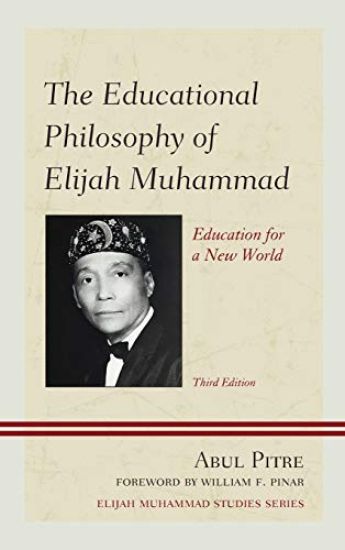
The Educational Philosophy of Elijah Muhammad

The Educational Philosophy of Elijah Muhammad

Abul Pitre; William F. Pinar

University Press of America
2015
sidottu
This work is the first to examine the educational philosophy of Elijah Muhammad, the patriarch of the Nation of Islam and a pivotal leader in America's history. This timely book outlines Elijah Muhammad's educational ideas in relation to critical pedagogy, multicultural education, and critical white studies, a branch of "critical race theory" popularized in the mid-1970s that reaches across disciplines to explore the relationship among race, the justice system, and society. The Educational Philosophy of Elijah Muhammad: Education for a New World is a must-read for those dedicated to creating a new paradigm that can transform individuals, schools, societies, and the world. Features new to this completely revised third edition include a more in-depth discussion of critical educational theory as it relates to the teachings of Elijah Muhammad and foreword by world renowned curriculum theorist William Pinar.
The Educational Philosophy of Elijah Muhammad

The Educational Philosophy of Elijah Muhammad

Abul Pitre; William F. Pinar

Hamilton Books
2017
nidottu
This work is the first to examine the educational philosophy of Elijah Muhammad, the patriarch of the Nation of Islam and a pivotal leader in America's history. This timely book outlines Elijah Muhammad's educational ideas in relation to critical pedagogy, multicultural education, and critical white studies, a branch of "critical race theory" popularized in the mid-1970s that reaches across disciplines to explore the relationship among race, the justice system, and society. The Educational Philosophy of Elijah Muhammad: Education for a New World is a must-read for those dedicated to creating a new paradigm that can transform individuals, schools, societies, and the world. Features new to this completely revised third edition include a more in-depth discussion of critical educational theory as it relates to the teachings of Elijah Muhammad and foreword by world renowned curriculum theorist William Pinar.
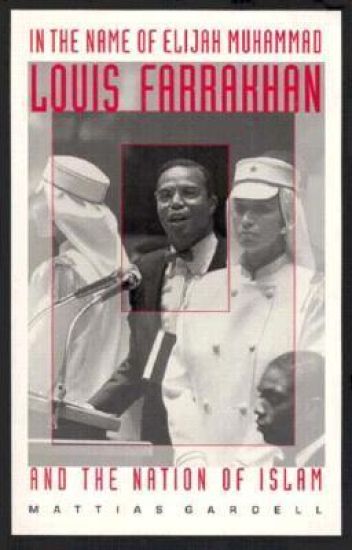
In the Name of Elijah Muhammad

In the Name of Elijah Muhammad

Mattias Gardell

Duke University Press
1996
pokkari
In the Name of Elijah Muhammad tells the story of the Nation of Islam-its rise in northern inner-city ghettos during the Great Depression through its decline following the death of Elijah Muhammad in 1975 to its rejuvenation under the leadership of Louis Farrakhan. Mattias Gardell sets this story within the context of African American social history, the legacy of black nationalism, and the long but hidden Islamic presence in North America. He presents with insight and balance a detailed view of one of the most controversial yet least explored organizations in the United States-and its current leader. Beginning with Master Farad Muhammad, believed to be God in Person, Gardell examines the origins of the Nation. His research on the period of Elijah Muhammad’s long leadership draws on previously unreleased FBI files that reveal a clear picture of the bureau’s attempts to neutralize the Nation of Islam. In addition, they shed new light on the circumstances surrounding the murder of Malcolm X. With the main part of the book focused on the fortunes of the Nation after Elijah Muhammad’s death, Gardell then turns to the figure of Minister Farrakhan. From his emergence as the dominant voice of the radical black Islamic community to his leadership of the Million Man March, Farrakhan has often been portrayed as a demagogue, bigot, racist, and anti-Semite. Gardell balances the media’s view of the Nation and Farrakhan with the Nation’s own views and with the perspectives of the black community in which the organization actively works. His investigation, based on field research, taped lectures, and interviews, leads to the fullest account yet of the Nation of Islam’s ideology and theology, and its complicated relations with mainstream Islam, the black church, the Jewish community, extremist white nationalists, and the urban culture of black American youth, particularly the hip-hop movement and gangs.