Kirjojen hintavertailu. Mukana 11 456 661 kirjaa ja 12 kauppaa.

Kirjahaku

Etsi kirjoja tekijän nimen, kirjan nimen tai ISBN:n perusteella.

1000 tulosta hakusanalla NOT KNOWN

Not-for-Profit Accounting Made Easy

Not-for-Profit Accounting Made Easy

Warren Ruppel

John Wiley Sons Inc
2007
sidottu
A hands-on guide to the ins and outs of nonprofit accounting Not-for-Profit Accounting Made Easy, Second Edition equips you with the tools you need to run the financial and accounting operations within your nonprofit organization. Even if you do not have a professional understanding of accounting principles and financial reporting, this handy guide makes it all clear with complex accounting rules explained in terms nonaccountants can easily understand in order to help you better fulfill your managerial and fiduciary duties. Always practical and never overtechnical, this helpful guide conforms to FASB and AICPA standards and: * Discusses federal single audit and its impact on nonprofits * Offers examples of various types of split-interest agreements * Shows you how to read and understand a nonprofit financial statement * Explains financial accounting and reporting standards * Helps you become conversant in the rules and principles of accounting * Updates board members, executive directors, and other senior managers on the accounting basics they should know for day-to-day operations * Features tables, exhibits, and charts that illustrate the content in a simple and easy-to-understand manner Suitable for fundraising managers and executives--as well as anyone who needs to read and understand a nonprofit financial statement--this is the ultimate not-an-accountant's guide to nonprofit accounting.
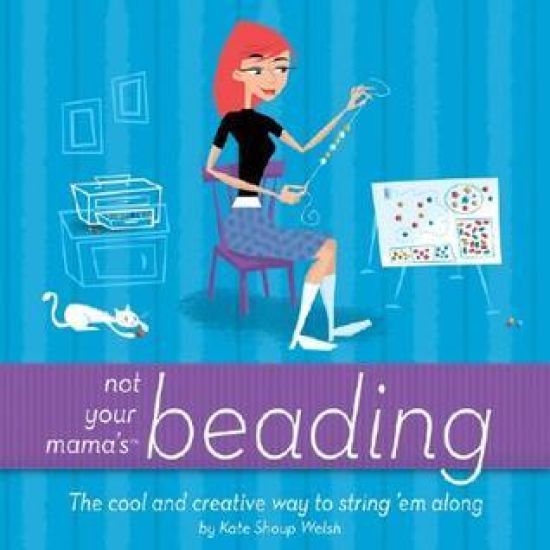
Not Your Mama's Beading

Not Your Mama's Beading

Kate Shoup Welsh

John Wiley Sons Inc
2006
nidottu
This beading book offers projects that are chic, unique, and absolutely wearable. With more than thirty super-cool designs, it covers essential tools and materials, must-know beading techniques, and ideas for personalizing every project. You'll whip up designs with pizzazz to adorn your apartment, your friends, or yourself With a sassy attitude, hip projects, and color photos, this will bring out your inner diva.
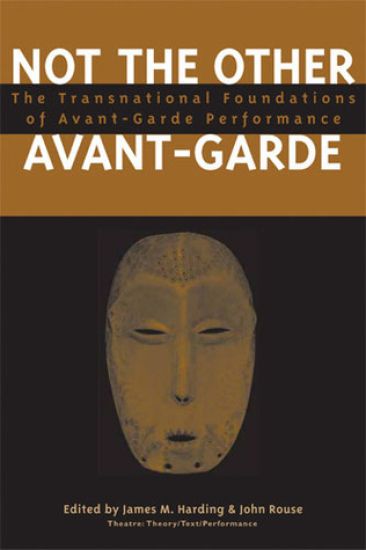
Not the Other Avant-Garde

Not the Other Avant-Garde

The University of Michigan Press
2006
nidottu
Almost without exception, studies of the avant-garde take for granted the premise that the influential experimental practices associated with the avant-garde began primarily as a European phenomenon that in turn spread around the world. These ten original essays, especially commissioned for Not the Other Avant-Garde, forge a radically new conception of the avant-garde by demonstrating the many ways in which the first- and second-wave avant-gardes were always already a transnational phenomenon, an amalgam of often contradictory performance traditions and practices developed in various cultural locations around the world, including Africa, the Middle East, Mexico, Argentina, India, and Japan. Essays from leading scholars and critics-including Marvin Carlson, Sudipto Chatterjee, John Conteh-Morgan, Peter Eckersall, Harry J. Elam Jr., Joachim Fiebach, David G. Goodman, Jean Graham-Jones, Hannah Higgins, and Adam Versényi-suggest collectively that the very concept of the avant-garde is possible only if conceptualized beyond the limitations of Eurocentric paradigms.Not the Other Avant-Garde is groundbreaking in both avant-garde studies and performance studies and will be a valuable contribution to the fields of theater studies, modernist studies, art history, literature, and music history. "Joins the growing field of critical and transnational theories on the arts. . . its grounding in live performance and its foregrounding of the performative human body presents a new theoretical paradigm that is pathbreaking." --Haiping Yan, University of California, Los AngelesJames M. Harding is Associate Professor of English at Mary Washington University. He is author of Adorno and "A Writing of the Ruins": Essays on Modern Aesthetics and Anglo-American Literature and Culture and editor of Contours of the Theatrical Avant-Garde: Performance and Textuality.John Rouse is Associate Professor of Theater at the University of California, San Diego. He is author of Brecht and the West German Theatre.
Not the Other Avant-Garde

Not the Other Avant-Garde

The University of Michigan Press
2006
sidottu
Almost without exception, studies of the avant-garde take for granted the premise that the influential experimental practices associated with the avant-garde began primarily as a European phenomenon that in turn spread around the world. These ten original essays, especially commissioned for Not the Other Avant-Garde, forge a radically new conception of the avant-garde by demonstrating the many ways in which the first- and second-wave avant-gardes were always already a transnational phenomenon, an amalgam of often contradictory performance traditions and practices developed in various cultural locations around the world, including Africa, the Middle East, Mexico, Argentina, India, and Japan. Essays from leading scholars and critics-including Marvin Carlson, Sudipto Chatterjee, John Conteh-Morgan, Peter Eckersall, Harry J. Elam Jr., Joachim Fiebach, David G. Goodman, Jean Graham-Jones, Hannah Higgins, and Adam Versényi-suggest collectively that the very concept of the avant-garde is possible only if conceptualized beyond the limitations of Eurocentric paradigms.Not the Other Avant-Garde is groundbreaking in both avant-garde studies and performance studies and will be a valuable contribution to the fields of theater studies, modernist studies, art history, literature, and music history. "Joins the growing field of critical and transnational theories on the arts. . . its grounding in live performance and its foregrounding of the performative human body presents a new theoretical paradigm that is pathbreaking." --Haiping Yan, University of California, Los AngelesJames M. Harding is Associate Professor of English at Mary Washington University. He is author of Adorno and "A Writing of the Ruins": Essays on Modern Aesthetics and Anglo-American Literature and Culture and editor of Contours of the Theatrical Avant-Garde: Performance and Textuality.John Rouse is Associate Professor of Theater at the University of California, San Diego. He is author of Brecht and the West German Theatre.
Not Just Any Medical School

Not Just Any Medical School

Horace W. Davenport

The University of Michigan Press
1999
sidottu
Not Just Any Medical School details the establishment of the University of Michigan Medical School. It provides a picture of its students, curriculum, amphitheaters, laboratories, hospitals, and patients as seen through the eyes of its leading faculty members and documented by their published works, lecture notes, and other primary and secondary sources.The book begins with the selection of the first five professors and continues through the appointment of statesman and scientist Victor Vaughan as dean and his successors to 1941. Organized by specialty, the material is chronological within chapters. Illustrations include student and faculty scenes, hospital interiors and exteriors, and medical apparatus. The narrative includes numerous direct quotes from research papers, lectures, and letters illustrating that Michigan was "not just any medical school." Many of the significant medical and scientific advances that originated at Michigan are described in detail.Appearing in conjunction with the sesquicentennial of the Medical School, Not Just Any Medical School will appeal to those interested in the history of medicine and particularly to those with a connection to the University of Michigan.Horace Davenport is William Beaumont Professor Emeritus of Physiology, University of Michigan.
Not Straight from Germany

Not Straight from Germany

The University of Michigan Press
2017
sidottu
Magnus Hirschfeld’s Institute for Sexual Science was founded in Berlin in 1919 as a place of research, political advocacy, counseling, and public education. Inspired by the world’s first gay rights organizations, it was closely allied with other groups fighting for sexual reform and women’s rights, and was destroyed in 1933 as the first target of the Nazi book burnings. Not Straight from Germany examines the legacy of that history, combining essays and a lavish array of visual materials. Scholarly essays investigate the ways in which sex became public in early 20th-century Germany, contributing to a growing awareness of Hirschfeld’s influence on histories of sexuality while also widening the perspective beyond the lens of identity politics. Two visual sourcebooks and catalog essays on an exhibition of contemporary artists’ responses to the Hirschfeld historical materials interrogate the modes of visual representation that Hirschfeld employed by re-imagining the public visibility of his institute from a contemporary perspective. The archival material includes stunning, never-before-published images from Hirschfeld’s institute that challenge many received ideas, while the scholarly and art catalog essays explore collaboration and dialogue as methods of research and activism that resonate beyond the academy to pressing issues of public concern.
Not There Yet: Wandering Home with an Amateur Vagabond
When you leave, at what point do you start going home? And when you leave and don't come back, where is home?Moving to another country for a while provides an excellent opportunity to travel on the way. Having threatened The Big Trip for years, Kevin finally takes the plunge and, as a result, finds that the idea of home is not as clear as it used to be.Kayak in the rain, meet an Aboriginal elder, make conversation with a grumpy barber, kill sheep, crash a car, eat entrails, be in the Middle East on 9/11, ride legendary highways, find yourself face to face with an elk, get lost in the African night, have the best view at Shangri-La, fight a fire, be ill on an overnight bus, search for intruders, flirt, haggle, dance, joke, eat, hike, misunderstand, leave home and return.This collection of stories follows those of Into the blue, so throw your backpack over your shoulder again and set off on the never ending journey home.
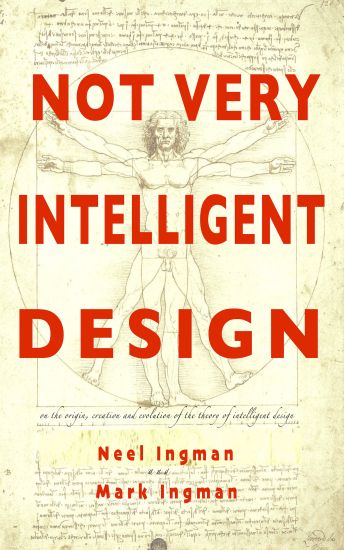
Not Very Intelligent Design

Not Very Intelligent Design

Mark Ingman; Neel Ingman

Palaceno House
2018
pokkari
10 amazing things concerning this book -The Intelligent Designer created reading glasses so that all humans could read this book.Humans need haircuts. Cat hair stops growing at exactly the right length.Humans have butt crack hair because the Intelligent Designer decided that your bottom would be too hygienic and too easy to clean without it.Humans sometimes choke to death. Dolphins don't. They have a separate breathing tube.Humans who seriously believe in creation theory will not enjoy this book.The bit in this book about an amputee soldier who loses his second hand in a blender whilst on a bender in Bali may contain traces of fiction.The Intelligent Designer decided that human limbs should not regrow after amputation. Salamanders on the other hand...The bit about a poop in a public pool that leads to mass murder may not be completely true.If you believe that God's on your side, don't read this book.The Intelligent Designer created special, lethal diseases which are transmitted during acts of procreation. Mysterious or perverse?
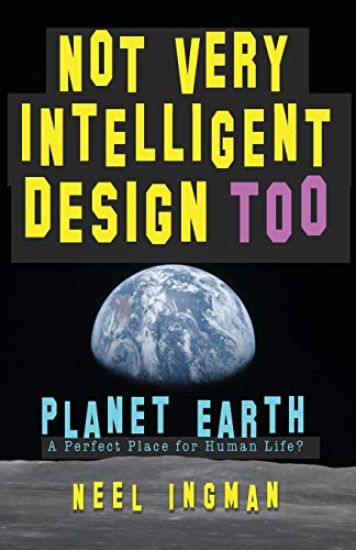
Not Very Intelligent Design Too

Not Very Intelligent Design Too

Neel Ingman

Palaceno House
2020
pokkari
10 amazing things concerning this book -The Intelligent Designer created a planet for humans, then gave 70% of it to fish.Humans need heat from the sun to avoid freezing to death.Humans need protection from the sun, to avoid getting burnt. To death.Most humans think land mines are evil. The Intelligent Designer made volcanoes and earthquakes.Humans who believe in an Intelligent Designer will not enjoy this book.The bit in this book about a man from Scunthorpe with a death wish for mountain climbers may contain traces of fiction.The Intelligent Designer decided that a perfect place for humans to live would have thousands of species of plants, fungi, insects and animals capable of killing us without warning.The bit about Van Gogh and the famous St R my Pray-Off of 1889 may not be completely true.If you believe that God's on your side, don't read this book.The Intelligent Designer decided that a wafer thin film of atmosphere would be plenty, and that humans would definitely not pollute it to death.
Not Very Intelligent Design 3

Not Very Intelligent Design 3

Neel Ingman

Palaceno House
2023
pokkari
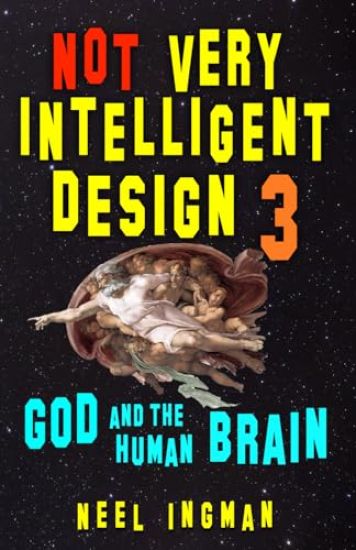
Was the Human Brain created by God? Or was God created by the Human Brain? In this third book of the series, Not Very Intelligent Design, Neel Ingman investigates, hypothesizes, ridicules and dances all around one of the big questions. For those in search of a dry, academic study of the subject, sorry, it's not that. Neither is it a work of theological apologetics. For those who like a spot of entertainment and sophomoronic humor... dive in. This is for you.
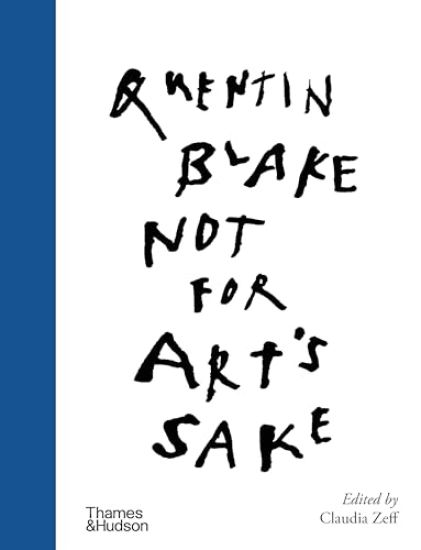
Not for Art's Sake

Not for Art's Sake

Quentin Blake

THAMES HUDSON LTD
2025
sidottu
An art book about art that has a purpose, focusing on work by Quentin Blake that has been commissioned for a particular place or for a particular use. Illustration is the most accessible visual artform and one that is used in all aspects of life; as Quentin Blake says, 'it is, if you like, a vernacular; it’s a language that everybody understands. They may look at it and not think that they’re looking at art, but it’s having the effect on them of art. It’s a language that everybody can read, so to speak.' The work here shows Quentin using this vernacular to great effect and for very different purposes. In 2007 when Elizabeth II was opening the new Eurostar at St Pancras, Quentin was asked to hide an unsightly building across the road. He drew a 2-colour illustration on his drawing board showing a cast of characters that you might meet on a London Street; this was then blown up large enough to wrap a five-storey building. Since then he has found other opportunities for site specific work. Here are beautiful drawings of new-borns, mothers and fathers in a maternity hospital in France. Some images were etched, larger than life-size, on the external glass of the building as well as used in corridors and delivery suites. Most recently Quentin has done a series of drawings of everyday life for the family rooms for prisons across the UK. And charities have benefited from Quentin’s enjoyment of drawing for a purpose; the Roald Dahl Marvellous Charity’s logo and cards; for Comic Relief’s two virtual pantomimes during lockdown, he drew the scene changes for Cinderella and Beauty and the Beast which were then auctioned; he created a rainbow for the NHS trust mug, and posters for Islington Libraries to encourage reading. All these and more are featured in this charming book, which opens with a foreword by Quentin Blake, and includes photographs of him at work.
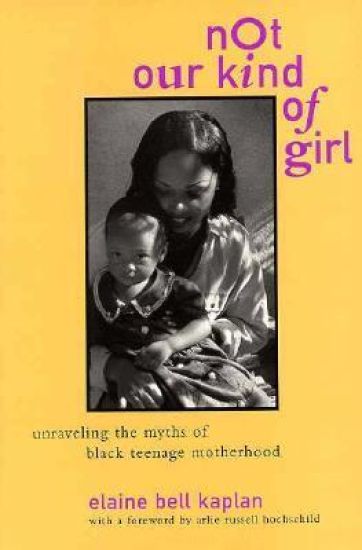
Not Our Kind of Girl

Not Our Kind of Girl

Elaine Bell Kaplan

University of California Press
1997
pokkari
One of the most worrisome images in America today is that of the teenage mother. For the African-American community, that image is especially troubling: All the problems of the welfare system seem to spotlight the black teenage mom. Elaine Bell Kaplan's affecting and insightful book dispels common perceptions of these young women. Her interviews with the women themselves, and with their mothers and grandmothers, provide a vivid picture of lives caught in the intersection of race, class, and gender. Kaplan challenges the assumption conveyed in the popular media that the African-American community condones teen pregnancy, single parenting, and reliance on welfare. Especially telling are the feelings of frustration, anger, and disappointment expressed by the mothers and grandmothers Kaplan interviewed. And in listening to teenage mothers discuss their problems, Kaplan hears first-hand of their misunderstandings regarding sex, their fraught relationships with men, and their difficulties with the educational system--all factors that bear heavily on their status as young parents. Kaplan's own experience as an African-American teenage mother adds a personal dimension to this book, and she offers substantial proposals for rethinking and reassessing the class factors, gender relations, and racism that influence black teenagers to become mothers.
Not by Bread Alone

Not by Bread Alone

Melissa L. Caldwell

University of California Press
2004
pokkari
What Muscovites get in a soup kitchen run by the Christian Church of Moscow is something far more subtle and complex--if no less necessary and nourishing--than the food that feeds their hunger. In Not by Bread Alone, the first full-length ethnographic study of poverty and social welfare in the postsocialist world, Melissa L. Caldwell focuses on the everyday operations and civil transactions at CCM soup kitchens to reveal the new realities, the enduring features, and the intriguing subtext of social support in Russia today. In an international food aid community, Caldwell explores how Muscovites employ a number of improvisational tactics to satisfy their material needs. She shows how the relationships that develop among members of this community--elderly Muscovite recipients, Russian aid workers, African student volunteers, and North American and European donors and volunteers--provide forms of social support that are highly valued and ultimately far more important than material resources. In Not by Bread Alone we see how the soup kitchens become sites of social stability and refuge for all who interact there--not just those with limited financial means--and how Muscovites articulate definitions of hunger and poverty that depend far more on the extent of one's social contacts than on material factors. By rethinking the ways in which relationships between social and economic practices are theorized--by identifying social relations and social status as Russia's true economic currency--this book challenges prevailing ideas about the role of the state, the nature of poverty and welfare, the feasibility of Western-style reforms, and the primacy of social connections in the daily lives of ordinary people in post-Soviet Russia.
Not Much Left

Not Much Left

Tom Waldman

University of California Press
2008
sidottu
Tom Waldman's lively and sweeping assessment of the state of American liberalism begins with the political turbulence of 1968 and culminates with the 2006 takeover of Congress by the Democratic Party. "Not Much Left: The Fate of Liberalism in America" vividly demonstrates how the progressive and liberal wing of the Democratic Party helped end a war, won the civil rights battle, and paved the way for blacks, women, gays, and other minorities to achieve full citizenship.Through reportage, anecdotes, and analysis - particularly of the disastrous defeat of Democrat George McGovern in 1972 - Waldman chronicles how the grand coalition that achieved so much in the 1960s began to self-destruct in the early 1970s. Citing the Republican recovery from Barry Goldwater's 1964 defeat, Waldman demonstrates how the two parties' very different reactions to electoral debacle account for recent Republican dominance and Democratic impotence. Assessing liberalism's fate through the Carter and Reagan presidencies, the defeat of Michael Dukakis in the 1988 presidential election, and the on-again, off-again liberalism of the Clinton years, Waldman then brings the discussion up to date with analysis of the 2008 presidential campaign.
Not Fit for Our Society

Not Fit for Our Society

Peter Schrag

University of California Press
2010
sidottu
In a book of deep and telling ironies, Peter Schrag provides essential background for understanding the fractious debate over immigration. Covering the earliest days of the Republic to current events, Schrag sets the modern immigration controversy within the context of three centuries of debate over the same questions about who exactly is fit for citizenship. He finds that nativism has long colored our national history, and that the fear - and loathing - of newcomers has provided one of the faultlines of American cultural and political life. Schrag describes the eerie similarities between the race-based arguments for restricting Irish, German, Slav, Italian, Jewish, and Chinese immigrants in the past and the arguments for restricting Latinos and others today. He links the terrible history of eugenic 'science' to ideas, individuals, and groups now at the forefront of the fight against rational immigration policies. "Not Fit for Our Society" makes a powerful case for understanding the complex, often paradoxical history of immigration restriction as we work through the issues that inform, and often distort, the debate over who can become a citizen, who decides, and on what basis.
Not Fit for Our Society

Not Fit for Our Society

Peter Schrag

University of California Press
2010
pokkari
In a book of deep and telling ironies, Peter Schrag provides essential background for understanding the fractious debate over immigration. Covering the earliest days of the Republic to current events, Schrag sets the modern immigration controversy within the context of three centuries of debate over the same questions about who exactly is fit for citizenship. He finds that nativism has long colored our national history, and that the fear - and loathing - of newcomers has provided one of the faultlines of American cultural and political life. Schrag describes the eerie similarities between the race-based arguments for restricting Irish, German, Slav, Italian, Jewish, and Chinese immigrants in the past and the arguments for restricting Latinos and others today. He links the terrible history of eugenic 'science' to ideas, individuals, and groups now at the forefront of the fight against rational immigration policies. "Not Fit for Our Society" makes a powerful case for understanding the complex, often paradoxical history of immigration restriction as we work through the issues that inform, and often distort, the debate over who can become a citizen, who decides, and on what basis.