Kirjojen hintavertailu. Mukana 11 717 486 kirjaa ja 12 kauppaa.

Kirjahaku

Etsi kirjoja tekijän nimen, kirjan nimen tai ISBN:n perusteella.

1000 tulosta hakusanalla Napolean Hill

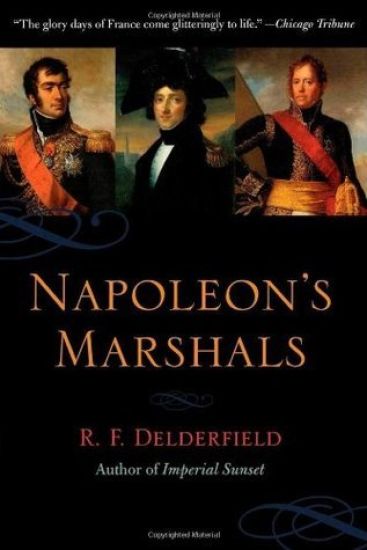
Napoleon's Marshals

Napoleon's Marshals

R. F. Delderfield

Cooper Square Publishers Inc.,U.S.
2002
pokkari
Napoleon's Marshals led the troops of France in battles across Europe from 1804 to 1815. A mixed group of twenty-six men, some of the Marshals came from aristocratic backgrounds, some had originally pursued tradesmen careers as drapers and bakers, and others rose from total poverty to hold the highest positions in the empire below the emperor himself. Delderfield's exciting chronicle of these men and their battles tells of their origins, their elevation under the rule of Napoleon, the kingships achieved by some and the betrayals of others, and the Marshals' changing relationship with their leader as the fortunes of the empire rose and fell.
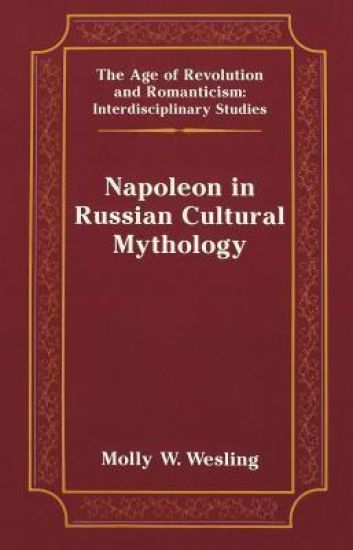
Napoleon in Russian Cultural Mythology

Napoleon in Russian Cultural Mythology

Molly W. Wesling

Peter Lang Publishing Inc
2001
sidottu
Beginning with the earliest days of his meteoric rise to power at the turn of the nineteenth century and continuing into the post-soviet era, Napoleon Bonaparte has maintained a peculiar grip on Russian popular and literary imagination. Heralded as the Messiah, condemned as the Antichrist, and lauded as the spirit of the Revolution, Napoleon invaded Russia at a critical period in its historical development, when ideas about nation and identity were beginning to take form in literature and public debate. Using traditional methods and tools of literary analysis, this book examines the figure of Napoleon in the context of uniquely Russian paradigms and myths. It analyzes the motifs, images, and plots that underlie the ongoing process of the mythologization of Napoleon and demonstrates how the speaking terms in which Russians regaled this outsider, at various moments and in different contexts, expose strategies Russians used in common to fashion their own self-image and that of their nation.
Napoleon's Italy

Napoleon's Italy

Desmond Gregory

Fairleigh Dickinson University Press,U.S.
2001
sidottu
This is the first book in English devoted to the history of Italy as a whole under the rule of Napoleon Bonaparte. Drawing largely on printed primary sources and the large number of secondary works that have been written in French and Italian, it seeks to present a balanced summary of conclusions reached by historians. Napoleon's Italy addresses the source of Napoleon's continued interest in Italy, exploring not only his apparent intentions with regard to the future of that country but the effect of fifteen years of Napoleonic rule. This book examines the impact of his continued interest in Italy on the country's economy in its various and diverse regions; on its legal, judicial, and administrative systems; and on Napoleon's use of Italy's conscripted armies. It assesses the degree of support and hostility his rule received, as well as the nature of the resistance to it. Finally, this book seeks to compute what sort of legacy Napoleon's rule has left behind in Italy. Desmond Gregory has published widely, including eight academic history books.
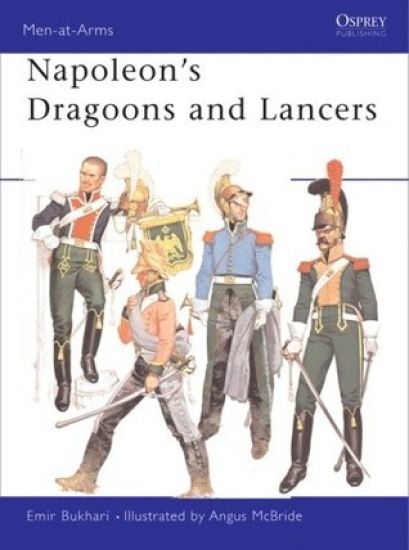
Napoleon's Dragoons and Lancers

Napoleon's Dragoons and Lancers

Emir Bukhari

Osprey Publishing
1992
nidottu
France was to call up a total of 1,600,000 men during the Napoleonic Wars, of whom a mere 600,000 were to survive. For those conscripted into service, one of the better fates would be recruitment as a cavalryman. Napoleon's dragoons were not just any band of individuals sorted and labelled cavalrymen; they were mounted infantrymen, trained to be adept with both musket and sabre, and proud of that distinction. Originally mounted for the sake of mobility but generally fighting on foot, they evolved into an army equally at home sabring at the charge as firing dismounted.
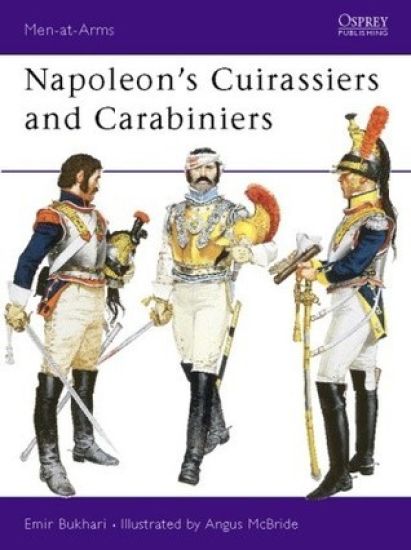
Napoleon's Cuirassiers and Carabiniers

Napoleon's Cuirassiers and Carabiniers

Emir Bukhari

Osprey Publishing
1994
nidottu
Owing to the heavy casualties suffered by the carabiniers in the 1809 campaign, the Emperor decreed that they should be armoured to the same advantage as the cuirassiers. In this way the two corps drew together in being the only troops of the Grande Armeé who were armoured, while at the same time they diverged in breaking away from their traditionally similar dress. Emir Bukhari does a splendid job of examining the uniforms and equipment of Napoleon's cuirassiers and carabiniers, in a text complemented throughout by numerous illustrations and diagrams including eight full page colour plates by the ever popular Angus McBride.
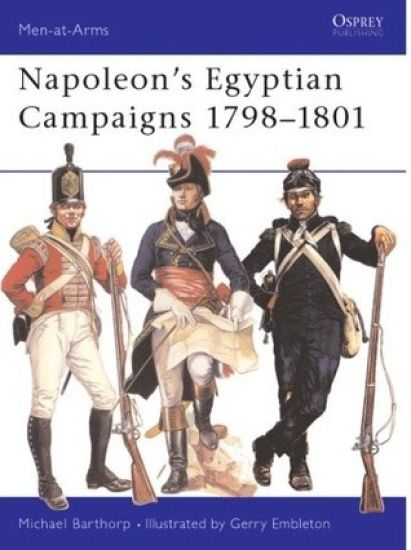
Napoleon's Egyptian Campaigns 1798–1801

Napoleon's Egyptian Campaigns 1798–1801

Michael Barthorp

Osprey Publishing
1992
nidottu
The imaginative strategic plan of Revolutionary France to cut Britain's lifeline to India by seizing Egypt and the Levant was an epic adventure, set amongst some of the most ancient places of history, then almost unknown to Europeans. The conflicts proved once again the supremacy of the British fleet and furthermore that a reformed British Army was a force to be reckoned with. This fascinating book by Michael Barthorp provides an outline of the campaigns and examines in greater detail the armies which marched and fought amid the desert sands and relics of earlier civilisations.
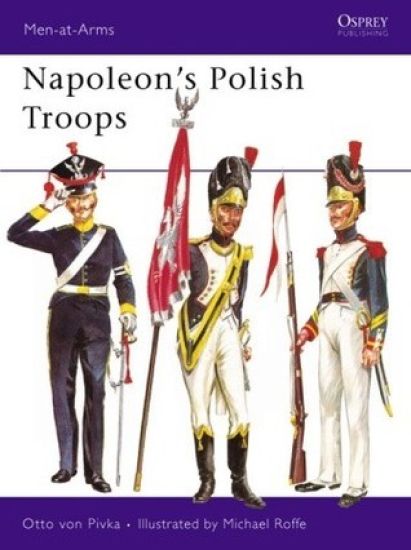
Napoleon’s Polish Troops

Napoleon’s Polish Troops

Otto von Pivka

Osprey Publishing
1974
nidottu
In 1795 the kingdom of Poland fell prey to her stronger neighbours, Russia, Prussia and Austria. Following the death of the king of Poland in 1798, his kingdom was divided among these three neighbouring powers.France became increasingly involved, and protested at Poland's treatment, offering refuge for Polish exiles. On 11 October 1796 the Polish Legion was formed in the French army by General Dombrowski and Napoleon. This book covers the uniforms, dress, organisation and equipment of the infantry, artillery, and cavalry of Napoleon's Polish Troops. Among the cavalry units covered are the Chasseurs and Lancers.This title also provides a summary of the Polish divisions' campaigns in Spain, Russia and within Poland itself.
Napoleon's Hussars

Napoleon's Hussars

Emir Bukhari

Osprey Publishing
1978
nidottu
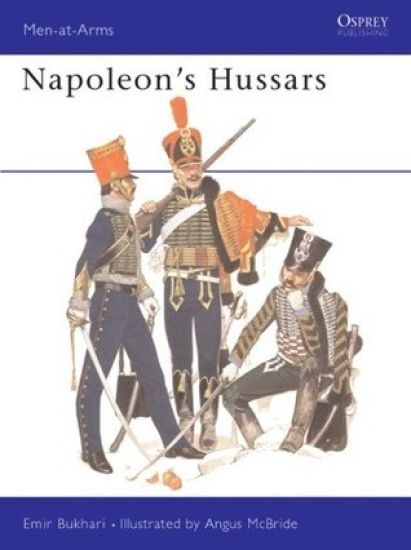
Napoleon's Hussars made their first real impact in 1806 with their astonishing pursuit of the Prussians over 1,160km from the river Saale to the Oder in twenty-five days. They then capped this feat on arrival when, by dint of audacious demonstrations by the 500 men of the combined 5th and 7th Hussars, the 6,000-strong Prussian garrison was bluffed into capitulating its fortress at Stettin along with 160 cannon. This splendid volume by Emir Bukhari describes the organisation, war records, dress and equipment of these most colourful of Napoleon's troops.
Napoleon's German Allies (2)

Napoleon's German Allies (2)

Otto von Pivka

Osprey Publishing
1991
nidottu
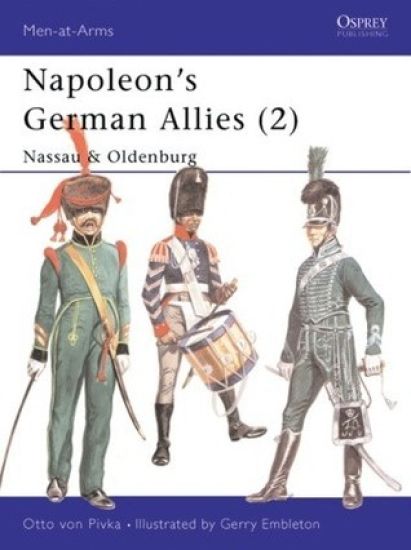
On 14 October 1808, Napoleon persuaded Herzog Peter Friedrich Ludwig of Oldenburg to join the Confederation of the Rhine by the Treaty of Erfurt – the military contingent to be maintained by the duchy was set at an infantry battalion of 800 men in six companies. Similarly, Friedrich August, Herzog of Nassau, was charged, under the terms of the treaty with co-ordinating and organising the military efforts of all the tiny states of its neighbours. In this fine addition to Osprey's Men-at-Arms series, Otto Von Pivka details the campaign history and uniforms of Napoleon's Nassau and Oldenburg allied troops.
Napoleon's Line Chasseurs

Napoleon's Line Chasseurs

Emir Bukhari

Osprey Publishing
1977
nidottu
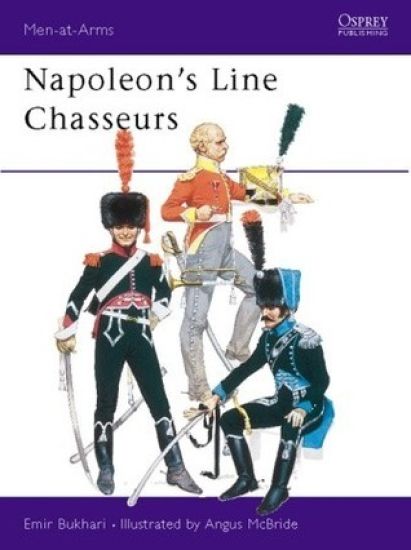
The chasseurs, being the indigenous French light horse, can perhaps therefore be equated best with the infantry demi-brigades of this period, a half-trained, unprofessional, make-shift collection, making up with zeal what they lacked in experience, a qualification which in no way diminished the importance of their role within Napoleon's all-conquering army. Emir Bukhari's fine text examines the dress and equipment of Napoleon's line chasseurs, plus the histories of individual regiments in a volume containing a plethora of illustrations and diagrams including eight full page colour plates by popular artist Angus McBride, showing a variety of uniforms in admirable detail.
Napoleon's Guard Cavalry

Napoleon's Guard Cavalry

Emir Bukhari

Osprey Publishing
1992
nidottu
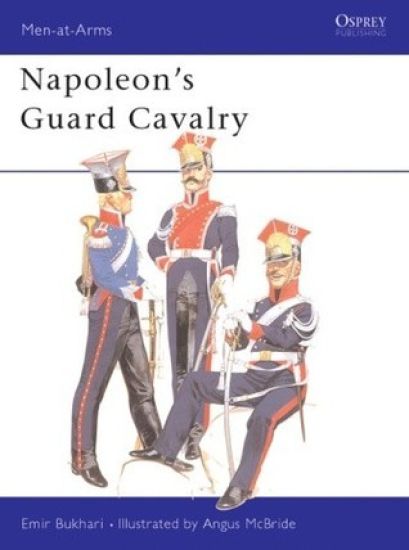
This title examines some of the most colourful and fanciful uniforms in military history, those of Napoleon's Guard Cavalry. The detailed text covers units such as the Grenadiers à Cheval; the Empress's Dragoons; the Chasseurs à Cheval; the Mamelukes; the Gardes d'Honneur; the Polish Lancers; the Dutch Lancers; the German Lancers and the Lithuanian Tartars. A plethora of illustrations complement the text, including eight fine full page colour plates by inimitable Angus McBride, providing admirably detailed reconstructions of uniforms and accompanied by ten pages of commentaries.
Napoleon's German Allies (4)

Napoleon's German Allies (4)

Otto von Pivka

Osprey Publishing
1980
nidottu
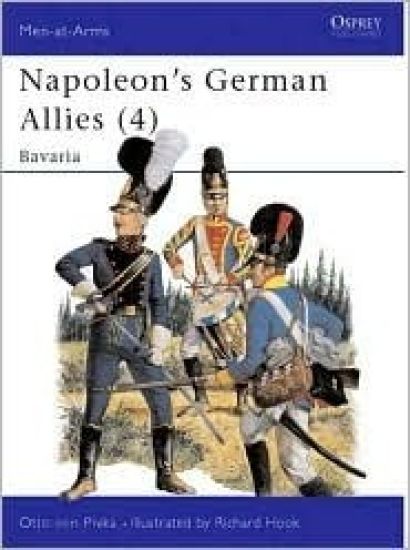
In 1805, Bavaria allied itself with France and Bavarian troops served with Napoleon during the 1809 campaign against Austria, and participated in the Russian campaign of 1812, before eventually abandoning the Emperor's cause in 1813 prior to the battle of Leipzig. They then engaged Napoleon's troops in combat at the battle of Hanua in an unsuccessful attempt to cut off their retreat to France. This book by Otto von Pivka provides an in depth examination of the organisation, equipment, weaponry and uniforms of Napoleon's Bavarian allies. The fascinating text is accompanied by numerous illustrations and eight full page colour plates.
Napoleon's German Allies (5)

Napoleon's German Allies (5)

Otto von Pivka

Osprey Publishing
1982
nidottu
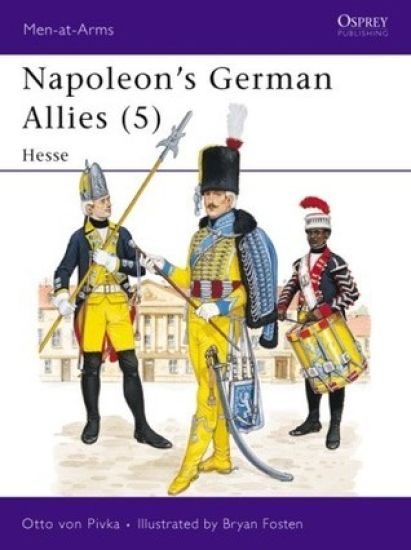
During the Napoleonic Wars the region of Hesse was divided between Hessen-Kassel and Hessen-Darmstadt. Under Napoleon's patronage, in 1806 Hessen-Darmstadt received all remaining imperial possessions within its borders and was elevated to a Grand Duchy. That same year, Hessen-Kassel, under Imperial Elector Wilhelm I, was dissolved and incorporated into Jerome Bonaparte's Kingdom of Westphalia, resulting in significant political, administrative and sartorial changes. This richly illustrated book details the organization, campaigns, uniforms, and colours and standards of the forces of Hessen-Darmstadt and Hessen-Kassel from 1792 to Napoleon's defeat in 1813.
Napoleon's Line Infantry

Napoleon's Line Infantry

Philip Haythornthwaite

Osprey Publishing
1983
nidottu
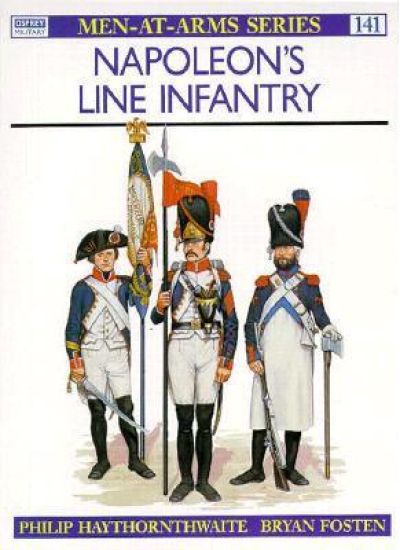
Napoleon's line infantry was founded upon that of the Ancien Régime. A total re-organisation began on 1 January 1791 with the abolition of the old regimental titles, and over the next two years an increasing number of conscript and volunteer battalions were formed. Their quality varied from the proficiency of the early National Guard regiments to the untrained and ill-equipped rabble of the levée. To combine the discipline and steadiness of the regular army with the revolutionary fervour of the new army, the Amalgame was decreed on 21 February; by this measure each regular battalion became the nucleus of a new Demi-Brigade.
Napoleon's Light Infantry

Napoleon's Light Infantry

Philip Haythornthwaite

Osprey Publishing
1983
nidottu
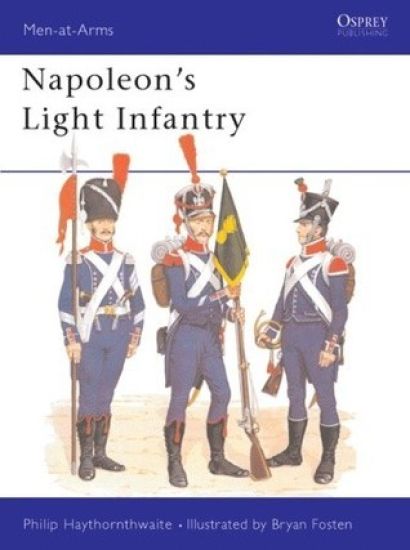
Although light infantry tactics formed one of the cornerstones of Napoleonic warfare, their employment was by no means restricted to Light regiments. Thus, from the early 1800s if not before, the distinction between Light and Line infantry was largely one of costume and tradition. One marked difference from the Line infantry, however, was in the superior ésprit de corps of the Light regiments. Their attitude of superiority was reinforced by their different (and often more impressive) uniform, the theoretical difference in role, and supposed superior training. Philip Haythornwaite examines their uniforms in a volume including eight superb colour plates by Brian Fosten.
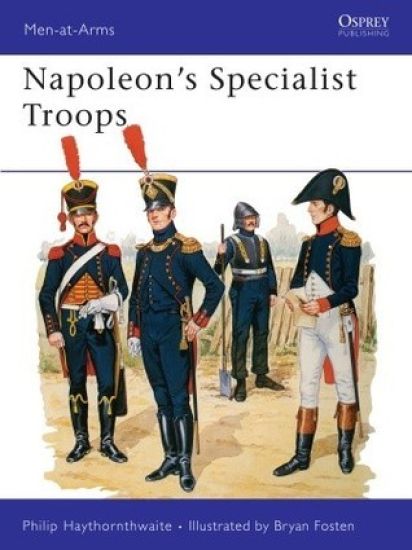
Napoleon's Specialist Troops

Napoleon's Specialist Troops

Philip Haythornthwaite

Osprey Publishing
1988
nidottu
Though less celebrated than the infantry and cavalry, Napoleon's 'specialist' troops – artillery, engineers and supporting services – were indispensable elements.Without them, no army could have operated, and they frequently assumed greater significance than the line regiments. Indeed, having suffered least from the emigration of Royalist officers, the artillery was the best element of the early Republican armies, the nucleus of the old Royal artillery serving with distinction in the early campaigns such as Valmy.The organisation and uniform of Napoleon's specialist troops are here examined by Philip Haythornwaite in a engaging volume complemented by a wealth of illustrations including eight full page colour plates by Bryan Fosten.
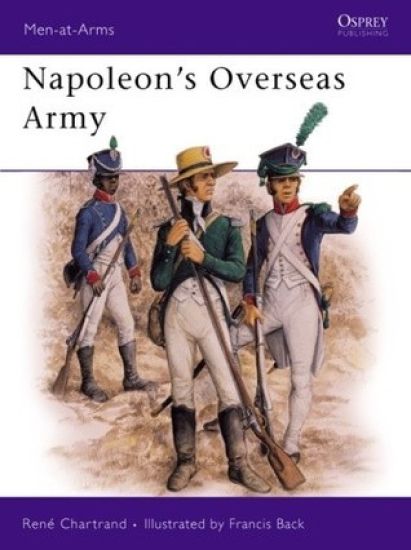
Napoleon's Overseas Army

Napoleon's Overseas Army

René Chartrand

Osprey Publishing
1989
nidottu
When the French Revolution broke out in 1789, France possessed numerous colonies spread over three continents. To defend and keep the peace in these territories, a small army of colonial troops, distinct from the metropolitan line regiments or marines, had existed since the days of Louis XIV. This book examines the history and uniforms of the often-overlooked French armies in Saint-Domingue, Guadeloupe, Martinique, St Lucia, Tobago, Ile-de-France, La Réunion, Pondichéry, Guiana, Senegal and Saint-Pierre-et-Miquelon. The text is backed by numerous illustrations offering a rare glimpse into dress and equipment of Napoleon's overseas army.