Kirjojen hintavertailu. Mukana 12 477 204 kirjaa ja 12 kauppaa.

Kirjahaku

Etsi kirjoja tekijän nimen, kirjan nimen tai ISBN:n perusteella.

1000 tulosta hakusanalla Nathan Howe Parker

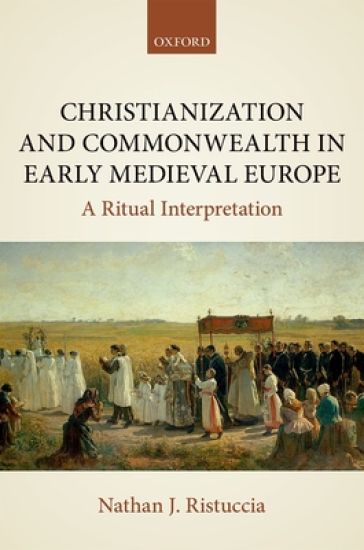
Christianization and Commonwealth in Early Medieval Europe

Christianization and Commonwealth in Early Medieval Europe

Nathan J. Ristuccia

Oxford University Press
2018
sidottu
Christianization and Commonwealth in Early Medieval Europe re-examines the alterations in Western European life that followed widespread conversion to Christianity-the phenomena traditionally termed "Christianization". It refocuses scholarly paradigms for Christianization around the development of mandatory rituals. One prominent ritual, Rogationtide supplies an ideal case study demonstrating a new paradigm of "Christianization without religion." Christianization in the Middle Ages was not a slow process through which a Christian system of religious beliefs and practices replaced an earlier pagan system. In the Middle Ages, religion did not exist in the sense of a fixed system of belief bounded off from other spheres of life. Rather, Christianization was primarily ritual performance. Being a Christian meant joining a local church community. After the fall of Rome, mandatory rituals such as Rogationtide arose to separate a Christian commonwealth from the pagans, heretics, and Jews outside it. A Latin West between the polis and the parish had its own institution-the Rogation procession-for organizing local communities. For medieval people, sectarian borders were often flexible and rituals served to demarcate these borders. Rogationtide is an ideal case study of this demarcation, because it was an emotionally powerful feast, which combined pageantry with doctrinal instruction, community formation, social ranking, devotional exercises, and bodily mortification. As a result, rival groups quarrelled over the holiday's meaning and procedure, sometimes violently, in order to reshape the local order and ban people and practices as non-Christian.
The Making of the Tabernacle and the Construction of Priestly Hegemony
How did the Jerusalem high priests go from being cultic servants in the sixth century BCE to assuming political supremacy at some point during the third or second century? The Making of the Tabernacle and the Construction of Priestly Hegemony examines how the conditions were created for the priesthood's rise to power by examining the most important ideological texts for the high priests: the description of the wilderness tabernacle and the instructions for the ordination ritual found in the Biblical books of Exodus and Leviticus. Although neglected by many modern readers, who often find them technical and repetitive, the tabernacle accounts excited considerable interest amongst early scribes and readers, as is evidenced by the survival of them in no fewer than four versions. Untangling this intricate compositional history helps shed light on how these chapters in the Pentateuch shaped-and were shaped by-the perception of the priesthood's powers and competencies during the Persian and early Hellenistic periods. The hierarchy that is developed is more nuanced and multifaceted than previously appreciated, with Israelite artisans, community leaders, Levites and women incorporated into a complex vision of society. The ordination ritual was also transformed by scribal elites during the Persian period, appearing in no fewer than five variant forms as the role of the high priesthood and its relationship to other groups was negotiated. Using a broad, plural methodological approach that incorporates insights from sociology, ritual studies, textual and literary criticism, early interpretation, manuscript studies, and philology, Nathan MacDonald's study shines new light on the historical development, theology, and ideology of priestly texts in the Pentateuch.
Moonlighting

Moonlighting

Nathan Waddell

Oxford University Press
2019
sidottu
How and why did the life and music of Ludwig van Beethoven (1770-1827) matter to experimental writers in the early twentieth century? Previous answers to this question have tended to focus on structural analogies between musical works and literary texts, charting the many different ways in which poetry and prose resemble Beethoven's compositions. This book takes a different approach. It focuses on how early twentieth-century writers--chief among them E. M. Forster, Aldous Huxley, Wyndham Lewis, Dorothy Richardson, Rebecca West, and Virginia Woolf--profited from the representational conventions associated in the nineteenth century and beyond with Beethovenian culture. The emphasis of Moonlighting falls for the most part on how modernist writers made use of Beethovenian legend. It is concerned neither with formal similarities between Beethoven's music and modernist writing nor with the music of Beethoven per se, but with certain ways of understanding Beethoven's music which had long before 1900 taken shape as habit, myth, cliché, and fantasy, and with the influence they had on experimental writing up to 1930. Moonlighting suggests that the modernists drew knowingly and creatively on the conventional. It proposes that many of the most experimental works of modernist literature were shaped by a knowing reliance on Beethovenian consensus; in short, that the literary modernists knew Beethovenian legend when they saw it, and that they were eager to use it.
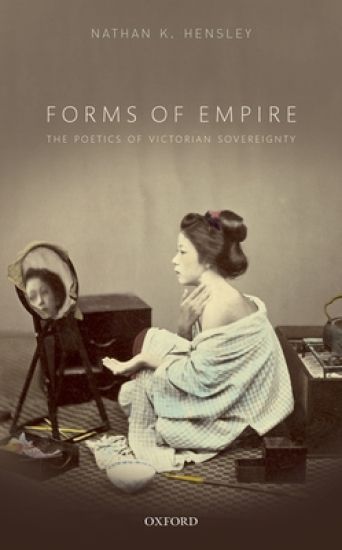
Forms of Empire

Forms of Empire

Nathan K. Hensley

Oxford University Press
2018
nidottu
Forms of Empire shows how the modern state's anguished relationship to violence pushed writers to expand the capacities of literary form. The Victorian era is often imagined as an 'age of equipoise,' but the period between 1837 and 1901 included more than 200 separate wars. What is the difference, though, between peace and war? The much-vaunted equipoise of the nineteenth-century state depended on physical force to guarantee it. But the sovereign violence hidden in the shadows of all law shuddered most visibly into being at the edges of law's reach, in the Empire, where emergency was the rule and death perversely routinized. George Eliot, Charles Dickens, Wilkie Collins, A. C. Swinburne, H. Rider Haggard, and Robert Louis Stevenson, among others, all generated new formal techniques to account for the sometimes sickening interplay between order and force in their liberal Empire. In contrast to the progressive idealism we have inherited from the Victorians, these writers moved beyond embarrassment and denial in the face of modernity's uncanny relation to killing. They sought aesthetic effects—free indirect discourse, lyric tension, and the idea of literary 'character' itself—able to render thinkable the conceptual vertigoes of liberal violence. In so doing, they touched the dark core of our post-Victorian modernity. Archival work, literary analyses, and a theoretical framework that troubles the distinction between 'historicist' and 'formalist' approaches helps this book link the Victorian period to the present and articulate a forceful vision of why literary thinking matters now.
Not Quite Hope and Other Political Emotions in the Gilded Age
Not Quite Hope and Other Political Emotions in the Gilded Age argues that late nineteenth-century US fiction grapples with and helps to conceptualize the disagreeable feelings that are both a threat to citizens' agency and an inescapable part of the emotional life of democracy--then as now. In detailing the corruption and venality for which the period remains known, authors including Mark Twain, Harriet Beecher Stowe, Henry Adams, and Helen Hunt Jackson evoked the depressing inefficacy of reform, the lunatic passions of the mob, and the revolting appetites of lobbyists and office seekers. Readers and critics of these Washington novels, historical romances, and satiric romans à clef have denounced these books' fiercely negative tone, seeing it as a sign of cynicism and elitism. Not Quite Hope argues, in contrast, that their distrust of politics is coupled with an intense investment in it: not quite apathy, but not quite hope. Chapters examine both common and idiosyncratic forms of political emotion, including 'crazy love', disgust, cynicism, 'election fatigue', and the myriad feelings of hatred and suspicion provoked by the figure of the hypocrite. In so doing, the book corrects critics' too-narrow focus on 'sympathy' as the American novel's model political emotion. We think of reform novels as fostering feeling for fellow citizens or for specific causes. This volume argues that Gilded Age fiction refocuses attention on the unstable emotions that continue to shape our relation to politics as such.
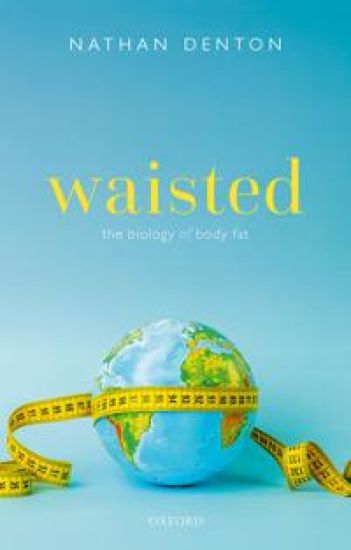
Waisted: The Biology of Body Fat

Waisted: The Biology of Body Fat

Nathan Denton

Oxford University Press
2021
nidottu
Waisted: The Biology of Body Fat outlines the fascinating, often misunderstood and sometimes controversial biology of fat, otherwise known as adipose tissue. It provides a comprehensive, evidence-based perspective on fat biology and its crucial role in human evolution, health, disease, and society. The content draws upon biomedical, epidemiological, social and evolutionary research to understand the striking relationship between body fat distribution and health outcomes. Using digestible analogies, real-world examples and images, it highlights the multi-faceted relationship between adipose biology and society. Waisted clearly conveys the key concepts and assumptions that can lead to negative perceptions of fat, and reframes these challenges to highlight the underappreciated importance of adipose tissue in humans. Waisted is an accessible yet in-depth exploration of the subject that is suitable for both specialists and non-specialists alike. It is a highly valuable resource for clinicians, health practitioners, biomedical researchers, and students who study adipose biology, obesity, and diseases related to fat dysfunction. This book also provides an interesting sociological and anthropological read for anyone who wants to gain a broader and deeper appreciation of the unique role that adipose tissue plays in human evolution and society, by considering how biological and social factors intersect.
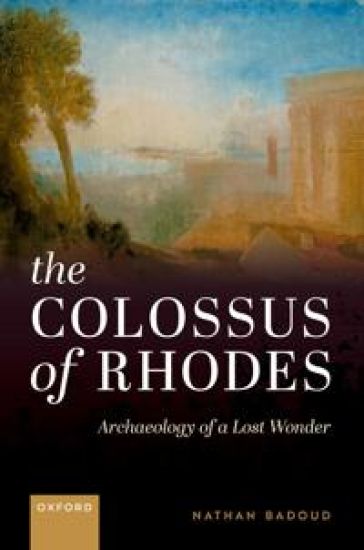
The Colossus of Rhodes

The Colossus of Rhodes

Nathan Badoud

Oxford University Press
2024
sidottu
The Colossus of Rhodes is both the most famous and the least well-known monument of Ancient Greece. Numbered among the Seven Wonders of the World, this bronze statue of the god Helios, thirty-four metres in height, was created by the sculptor Chares of Lindos between the years 295 and 283 BC, only to be destroyed by an earthquake in 227 BC. The legends which have spread after its collapse seem so strange and contradictory that specialists in Greek sculpture have been dissuaded from investigating the topic. Nathan Badoud publishes the first comprehensive study devoted to the Colossus. His book mobilises a large array of sources, ranging from antiquity to the present day. It proposes an intellectual excavation through the layers of the literary, artistic, and scientific tradition. It envisages the statue in its religious, political, and topographical contexts. It explores its function, its technique, its appearance, its meaning, and its location. It reconsiders the beginnings of the Hellenistic world, marked by the emergence of Rhodes as an imperial power, embodied by the Colossus.
Metaphysics, Mathematics, and Meaning

Metaphysics, Mathematics, and Meaning

Nathan Salmon

Clarendon Press
2005
sidottu
Metaphysics, Mathematics, and Meaning brings together Nathan Salmon's influential papers on topics in the metaphysics of existence, non-existence, and fiction; modality and its logic; strict identity, including personal identity; numbers and numerical quantifiers; the philosophical significance of Goedel's Incompleteness theorems; and semantic content and designation. Including a previously unpublished essay and a helpful new introduction to orient the reader, the volume offers rich and varied sustenance for philosophers and logicians.
Content, Cognition, and Communication

Content, Cognition, and Communication

Nathan Salmon

Clarendon Press
2007
sidottu
Nathan Salmon presents a selection of his essays from the early 1980s to 2006, on a set of closely connected topics central to analytic philosophy. The book is divided into four thematic sections. The first contains six essays on the theme of direct reference, and associated issues regarding names and descriptions, demonstratives and reflexivity. The four essays in the second section, under the heading of apriority, concern particular consequences of Millianism with respect to the semantic-epistemological status of certain special kinds of sentences. The five essays in the third section develop Salmon's project of reconciling Millianism with a host of problems posed by locutions of propositional attitude, especially by attributions of belief. The volume concludes with four essays about the distinction between meaning and use, or more generally, the distinction between semantics and pragmatics.
Metaphysics, Mathematics, and Meaning

Metaphysics, Mathematics, and Meaning

Nathan Salmon

Clarendon Press
2005
nidottu
Metaphysics, Mathematics, and Meaning brings together Nathan Salmon's influential papers on topics in the metaphysics of existence, non-existence, and fiction; modality and its logic; strict identity, including personal identity; numbers and numerical quantifiers; the philosophical significance of Gödel's Incompleteness theorems; and semantic content and designation. Including a previously unpublished essay and a helpful new introduction to orient the reader, the volume offers rich and varied sustenance for philosophers and logicians.
Content, Cognition, and Communication

Content, Cognition, and Communication

Nathan Salmon

Clarendon Press
2007
nidottu
Nathan Salmon presents a selection of his essays from the early 1980s to 2006, on a set of closely connected topics central to analytic philosophy. The book is divided into four thematic sections. The first contains six essays on the theme of direct reference, and associated issues regarding names and descriptions, demonstratives and reflexivity. The four essays in the second section, under the heading of apriority, concern particular consequences of Millianism with respect to the semantic-epistemological status of certain special kinds of sentences. The five essays in the third section develop Salmon's project of reconciling Millianism with a host of problems posed by locutions of propositional attitude, especially by attributions of belief. The volume concludes with four essays about the distinction between meaning and use, or more generally, the distinction between semantics and pragmatics.
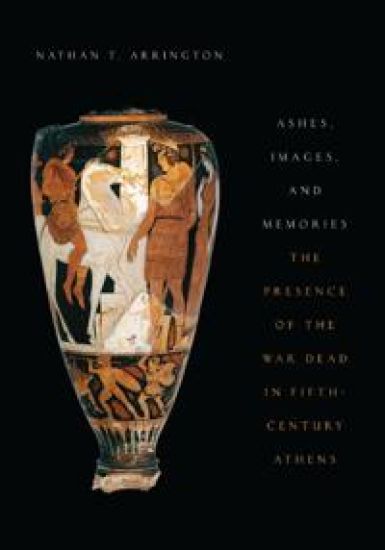
Ashes, Images, and Memories

Ashes, Images, and Memories

Nathan T. Arrington

Oxford University Press Inc
2015
sidottu
Ashes, Images, and Memories argues that the institution of public burial for the war dead and images of the deceased in civic and sacred spaces fundamentally changed how people conceived of military casualties in fifth-century Athens. In a period characterized by war and the threat of civil strife, the nascent democracy claimed the fallen for the city and commemorated them with rituals and images that shaped a civic ideology of struggle and self-sacrifice on behalf of a unified community. While most studies of Athenian public burial have focused on discrete aspects of the institution, such as the funeral oration, this book broadens the scope. It examines the presence of the war dead in cemeteries, civic and sacred spaces, the home, and the mind, and underscores the role of material culture--from casualty lists to white-ground lekythoi--in mediating that presence. This approach reveals that public rites and monuments shaped memories of the war dead at the collective and individual levels, spurring private commemorations that both engaged with and critiqued the new ideals and the city's claims to the body of the warrior. Faced with a collective notion of "the fallen, " families asserted the qualities, virtues, and family links of the individual deceased, and sought to recover opportunities for private commemoration and personal remembrance. Contestation over the presence and memory of the dead often followed class lines, with the elite claiming service and leadership to the community while at the same time reviving Archaic and aristocratic commemorative discourses. Although Classical Greek art tends to be viewed as a monolithic if evolving whole, this book depicts a fragmented and charged visual world.
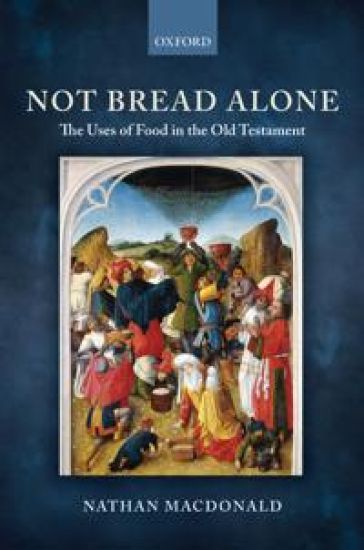
Not Bread Alone

Not Bread Alone

Nathan Macdonald

Oxford University Press
2008
sidottu
In ancient Israel the production of food was a basic concern of almost every Israelite. Consequently, there are few pages in the Old Testament that do not mention food, and food provides some of the most important social, political and religious symbols in the biblical text. Not Bread Alone is the first detailed and wide-ranging examination of food and its symbolism in the Old Testament and the world of ancient Israel. Many of these symbols are very well-known, such as the forbidden fruit in the Garden of Eden, the abominable pig and the land flowing with milk and honey. Nathan MacDonald demonstrates that the breadth biblical symbolism associated with food reaches beyond these celebrated examples, providing a collection of interrelated studies that draw on work on food in anthropology or other historical disciplines. The studies maintain sensitivity to the literary nature of the text as well as the many historical-critical questions that arise when studying it. Topics examined include: the nature and healthiness of the ancient Israelite diet; the relationship between food and memory in Deuteronomy; the confusion of food, sex and warfare in Judges; the place of feasting in the Israelite monarchy; the literary motif of divine judgement at the table; the use of food in articulating Israelite identity in the post-exilic period. The concluding chapter shows how some of these Old Testament concerns find resonance in the New Testament.
The Music Parents' Survival Guide

The Music Parents' Survival Guide

Nathan Amy

Oxford University Press Inc
2014
sidottu
This book of parent-to-parent advice aims to encourage, support, and bolster the morale of one of music's most important back-up sections: music parents. Within these pages, more than 150 veteran music parents contribute their experiences, reflections, warnings, and helpful suggestions for how to walk the music-parenting tightrope: how to be supportive but not overbearing, and how to encourage excellence without becoming bogged down in frustration. Among those offering advice are the parents of several top musicians, including the mother of violinist Joshua Bell, the father of trumpeter Wynton Marsalis, the parents of cellist Alisa Weilerstein, and those of violinist Anne Akiko Meyers. The book also features advice from music educators and more than forty professional musicians, including Paula Robison, Sarah Chang, Anthony McGill, Jennifer Koh, Jonathan Biss, Toyin Spellman-Diaz, Marin Alsop, Christian McBride, Miguel Zenon, Stephanie Blythe, Lawrence Brownlee, and Kelli O'Hara. The topics they discuss span a wide range of issues faced by the parents of both instrumentalists and singers, from how to get started to encouraging effective practice habits, to how to weather the rough spots, cope with the cost of music training, deal with college and career concerns, and help young musicians discover the role that music can play in their lives. The parents who speak here reach a unanimous and overwhelming conclusion that music parenting is well worth the effort, and the experiences that come with it - everything from flying to New York on the weekends to searching a flute convention for the perfect instrument - enrich family life with a unique joy in music.
The Music Parents' Survival Guide

The Music Parents' Survival Guide

Nathan Amy

Oxford University Press Inc
2014
nidottu
This book of parent-to-parent advice aims to encourage, support, and bolster the morale of one of music's most important back-up sections: music parents. Within these pages, more than 150 veteran music parents contribute their experiences, reflections, warnings, and helpful suggestions for how to walk the music-parenting tightrope: how to be supportive but not overbearing, and how to encourage excellence without becoming bogged down in frustration. Among those offering advice are the parents of several top musicians, including the mother of violinist Joshua Bell, the father of trumpeter Wynton Marsalis, the parents of cellist Alisa Weilerstein, and those of violinist Anne Akiko Meyers. The book also features advice from music educators and more than forty professional musicians, including Paula Robison, Sarah Chang, Anthony McGill, Jennifer Koh, Jonathan Biss, Toyin Spellman-Diaz, Marin Alsop, Christian McBride, Miguel Zenon, Stephanie Blythe, Lawrence Brownlee, and Kelli O'Hara. The topics they discuss span a wide range of issues faced by the parents of both instrumentalists and singers, from how to get started to encouraging effective practice habits, to how to weather the rough spots, cope with the cost of music training, deal with college and career concerns, and help young musicians discover the role that music can play in their lives. The parents who speak here reach a unanimous and overwhelming conclusion that music parenting is well worth the effort, and the experiences that come with it - everything from flying to New York on the weekends to searching a flute convention for the perfect instrument - enrich family life with a unique joy in music.
The Politics of Scale

The Politics of Scale

Nathan F. Sayre

University of Chicago Press
2017
sidottu
Rangelands are vast, making up one quarter of the United States and forty percent of the Earth's ice-free land. And while contemporary science has revealed a great deal about the environmental impacts associated with intensive livestock production from greenhouse gas emissions to land and water degradation far less is known about the historic role science has played in rangeland management and politics. Steeped in US soil, this first history of rangeland science looks to the origins of rangeland ecology in the late nineteenth-century American west, exploring the larger political and economic forces that together with scientific study produced legacies focused on immediate economic success rather than long-term ecological well being. During the late 1880s and early 1890s, a variety of forces from the Homestead Act of 1862 to the extermination of bison, foreign investment, and lack of government regulation promoted free-for-all access to and development of the western range, with disastrous environmental consequences. To address the crisis, government agencies turned to scientists, but as Nathan F. Sayre shows, range science grew in a politically fraught landscape. Neither the scientists nor the public agencies could escape the influences of bureaucrats and ranchers who demanded results, and the ideas that became scientific orthodoxy from fire suppression and predator control to fencing and carrying capacities contained flaws and blind spots that plague public debates about rangelands to this day. Looking at the global history of rangeland science through the Cold War and beyond, The Politics of Scale identifies the sources of past conflicts and mistakes and helps us to see a more promising path forward, one in which rangeland science is guided less by capital and the state and more by communities working in collaboration with scientists.
The Politics of Scale

The Politics of Scale

Nathan F. Sayre

University of Chicago Press
2017
nidottu
Rangelands are vast, making up one quarter of the United States and forty percent of the Earth's ice-free land. And while contemporary science has revealed a great deal about the environmental impacts associated with intensive livestock production from greenhouse gas emissions to land and water degradation far less is known about the historic role science has played in rangeland management and politics. Steeped in US soil, this first history of rangeland science looks to the origins of rangeland ecology in the late nineteenth-century American west, exploring the larger political and economic forces that together with scientific study produced legacies focused on immediate economic success rather than long-term ecological well being. During the late 1880s and early 1890s, a variety of forces from the Homestead Act of 1862 to the extermination of bison, foreign investment, and lack of government regulation promoted free-for-all access to and development of the western range, with disastrous environmental consequences. To address the crisis, government agencies turned to scientists, but as Nathan F. Sayre shows, range science grew in a politically fraught landscape. Neither the scientists nor the public agencies could escape the influences of bureaucrats and ranchers who demanded results, and the ideas that became scientific orthodoxy from fire suppression and predator control to fencing and carrying capacities contained flaws and blind spots that plague public debates about rangelands to this day. Looking at the global history of rangeland science through the Cold War and beyond, The Politics of Scale identifies the sources of past conflicts and mistakes and helps us to see a more promising path forward, one in which rangeland science is guided less by capital and the state and more by communities working in collaboration with scientists.
American Judaism

American Judaism

Nathan Glazer

University of Chicago Press
1988
nidottu
First published in 1957, Nathan Glazer's classic, historical study of Judaism in America has been described by the New York Times Book Review as "a remarkable story . . . told briefly and clearly by an objective historical mind, yet with a fine combination of sociological insight and religious sensitivity." Glazer's new introduction describes the drift away from the popular equation of American Judaism with liberalism during the last two decades and considers the threat of divisiveness within American Judaism. Glazer also discusses tensions between American Judaism and Israel as a result of a revivified Orthodoxy and the disillusionment with liberalism. "American Judaism has been arguably the best known and most used introduction to the study of the Jewish religion in the United States. . . . It is an inordinately clear-sighted work that can be read with much profit to this day."—American Jewish History (1987)
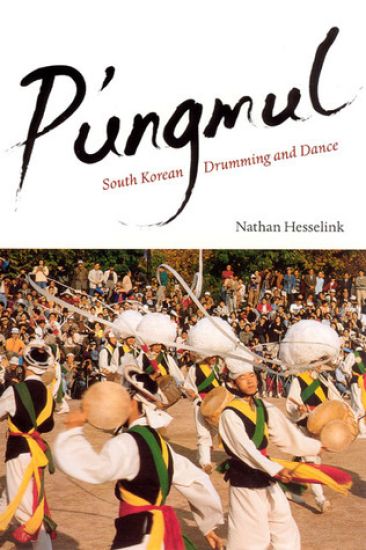
P'ungmul

P'ungmul

Nathan Hesselink

University of Chicago Press
2006
sidottu
Composed of a core set of two drums and two gongs, p'ungmul is a South Korean tradition of rural folk percussion. Steeped in music, dance, theater, and pageantry, but centrally focused on rhythm, such ensembles have been an integral part of village life in South Korea for centuries, serving as a musical accompaniment in the often overlapping and shifting contexts of labor, ritual, and entertainment. The first book to introduce Korean drumming and dance to the English-speaking world, Nathan Hesselink's "P'ungmul" offers detailed descriptions of its instrumentation, dance formations, costuming, actors, teaching lineages, and the complexities of training. Hesselink also evaluates how this tradition has taken on new roles and meanings in the twentieth and early twenty-first centuries, investigating the interrelated, yet contested spheres of history, memory, government policy, grassroots politics, opportunities for musical transmission, and performance practices and aesthetics. "P'ungmul" offers those interested in ethnomusicology, world music, anthropology, sociology, and Asian studies a special glimpse into the inner workings of a historically rich, artistically complex, and aesthetically and aurally beautiful Korean musical and dance tradition.
P'ungmul

P'ungmul

Nathan Hesselink

University of Chicago Press
2006
nidottu
Composed of a core set of two drums and two gongs, p'ungmul is a South Korean tradition of rural folk percussion. Steeped in music, dance, theater, and pageantry, but centrally focused on rhythm, such ensembles have been an integral part of village life in South Korea for centuries, serving as a musical accompaniment in the often overlapping and shifting contexts of labor, ritual, and entertainment. The first book to introduce Korean drumming and dance to the English-speaking world, Nathan Hesselink's "P'ungmul" offers detailed descriptions of its instrumentation, dance formations, costuming, actors, teaching lineages, and the complexities of training. Hesselink also evaluates how this tradition has taken on new roles and meanings in the twentieth and early twenty-first centuries, investigating the interrelated, yet contested spheres of history, memory, government policy, grassroots politics, opportunities for musical transmission, and performance practices and aesthetics. "P'ungmul" offers those interested in ethnomusicology, world music, anthropology, sociology, and Asian studies a special glimpse into the inner workings of a historically rich, artistically complex, and aesthetically and aurally beautiful Korean musical and dance tradition.