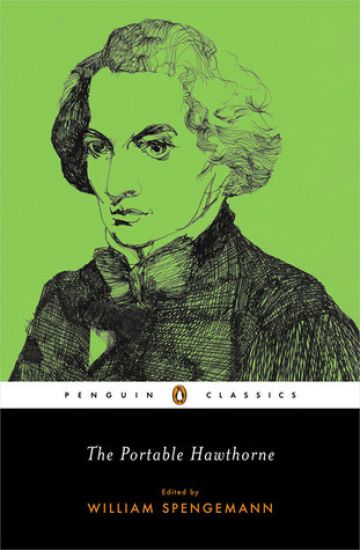
"The Portable Hawthorne" includes writings from each major stage in the career of Nathaniel Hawthorne: a number of his most intriguing early tales, all of "The Scarlet Letter", excerpts from his three subsequently published romances - "The House of Seven Gables", "The Blithedale Romance", and "The Marble Faun" - as well as passages from his European journals and a sampling of his last, unfinished works. The editor's introduction and head notes trace the evolution of Hawthorne's writing over the course of his long career: from the tales, to their apotheosis in "The Scarlet Letter", through his popular romances, to his private journals and frustrated attempts at another romance. Readers looking for a critical vantage point from which to see Hawthorne whole - his artistic rise, triumph, and sad decline - can find it in this collection.
This is a dramatic, moving depiction of social defiance and social deference, of passion and human frailty. Set in the harsh Puritan community of seventeenth-century Boston, this tale of an adulterous entanglement that results in an illegitimate birth reveals Nathaniel Hawthorne's concerns with the tension between the public and the private selves. Publicly disgraced and ostracized, Hester Prynne draws on her inner strength and certainty of spirit to emerge as the first true heroine of American fiction. Arthur Dimmesdale stands as a classic study of a self divided; trapped by the rules of society, he suppresses his passion and disavows his lover, Hester, and their daughter, Pearl.
The classic American novel, rejacketed with a new foreword by Tom Perotta and introduction by Hawthorne scholar Robert MilderSet in the harsh Puritan community of 17th century Boston, this is a tale of an adulterous entanglement that results in an illegitimate birth. The mother of the child, Hester Prynne, is publicly disgraced and ostracized but emerges as the first true heroine of American fiction.
This is a work in Kantian conceptual geography. It explores issues in analytic epistemology, philosophy of language, and metaphysics in particular by appealing to theses drawn from Immanuel Kant's Critique of Pure Reason. Those issues include the nature of the subjective, objective, and empirical; potential scopes of the subjective; what can (and cannot) be said about a subject-independent reality; analyticity, syntheticity, apriority, and aposteriority; constitutive principles, acquisitive principles, and empirical claims; meaning, indeterminacy, and incommensurability; logically possible versus subjectively empirical worlds; and the nature of empirical truth. Part One introduces two theses drawn from the Critique. The first, Empirical Dualism, concerns the subjective, objective, and empirical. The second, Subjective Principlism, concerns principles that might bear on the empirical. Part Two examines work of influential analytic philosophers to reveal how conceptually expansive the territory formed by Empirical Dualism and Subjective Principlism is. Part Three defends that territory by defending Empirical Dualism and Subjective Principlism themselves. Part Four discloses two new lands within the territory that have so far remained uncharted. The first is a Kantian account of meaning, which is shown to be superior to other accounts of meaning in the analytic literature. The second are Kantian thoughts on truth, which illuminate the nature of empirical truth itself. Finally Part Five shows how engaging in Kantian conceptual geography enriches epistemology, philosophy of language, and metaphysics generally.
The most consistent of all series in terms of language control, length, and quality of story. David R. Hill, Director of the Edinburgh Project on Extensive Reading.
The most consistent of all series in terms of language control, length, and quality of story. David R. Hill, Director of the Edinburgh Project on Extensive Reading.
In a 1965 letter to Newsweek, French writer and academic Bernard Fall (1926-67) staked a claim as the 'Number One Realist' on the Vietnam War. This is the first book to study the thought of this overlooked figure, one of the most important experts on counterinsurgency warfare in Indochina. Nathaniel L. Moir's intellectual history analyses Fall's formative experiences: his service in the French underground and army during the Second World War; his father's execution by the Germans and his mother's murder in Auschwitz; and his work as a research analyst at the Nuremberg Trials. Moir demonstrates how these critical events shaped Fall's trenchant analysis of Viet Minh-led revolutionary warfare during the French-Indochina War and the early Vietnam War. In the years before conventional American intervention in 1965, Fall argued that--far more than anything in the United States' military arsenal--resolving conflict in Vietnam would require political strength, willpower, integrity and skill. Number One Realist illuminates Fall's study of political reconciliation in Indochina, while showing how his profound, humanitarian critique of war continues to echo in the endless conflicts of the present. It will challenge and change the way we think about the Vietnam War.
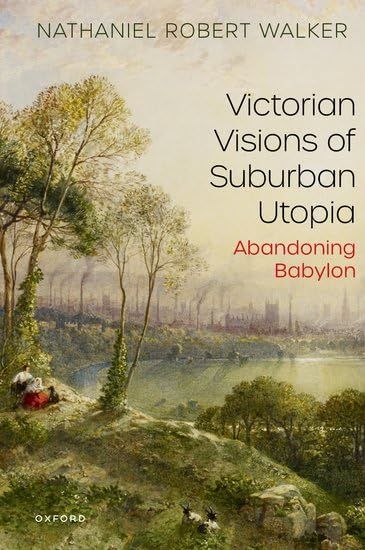
The rise of suburbs and disinvestment from cities have been defining features of life in many countries over the course of the twentieth century. In Victorian Visions of Suburban Utopia, Nathaniel Walker asks: why did we abandon our dense, complex urban places and seek to find "the best of the city and the country" in the flowery suburbs? While looking back at the architecture and urban design of the 1800s offers some answers, Walker argues that a great missing piece of the story can be found in Victorian utopian literature. The replacement of cities with high-tech suburbs was repeatedly imagined and breathlessly described in the socialist dreams and science-fiction fantasies of dozens of British and American authors. Some of these visionaries — such as Robert Owen, Edward Bulwer-Lytton, Edward Bellamy, William Morris, Ebenezer Howard, and H. G. Wells — are enduringly famous, while others were street vendors or amateur chemists who have been all but forgotten. Together, they fashioned strange and beautiful imaginary worlds built of synthetic gemstones, lacy metal colonnades, and unbreakable glass, staffed by robotic servants and teeming with flying carriages. As varied as their futuristic visions could be, Walker reveals how most of them were unified by a single, desperate plea: for humanity to have a future worth living, we must abandon our smoky, poor, chaotic Babylonian cities for a life in shimmering gardens.
The rise of suburbs and the disinvestment from cities have been defining features of life in many countries over the course of the twentieth century, especially English-speaking countires. The separation of different aspects of life, such as living and working, and the diffusion of the population in far-flung garden homes have necessitated the enormous consumption of natural lands and the constant use of mechanized transportation. Why did we abandon our dense, complex urban places and seek to find 'the best of the city and the country' in the flowery suburbs? Looking back at the architecture and urban design of the 1800s offers some answers, but a missing piece in the story is found in Victorian utopian literature. The replacement of cities with high-tech suburbs was repeatedly imagined and breathlessly described in the socialist dreams and science-fiction fantasies of dozens of British and American authors. Some of these visionaries -- such as Robert Owen, Edward Bulwer-Lytton, Edward Bellamy, William Morris, Ebenezer Howard, and H.G. Wells -- are enduringly famous, while others were street vendors or amateur chemists who have been all but forgotten. Together, they fashioned strange and beautiful imaginary worlds built of synthetic gemstones, lacy metal colonnades, and unbreakable glass, staffed by robotic servants and teeming with flying carriages. As different as their futuristic visions could be, however, most of them were unified by a single, desperate plea: for humanity to have a future worth living, we must abandon our smoky, poor, chaotic Babylonian cities for a life in shimmering gardens.
'Thou and thine, Hester Prynne, belong to me.' With these chilling words a husband claims his wife after a two-year absence. But the child she clutches is not his, and Hester must wear a scarlet 'A' upon her breast, the sin of adultery visible to all. Under an assumed name her husband begins his search for her lover, determined to expose what Hester is equally determined to protect. Defiant and proud, Hester witnesses the degradation of two very different men, as moral codes and legal imperatives painfully collide. Set in the Puritan community of seventeenth-century Boston, The Scarlet Letter also sheds light on the nineteenth-century in which it was written, as Hawthorne explores his ambivalent relations with his Puritan forebears. The text of this edition is taken from the Centenary Edition of Hawthorne's works, the most authoritative critical edition. ABOUT THE SERIES: For over 100 years Oxford World's Classics has made available the widest range of literature from around the globe. Each affordable volume reflects Oxford's commitment to scholarship, providing the most accurate text plus a wealth of other valuable features, including expert introductions by leading authorities, helpful notes to clarify the text, up-to-date bibliographies for further study, and much more.
In the final years of the seventeenth century in a small New England town, the venerable Colonel Pyncheon decides to erect a ponderously oak-framed and spacious family mansion. It occupies the spot where Matthew Maule, `an obscure man', had lived in a log hut, until his execution for witchcraft. From the scaffold, Maule points his finger at the presiding Colonel and cries `God will give him blood to drink!' The fate of Colonel Pyncheon exerts a heavy influence on his descendants in the crumbling mansion for the next century and a half. Hawthorne called his novel a `Romance', drawing on the Gothic tradition which embraced and exploited the thrills of the supernatural. Unlike The Scarlet Letter, with its unrelentingly dark view of human nature and guilt, Hawthorne sought to write `a more natural and healthy product of my mind', a story which would show guilt to be a trick of the imagination. The tension between fantasy and a new realism underpins the novel's descriptive virtuosity. ABOUT THE SERIES: For over 100 years Oxford World's Classics has made available the widest range of literature from around the globe. Each affordable volume reflects Oxford's commitment to scholarship, providing the most accurate text plus a wealth of other valuable features, including expert introductions by leading authorities, helpful notes to clarify the text, up-to-date bibliographies for further study, and much more.
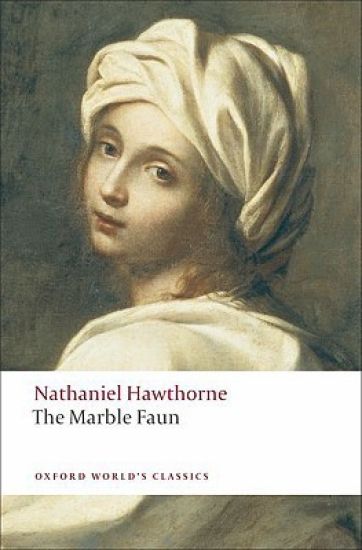
'any narrative of human action and adventure - whether we call it history or Romance - is certain to be a fragile handiwork, more easily rent than mended' The fragility - and the durability - of human life and art dominate this story of American expatriates in Italy in the mid-nineteenth century. Befriended by Donatello, a young Italian with the classical grace of the 'Marble Faun', Miriam, Hilda, and Kenyon find their pursuit of art taking a sinister turn as Miriam's unhappy past precipitates the present into tragedy. Hawthorne's 'International Novel' dramatizes the confrontation of the Old World and the New and the uncertain relationship between the 'authentic' and the 'fake', in life as in art. The author's evocative descriptions of classic sites made The Marble Faun a favourite guidebook to Rome for Victorian tourists, but this richly ambiguous symbolic romance is also the story of a murder, and a parable of the Fall of Man. As the characters find their civilized existence disrupted by the awful consequences of impulse, Hawthorne leads his readers to question the value of Art and Culture and addresses the great evolutionary debate which was beginning to shake Victorian society. ABOUT THE SERIES: For over 100 years Oxford World's Classics has made available the widest range of literature from around the globe. Each affordable volume reflects Oxford's commitment to scholarship, providing the most accurate text plus a wealth of other valuable features, including expert introductions by leading authorities, helpful notes to clarify the text, up-to-date bibliographies for further study, and much more.
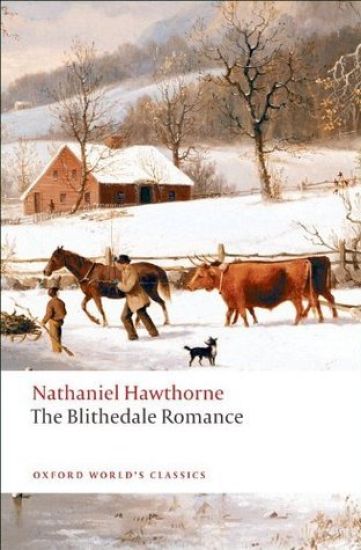
Based on Hawthorne's own experience of a Utopian socialist community outside Boston, The Blithedale Romance tells of the attempts of a like-minded group to begin reforming a dissipated America. However, rather than dropping bad habits and changing the world, Coverdale the prurient bachelor, Hollingsworth the furious philanthropist, Zenobia the voluptuous feminist, and Priscilla the vulnerable seamstress soon find themselves pursuing egotistical paths which must lead ultimately to tragedy. Evoking a bright rural idyll which fails to survive the ravages of lust and power, Hawthorne cynically undermines the fatuities of nineteenth-century American idealism. ABOUT THE SERIES: For over 100 years Oxford World's Classics has made available the widest range of literature from around the globe. Each affordable volume reflects Oxford's commitment to scholarship, providing the most accurate text plus a wealth of other valuable features, including expert introductions by leading authorities, helpful notes to clarify the text, up-to-date bibliographies for further study, and much more.
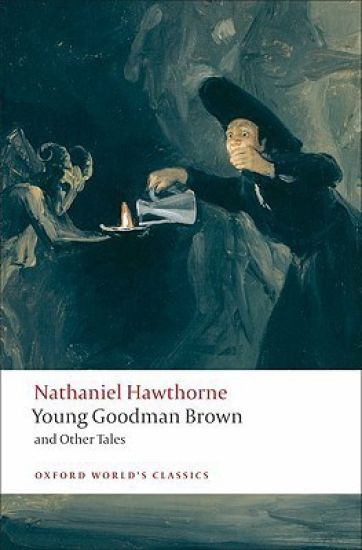
This selection of twenty of Hawthorne's tales is the first in paperback to present his most important short works with full annotation in one volume. ABOUT THE SERIES: For over 100 years Oxford World's Classics has made available the widest range of literature from around the globe. Each affordable volume reflects Oxford's commitment to scholarship, providing the most accurate text plus a wealth of other valuable features, including expert introductions by leading authorities, helpful notes to clarify the text, up-to-date bibliographies for further study, and much more.
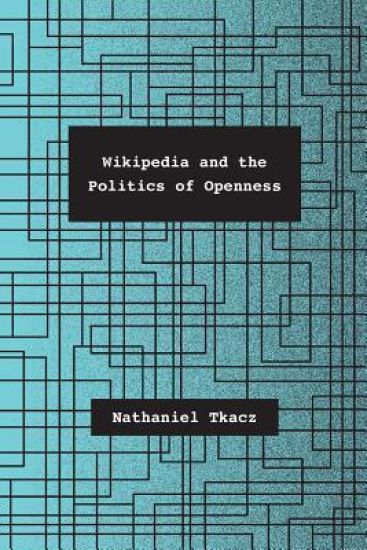
Few virtues are as celebrated in contemporary culture as openness. Rooted in software culture and carrying more than a whiff of Silicon Valley technical utopianism, openness - of decision-making, data, and organizational structure - is seen as the cure for many problems in politics and business. But what does openness mean, and what would a political theory of openness look like? With Wikipedia and the Politics of Openness, Nathaniel Tkacz uses Wikipedia, the most prominent product of open organization, to analyze the theory and politics of openness in practice - and to break its spell. Through discussions of edit wars, article deletion policies, user access levels, and more, Tkacz enables us to see how the key concepts of openness - including collaboration, adhocracy, and the splitting of contested projects through "forking" - play out in reality. The resulting book is the richest critical analysis of openness to date, one that roots media theory in messy reality and thereby helps us move beyond the vaporware promises of digital utopians and take the first steps toward truly understanding what openness does, and does not, have to offer.
Few virtues are as celebrated in contemporary culture as openness. Rooted in software culture and carrying more than a whiff of Silicon Valley technical utopianism, openness - of decision-making, data, and organizational structure - is seen as the cure for many problems in politics and business. But what does openness mean, and what would a political theory of openness look like? With Wikipedia and the Politics of Openness, Nathaniel Tkacz uses Wikipedia, the most prominent product of open organization, to analyze the theory and politics of openness in practice-and to break its spell. Through discussions of edit wars, article deletion policies, user access levels, and more, Tkacz enables us to see how the key concepts of openness - including collaboration, ad-hocracy, and the splitting of contested projects through "forking" - play out in reality. The resulting book is the richest critical analysis of openness to date, one that roots media theory in messy reality and thereby helps us move beyond the vaporware promises of digital utopians and take the first steps toward truly understanding what openness does, and does not, have to offer.
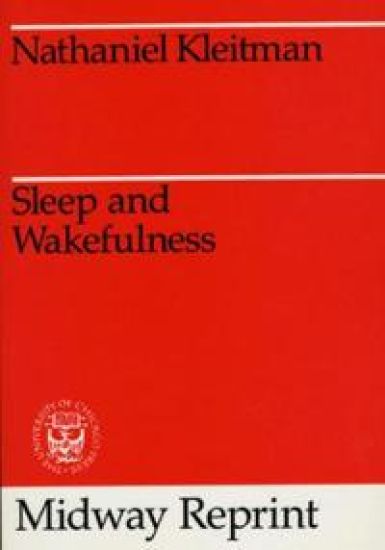
For half a century, Sleep and Wakefulness has been a valuable reference work. It discusses phases of the sleep cycle, experimental work on sleep and wakefulness, sleep disorders and their treatment, and such sleep-like states as hypnosis and hibernation.
In the wake of the September 11 attacks, US officials identified the so-called battle for hearts and minds as the “second front” in the war on terror. A wave of funding flowed into public diplomacy in the Middle East, seeking to change views of the United States through Arabic-language communications—often while hiding the traces of American origins. To what extent did this vast propaganda apparatus sway Arab public opinion? Which ideas and actors shaped American public diplomacy in this period? What are the lessons for information strategy today?This groundbreaking book tells the story of American propaganda campaigns in the Middle East after 9/11, drawing on in-depth interviews with key players and previously classified documents. Nathaniel Greenberg shows how the United States tried to control perceptions of its response to 9/11 through news and entertainment, and reveals that Arab governments and unofficial actors were involved—knowingly or not—in distributing US propaganda. He explores the institutions, strategy, and rhetoric deployed in the war on terror, placing them in the context of American and Soviet influence campaigns during the Cold War. Greenberg argues that US government-backed broadcasting laid the groundwork for global information warfare, such as the rise of competing Russian and Chinese state media operations. Shedding light on the ideological underpinnings of American propaganda in Arabic after 9/11, The Long War of Ideas offers new insight into soft power in the twenty-first century.