Kirjojen hintavertailu. Mukana 11 342 296 kirjaa ja 12 kauppaa.

Kirjahaku

Etsi kirjoja tekijän nimen, kirjan nimen tai ISBN:n perusteella.

1000 tulosta hakusanalla Oliver Perry Temple

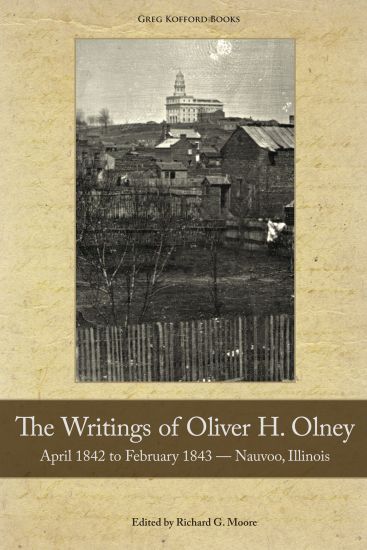
The Writings of Oliver Olney

The Writings of Oliver Olney

Oliver H Olney

Greg Kofford Books, Inc.
2020
sidottu
Oliver H. Olney, an early convert to The Church of Jesus Christ of Latter-day Saints, fled to Nauvoo, Illinois, following persecution in Missouri. In Nauvoo, Olney became disgruntled with church leadership and viewed Joseph Smith as a fallen prophet. His writings, consisting of journal entries, letters, and booklets, express his concerns about what he viewed as serious iniquity within the Church. Despite his opposition to church leadership resulting in his excommunication, Olney remained in Nauvoo and wrote about the things he witnessed. The handwritten papers of Oliver Olney are housed in the Beinecke Rare Book and Manuscript Library at Yale University and are made available in published form for the first time. They offer historical researchers and interested readers of the early Latter-day Saint movement a unique glimpse from the margins of religious society in Nauvoo. Olney's writings add light to key events in early Mormonism such as rumors of polygamy, the influence of Free Masonry in Nauvoo, plans to migrate westward to the Rocky Mountains, as well as growing tensions with disaffected church members and rising conflict with Nauvoo's non-Mormon neighbors.
Oliver Twist

Oliver Twist

Focus on the Family

Tyndale House Publishers
2012
muu
Focus on the Family's Radio Theatre's edition of Charles Dickens' classic story, "Oliver Twist." Oliver is born in a workhouse about 70 miles from London, England in the early 1800s. He is brought up at a "child farm" in the country until the parish officials running the child farm decide it's time for him to start working, and send him back to the workhouse. When Oliver commits the unpardonable offense of asking for more food, the parish officials offer five pounds to anyone who's willing to take him on as an apprentice. Oliver is sent off with a coffin-maker whose wife mistreats him. Oliver finally runs away to London, where he meets the Artful Dodger and Fagin. Fagin trains kids to be pickpockets, and then sells off what they steal. Oliver goes through many trials and hardships, but finally gets his happy ending.Recorded in London with an award-winning cast, "Oliver Twist" will steal your heart and take you back in time as the characters are brought to life in this audio drama.
The Beckoning Fair One by Oliver Onions, Fiction, Horror
"As far as the chief business of his life--his writing--was concerned., Paul Oleron treated the world a good deal better than he was treated by it; but he seldom took the trouble to strike a balance, or to compute how far, at forty-four years of age, he was behind his points on the handicap. To have done so wouldn't have altered matters, and it might have depressed Oleron. He had chosen his path, and was committed to it beyond possibility of withdrawal. Perhaps he had chosen it in the days when he had been easily swayed by some thing a little disinterested, a little generous, a little noble and had he ever thought of questioning himself he would still have held to it that a life without nobility and generosity and disinterestedness was no life for him. Only quite recently and rarely, had he even vaguely suspected that there was more in it than this; but it was no good anticipating the day when, he supposed, he would reach that maximum point of his powers beyond which he must inevitably decline, and be left face to face with the question whether it would not have profited him better to have ruled his life by less exigent ideals."
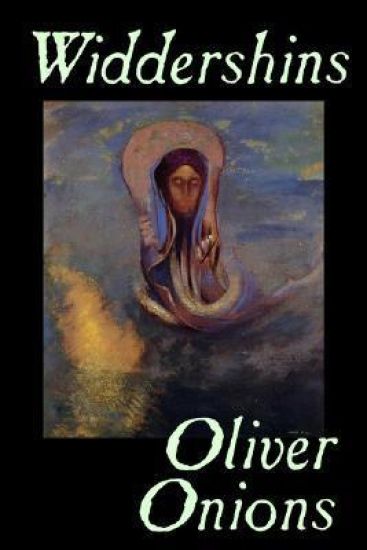
Widdershins by Oliver Onions, Fiction, Horror, Fantasy, Classics
At first blush, Widdershins a conventional haunted house story involving an unsuccessful writer, who moves into an empty house in hope that isolation will help his failing creativity. His sensitivity and imagination are enhanced by his seclusion, but his art, his only friend and his sanity are all destroyed in the process. . . .The story can be read as narrating the gradual possession of the protagonist by a mysterious and possessive feminine spirit, or as a realistic description of a psychotic outbreak culminating in catatonia and murder, told from the psychotic subject's point of view. The precise description of the slow disintegration of the protagonist's mind is terrifying in either case.
Oliver's Travels

Oliver's Travels

Carolyn Seabolt

Fideli Publishing Inc.
2017
sidottu
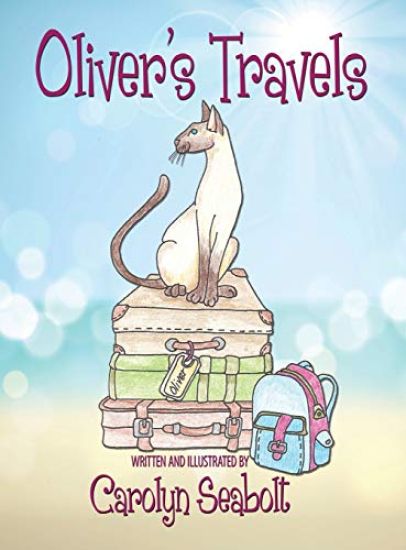
Join Oliver, a chocolate point Siamese cat on his adventures as he travels to Egypt, Greece, Spain, Italy, Germany, Holland, London and Paris. Even with all the excitment of travelling, he learns that there's no place like home.
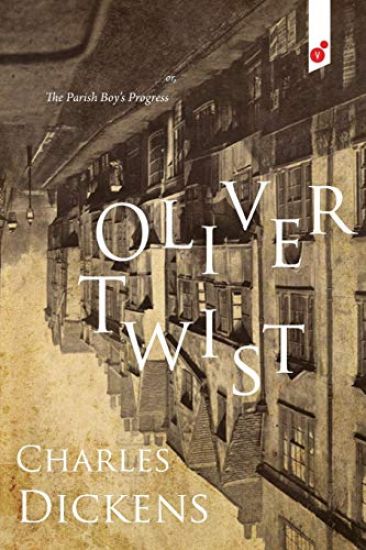
Oliver Twist

Oliver Twist

Charles Dickens

Flying Chipmunk Publishing
2008
pokkari
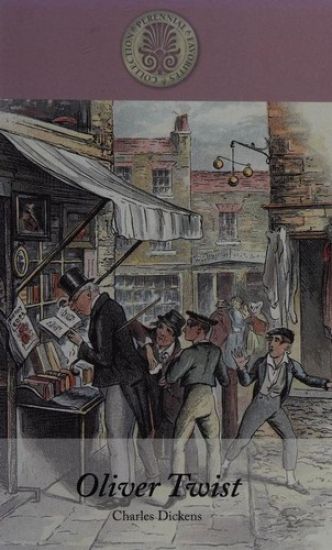
One of Dickens most enduringly popular stories is Oliver Twist, his second novel, published in installments starting in February 1837 and continuing until 1838. Like many of his later novels, its central theme is the hardship faced by the dispossessed
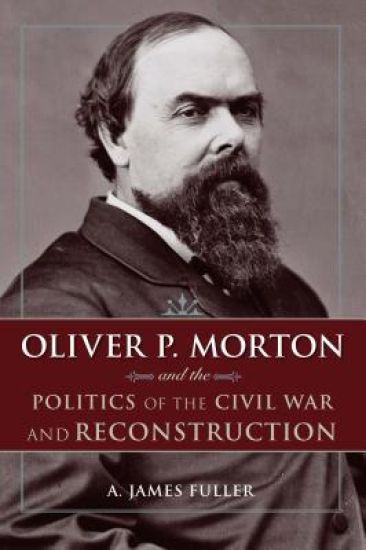
Oliver P. Morton and the Politics of the Civil War and Reconstruction
Remembered as the "Great War Governor" who led the state of Indiana during the Civil War, Oliver P. Morton has always been a controversial figure. His supporters praised him as a statesman who helped Abraham Lincoln save the Union, while his critics blasted him as a ruthless tyrant who abused the power of his office. Many of his contemporaries and some historians saw him as a partisan politician and an opportunist who shifted his positions to maintain power. Later generations treated Governor Morton as either a hero or a villain and generally forgot about his postwar career as a Radical Republican leader in the U.S. Senate.In this first full biography of Morton to be published in over a century, A. James Fuller offers a groundbreaking new interpretation of Indiana's most significant political leader in the nineteenth century. Overturning traditional views, Fuller argues that Morton's nationalist ideology motivated him throughout his career and that the Hoosier leader held consistently to the ideas of freedom, Union, power, and party. Those core principles drove Morton's politics and actions, including his support for Indiana soldiers, his fight against the Democrats in the state legislature, and his twenty-two months of one-man rule, a period in which his opponents accused him of being a virtual dictator. His principles also framed his struggle against the disloyal Copperheads who tried to assassinate him and whose leaders he helped bring to justice in the Indianapolis Treason Trials.Fuller also restores the historical significance of Morton's long neglected career as a Reconstruction senator. Seeing Reconstruction as a continuation of the Civil War, Morton became a leading Radical Republican who championed racial equality. He continually waved the bloody shirt, reminding voters that the Democrats had caused the rebellion. Morton supported the civil rights of African Americans and fought against the Democrats and the Ku Klux Klan. He enjoyed widespread support for the presidency in 1876, but when his bid for the Republican nomination came up short, he helped decide the disputed election for Rutherford B. Hayes. When Morton died in 1877, Reconstruction died with him, symbolically marking the end of an era. In the decades after his death, Hoosiers built monuments to Morton, remembering him in ways that reflected their own times, keeping his controversial legacy alive in historical memory.
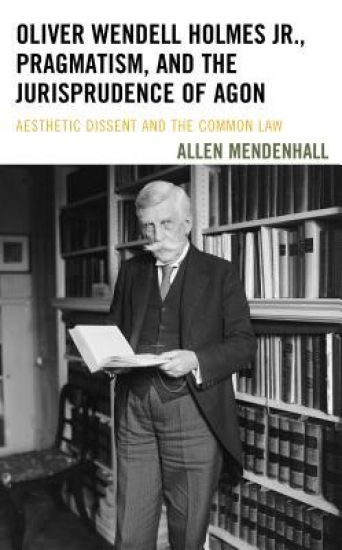
Oliver Wendell Holmes Jr., Pragmatism, and the Jurisprudence of Agon
This book argues that Oliver Wendell Holmes Jr., helps us see the law through an Emersonian lens by the way in which he wrote his judicial dissents. Holmes’s literary style mimics and enacts two characteristics of Ralph Waldo Emerson’s thought: “superfluity” and the “poetics of transition,” concepts ascribed to Emerson and developed by literary critic Richard Poirier. Using this aesthetic style borrowed from Emerson and carried out by later pragmatists, Holmes not only made it more likely that his dissents would remain alive for future judges or justices (because how they were written was itself memorable, whatever the value of their content), but also shaped our understanding of dissents and, in this, our understanding of law. By opening constitutional precedent to potential change, Holmes’s dissents made room for future thought, moving our understanding of legal concepts in a more pragmatic direction and away from formalistic understandings of law. Included in this new understanding is the idea that the “canon” of judicial cases involves oppositional positions that must be sustained if the law is to serve pragmatic purposes. This process of precedent-making in a common-law system resembles the construction of the literary canon as it is conceived by Harold Bloom and Richard Posner.
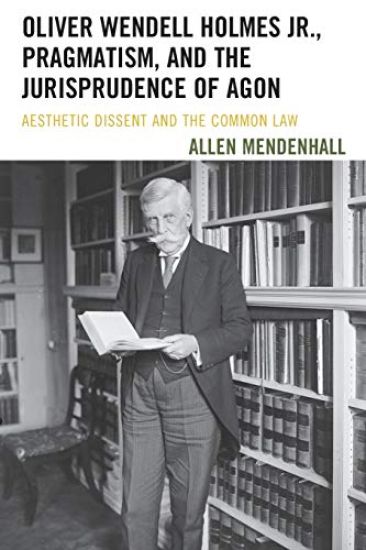
Oliver Wendell Holmes Jr., Pragmatism, and the Jurisprudence of Agon
This book argues that Oliver Wendell Holmes Jr., helps us see the law through an Emersonian lens by the way in which he wrote his judicial dissents. Holmes’s literary style mimics and enacts two characteristics of Ralph Waldo Emerson’s thought: “superfluity” and the “poetics of transition,” concepts ascribed to Emerson and developed by literary critic Richard Poirier. Using this aesthetic style borrowed from Emerson and carried out by later pragmatists, Holmes not only made it more likely that his dissents would remain alive for future judges or justices (because how they were written was itself memorable, whatever the value of their content), but also shaped our understanding of dissents and, in this, our understanding of law. By opening constitutional precedent to potential change, Holmes’s dissents made room for future thought, moving our understanding of legal concepts in a more pragmatic direction and away from formalistic understandings of law. Included in this new understanding is the idea that the “canon” of judicial cases involves oppositional positions that must be sustained if the law is to serve pragmatic purposes. This process of precedent-making in a common-law system resembles the construction of the literary canon as it is conceived by Harold Bloom and Richard Posner.
Oliver Sacks: The Last Interview

Oliver Sacks: The Last Interview

Oliver Sacks

Melville House Publishing
2016
nidottu
An extraordinary collection of interviews with the beloved doctor and author, whose research and books inspired generations of readers. Oliver Sacks ?called "the poet laureate of medicine" by the New York Times?illuminated the mysteries of the brain for a wide audience in a series of richly acclaimed books, including Awakenings and The Man Who Mistook His Wife for a Hat, and numerous The New Yorker articles. In this collection of interviews, Sacks is at his most candid and disarming, rich with insights about his life and work. Any reader of Oliver Sacks will find in this book an entirely new way of looking at a brilliant writer.
Oliver Twist

Oliver Twist

Charles Dickens

Serenity Publishers, LLC
2013
pokkari
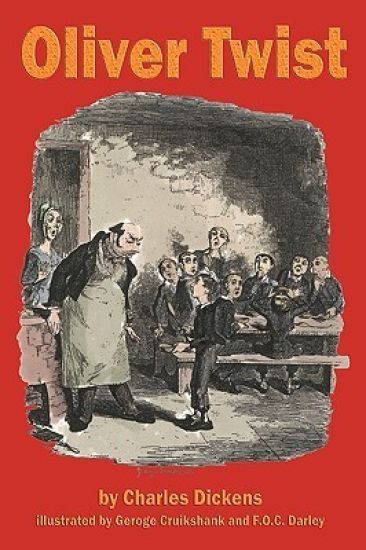
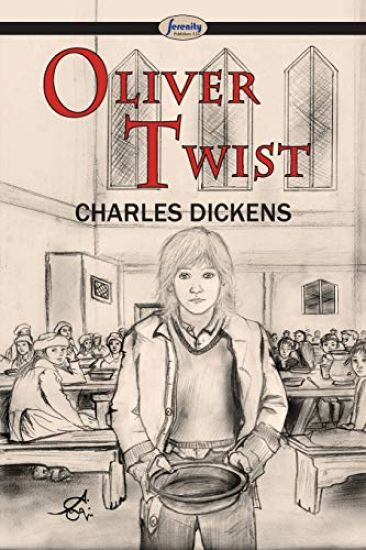
This is an illustrated adaptation for children of the famous novel by Charles Dickens. In nineteenth-century England, a young boy named Oliver Twist is driven out of his orphanage. Placed with an undertaker who mistreats him, Oliver escapes and travels to London in search of happiness. There, he discovers the meaning of living in the streets as he becomes entangled with a gang of thieves, but he never loses his will to find a family.
Oliver Twist

Oliver Twist

Charles Dickens

Simon Brown
2011
pokkari
Dickens's second novel is a scalding indictment of child labor and the English Poor Laws, centering on the travails of an innocent child Orphaned at birth and abandoned to the hardships of the workhouse, Oliver Twist lives a grueling life of poverty. Desperate to escape his heartless tormenters, he runs away to start a better life in London but, once there, he is befriended by a young pickpocket known as the Artful Dodger, who introduces him to Fagin and his gang of thieves. A chance encounter gives Oliver the opportunity to escape the criminal underworld, but Fagin won't let him get away so easily--and just when everything seems hopeless, events take a most unexpected turn.
Oliver Twist

Oliver Twist

Charles Dickens

Simon Brown
2013
nidottu
At the heart of Dickens's second novel is a story as much about crime and poverty as it is about justice and charity. Orphaned at birth, Oliver Twist grows up under the loveless, relentless watch of a workhouse. He runs away with hopes for a better life in London, only to become-at the hands of the unforgettable Artful Dodger-a guileless pawn in a gang of pickpockets and robbers working for Fagin, one of Dickens's most controversial villains. Full of ingenious plot twists, at turns thrilling, tragic, tender, and sharp-eyed, Oliver Twist is among Dickens's most enduring classics; the story of a young orphan who dares to say, "Please, sir, I want some more." We are delighted to publish this classic book as part of our extensive Classic Library collection. Many of the books in our collection have been out of print for decades, and therefore have not been accessible to the general public. The aim of our publishing program is to facilitate rapid access to this vast reservoir of literature, and our view is that this is a significant literary work, which deserves to be brought back into print after many decades. The contents of the vast majority of titles in the Classic Library have been scanned from the original works. To ensure a high quality product, each title has been meticulously hand curated by our staff. Our philosophy has been guided by a desire to provide the reader with a book that is as close as possible to ownership of the original work. We hope that you will enjoy this wonderful classic work, and that for you it becomes an enriching experience