Kirjojen hintavertailu. Mukana 11 244 527 kirjaa ja 12 kauppaa.

Kirjahaku

Etsi kirjoja tekijän nimen, kirjan nimen tai ISBN:n perusteella.

1000 tulosta hakusanalla Oral Sumner Coad

The Oral and the Written in Early Islam

The Oral and the Written in Early Islam

Gregor Schoeler; Uwe Vagelpohl; James E. Montgomery

Routledge
2010
nidottu
Made up of a number of seminal articles that are translated for the first time in English, this prestigious book from Gregor Schoeler gives a reasoned, informed and comprehensive overflow of how the written and the spoken interacted, diverged and received cultural articulation among the Muslim societies of the first two centuries of the Hijra.
The Oral History Reader
The Oral History Reader, now in its third edition, is a comprehensive, international anthology combining major, ‘classic’ articles with cutting-edge pieces on the theory, method and use of oral history. Twenty-seven new chapters introduce the most significant developments in oral history in the last decade to bring this invaluable text up to date, with new pieces on emotions and the senses, on crisis oral history, current thinking around traumatic memory, the impact of digital mobile technologies, and how oral history is being used in public contexts, with more international examples to draw in work from North and South America, Britain and Europe, Australasia, Asia and Africa. Arranged in five thematic sections, each with an introduction by the editors to contextualise the selection and review relevant literature, articles in this collection draw upon diverse oral history experiences to examine issues including: Key debates in the development of oral history over the past seventy years First hand reflections on interview practice, and issues posed by the interview relationship The nature of memory and its significance in oral history The practical and ethical issues surrounding the interpretation, presentation and public use of oral testimonies how oral history projects contribute to the study of the past and involve the wider community. The challenges and contributions of oral history projects committed to advocacy and empowermentWith a revised and updated bibliography and useful contacts list, as well as a dedicated online resources page, this third edition of The Oral History Reader is the perfect tool for those encountering oral history for the first time, as well as for seasoned practitioners.
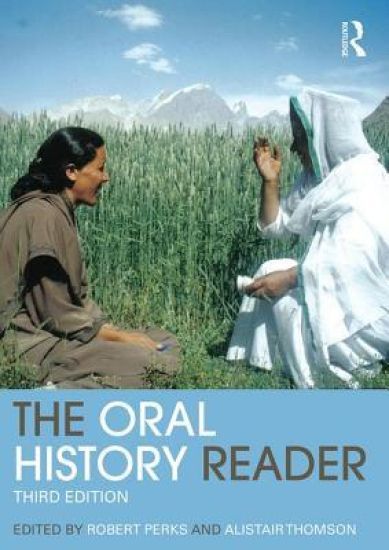
The Oral History Reader
The Oral History Reader, now in its third edition, is a comprehensive, international anthology combining major, ‘classic’ articles with cutting-edge pieces on the theory, method and use of oral history. Twenty-seven new chapters introduce the most significant developments in oral history in the last decade to bring this invaluable text up to date, with new pieces on emotions and the senses, on crisis oral history, current thinking around traumatic memory, the impact of digital mobile technologies, and how oral history is being used in public contexts, with more international examples to draw in work from North and South America, Britain and Europe, Australasia, Asia and Africa. Arranged in five thematic sections, each with an introduction by the editors to contextualise the selection and review relevant literature, articles in this collection draw upon diverse oral history experiences to examine issues including: Key debates in the development of oral history over the past seventy years First hand reflections on interview practice, and issues posed by the interview relationship The nature of memory and its significance in oral history The practical and ethical issues surrounding the interpretation, presentation and public use of oral testimonies how oral history projects contribute to the study of the past and involve the wider community. The challenges and contributions of oral history projects committed to advocacy and empowermentWith a revised and updated bibliography and useful contacts list, as well as a dedicated online resources page, this third edition of The Oral History Reader is the perfect tool for those encountering oral history for the first time, as well as for seasoned practitioners.
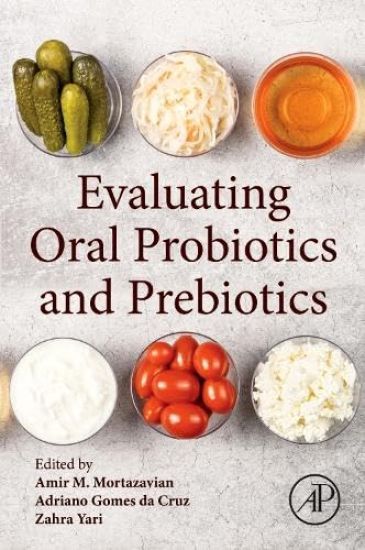
Evaluating Oral Probiotics and Prebiotics

Evaluating Oral Probiotics and Prebiotics

ELSEVIER SCIENCE PUBLISHING CO INC
2026
nidottu
Evaluating Oral Probiotics and Prebiotics reviews emerging applications of new probiotic strains, postbiotics, and production of key synbiotic generations. The book discusses successes and failures of viable probiotic ingestion, new trends and strains including genetically engineered probiotics, assessment of nonviable probiotics (postbiotics) and microflora benefits of prebiotic and synbiotic ingestion over probiotics.
The Oral-Literate Connection

The Oral-Literate Connection

John M. Swales

The University of Michigan Press
2008
nidottu
The Oral-Literate Connection: Perspectives on L2 Speaking, Writing, and Other Media Interactions presents the most current insights from research and theory on the numerous ways in which L2 speaking and writing support and enhance each other. Contributors to this collection not only report on recent research and theoretical developments but also on state-of-the-art pedagogical practices linking oral skills and literacy. Although research and theory are informed by practice throughout the text's four parts, the thematic organization proceeds from more theoretical and research-oriented issues to more classroom-based perspectives:§ Theory and research on the interaction between speaking and writing§ How speaking scaffolds writing§ How writing scaffolds speaking§ How technology bridges speaking and writingThis volume offers readers both a compelling rationale for connecting speaking and writing in the L2 classroom and an informed means of making these connections. A wide array of theoretical and classroom-oriented topics is offered, ranging from sociocultural and second-language acquisition theory to classroom concordancing and blogging.The book has a foreword by John M. Swales and an Afterword by Paul Kei Matsuda.
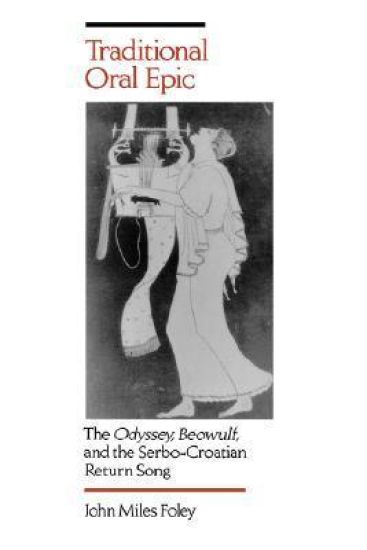
Traditional Oral Epic

Traditional Oral Epic

John Miles Foley

University of California Press
1993
pokkari
John Miles Foley offers an innovative and straightforward approach to the structural analysis of oral and oral-derived traditional texts. Professor Foley argues that to give the vast and complex body of oral "literature" its due, we must first come to terms with the endemic heterogeneity of traditional oral epics, with their individual histories, genres, and documents, as well as both the synchronic and diachronic aspects of their poetics. Until now, the emphasis in studies of oral traditional works has been placed on addressing the correspondences among traditions--shared structures of "formula," "theme," and "story-pattern." Traditional Oral Epic explores the incongruencies among traditions and focuses on the qualities specific to certain oral and oral-derived works. It is certain to inspire further research in this field.
Xhosa Oral Poetry

Xhosa Oral Poetry

Jeff Opland

Cambridge University Press
2009
pokkari
The Xhosa-speaking peoples of south-eastern South Africa have a long tradition of oral poetry, extending back at least two hundred years. This book, first published in 1983, was the first detailed study of that tradition. Jeff Opland has assembled a large corpus of Xhosa oral poetry making his the first analysis of an active South African oral poetic tradition to be based on actual fieldwork. The book focuses in particular on the poetry produced by the imbongi, or court poet, and Professor Opland examines the poetry and careers of four such individuals. He describes the imbongi's informal training, the diction of his poetry and its improvisational character and the relationship of the poet to the chief and the community, revealing that the role of the poetry is essentially political. He also considers the nature of the poetry in relation to ritual. His discussion of Xhosa poetry in relation to theoretical constructs of oral poetry and of oral mental processes is an important contribution to the debate about the nature and distinctiveness of 'oral literature'. With its interdisciplinary approach, it will appeal to readers from many disciplines as well as to general readers interested in African culture.
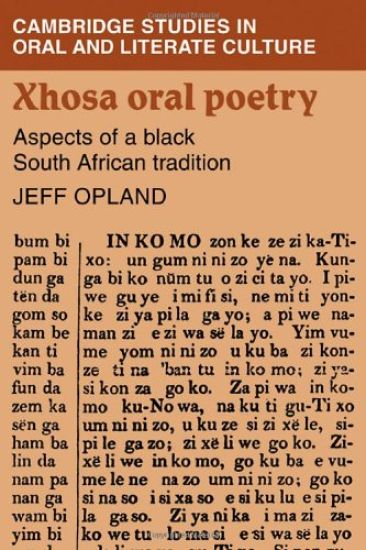
Xhosa Oral Poetry

Xhosa Oral Poetry

Opland Jeff

Cambridge University Press
1983
sidottu
The Xhosa-speaking peoples of south-eastern South Africa have a long tradition of oral poetry, extending back at least two hundred years. This book, first published in 1983, was the first detailed study of that tradition. Jeff Opland has assembled a large corpus of Xhosa oral poetry making his the first analysis of an active South African oral poetic tradition to be based on actual fieldwork. The book focuses in particular on the poetry produced by the imbongi, or court poet, and Professor Opland examines the poetry and careers of four such individuals. He describes the imbongi's informal training, the diction of his poetry and its improvisational character and the relationship of the poet to the chief and the community, revealing that the role of the poetry is essentially political. He also considers the nature of the poetry in relation to ritual. His discussion of Xhosa poetry in relation to theoretical constructs of oral poetry and of oral mental processes is an important contribution to the debate about the nature and distinctiveness of 'oral literature'. With its interdisciplinary approach, it will appeal to readers from many disciplines as well as to general readers interested in African culture.
Teaching Oral Communication

Teaching Oral Communication

William Littlewood

Blackwell Publishers
1992
nidottu
The aim of this book is to bridge the gap between the theory and practice of teaching language for communication. It is written principally for teachers who wish to adopt a communicative approach and would like to reflect on the principles that underlie it.
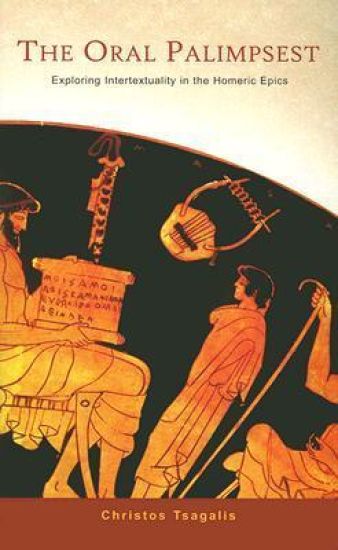
The Oral Palimpsest

The Oral Palimpsest

Christos Tsagalis

Harvard University, Center for Hellenic Studies
2008
nidottu
Oral intertextuality is an innate feature of the web of myth, whose interrelated fabrics allow the audience of epic song to have access to an entire horizon of diverse variants of a story. The Oral Palimpsest argues that just as the erased text of a palimpsest still carries traces of its previous writing, so the Homeric tradition unfolds its awareness of alternative versions in the act of producing the signs of their erasure. In this light, "Homer" reflects the concerted effort to create a Panhellenic canon of epic song, through which we can still retrieve the poikilia (roughly, "dappled, embroidered variation") of various interwoven fabrics belonging to recognizable song-traditions or even older Indo-European strata.
An Oral-Formulaic Study of the Qur'an

An Oral-Formulaic Study of the Qur'an

Andrew G. Bannister

Lexington Books
2014
sidottu
The Qur’an makes extensive use of older religious material, stories, and traditions that predate the origins of Islam, and there has long been a fierce debate about how this material found its way into the Qur’an. This unique book argues that this debate has largely been characterized by a failure to fully appreciate the Qur’an as a predominately oral product. Using innovative computerized linguistic analysis, this study demonstrates that the Qur’an displays many of the signs of oral composition that have been found in other traditional literature. When one then combines these computerized results with other clues to the Qur’an’s origins (such as the demonstrably oral culture that both predated and preceded the Qur’an, as well as the “folk memory” in the Islamic tradition that Muhammad was an oral performer) these multiple lines of evidence converge and point to the conclusion that large portions of the Qur’an need to be understood as being constructed live, in oral performance. Combining historical, linguistic, and statistical analysis, much of it made possible for the first time due to new computerized tools developed specifically for this book, Bannister argues that the implications of orality have long been overlooked in studies of the Qur’an. By relocating the Islamic scripture firmly back into an oral context, one gains both a fresh appreciation of the Qur’an on its own terms, as well as a fresh understanding of how Muhammad used early religious traditions, retelling old tales afresh for a new audience.
Recording Oral History

Recording Oral History

Valerie Raleigh Yow

Rowman Littlefield Publishers
2014
sidottu
Recording Oral History, now available in its third edition, provides a comprehensive guide to oral history for researchers and students in diverse fields including history, sociology, anthropology, education, psychology, social work, and ethnographic methods. Writing in a clear, accessible style, Valerie Yow builds on the foundations laid in prior editions of her widely used and highly regarded text to tackle not just the practicalities of interviewing but also the varied ethical, legal, and philosophical questions that can arise. The text—now twelve chapters—allows for dedicated discussion of both legalities and ethics. Other new material include recent research on how brain functions affect memory, more comprehensive demonstration of how to analyze an interview, and details on making the most of technology, both old and new. Each chapter concludes with updated and annotated Recommended Readings and tailored appendixes address new developments, such as institutional review boards and the Oral History Association’s new Principles and Best Practices.
Recording Oral History

Recording Oral History

Valerie Raleigh Yow

Rowman Littlefield Publishers
2014
nidottu
Recording Oral History, now available in its third edition, provides a comprehensive guide to oral history for researchers and students in diverse fields including history, sociology, anthropology, education, psychology, social work, and ethnographic methods. Writing in a clear, accessible style, Valerie Yow builds on the foundations laid in prior editions of her widely used and highly regarded text to tackle not just the practicalities of interviewing but also the varied ethical, legal, and philosophical questions that can arise. The text—now twelve chapters—allows for dedicated discussion of both legalities and ethics. Other new material include recent research on how brain functions affect memory, more comprehensive demonstration of how to analyze an interview, and details on making the most of technology, both old and new. Each chapter concludes with updated and annotated Recommended Readings and tailored appendixes address new developments, such as institutional review boards and the Oral History Association’s new Principles and Best Practices.
Awesome Oral

Awesome Oral

Quarto Publishing Group USA Inc
2024
sidottu
Learn everything you need to know about over 50 erotic oral sex positions in this beautiful little book. Oral play is one of the core competencies of sex. It is also a technique that many feel intimidated by. However, with this sexy little guide, hotter oral sex is right at your lips and fingertips. While other books require you to learn an entire approach or set up a whole scenario, Awesome Oral gives you hot and scintillating techniques you can use anytime, anywhere! Learn a great technique quickly, and use it on your partner tonight for mind-blowing pleasure. Learn how to tease and please multiple hot spots and have amazing orgasms.Awesome Oral is a collection of 50 techniques for him and her, including: The Deep End Catch and Release Slip ‘N Swivel Tongue Shift Tight Twirl Make Her Purr The French Kiss The Sizzle Containing beautiful illustrations and design, use this little guide to level up your oral sex with Awesome Oral.The Erotic Couple's Playbook is a series of sexy and inspiring gift books filled with explicit positions, techniques, games, and ideas to help adventurous couples get creative and playful in the bedroom and beyond.
The Oral Tradition of the Baganda of Uganda

The Oral Tradition of the Baganda of Uganda

Immaculate N. Kizza

McFarland Co Inc
2010
pokkari
The Baganda people of Uganda enjoy an extraordinarily rich oral tradition, which serves as a window into their culture, history, and experiences as a people. This comprehensive, multigenre work is both a study of the Baganda people's oral literature--framed within the broader contexts of the African oral tradition genre, modern African literature, and global literary studies--and a collection of representative stories. Cultural explanations throughout the text explore the living culture of this unique East African nation. Particular attention is paid to the history of Uganda, thus placing the oral tradition within its proper context. An appendix offers sample Luganda songs.
Interactive Oral History Interviewing

Interactive Oral History Interviewing

Routledge Member of the Taylor and Francis Group
1994
sidottu
The essays in this anthology represent, in the broadest sense, an interpretive perspective of inquiry that has flourished in oral history for the past 15 years. This perspective considers oral history interviews as subjective, socially constructed and emergent events; that is, understanding, interpretation, and meaning of lived experience are interactively constructed. The impetus for this volume was the editor's fascination with the multifaceted complexity of the oral history interview method coupled with the belief that, despite many books that address methodological issues, no single work takes as its focus those complex, interactive processes which constitute the oral history interview. The editors' purpose in developing this anthology, therefore, was to provide a variety of essays which taken together address the possibilities and constraints inherent in oral history interviewing.