Based on 40 years' interviewing experience, this book illustrates the variety of religious, spiritual and other beliefs held by older people. It provides models of research procedure, especially in the context of bereavement. Participants include not only British Christians, but also Muslims, Humanists and witnesses of the Soviet persecution of religion. The author argues that both welfare professionals and gerontologists need to pay far more consideration to belief as a constituent of well-being in later life. The book looks to the future and increasing diversity of choice in matters of belief among Britain and Europe's older citizens as a consequence of immigration and globalisation.
The psychology of aging usually focuses upon cognitive changes, with a particular focus on dementia and other forms of cognitive decline. But getting older is about more than simply changes to the brain and related health issues. Changes to our social and emotional lives are also hugely significant as we adapt across our lifespan. The second edition of Aging and Development is the only textbook available that responds to the growing interest in social, personal and emotional development in older age. Ideally suited to complement texts on cognitive change, the book provides a holistic developmental perspective on aging. It highlights a range of issues, including the development of personal meaning and spirituality, improvements in emotional control, uses of reminiscence and life review, the importance of healthy attitudes to aging, as well as the maintenance of close personal relationships. It does not avoid the difficult issues of late life decline, but illustrates how even in circumstances of physical and mental frailty a positive sense of self can be created and enhanced.Fully updated to provide the most cutting-edge overview on this burgeoning topic of interest, Aging and Development includes a glossary and list of useful websites both on the study of gerontology and the psychology of aging. It will be essential reading for all students of developmental psychology, as well as anyone either training to work or already working with older people.
The psychology of aging usually focuses upon cognitive changes, with a particular focus on dementia and other forms of cognitive decline. But getting older is about more than simply changes to the brain and related health issues. Changes to our social and emotional lives are also hugely significant as we adapt across our lifespan. The second edition of Aging and Development is the only textbook available that responds to the growing interest in social, personal and emotional development in older age. Ideally suited to complement texts on cognitive change, the book provides a holistic developmental perspective on aging. It highlights a range of issues, including the development of personal meaning and spirituality, improvements in emotional control, uses of reminiscence and life review, the importance of healthy attitudes to aging, as well as the maintenance of close personal relationships. It does not avoid the difficult issues of late life decline, but illustrates how even in circumstances of physical and mental frailty a positive sense of self can be created and enhanced.Fully updated to provide the most cutting-edge overview on this burgeoning topic of interest, Aging and Development includes a glossary and list of useful websites both on the study of gerontology and the psychology of aging. It will be essential reading for all students of developmental psychology, as well as anyone either training to work or already working with older people.
More than ever, diasporas have a direct impact on the politics of their homelands. Today's diasporic activists-empowered by new media and the ease of travel afforded by globalization-engage directly to shape elections and conflicts in distant settings: politics from afar. Drawing on a global range of cases, this groundbreaking volume explores the impact of transnational diaspora politics on development, democratization, conflict, and the changing nature of citizenship. The contributors to this collection, representing a variety of disciplinary perspectives and area studies expertise, reveal the diasporic politics shaping the governance of development in Mexico, conflict in Sri Lanka, and elections in Ethiopia among other timely cases. While some predicted that globalization would usher in a new era of cosmopolitanism, Politics from Afar demonstrates that ethno-nationalism and patron-client relationships are alive and thriving in transnational spaces. Cognizant of the political capital residing in diasporas, homeland governments, opposition political parties, and insurgent groups seek to tap theirA" co-nationals abroad to advance development strategies and broader geopolitical agendas. Politics from Afar maps an ambitious theoretical and empirical agenda for the analysis of contemporary diaspora politics.
DescriptionWritten at the age of 17, "The Madhouse of Love" is the story of a 12-year-old who is kept in a psychiatric unit for 2 years in Scotland in the late 1960s due to a misunderstanding. During his stay in the hospital, he falls in love with a girl who is also a patient, but their relationship is put a stop to by the authorities, leading them both to contemplate suicide.Eventually, Tony manages to discharge himself by using a great deal of tact and persuasion but eventually ends up homeless in London at the age of 16.About the AuthorPeter G. Mackie was born in Perth, Scotland in 1957 and, as a teenager, spent 2 years in an Adolescent Unit, causing him to lapse into depression.In the 1970s and '80s, he spent several years living and working abroad, which helped him see a more positive side of life.However, in recent years, his depression has returned, along with panic attacks.He is currently attending Redhall Walled Garden, a project in Edinburgh run by the Scottish Association for Mental Health (SAMH), where he is doing a computer course.
This comprehensive book provides analysis and discussion on the following key issues in EU environmental law: environmental competence, principles and objectives, implementation and enforcement, nature protection, impact assessment, trade and the environment, waste management, climate change and the EU. An accessible work for all students of the subject both academic or professional.
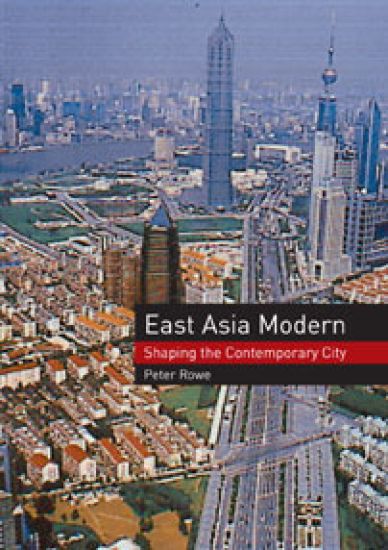
East Asia today is a hotbed of urban expansion. Cities such as Singapore, Taipei, Seoul, Tokyo, Beijing and Shanghai are expanding at a prodigious rate, and this ongoing process of expansion and modernization is bringing rapid and widespread change to this part of the globe.Peter G. Rowe’s East Asia Modern is a timely comparative study of urban expansion in the region, examining the processes by which new city building has taken place in recent years. The author, well known in the field of East Asian architecture and urbanism, focuses on how the modernizing process might most usefully be understood, especially with regard to building processes and projects; and how that understanding differs from other modernizing circumstances. He explains what modernization has meant for the general cultural diffusion of largely Western, ideas, how East Asian urban regions have developed their own distinct kind of modernity, and also what lessons can be learned from the contemporary East Asian experience.The book also provides a historical assessment of the region, showing how cities have developed over the last century and setting into context their individual paths towards modernization. East Asia Modern refutes many of the common misconceptions about life in modern East Asia, and provides a readable, critical assessment of the cities of the region, while also pointing to possible ways forward for the future.
The collapse of Barings Bank, the oldest merchant bank in Britain, was a shock to the financial industry throughout the world. This volume is the first organized material to explain how and why this established bank with a history of 233 years bankrupted within a few days. It explains in a structured and easytounderstand manner the concept of financial derivatives, with an analysis of futures and options and their market. This is a practical reference for finance professionals, economic or finance undergraduates.
"When crystallized identities enter a nondual field of awareness and begin to interact with a being embodying that state, suffering can't be sustained. It dissolves into a space where there is neither suffering nor its absence. Nondual awareness creates a transformational field or vortex that gently or abruptly, but irrevocably moves people into radiant awareness.... This is the paradoxical state that bodhisattvas play in for eternity." This Guide goes behind the curtains of Dr. Peter Fenner's highly distinctive nondual teachings. It reveals in great detail and clarity the subtle and sometimes mysterious skillful methods he uses in his workshops, trainings, public presentations and coaching to swiftly awaken people to the liberating freedom of nondual, panoramic awareness. Peter has a unique ability to reflect on the deep processes involved in his nondual transmission, especially the nuances of language, deep feelings and silence. He is well known for the rigor, precision and organic flow of his unfindability dialogs. The skills he reveals in this Guide are many of the very same methods used by Dzogchen masters, Zen roshis and Advaita sages in "pointing out events" and "mind-to-mind transmission". Peter's teaching has been described by others as "free-form, continuous pointing to awareness." In Buddhism nondual awareness is often called the "ultimate medicine" because no higher evolutionary accomplishment is possible for any conscious being, living anywhere, at any time. When we see everything as the seamlessly changing fabric of immutable, unfindable awareness it's impossible to be negatively touched by any environmental circumstance or inner perturbance. We move into the realm of embodied transcendence beyond disturbances and conditioned forms of peace. In this Guide Peter often shares at the "result, or fruition level." He shows us how comprehensive awakening is our natural state, that infuses and embraces the totality of existence whenever we let go of personal striving, ambition, fantasies, hopes, fears and self-judgment. At this level our familiar preoccupations transform into a blissful and exquisite mandala that's completely free of the narrow concerns of a self-absorbed life. The neurotic energies and paranoiac projections that shape samsaric existence self-liberate into a panoramic clearing that supports evolutionary transformation throughout the universe. In this Guide Peter's outlines everything he has discovered in 42 years of teaching. The Guide is especially useful for facilitators, therapists and coaches as it powerfully accelerates the integration on the nondual in a form that lends itself to the public sharing of pure awareness. Part One is a virtual manual for spiritual teachers, therapists and coaches in how to introduce groups and clients to the ultimate state of healing and being-pure, pristine, timeless awareness. Part Two traces Peter's contemporary expression of nonduality, and more especially his well-known Radiant Mind course, through to its Asian origins.
The goal of this comprehensive text is to enable ophthalmologists and rheumatologists to differentiate scleral disorders and implement timely treatment plans based on current best practice and available evidence. Extensive updates to text reflect the advances that have occurred in investigation and treatment of scleral disease since the 2nd edition was written between 1998 and 2003. Numerous new and replacement images of the highest quality, particularly (in chapter 5) of Anterior Segment OCT which is being adapted to investigate scleral disease with stunning results. 1000+ new references to relevant key review and research papers.
The author of this book, Peter G. Fitzgerald, was born in Manchester, United Kingdom. Early 1949 his family immigrated to Harare, Zimbabwe (formerly Salisbury, Rhodesia). Peter attended school in Salisbury. On leaving school he worked on a farm near the town of Norton, forty miles west of the Capital. One of his goals was to understand the local African language. In 1959 he joined the BSAP (British South Africa Police). After intensive training he was transferred to Bulawayo to pursue his chosen career which encompassed many areas of Policing. He rose through the ranks to the level of Licensing Inspector. In1977, whilst on duty, he suffered serious brain injury and part paralysis by a hand grenade thrown in an anti terrorism action which ended his career. It was important for him to try and record his memories of the BSAP and his family as far back as he could remember, and to see, at the same time, whether he could cope with drafting this book. It is the author's deepest wish that others, who are in the same situation, will be inspired to do something similar as a form of therapy. The author, who still needs daily assistance, now lives in the United Kingdom.
Cardiovascular magnetic resonance imaging (CMR) has become an essential part of noninvasive diagnostic cardiac imaging. A Practical Guide for Cardiovascular Magnetic Resonance Imaging provides a comprehensive and reader-friendly educational tool for physicians starting to work with CMR and cardiology and radiology trainees preparing for the Board certification examination. Appealing to trainees, this text conveys teaching points with multiple choice questions that are supported by concise comments, providing a complete explanation of the correct answer and pertinent up-to-date bibliography. Cases address a broad spectrum of clinical problems, including ischemic, valvular, myopathic, pericardial, aortic and congenital heart diseases.