Kirjojen hintavertailu. Mukana 11 342 296 kirjaa ja 12 kauppaa.

Kirjahaku

Etsi kirjoja tekijän nimen, kirjan nimen tai ISBN:n perusteella.

1000 tulosta hakusanalla Philo

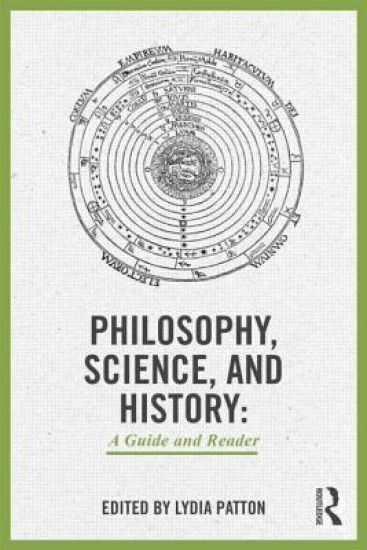
Philosophy, Science, and History
Philosophy, Science, and History: A Guide and Reader is a compact overview of the history and philosophy of science that aims to introduce students to the groundwork of the field, and to stimulate innovative research. The general introduction focuses on scientific theory change, assessment, discovery, and pursuit. Part I of the Reader begins with classic texts in the history of logical empiricism, including Reichenbach’s discovery-justification distinction. With careful reference to Kuhn’s analysis of scientific revolutions, the section provides key texts analyzing the relationship of HOPOS to the history of science, including texts by Santayana, Rudwick, and Shapin and Schaffer. Part II provides texts illuminating central debates in the history of science and its philosophy. These include the history of natural philosophy (Descartes, Newton, Leibniz, Kant, Hume, and du Châtelet in a new translation); induction and the logic of discovery (including the Mill-Whewell debate, Duhem, and Hanson); and catastrophism versus uniformitarianism in natural history (Playfair on Hutton and Lyell; de Buffon, Cuvier, and Darwin). The editor’s introductions to each section provide a broader perspective informed by contemporary research in each area, including related topics. Each introduction furnishes proposals, including thematic bibliographies, for innovative research questions and projects in the classroom and in the field.
Philosophia

Philosophia

Andrea Nye

Routledge
1994
nidottu
Philosophia brings together, for the first time, the work of three major women thinkers of this century, producing a developing commentary on the human condition as an alternative to the mainstream, masculine, philosophical tradition.
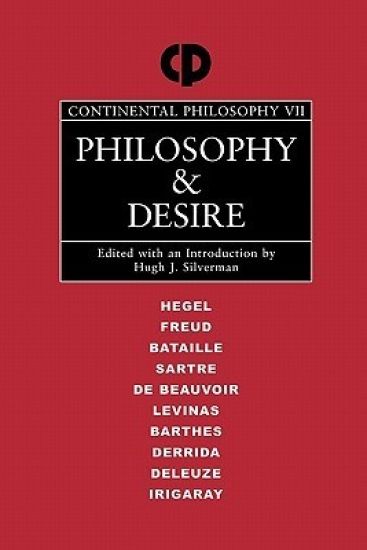
Philosophy and Desire
Philosophy and Desire , the seventh book in the well-known Continental Philosophy series, examines questions of desire--desire for another person, desire for happiness, desire for knowledge, desire for a better world, desire for the impossible, desire in text, desire in language and desire for desire itself. The theme of desire is explored through readings of contemporary figures such as Merleau-Ponty, Bataille, Sartre, de Beauvoir, Levinas, Irigaray, Barthes, Derrida, and Derrida. A hot, timely topic in philosophy today Expands the contemporary debates
Philosophy and Desire
Philosophy and Desire , the seventh book in the well-known Continental Philosophy series, examines questions of desire--desire for another person, desire for happiness, desire for knowledge, desire for a better world, desire for the impossible, desire in text, desire in language and desire for desire itself. The theme of desire is explored through readings of contemporary figures such as Merleau-Ponty, Bataille, Sartre, de Beauvoir, Levinas, Irigaray, Barthes, Derrida, and Derrida. A hot, timely topic in philosophy today Expands the contemporary debates
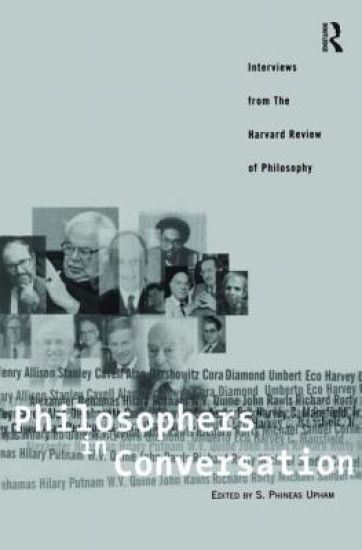
Philosophers in Conversation
This volume brings together 13 interviews with some of the brightest names in contemporary philosophy, including W.V.O. Quine, Richard Rorty, Stanley Cavell, Hilary Putnam, as well as John Rawls. Covering a wide range of topics from the philosophy of law and logic to metaphysics to literature, the interviews in this text provide an introduction to some of the most influential thinkers of the day.
Philosophers in Conversation
This volume brings together 13 interviews with some of the brightest names in contemporary philosophy, including W.V.O. Quine, Richard Rorty, Stanley Cavell, Hilary Putnam, as well as John Rawls. Covering a wide range of topics from the philosophy of law and logic to metaphysics to literature, the interviews in this text provide an introduction to some of the most influential thinkers of the day.
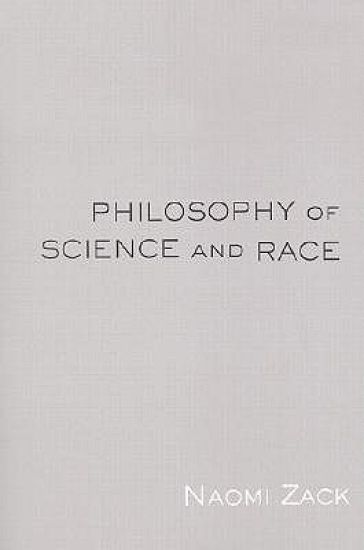
Philosophy of Science and Race
First published in 2003. In this concisely argued, short new book, well-known philosopher Naomi Zack explores the scientific and philosophical problems in applying a biological conception of race to human beings. Through the systematic analysis of up-to-date data and conclusions in population genetics, transmission genetics, and biological anthropology, Zack provides a comprehensive conceptual account of how race in the ordinary sense has no basis in science. Her book combats our everyday understanding of race as a scientifically supported taxonomy of human beings, and in conclusion challenges us to be clear about what we mean by race and what it would require to remedy racism.
Philosophy of Science and Race
First published in 2003. In this concisely argued, short new book, well-known philosopher Naomi Zack explores the scientific and philosophical problems in applying a biological conception of race to human beings. Through the systematic analysis of up-to-date data and conclusions in population genetics, transmission genetics, and biological anthropology, Zack provides a comprehensive conceptual account of how race in the ordinary sense has no basis in science. Her book combats our everyday understanding of race as a scientifically supported taxonomy of human beings, and in conclusion challenges us to be clear about what we mean by race and what it would require to remedy racism.
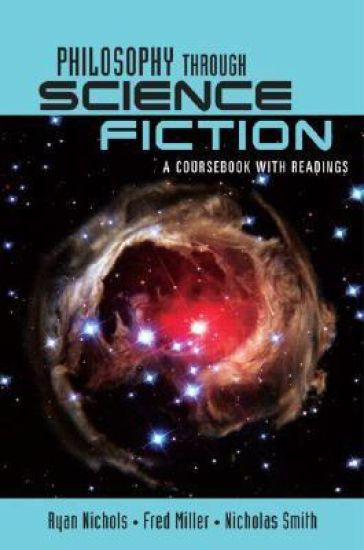
Philosophy Through Science Fiction

Philosophy Through Science Fiction

Ryan Nichols; Nicholas D. Smith; Fred Miller

Routledge
2008
nidottu
Philosophy Through Science Fiction offers a fun, challenging, and accessible way in to the issues of philosophy through the genre of science fiction. Tackling problems such as the possibility of time travel, or what makes someone the same person over time, the authors take a four-pronged approach to each issue, providing· a clear and concise introduction to each subject · a science fiction story that exemplifies a feature of the philosophical discussion· historical and contemporary philosophical texts that investigate the issue with rigor, and· glossary, plot profiles of pertinent science fiction stories and films, and questions for further reflection.Philosophy Through Science Fiction includes stories from contemporary science fiction writers including Greg Egan and Mike Resnick, as well as from classic authors like Philip K. Dick and Robert Heinlein. Philosophy readings include historical pieces by René Descartes and David Hume, and contemporary pieces by John Searle and Mary Midgley.
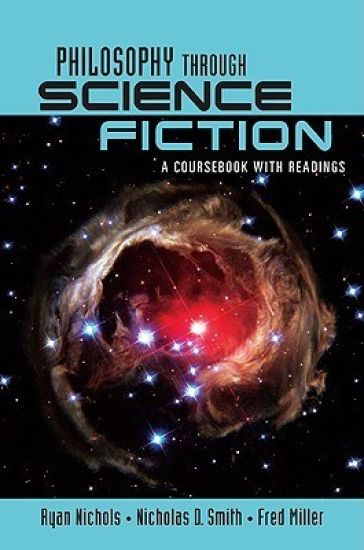
Philosophy Through Science Fiction

Philosophy Through Science Fiction

Ryan Nichols; Nicholas D. Smith; Fred Miller

Routledge
2008
sidottu
Philosophy Through Science Fiction offers a fun, challenging, and accessible way in to the issues of philosophy through the genre of science fiction. Tackling problems such as the possibility of time travel, or what makes someone the same person over time, the authors take a four-pronged approach to each issue, providing· a clear and concise introduction to each subject · a science fiction story that exemplifies a feature of the philosophical discussion· historical and contemporary philosophical texts that investigate the issue with rigor, and· glossary, plot profiles of pertinent science fiction stories and films, and questions for further reflection.Philosophy Through Science Fiction includes stories from contemporary science fiction writers including Greg Egan and Mike Resnick, as well as from classic authors like Philip K. Dick and Robert Heinlein. Philosophy readings include historical pieces by René Descartes and David Hume, and contemporary pieces by John Searle and Mary Midgley.
Philosophy of Mathematics

Philosophy of Mathematics

James Robert Brown

Routledge
2008
nidottu
In his long-awaited new edition of Philosophy of Mathematics, James Robert Brown tackles important new as well as enduring questions in the mathematical sciences. Can pictures go beyond being merely suggestive and actually prove anything? Are mathematical results certain? Are experiments of any real value? This clear and engaging book takes a unique approach, encompassing non-standard topics such as the role of visual reasoning, the importance of notation, and the place of computers in mathematics, as well as traditional topics such as formalism, Platonism, and constructivism. The combination of topics and clarity of presentation make it suitable for beginners and experts alike. The revised and updated second edition of Philosophy of Mathematics contains more examples, suggestions for further reading, and expanded material on several topics including a novel approach to the continuum hypothesis.
Philosophy of Mathematics

Philosophy of Mathematics

James Robert Brown

Routledge
2008
sidottu
In his long-awaited new edition of Philosophy of Mathematics, James Robert Brown tackles important new as well as enduring questions in the mathematical sciences. Can pictures go beyond being merely suggestive and actually prove anything? Are mathematical results certain? Are experiments of any real value? This clear and engaging book takes a unique approach, encompassing non-standard topics such as the role of visual reasoning, the importance of notation, and the place of computers in mathematics, as well as traditional topics such as formalism, Platonism, and constructivism. The combination of topics and clarity of presentation make it suitable for beginners and experts alike. The revised and updated second edition of Philosophy of Mathematics contains more examples, suggestions for further reading, and expanded material on several topics including a novel approach to the continuum hypothesis.
Philosophy and the Vision of Language

Philosophy and the Vision of Language

Paul M. Livingston

Routledge
2008
sidottu
Philosophy and the Vision of Language explores the history and enduring significance of the twentieth-century turn to language as a specific object of investigation and resource for philosophical reflection. It traces the implications of the access to language in some of the most prominent projects and results of the historical and contemporary tradition of analytic philosophy, including the projects of Frege, Wittgenstein, Sellars, Quine, Brandom, and Cavell. Additionally, it demonstrates the deep and enduring connections between the analytic tradition’s inquiry into language and the parallel inquiries of phenomenology, critical theory, and deconstruction over the course of the twentieth century. Finally, it documents some of the enduring consequences of philosophy’s inquiry into language for contemporary questions of social and political life. The book provides a clear, accessible and widely inclusive introduction to the relevance of language for analytic and continental philosophy in the twentieth century and is readable by non-specialist audiences. It should contribute to a growing historical sense of the location of the analytic tradition in a broader geography of social, political and critical thought. Furthermore, it contributes to building bridges between this tradition and the neighboring continental ones from which it has all too often been estranged.
Philosophy of Religion

Philosophy of Religion

Keith E. Yandell

Routledge
2016
sidottu
Keith Yandell's Philosophy of Religion: A Contemporary Introduction was one of the first textbooks to explore the philosophy of religion with reference to religions other than Christianity. This new, revised edition explores the logical validity and truth claims of several world religions—Christianity, Judaism, Islam, Hinduism, Buddhism, and Jainism—with updated, streamlined discussions on important topics in philosophy of religion such as:Religious pluralismFreedom and responsibilityEvidentialist Moral TheismReformed Epistemology Doxastic Practice EpistemologyThe problem of evilOntological and cosmological argumentsOther new features include updated Questions for Reflection,and new Annotated Bibliographies for each chapter, as well as an updated Glossary. This exciting new edition, much like its classic predecessor, is sure to be a classroom staple for undergraduate students studying philosophy of religion, as well as a comprehensive introductory read for anyone interested in the subject.
Philosophy of Religion

Philosophy of Religion

Keith E. Yandell

Routledge
2016
nidottu
Keith Yandell's Philosophy of Religion: A Contemporary Introduction was one of the first textbooks to explore the philosophy of religion with reference to religions other than Christianity. This new, revised edition explores the logical validity and truth claims of several world religions—Christianity, Judaism, Islam, Hinduism, Buddhism, and Jainism—with updated, streamlined discussions on important topics in philosophy of religion such as:Religious pluralismFreedom and responsibilityEvidentialist Moral TheismReformed Epistemology Doxastic Practice EpistemologyThe problem of evilOntological and cosmological argumentsOther new features include updated Questions for Reflection,and new Annotated Bibliographies for each chapter, as well as an updated Glossary. This exciting new edition, much like its classic predecessor, is sure to be a classroom staple for undergraduate students studying philosophy of religion, as well as a comprehensive introductory read for anyone interested in the subject.
Philodemus on Rhetoric Books 1 and 2
The Epicureans were notorious in antiquity for denigrating most forms of civic participation and for rejecting those cultural activities (such as poetry, music, and rhetoric) which are broadly labelled paideia. In this, as in all else, they ostensibly took their cue from Epicurus and the other founders of the School. In contrast to this, the Epicurean Philodemus, who lived and wrote in Italy in the first century B.C., presents an interesting case. For a substantial portion of his surviving work is preoccupied with investigations into this paideia and with demonstrating how an orthodox Epicurean is to approach them. This book selects one of those investigations, the first two books of Philodemus' On Rhetoric. An annotated translation is provided of the most recent edition of this text (Longo Auricchio 1977) which is followed by a series of essays which aim to clarify Philodemus' conception of, and approach to, the problem of rhetoric for Epicureans, and in particular the way he manages citations from the works of the founders to support his arguments against other Epicureans who take a different view. The book constitutes a very helpful guide to this fragmentary and difficult text.
Philosophy Through Video Games

Philosophy Through Video Games

Jon Cogburn; Mark Silcox

Routledge
2008
sidottu
How can Wii Sports teach us about metaphysics?Can playing World of Warcraft lead to greater self-consciousness?How can we learn about aesthetics, ethics and divine attributes fromZork, Grand Theft Auto, and Civilization?A variety of increasingly sophisticated video games are rapidly overtaking books, films, and television as America's most popular form of media entertainment. It is estimated that by 2011 over 30 percent of US households will own a Wii console - about the same percentage that owned a television in 1953.In Philosophy Through Video Games, Jon Cogburn and Mark Silcox - philosophers with game industry experience - investigate the aesthetic appeal of video games, their effect on our morals, the insights they give us into our understanding of perceptual knowledge, personal identity, artificial intelligence, and the very meaning of life itself, arguing that video games are popular precisely because they engage with longstanding philosophical problems.Topics covered include:* The Problem of the External World* Dualism and Personal Identity* Artificial and Human Intelligence in the Philosophy of Mind* The Idea of Interactive Art* The Moral Effects of Video Games* Games and God's GoodnessGames discussed include:Madden Football, Wii Sports, Guitar Hero, World of Warcraft, Sims Online, Second Life, Baldur's Gate, Knights of the Old Republic, Elder Scrolls, Zork, EverQuest Doom, Halo 2, Grand Theft Auto, Civilization, Mortal Kombat, Rome: Total War, Black and White, Aidyn Chronicles
Philosophy Through Video Games

Philosophy Through Video Games

Jon Cogburn; Mark Silcox

Routledge
2008
nidottu
How can Wii Sports teach us about metaphysics?Can playing World of Warcraft lead to greater self-consciousness?How can we learn about aesthetics, ethics and divine attributes fromZork, Grand Theft Auto, and Civilization?A variety of increasingly sophisticated video games are rapidly overtaking books, films, and television as America's most popular form of media entertainment. It is estimated that by 2011 over 30 percent of US households will own a Wii console - about the same percentage that owned a television in 1953.In Philosophy Through Video Games, Jon Cogburn and Mark Silcox - philosophers with game industry experience - investigate the aesthetic appeal of video games, their effect on our morals, the insights they give us into our understanding of perceptual knowledge, personal identity, artificial intelligence, and the very meaning of life itself, arguing that video games are popular precisely because they engage with longstanding philosophical problems.Topics covered include:* The Problem of the External World* Dualism and Personal Identity* Artificial and Human Intelligence in the Philosophy of Mind* The Idea of Interactive Art* The Moral Effects of Video Games* Games and God's GoodnessGames discussed include:Madden Football, Wii Sports, Guitar Hero, World of Warcraft, Sims Online, Second Life, Baldur's Gate, Knights of the Old Republic, Elder Scrolls, Zork, EverQuest Doom, Halo 2, Grand Theft Auto, Civilization, Mortal Kombat, Rome: Total War, Black and White, Aidyn Chronicles