Rainer Maria Rilke: Erz hlungen und Skizzen Edition Holzinger. Taschenbuch Berliner Ausgabe, 2013 Vollst ndiger, durchgesehener Neusatz mit einer Biographie des Autors bearbeitet und eingerichtet von Michael Holzinger Der Totengr ber: Entstanden 1901, Erstdruck in: sterreichisches Novellenbuch, Wien und Leipzig 1903. Der Drachent ter: Entstanden 1901, Erstdruck in: Die Zeit (Wien), 30. Bd., Nr. 382, 1902. Frau Blaha's Magd: Entstanden 1899, Erstdruck in: Briefe und Tageb cher aus der Fr hzeit, Leipzig 1931. Die Turnstunde: Entstanden 1899/1901, Erstdruck in: Die Zukunft (Berlin), 10. Jg., 1902. Generationen: Entstanden 1898, Erstdruck in: Die Zukunft (Berlin), 7. Jg., Nr. 9, 1898. Ewald Tragy]: Entstanden wohl 1898, Erstdruck: M nchen 1929 Textgrundlage ist die Ausgabe: Rainer Maria Rilke: S mtliche Werke. Herausgegeben vom Rilke-Archiv in Verbindung mit Ruth Sieber-Rilke, besorgt von Ernst Zinn, Band 1-6, Wiesbaden und Frankfurt a.M.: Insel, 1955-1966. Herausgeber der Reihe: Michael Holzinger Reihengestaltung: Viktor Harvion Umschlaggestaltung unter Verwendung des Bildes: Rainer Maria Rilke (Fotografie, 18. September 1900)
Advanced Quantum Mechanics: Materials and Photons is a textbook which emphasizes the importance of advanced quantum mechanics for materials science and all experimental techniques which employ photon absorption, emission, or scattering. Important aspects of introductory quantum mechanics are covered in the first seven chapters to make the subject self-contained and accessible for a wide audience. The textbook can therefore be used for advanced undergraduate courses and introductory graduate courses which are targeted towards students with diverse academic backgrounds from the Natural Sciences or Engineering. To enhance this inclusive aspect of making the subject as accessible as possible, Appendices A and B also provide introductions to Lagrangian mechanics and the covariant formulation of electrodynamics. Other special features include an introduction to Lagrangian field theory and an integrated discussion of transition amplitudes with discrete or continuous initial or final states. Once students have acquired an understanding of basic quantum mechanics and classical field theory, canonical field quantization is easy. Furthermore, the integrated discussion of transition amplitudes naturally leads to the notions of transition probabilities, decay rates, absorption cross sections and scattering cross sections, which are important for all experimental techniques that use photon probes.Quantization is first discussed for the Schrödinger field before the relativistic Maxwell, Klein-Gordon and Dirac fields are quantized. Quantized Schrödinger field theory is not only important for condensed matter physics and materials science, but also provides the easiest avenue to general field quantization and is therefore also useful for students with an interest in nuclear and particle physics. The quantization of the Maxwell field is performed in Coulomb gauge. This is the appropriate and practically most useful quantization procedure in condensed matter physics,chemistry, and materials science because it naturally separates the effects of Coulomb interactions, exchange interactions, and photon scattering. The appendices contain additional material that is usually not found in standard quantum mechanics textbooks, including a completeness proof of eigenfunctions of one-dimensional Sturm-Liouville problems, logarithms of matrices, and Green's functions in different dimensions.
Successful Coaching has helped more than a million coaches-aspiring, new, and seasoned coaches alike-develop and expand their knowledge of coaching to provide the best, most fulfilling sport experience for their athletes. In the revised fifth edition, author and sport psychologist Rainer Martens is joined by coauthor Robin Vealey, longtime professor of sport psychology at Miami University (Ohio). Together they bring to the text their knowledge and proficiency, gleaned from decades of personal experiences as coaches, athletes, and educators.Successful Coaching will help you think critically about your approach to coaching and develop the skills and wisdom to fulfill your many responsibilities as coach: Identify your coaching philosophy and coaching objectives Build relationships with players and staff and promote teamwork Nurture positive decision making and sportsmanship to develop more mature individuals Coach athletes of diverse backgrounds, characteristics, interests, and abilities Teach and practice sport skills and strategies using the games approach Train, condition, and fuel athletes using sound principles and methods Organize and guide your team and sport program Manage relationships with administrators, officials, parents, and media Minimize risk and meet your legal duties as a coach The fifth edition of Successful Coaching has been carefully revised in accordance with recommendations of the National Standards for Sport Coaches. Updates and additions include the latest scientific research in physical training and nutrition, plus best practices, guidelines, and insights from successful coaches addressing today’s foremost topics of concern: Mental health issues, including depression, anxiety, and disordered eating Race, ethnicity, and sexual orientation in youth sport Sexual harassment and abuse Motivation, corrective discipline, and burnout Alcohol consumption, drug use, and vaping Chapters are punctuated with supplemental content to underscore key concepts. Current insights, innovations, and quotes from recognized coaches demonstrate how to overcome common and challenging coaching situations. Coaching Yourself sidebars and end-of-chapter Questions for Reflection challenge you to think critically about your own coaching style and how to apply key principles in real coaching situations. Sample coaching forms that can be modified for personal use are provided online. Written by coaches for coaches, Successful Coaching is a practical, readable, and useful resource that you’ll refer to throughout the season and cherish more than your playbook.Successful Coaching is the text for Human Kinetics’ Coaching Principles course. Coaching Principles is recognized by numerous state high school and athletic directors’ associations, school districts, national governing bodies, and other sport organizations as meeting coaching education and certification requirements. In addition, hundreds of colleges and universities have adopted Coaching Principles for graduate and undergraduate coaching programs. Note: A code for accessing HKPropel is included with all print books.
Essential for all biology and biomathematics courses, this textbook provides students with a fresh perspective of quantitative techniques in biology in a field where virtually any advance in the life sciences requires a sophisticated mathematical approach. An Invitation to Biomathematics, expertly written by a team of experienced educators, offers students a solid understanding of solving biological problems with mathematical applications. This text succeeds in enabling students to truly experience advancements made in biology through mathematical models by containing computer-based hands-on laboratory projects with emphasis on model development, model validation, and model refinement.The supplementary work, Laboratory Manual of Biomathematics is available separately ISBN 0123740223, or as a set ISBN: 0123740290)
This book combines theory, applications, and numerical methods, and covers each of these fields with the same weight. In order to make the book accessible to mathematicians, physicists, and engineers alike, the author has made it as self-contained as possible, requiring only a solid foundation in differential and integral calculus. The functional analysis which is necessary for an adequate treatment of the theory and the numerical solution of integral equations is developed within the book itself. Problems are included at the end of each chapter. For this third edition in order to make the introduction to the basic functional analytic tools more complete the Hahn–Banach extension theorem and the Banach open mapping theorem are now included in the text. The treatment of boundary value problems in potential theory has been extended by a more complete discussion of integral equations of the first kind in the classical Holder space setting and of both integral equations of the first and second kind in the contemporary Sobolev space setting. In the numerical solution part of the book, the author included a new collocation method for two-dimensional hypersingular boundary integral equations and a collocation method for the three-dimensional Lippmann-Schwinger equation. The final chapter of the book on inverse boundary value problems for the Laplace equation has been largely rewritten with special attention to the trilogy of decomposition, iterative and sampling methodsReviews of earlier editions:"This book is an excellent introductory text for students, scientists, and engineers who want to learn the basic theory of linear integral equations and their numerical solution."(Math. Reviews, 2000)"This is a good introductory text book on linear integral equations. It contains almost all the topics necessary for a student. The presentation of the subject matter is lucid, clear and in the proper modern framework without being too abstract." (ZbMath, 1999)
Dieses Buch ist nicht nur, aber auch f r Studenten und Lehrende des Franz sischen geeignet, aber ein bisschen Franz sisch sollten Sie alle mitbringen, das erh ht die Freude und das Vergn gen beim Entdecken. Ich nehme Sie mit auf eine 3000 Jahre w hrende Reise, die mit der Einwanderung nomadischer V lker nach Europa begann und heute endet. Auf dieser Reise suchen wir nach unseren Vorfahren, d.h. den Menschen, die Stonehenge und die Dolmen (H nengr ber) auf Malta gebaut haben, aber auch denen, die " tzi" ermordet und die Asche Ihrer Toten in Urnen bestattet haben. Deshalb ist der vollst ndige Titel dieses Buches auch "Die Geschichte der franz sischen Sprache - vom Menhir zum Eiffelturm". Nat rlich haben unsere Vorfahren keine Tonb nder und in den ersten 2 Jahrtausenden auch kaum schriftliche Texte hinterlassen, trotzdem sind wir ziemlich gut informiert, denn ...
Nach 40 Jahren Emigration kehrt Rainer Loveiam nach Berlin zur ck. Immer nach vorne schauen Ich kann nicht scheitern Ich werde sterben Im Namen der antiautorit ren Literatur: Eine ungew hnliche Reise, ein satirischer und gleichzeitig spirtitueller Gedichtband.Bissiger kann es nicht gehen. Ein berraschendes, ein provozierendes Buch. Unkonventionelle Fragen mit berraschende Antworten, oft kontrovers, selbstkritisch und voller Geheimnisse. Mit Witz und hintergr ndigem Humor in die Themen unserer Zeit: Aus der Reichshauptstadt Berlin in das ferne Burma, Thailand und Bali. Darunter auch neue satirische Zen Koans. Letzlich findet sich alles berleben in der Gl ckseligkeit, der wahren menschlichen Natur und Bestimmung. Rainer Loveiam ist ein Humanist des 21.Jahrhunderts. Er provoziert, ermahnt und ruft zum Besinnen auf, ohne sich an starre poetische, politische und soziale Formeln halten zu m ssen. Das geschriebene Wort kann eine Waffe sein, die sich in den Herzen der Menschen verbreitet und erw rmt - von Mund zu Mund, von Aufschrei zu Aufschrei, von Feuer zu Feuer.
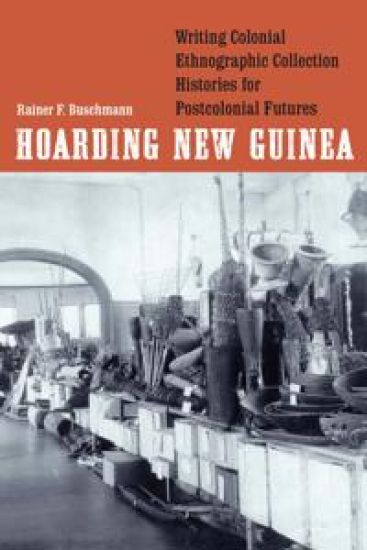
Hoarding New Guinea provides a new cultural history of colonialism that pays close attention to the millions of Indigenous artifacts that serve as witnesses to Europe’s colonial past in ethnographic museums. Rainer F. Buschmann investigates the roughly two hundred thousand artifacts extracted from the colony of German New Guinea from 1870 to 1920. Reversing the typical trajectories that place ethnographic museums at the center of the analysis, he concludes that museum interests in material culture alone cannot account for the large quantities of extracted artifacts. Buschmann moves beyond the easy definition of artifacts as trophies of colonial defeat or religious conversion, instead employing the term hoarding to describe the irrational amassing of Indigenous artifacts by European colonial residents. Buschmann also highlights Indigenous material culture as a bargaining chip for its producers to engage with the imposed colonial regime. In addition, by centering an area of collection rather than an institution, he opens new areas of investigation that include non-professional ethnographic collectors and a sustained rather than superficial consideration of Indigenous peoples as producers behind the material culture. Hoarding New Guinea answers the call for a more significant historical focus on colonial ethnographic collections in European museums.
While I traveled Australia, I was a very naive person. Only in retrospect I realized that many times I had gotten myself into dangerous situations and only got through them thanks to luck, intuition and well-meaning fellow people. This book contains my first-hand advice to support you in returning from traveling safely, healthy and - above all - alive. Each advice is illustrated with tales and anecdotes about how I learned it. Also available in German: ISBN 978-1512249958 At first, Australia may seem quite homelike to you - but this misapprehension can cost your life. The greatest source of danger is: you yourself - and that's what I'm starting this book with. Further, it's about dangers posed by other people, by Australia's clich -dangers (animals, climate, natural disasters) and from getting around. As to not deter you entirely from traveling in Australia, this book closes with my most beautiful experiences. Here's a summary of the most important advice for readers impatient or just browsing: 1.) Wear sunscreen like a second skin. 2.) Keep distance from wild animals. 3.) Keep distance from where wild animals dwell (Which is pretty much everywhere). 4.) At night, refrain from driving your car outsides of settlements. There's nothing to see anyway - and if you do, it's likely to be too late. 5.) Don't listen to racists. they're just mean people. 6.) Take more water with you than you think you need. You'll need it. 7.) Always stay with the car. Rescue teams spot stranded cars earlier than lost wanderers. 8.) Marmite is great. It might tastes like the opposite of Nutella, but it helps to repel bloodsucking insects. 9.) Read warning signs in detail. Someone paid for them - just to save you. 10.) If it's risky at home, it's risky any place else. 11.) Tell someone where you go and when you plan to be there, then inform them once you got there. 12.) Always pack a jumper and a piece of cord.
Warum sollte jemand ausgerechnet dieses Buch kaufen? Da will mir auch nichts einfallen. Es handelt sich hier weder um die bittere Abrechnung eines Oppositionellen, noch um lobpreisende Ostalgie. Dieser Bericht liegt irgendwo dazwischen. Er zeigt mich angepasst und aufm pfig zugleich. So, wie es halt wirklich war. Lesen Sie wie ich die DDR-Zeit erlebte, finden Sie Gemeinsames und Trennendes....
So vieles hat sich in unserer Sprache ver ndert. Da sind die Anglizismen, die sich unaufh rlich in unsere Alltagssprache einschleichen. Jugendliche unterhalten sich in einer, f r uns Erwachsene schwer verst ndlichen "Jugendsprache". Dann gibt es noch die "Expertensprache", die nur so von unverst ndlichen Fachausdr cken wimmelt und die vor allem Politiker verwenden, die ahnungslos sind aber viel reden wollen oder m ssen.Geht es Ihnen auch auf die Nerven, wenn ein Politiker einen Satz mit der Redewendung beginnt: "Ich w rde meinen wollen..."? Da fragt man sich schon: "Was will dieser Kerl jetzt eigentlich? Hat er eine Meinung oder will er nur eine haben?"Ich rate Ihnen dringend, auf solch ein bles Gew sch zu verzichten. Eine klare, positive Sprache ist heute dringender notwendig als je zuvor. Ein weiteres, weit verbreitetes bel sind die h ufig verwendeten Konjunktive in der Sprache. Fast jeder Bewerber, der einen Kurs beim Arbeitsamt gemacht hat, schreibt heute an den Schluss seines Anschreibens den f rchterlichen Satz: " ber ein Bewerbungsgespr ch w rde ich mich freuen." Wie furchtbar das klingt. Jeder Personalchef bekommt da die Kr tze. Man kann auch ganz einfach schreiben: "Ich freue mich auf die Einladung zu einem Bewerbungsgespr ch "Auch die heutzutage h ufig verwendete Formel "kein Problem" ist ein sehr negativer Spruch. Er verwendet eine Negation (das Wort "kein") und genau diese wird vom Unterbewusstsein des Gegen bers ignoriert. Dort verbleibt nur der Ausdruck "Problem" und damit das Gegenteil von dem, was Sie eigentlich ausdr cken wollen. Zudem ist das Wort "Problem" negativ besetzt.Sie haben noch Zweifel? Nun, dann denken Sie jetzt einmal NICHT an den Eiffelturm An was haben Sie gedacht? Richtig Unser Unterbewusstsein ignoriert Negationen. Das ist eine Tatsache. Und nun stellen Sie sich vor, ein Verk ufer sagt Ihnen: "Dieses Produkt ist nicht teuer " Was bleibt bei Ihnen h ngen? Richtig Es ist teuer Es ist schwer, sich von diesen liebgewonnenen Floskeln zu befreien. Ich arbeite jetzt schon seit mehr als ein Jahr an diesem Thema und erwische mich immer noch dabei, dass mir das "kein Problem" einfach so rausrutscht. Dann rgere ich mich, denn ich h tte ja auch sagen k nnen: "aber gerne doch". Ich erkl re Ihnen in diesem Buch nach und nach, wie Sie sich selbst eine positive Sprache antrainieren k nnen und damit einen v llig neuen Eindruck auf Ihre Gespr chspartner, seien es private oder gesch ftliche, machen werden. Ihr Umfeld wird Sie vollkommen anders wahrnehmen. Sie erscheinen als positiv gepr gter Mensch, als jemand, mit dem man sich gerne unterh lt und dem man gerne zuh rt. Wie wichtig die Sprache als Transportmittel unserer Gedanken ist, zeigt das nachfolgende asiatische Sprichwort: Achte auf Deine Gedanken, denn sie werden Worte. Achte auf Deine Worte, denn sie werden Handlungen. Achte auf Deine Handlungen, denn sie werden Gewohnheiten. Achte auf Deine Gewohnheiten, denn sie werden Dein Charakter. Achte auf Deinen Charakter, denn er wird Dein Schicksal.Lesen Sie dieses Buch und ben Sie die darin beschriebenen Techniken, wie man sich eine positive Sprache angew hnen kann. Sie werden staunen, wie gerne man Ihnen zuh ren wird. Ihr Rainer Andreas Seemann
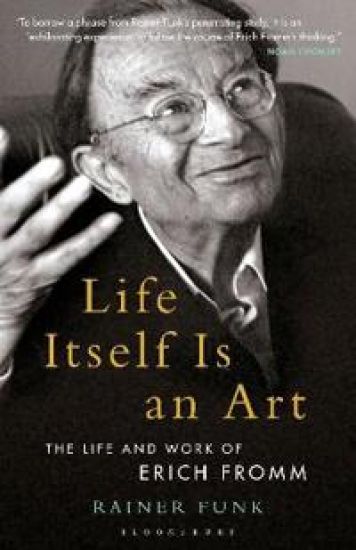
A Choice Outstanding Academic Title of the YearErich Fromm (1900-1980) is known to most readers as the author of the international bestseller The Art of Loving (1956). What may be less widely known is that Fromm was a social psychoanalyst whose psychoanalytic theories, developed around a humanistic concept of man and society, have had a profound impact on many fields and disciplines: on social life and societal organization, on politics, on religion, on psychotherapy and, last but not least, on the practice of mindfulness. Rainer Funk was Erich Fromm’s last assistant. He wrote his dissertation about Fromm, was designated by Fromm's last will to be his sole literary executor, and is the editor of Fromm's writings. From his very intimate knowledge of Fromm's life and ideas, and his access to an archive that includes 6,000 letters, Funk introduces Fromm's central concepts and examines them in relation to Fromm's lived experiences and to his idea that life itself is an art. The question of "the art of living" runs through all of the chapters, from the Introduction, in which Funk describes meeting Fromm for the first time in 1972, to the last chapter, in which Funk reflects on the impact of Fromm's social-psychoanalytic writings and his efforts to live well.
A Choice Outstanding Academic Title of the YearErich Fromm (1900-1980) is known to most readers as the author of the international bestseller The Art of Loving (1956). What may be less widely known is that Fromm was a social psychoanalyst whose psychoanalytic theories, developed around a humanistic concept of man and society, have had a profound impact on many fields and disciplines: on social life and societal organization, on politics, on religion, on psychotherapy and, last but not least, on the practice of mindfulness. Rainer Funk was Erich Fromm’s last assistant. He wrote his dissertation about Fromm, was designated by Fromm's last will to be his sole literary executor, and is the editor of Fromm's writings. From his very intimate knowledge of Fromm's life and ideas, and his access to an archive that includes 6,000 letters, Funk introduces Fromm's central concepts and examines them in relation to Fromm's lived experiences and to his idea that life itself is an art. The question of "the art of living" runs through all of the chapters, from the Introduction, in which Funk describes meeting Fromm for the first time in 1972, to the last chapter, in which Funk reflects on the impact of Fromm's social-psychoanalytic writings and his efforts to live well.
Der junge d nische Adlige Malte Laurids Brigge kommt nach Paris, um Dichter zu werden. Die pulsierende Gro stadt und Kulturmetropole ist um 1900 eine berw ltigende Erfahrung voller Gegens tze und faszinierender Anreize. Rilke hat mit dieser Erz hlung das Paris-Bild von Generationen gepr gt. Meisterhaft ist seine Sprache und Modernit t, von mitrei ender Sch nheit, Tiefe und Poesie.
Seit vielen Jahren spielen Triebfahrzeuge mit Drehstromantriebstechnik eine bedeutende Rolle bei den Eisenbahnen der Welt. Dabei ist die Nutzung des Drehstromes aber keine Errungenschaft der Neuzeit. ber die weitgehend unbekannten historischen Aspekte dieser Technik wird in diesem Buch berichtet. Behandelt werden zun chst die Bahnen und Triebfahrzeuge mit Zuf hrung des Drehstromes ber Oberleitungen. Solche Strecken gab es in Deutschland, Italien, in der Schweiz und in den USA. Ein zweiter Abschnitt widmet sich der Umformertechnik, die in Ungarn und in den USA weite Verbreitung fand. Zahlreiche Abbildungen, technische Daten und Zeichnungen erg nzen den Text. Zitate aus der zeitgen ssischen Literatur erm glichen einen Einblick in die Gedankeng nge der Techniker. Zu jedem Kapitel geh rt ein Literaturverweis, so dass ein weitergehendes Studium m glich ist.